On 12 July 2026, four days after the close of the NATO Summit in Ankara, Atlas News Romania published an analysis proposing a thesis and a verifiable test (Atlas News Romania —The NATO Ankara Summit: The Hypothesis of an Unseen Pact That Held the Alliance Together).
The thesis held that the Alliance had emerged from Ankara with an informal political convergence between Washington and the principal European capitals: the United States reaffirms collective defense, and the Europeans embrace, as their own choice, an interpretation of transatlantic solidarity that does not stop at NATO’s geographic borders when a major ally faces a strategic crisis. The test set out the conditions under which the hypothesis would be confirmed or refuted. In the months to follow, European states would have had to provide operational support to the United States outside the Alliance’s formal framework, through a separate coalition and without a significant public dispute within NATO.
The present text revisits that hypothesis with the explicit purpose of subjecting it to verification.
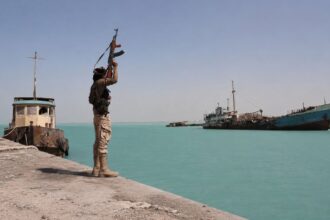
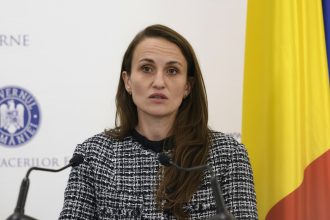
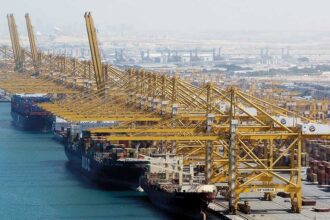
Between 19 and 20 July, two events together brought the conditions of the test into the public domain. On 19 July, U.S. Secretary of State Marco Rubio called on states around the world to contribute to securing the Strait of Hormuz and to share the financial and military costs of the operation (U.S. Department of State). On 20 July, Romanian Foreign Minister Oana Țoiu stated on TVR Info that Romania is part of an international coalition managed by France and the United Kingdom, comprising approximately forty states, which supports the U.S. State Department’s initiative to reopen the strait (TVR Info). The coalition is preparing mine-clearing operations and the escort of commercial vessels, and a number of states have already pre-positioned naval and logistical capabilities near the Gulf (Atlas News Romania).

Three markers must now be set out, in the order in which they occurred. The theory advanced on 12 July. The events of 19–20 July. The confirmation of the test. The remainder of this analysis argues why the test may be considered passed, what it tells us about the architecture of the new transatlantic solidarity, and what implications it holds for Romania.
Why the test may be considered passed
The distinction between confirming a mechanism and demonstrating the existence of a secret agreement must be rigorously preserved. Nothing that has emerged publicly between 8 and 20 July proves the existence of a document signed in Ankara by which the allies would have bound themselves, in legal terms, to support the United States in a potential escalation with Iran. The invisible pact hypothesis did not assert the existence of such a document. It asserted the existence of a political convergence over the meaning of solidarity, within an Alliance that is recalibrating its balances.
This convergence had four logical components. First: NATO provides political legitimacy but does not formally enter the operation. Second: member states act individually or in groups, through flexible coalitions. Third: the Europeans assume operational leadership of the mechanism, and Washington aligns its strategic objectives with their initiative. Fourth: the North Atlantic Council does not fracture on this matter, and NATO itself does not oppose the coalition it does not command.
All four components are visible today. The Hormuz coalition does not operate under NATO’s flag. It is led by Paris and London. It supports an American initiative. It comprises approximately forty states, many of them United States allies but also partners from outside the Alliance. It has produced, at this stage, no major public dispute within NATO.
What is being confirmed is therefore not a clandestine treaty. What is being confirmed is a political architecture that the Ankara Summit consolidated and that the final declaration validated by including, in a NATO document, Iran and freedom of navigation through the Strait of Hormuz — two subjects on which the Alliance has neither an operational mandate nor direct involvement (NATO — Ankara Summit Declaration).
The anatomy of a mechanism already at work
In fairness, it must be observed that the first elements of the Franco-British coalition existed before Ankara. As early as 6 July, at the pre-summit press conference, Secretary General Mark Rutte confirmed that France, the United Kingdom, and Oman had begun coordinating for the protection of freedom of navigation through the strait (NATO — Pre-Summit Press Conference). The initiative, therefore, was not requested at Ankara. It was already on the table, built by European powers that saw their own interests threatened by the blockage in the Gulf. What took place at the leaders’ meeting was the integration of this European initiative into a broader political formula of transatlantic solidarity.
The Ankara Declaration, adopted on 8 July, codified this integration. For the first time in a NATO document, Iran and the Strait of Hormuz appeared not as peripheral matters but as strategic priorities that the Alliance politically commits to supporting. Mark Rutte was, at the same time, extremely precise in delineating the levels. NATO adopts a political position. NATO does not participate militarily. Iran lies outside the territorial coverage of Article 5. Practical contribution falls to bilateral agreements between the United States and each ally, or to coalitions formed outside the Alliance’s framework (NATO — Press Conference by the Secretary General).
This three-tiered structure — NATO’s collective political position, the Franco-British operational mechanism, and individual state support — corresponds exactly to the hypothesis formulated on 12 July. It is the architecture the hypothesis described.
On 19 July, Marco Rubio’s appeal therefore introduced no new element. It publicly activated a mechanism already in place (Atlas News Romania). Washington did not present the Hormuz situation as an exclusively American problem. It presented it as a matter for the international community, in which the United States expects reciprocity from partners with similar interests. The following day, through the voice of the Foreign Minister, Romania assumed an affirmative response.
The circle has closed. The hypothesis was put to the test, and the test was passed.
The Franco-British coalition as a political formula
The fact that France and the United Kingdom lead the coalition, not the United States, is essential and must be read carefully.
In a traditional NATO, an operation of this kind would have been managed directly by Washington, with the Europeans in an auxiliary supporting role. At Ankara, a different distribution became visible, one that is emergent rather than imposed. The United States expresses the strategic objective — freedom of navigation through the strait, preventing the consolidation of an Iranian sphere of influence, easing pressure on energy markets. The two European powers with genuine expeditionary capabilities, with aircraft carriers, with a historical presence in the Gulf and diplomatic credibility in the Arab world, build the operational mechanism. The smaller states participate according to their own capacity to contribute and their own political calculations.
This division of labor brings benefits to all parties. The American administration sees a more balanced distribution of costs and a political confirmation that the Europeans are no longer passive beneficiaries of transatlantic security. Paris and London recover a global strategic role they had let fade after their withdrawals from the East. The intermediate states, Romania among them, gain access to a large-scale operation without assuming command of an intervention far from their own territory.
The institutional consequence is significant. NATO is not transforming into a global alliance, but it is beginning to function as a platform from which flexible coalitions may spin off for issues lying outside its legal mandate. This is the model Washington has invoked across several political cycles, one that Rutte articulated coherently at Ankara, and one that the most powerful Europeans accept because it suits their strategic interests. It is not a formula that one side imposed on the other. It is a formula that matured because it simultaneously serves different but convergent interests.
Türkiye’s role and the legitimacy of the host
It should be noted, within this architecture, Türkiye’s role as host of the summit. The choice of Ankara was not accidental, and the manner in which Türkiye administered the meeting mattered.
A summit dominated simultaneously by Russia, Ukraine, and Iran took place in the only allied capital sitting at the intersection of all three dossiers. Türkiye provided a diplomatic setting in which the United States could reaffirm its commitment to NATO, in which the Europeans could consolidate their own architecture of support, and in which regional powers could discuss freedom of navigation through the straits of the Gulf. Ankara imposed no formula. It created, through its own diplomatic authority and its own geographic positioning, a space in which the formula could be negotiated.
Türkiye remains, consequently, one of the principal political winners of this summit. Not because it dictated the outcome, but because it demonstrated that it can host a moment of allied realignment without erecting borders between partners with divergent interests. This is precisely the kind of role a pivot power seeks when it wishes to be treated as a global strategic actor, not merely as a regional ally.
Romania at the intersection of utility and vulnerability
Romania’s participation in the Hormuz coalition cannot be explained solely by loyalty to the United States or by allied obligations. There is a direct economic interest. The blockage of the strait affects energy markets, maritime transport, and the supply chains that eventually reach Romanian ports. The Foreign Minister rightly drew attention to a less-discussed risk — the impact on global food security, through the disruption of shipments of fertilizers essential to agriculture (Atlas News Romania).
There is, at the same time, a deeper strategic stake. Bucharest is consolidating its status as a useful ally within an Alliance in which influence is no longer negotiated in communiqué paragraphs but through participation in operations, procurement, and infrastructure. In Washington, Rutte publicly cited Romania as an example of an ally that provided logistical support for U.S. operations related to Iran (Atlas News Romania —The NATO Ankara Summit: The Hypothesis of an Unseen Pact That Held the Alliance Together). In Bucharest, the Foreign Minister confirms that Romania is part of the coalition applying the formula consolidated at Ankara. The two moments communicate with each other. Romania has entered, at least declaratively, the category of states that produce security, not merely that of states which consume it.
This is a shift in status with real potential. For the moment, it remains a declarative shift. Romania’s concrete contribution is not publicly known. We do not know whether Bucharest will offer vessels, personnel, divers, mine-clearing specialists, intelligence, logistical support for the vessels of other states, or only diplomatic support. We do not know whether there will be direct financial costs and who will bear them. We do not know what the political mandate of the participation is, what the legal basis under domestic law is, and what chain of command any Romanian capabilities will operate under.
This absence of detail is not neutral. It creates a space in which coalition membership can be sold politically as a diplomatic success, without the public understanding what the assumed commitment actually consists of. In a mature democracy, such participation requires clear governmental communication, a parliamentary debate, a risk assessment, and a public articulation of the expected benefits. None of this has taken place at this stage.
The Black Sea corollary cannot be avoided
If Romania contributes to unblocking a maritime route thousands of kilometers away, its Western partners have reason to understand a simple corollary. The Black Sea is, in turn, a maritime route whose freedom conditions the food security of several continents. It is the space in which, for nearly four years, the largest European conflict since the end of the Second World War has been unfolding. It is the sea traversed by gas pipelines, cables, grain routes, and critical infrastructure of the eastern flank. And it is the space in which Russia continues to test Western patience through gray-zone actions, aerial provocations, and pressure on commercial routes.
Participation in Hormuz produces political capital. Political capital must be negotiated while it is fresh. If Bucharest does not convert this contribution into a coherent insistence on securing the Black Sea — expanding allied naval presence, accelerating the MCM Black Sea and AFSC programs, developing its own mine-countermeasures capabilities, integrating Romanian industry into Western production chains — the moment will pass, and the Black Sea will remain, in the perception of Washington, London, and Paris, a dossier of regional importance rather than a pillar of Western security.
Within an Alliance increasingly oriented toward results, strategic solidarity does not function as a donation. It functions as reciprocal exchange.
The Ankara formula and its limits
What emerges from the Ankara–Hormuz–Bucharest sequence may be called, without exaggeration, the Ankara formula. It has three axioms.
First: collective defense remains the legal foundation of the Alliance, but political solidarity extends beyond the geographic borders of Article 5. NATO validates by declaration strategic objectives that concern the entire Western world, even where it cannot act directly.
Second: action outside the allied mandate is carried out through flexible coalitions, led by capable European powers and supported by smaller states according to their capabilities. The United States formulates priorities in dialogue with its partners; it no longer insists on commanding every operation and accepts that operational leadership may fall to the Europeans.
Third: participation in these coalitions produces political capital for the states that engage, and this capital must be transformed into concrete benefits — capabilities, technologies, industry, military presence on their own territory, integration into decision-making processes. Measurable solidarity gradually replaces declared solidarity.
The formula has, of course, serious limits. It depends on the convergence of interests between Washington and the leading European powers. It is unclear how it would function if an American initiative pursued objectives that France or the United Kingdom considered contrary to their interests. It presupposes reciprocal trust among allies that may be eroded by the next electoral crisis on either side of the Atlantic. It places growing pressure on smaller states, which must make participation choices without the institutional resources needed to evaluate them honestly.
There is also a more subtle risk. When solidarity is not written down, it cannot be verified. Nor invoked in law. Nor set against an administration that changes its position. The invisible pact functions as long as all parties decide to honor it. It contains no mechanism by which to be defended against a unilateral return to American isolationism or European neutralism.
The Hormuz precedent and what comes next
The Strait of Hormuz is the first application of the mechanism consolidated at Ankara. It will not be the last.
The same architecture — a strategic objective articulated by Washington, a European coalition of implementation, selective allied participation according to interests and capabilities — can be replicated in the Red Sea, the Gulf of Aden, the South China Sea, or the Arctic, wherever Western interests are threatened outside the legal coverage of Article 5. For each of these theaters, the formula will be adjusted to regional specifics and to the European power capable of leading. The structure, however, will remain the same.
This perspective changes the way Romania must think about its foreign policy. Bucharest can no longer assume that participation in NATO comes down to contributions on the eastern flank and to hosting allied structures. It will be invited with increasing frequency to contribute to global operations, and each such invitation will come with its own calculus of benefits, costs, and risks. A medium-sized state without a clear foreign-policy doctrine will squander political capital on operations to which it contributes mechanically, obtaining nothing in return. A state with an articulated doctrine will be able to negotiate, for each participation, a coherent package of reciprocal benefits.
Romania, to our knowledge, does not have such a doctrine at present.
From Ankara to a legible foreign policy
The invisible pact hypothesis has been validated. That was the analytical question. The political question remains: what does Bucharest do with the validation?
A government that seriously assumes its role in a coalition of forty states has an obligation to communicate four things publicly. What the nature of the Romanian contribution is, both financial and operational. What the risks are to the personnel and capabilities engaged. What the expected benefits are in terms of Black Sea security, the defense industry, and access to programs and technologies. What the timetable is for reviewing the commitment should the security situation change.
None of these four points is impossible to communicate. All four must be discussed with the parliamentary opposition, with the specialists of independent think tanks, and with the press. A serious foreign policy does not resist public scrutiny. It seeks it, because it uses it as a source of legitimacy in negotiations with external partners.
On 12 July, Atlas News Romania wrote that the invisible pact theory would be verified if European states offered operational support to the United States outside the Alliance’s formal framework, without major internal disputes. On 20 July, Romania confirmed that it is part of such a coalition. The test has been passed. The Ankara formula works.
One question remains, and it no longer concerns the Alliance. It concerns Bucharest. Romania has accepted the role. Will it play it wisely?
Sources: Atlas News Romania — The Invisible Pact Hypothesis (https://www.atlasnews.ro/summit-nato-ankara-pactul-nevazut/); Atlas News Romania — Oana Țoiu on the Coalition for the Strait of Hormuz (https://www.atlasnews.ro/oana-toiu-romania-sprijina-redeschiderea-stramtorii-ormuz-si-face-parte-din-coalitia-internationala/); Atlas News Romania — Marco Rubio Calls on States Worldwide to Engage in the Strait of Hormuz Crisis (https://www.atlasnews.ro/rubio-solicita-din-nou-implicarea-statelor-lumii-in-criza-din-stramtoarea-ormuz/); TVR Info (https://tvrinfo.ro/exclusiv-oana-toiu-despre-contributia-romaniei-la-eforturile-de-redeschidere-a-stramtorii-ormuz/); NATO — Pre-Summit Press Conference, 6 July 2026 (https://www.nato.int/en/news-and-events/events/transcripts/2026/07/06/pre-summit-press-conference-by-nato-secretary-general-mark-rutte-ahead-of-the-2026-nato-summit-in-ankara); NATO — Ankara Summit Declaration (https://www.nato.int/en/about-us/official-texts-and-resources/official-texts/2026/07/08/the-ankara-summit-declaration); NATO — Press Conference by Secretary General Mark Rutte, 8 July 2026 (https://www.nato.int/en/news-and-events/events/transcripts/2026/07/08/press-conference-by-nato-secretary-general-mark-rutte-following-the-meeting-of-heads-of-state-and-government-at-the-2026-nato-summit-in-ankara); U.S. Department of State — Remarks by Secretary Marco Rubio (https://www.state.gov/releases/office-of-the-spokesperson/2026/07/secretary-of-state-marco-rubio-remarks-to-the-press-13).