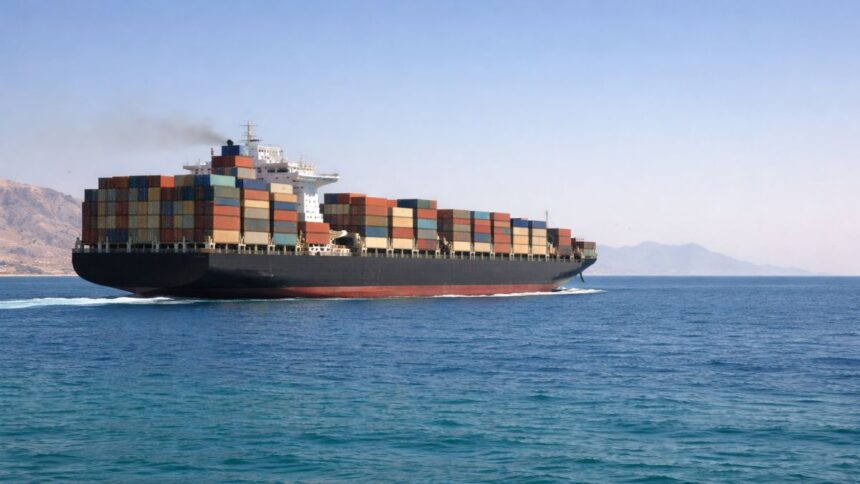
On the morning of 31 July, only two oil tankers transited the Strait of Hormuz, both empty and heading into the Gulf. Over the same period, 25 commercial vessels crossed Bab el-Mandeb, though monitoring data does not capture ships sailing with their transponders switched off. The picture recorded by Reuters does not merely describe a drop in traffic; it marks the beginning of a deeper transformation. Maritime commerce is gradually ceasing to operate under uniform rules.
Iran is demanding greater control over the routes through Hormuz. The Houthi movement is weighing tolls on vessels transiting Bab el-Mandeb, with the possibility of exempting Chinese ships. Beijing is negotiating directly with the Yemeni rebels for the protection of its own tankers. The London marine insurance market is expanding the zone deemed high-risk, and energy companies are beginning to purchase their own vessels in order to reduce their dependence on commercial carriers.
Taken separately, these developments can be explained by the immediate demands of war. Taken together, they outline a change of system.
Freedom of navigation is not being replaced by a single blockade, nor annulled by any official declaration. It is being fragmented through the emergence of selective access regimes, in which a vessel’s passage depends ever more on the identity of its owner, the origin of its cargo, the destination of its shipment, and the political ties of the state that protects it.

Goods are beginning to receive a geopolitical passport.
A Frontier That Appears on No Map
For decades, the world’s major international straits have been treated by the global economy as almost neutral infrastructure. States could contest political control of the surrounding regions, but international trade continued to function on the assumption that the passage of commercial vessels would be preserved, if necessary with the support of American naval power and international coalitions.
That assumption became so solid that the cost of guaranteeing freedom of navigation disappeared from ordinary economic calculations. Shipowners assessed distance, fuel, voyage duration, and available capacity. Importers calculated the cost of the cargo and its transport. Banks and insurers introduced political risk only in exceptional cases.
In economic terms, freedom of navigation was treated as a global public good. Once produced, it could be consumed by all commercial actors, without additional shipping traffic diminishing the system’s value for other users. No one could be excluded from its benefit, and every economic partner received, in principle, the same quality of access.
The crisis around Hormuz shows that this quality as a public good was never a natural property of geography. It was the result of a security order capable of imposing sufficient confidence for vessels, traders, and insurers to behave as though the seas were neutral. In the absence of that order, the sea returns to the status it held before the nineteenth century: a space in which passage depends on protection, tribute, and bilateral arrangement.
An analysis published by Atlas News Romania in March anticipated this rupture, arguing that economic infrastructure is, in reality, infrastructure of power. The fundamental question raised by Hormuz is not merely whether oil can be transported again, but whether there still exists a power or coalition capable of restoring the credibility of the system that makes such transport possible.
The developments of recent days carry that thesis further. What we are witnessing is not only the erosion of a universal maritime order, but the emergence of a market in which safe access is negotiated individually.
A vessel is no longer assessed solely by its commercial characteristics. It acquires a political dossier. Beneficial ownership, flag, operating company, the ports it has called at, and the ultimate purchaser of its cargo become factors that can influence the probability of an attack, the cost of insurance, and even the practical right to transit a strait.
This is the invisible frontier of the new maritime economy. It is not drawn on any map, and it has no customs posts. It activates differently for each vessel.
From Military Control to Commercial Sovereignty
Iran has proposed to Oman a temporary arrangement under which two-way traffic would rely to a greater extent on the waters controlled by Tehran. The deputy Iranian foreign minister, Kazem Gharibabadi, has stated that Iran no longer recognises the current traffic separation scheme and that the strait will remain closed unless Muscat accepts the Iranian proposal. According to Reuters, Tehran justifies the request as a matter of monitoring shipping in the wake of the attacks it suffered during the war.
From the standpoint of international law, the position is contested. The International Maritime Organization has reaffirmed that passage through straits used for international navigation may not be suspended or impeded, and that any regional arrangement must preserve non-discriminatory access for all vessels. The organisation has stated that transit through Hormuz must remain free of tolls.
The legal dispute, however, does not capture the full stake. Iran is not seeking merely to shift a route a few nautical miles to the north. Tehran is attempting to convert the capacity to generate insecurity into a right to administer security.
If a vessel can transit only after entering a corridor controlled by Iran, communicating with the Iranian authorities, and accepting procedures established by Tehran, then Iran acquires a form of commercial sovereignty without holding full legal recognition over the strait. Military power is converted into a regulatory competence.
The same model appears to be under test in Bab el-Mandeb. Regional sources cited by Reuters report that Iranian officials have discussed with Houthi representatives the imposition of tolls on vessels transiting the southern Red Sea. According to the same reporting, Iranian advisers are said to have arrived in Yemen to help build a structure capable of administering any such payments. The Houthi movement has not publicly confirmed the plan, and information regarding the existence of such an authority must be treated with caution.
The political significance of the discussion nevertheless remains substantial. A non-state actor is attempting to convert the threat to shipping into a permanent source of authority and revenue. This is no longer only a matter of attacking vessels to achieve a military effect. It is the attempt to normalise the idea that passage through an international corridor may be conditioned upon the payment of protection or the acceptance of rules imposed by force.
Within such an architecture, missiles and drones are no longer merely weapons. They become instruments of an informal fiscal policy. The historical precedent is not the Cold War, but the Ottoman capitulations and the tribute payments extracted from European vessels by the Barbary states in the seventeenth and eighteenth centuries. The sea is reverting to a regime in which access is purchased individually.
China and the Emergence of Bilateral Commercial Immunity
The possible exemption of Chinese vessels from Houthi tolls is one of the most important elements of the new equation.
China has held direct talks with the Yemeni movement in order to obtain guarantees for the passage of its tankers through Bab el-Mandeb. According to Reuters, Beijing has requested explicit assurances that Chinese vessels will not be targeted, with the authorisation of shipments reportedly assessed on a case-by-case basis.
Officially, China continues to affirm freedom of navigation and the safety of international routes. Operationally, however, Beijing is constructing a solution different from that pursued by the United States.
Washington is seeking to restore a universal principle whereby all commercial vessels may transit under the same conditions. Beijing is seeking bilateral immunity for its own shipments, without assuming the military cost of protecting the entire system.
That distinction may appear tactical, but the implications are structural. If Chinese vessels obtain individual guarantees while shipments bound for other markets remain exposed, China acquires an economic advantage without militarily controlling the strait. Oil can reach Chinese refineries by a shorter route, with reduced risk and potentially lower insurance premiums than those faced by a European or Asian competitor.
Under the old maritime order, commercial advantage derived principally from productivity, price, infrastructure, and access to capital. In the system now taking shape, a political relationship with the actor capable of blocking the route can itself become a competitive advantage.
Diplomacy is thus becoming a component of logistical cost.
The Chinese model does not envisage the immediate construction of a full alternative maritime order. It rests on the conclusion of enough commercial non-aggression arrangements to ensure that China’s essential flows continue even when the universal system no longer functions.
Multilateralism remains the official discourse. Bilateral immunity becomes the operational solution.
A fundamental strategic distinction is thus emerging between the American and Chinese approaches to maritime commerce. The former continues to invest in the security of the system, with the associated costs and responsibilities. The latter invests in selective exceptions from the insecurity of that same system. In a prolonged competition, the actor producing security for all pays more than the one purchasing exemptions.
The Insurer as the New Customs Authority
The formal tolls proposed in Hormuz or Bab el-Mandeb are only the visible part of the transformation. The real cost is set before any such toll is imposed, through the reaction of insurers, banks, and carriers.
On 29 July, the London marine insurance market extended the high-risk zone in the Red Sea following attacks on vessels linked to Saudi Arabia. Risk premiums for the ports of Jeddah and Yanbu rose from approximately 0.25% to 1% of the vessel’s value, while premiums for voyages through the southern Red Sea reached between 1% and 2%, up from around 0.3% before the latest escalation, according to Reuters.
For a tanker valued at 100 million dollars, moving from a premium of 0.25% to one of 1% represents a difference of 750,000 dollars for a single exposure. The cost is not ultimately borne by the insurer or the shipowner. It is passed into freight rates, then into the importer’s invoice, and finally into the price of energy or of goods purchased by the consumer.
Here emerges what may properly be defined as the geopolitical tariff.
Unlike a customs duty, this tariff is not adopted by any parliament and has no single rate. It cannot be contested before the World Trade Organization, nor is it applied uniformly to a category of products. It varies according to each vessel, each route, and each perceived political association.
The insurers’ risk map has, in practice, become a customs map of the conflict. It determines where a vessel can enter at a reasonable cost, where it requires additional coverage, and where insurance may become prohibitive.
The insurer claims no sovereignty and sets no foreign policy. Yet by translating military risk into price, the insurer decides which routes remain economically viable. In the new maritime order, access is regulated not only by states and naval fleets, but also by the market’s willingness to accept exposure.
Geopolitical Risk Moves from the Invoice to the Balance Sheet
The most important economic consequence will not necessarily be the temporary rise in the oil price. The transformation will be seen in how companies allocate capital on a permanent basis.
On 31 July, Reuters reported that Abu Dhabi National Oil Company had purchased five large-capacity tankers for approximately 590 million dollars. The acquisition is part of a process through which the Emirati producer seeks to control a larger share of its own logistics chain at a time when the conflicts in Hormuz and the Red Sea are reducing vessel availability.
The ADNOC decision shows that geopolitical risk is no longer being treated simply as an additional expense on a given voyage. It is beginning to alter the ownership structure of the industry.
Producers with capital will seek to control directly the vessels, terminals, storage, and logistical services on which they depend. Importers will maintain larger stockpiles. Industrial companies will look for alternative suppliers even where they are more expensive. Transport contracts will include additional security clauses, and access to maritime intelligence will become a commercial advantage.
Capital that would have been invested in the expansion of production, in research, or in new technologies will be devoted to building redundancy.
That is the difference between a cyclical shock and a structural shift. A shock temporarily raises prices. A structural shift compels companies to purchase assets, to reorganise supply chains, and to accept lower efficiency in order to avoid paralysis.
Geopolitical risk moves out of the profit-and-loss account and enters the balance sheet.
The world economy will not merely pay more for fuel and transport. It will lock more capital into vessels, storage, inventories, and infrastructure that exist for the eventuality that the main route can no longer be used. This is a form of hidden disinvestment: every dollar immobilised in redundancy is a dollar withdrawn from growth.
The Same Barrel, Different Geopolitical Prices
The geopolitical passport of goods will also fragment the way prices are formed.
In theory, a barrel of oil with identical characteristics has a comparable value for comparable buyers, adjusted for distance and commercial conditions. Under the new system, the final cost may vary considerably according to the political protection enjoyed by the shipment.
A Chinese tanker granted safe passage through Bab el-Mandeb can follow the direct route to Asia. A vessel associated with a state deemed hostile by the Houthis may be forced to turn back towards the Suez Canal, cross the Mediterranean, and circumnavigate Africa before reaching the Indian Ocean.
The difference does not consist merely in fuel consumed. A longer voyage means that the vessel cannot make another journey in the same period. The effective supply of maritime capacity contracts, even though no ship has been destroyed. The cost of capital tied up in the cargo rises, and the refinery awaiting delivery must draw down reserves or purchase urgently on the spot market.
In the first quarter of 2026, an average of 14.6 million barrels of oil and petroleum products transited the Strait of Hormuz daily, down from over 20 million barrels in previous quarters. Over the same period, Bab el-Mandeb carried approximately 5.4 million barrels per day, while the Suez Canal and the SUMED pipeline together handled nearly 4.9 million, according to data from the U.S. Energy Information Administration.
The figures show why the routes cannot be analysed in isolation. The reduction of traffic through Hormuz raises the importance of Saudi pipelines and the port of Yanbu. Pressure on Bab el-Mandeb pushes vessels towards Suez and the Mediterranean. Any threat to Egyptian infrastructure diminishes the value of the bypass route.
An analysis by Atlas News Romania has shown that Hormuz and Bab el-Mandeb have become the two ends of the same energy architecture. If Saudi Arabia diverts its oil through the East–West pipeline to Yanbu, while access from the Red Sea into the Indian Ocean becomes uncertain, the alternative built to bypass Hormuz loses part of its utility.
In this system, price no longer reflects only the scarcity of the commodity. It also reflects the scarcity of safe access. Certainty of delivery has ceased to be a free assumption and has itself become a commodity, unequally distributed.
Damietta and the Disappearance of the Fully Safe Route
The attack on the vessels Energos Winter and GasLog Salem in the Egyptian port of Damietta extends the geography of risk towards the Mediterranean. The Egyptian authorities have confirmed the outbreak of a fire and the involvement of a drone, but responsibility has not been officially attributed to any state or grouping.
In the absence of publicly available evidence, the incident cannot be presented as an Iranian operation. Its economic significance, however, does not depend exclusively on the identification of the perpetrator.
As the analysis published by Atlas News Romania noted, Damietta is an important component of the system through which Egypt imports and regasifies LNG for power generation and industry. The incident struck the infrastructure of a state seeking to avoid direct involvement in the war, yet already bearing losses from the reduction of traffic through the Suez Canal.
The signal transmitted to the market matters more than the immediate damage. Bypass routes no longer lie outside the conflict.
If Hormuz becomes inaccessible, shipments are diverted towards alternative pipelines and terminals. If Bab el-Mandeb becomes too risky, vessels are redirected towards Suez and the Mediterranean. If Mediterranean ports and regasification units enter the range of drone operations, the bypass no longer eliminates risk, but merely displaces it to the next node in the network.
This is the deep vulnerability of the modern maritime economy. The system possesses alternative routes, but those alternatives are tied to the same political and military infrastructure. A corridor can absorb the traffic of another only as long as it remains outside the field of confrontation.
The Damietta attack shows that the space considered safe can contract far more quickly than new terminals, pipelines, or fleets can be built.
From the Delayed Vessel to Consumer Inflation
The economic effect of maritime disruption does not stop at the port. It is transmitted gradually into producer and consumer prices.
A study published in February by the International Monetary Fund, based on AIS shipping data and price information for imported goods, estimates that a delay of 100 hours can raise inflation by approximately 0.5 percentage points at the peak of the effect, reached after five months.
This delay explains why the reopening of a strait does not automatically close the economic crisis. Vessels remain displaced from their normal routes. Insurance contracts have been renegotiated. Stockpiles have been drawn down. Companies have ordered goods from other regions, and additional costs continue to propagate through the commercial chain.
Maritime inflation appears with a lag and persists after the images of war disappear from the news cycle.
The effect is amplified by the link between energy, fertilisers, and agriculture. UNCTAD warns that disruption of shipping through Hormuz simultaneously affects oil, liquefied natural gas, and the fertiliser trade. More expensive gas raises the cost of ammonia production, and more expensive fertilisers feed into agricultural costs and, subsequently, into food prices.
For developed economies, the consequence may be a longer period of inflation and elevated interest rates. For import-dependent states, with limited foreign reserves and fragile budgets, the same mechanism can produce currency depreciation, trade deficits, and social pressure.
The geopolitical tariff is regressive at the international scale. Great powers can negotiate passage, escort their vessels, or purchase their own fleets. Vulnerable states buy the same goods at a higher price, without any ability to influence the rules of access.
Globalisation Moves from Efficiency to Belonging
The globalisation of recent decades was built around optimisation. The cheapest supplier could be chosen regardless of distance, because maritime transport was accessible and predictable. Stockpiles could be reduced, and production could be concentrated in a handful of industrial nodes.
The geopolitical passport of goods changes the selection criterion.
The cheapest supplier is no longer necessarily the one with the lowest final cost. Companies will also calculate the probability that the cargo will cross a conflict zone, that the vessel will be insured, and that the state of origin will be able to obtain political guarantees.
Diplomatic proximity may compensate for geographical distance. Neutrality may become more valuable than productivity. A well-protected port may attract traffic even where its tariffs are higher, while an efficient terminal may lose customers if associated with a state exposed to reprisals.
Globalisation is not disappearing, but its unit of organisation is changing. In place of networks built exclusively around cost, corridors of trust are emerging, within which states, companies, and shipowners consider themselves to benefit from an acceptable level of political and military protection.
Global commerce risks being divided into zones of preferential access. Some will be protected by naval alliances. Others will operate through arrangements with regional powers or non-state actors. Between them will lie spaces in which transport continues only at the price of very high risk premiums.
This is not deglobalisation in the classical sense of the term. It is the shift from world commerce organised around a public good—freedom of navigation—towards world commerce organised around geopolitical clubs, each with its own rules of access, its own insurance premiums, and its own tolerance of risk. It is the globalisation of negotiated immunities.
Corridors Become Military Objectives, Not Merely Collateral Casualties
The model is not confined to the Middle East.
In the Caspian Sea, commercial vessels associated with shipments between Iran and Russia, port infrastructure, and energy installations have entered the range of Ukrainian operations. The analysis by Atlas News Romania has shown that the widening of these strikes aims not only at the destruction of military targets, but at the disruption of the logistical corridor sustaining the cooperation between Moscow and Tehran.
In the Black Sea, attacks on tankers and infrastructure near the Novorossiysk terminal have led some vessels to avoid loading Kazakh crude, even though a substantial part of it belongs to international projects and not to the Russian state. The economic effect appears before infrastructure is destroyed: it is enough for shipowners to judge entry into port too dangerous.
Herein lies the fundamental strategic mutation. The commercial corridor is no longer merely an incidental casualty of war. It becomes the operation’s objective in itself.
Hitting a vessel, issuing a threat, or laying mines can alter the decisions of the entire market. The military cost of the action remains low, while the economic effect is multiplied by insurers, carriers, exchanges, and companies.
Power is no longer measured only by the capacity to physically halt each vessel. It is measured by the capacity to persuade the market that passage is no longer safe.
Europe Will Pay for a Crisis It Does Not Control
Europe is vulnerable not only through its energy imports, but through the very structure of its industry. Expensive energy, slower transport, and interest rates held at elevated levels reduce competitiveness at a moment when European companies are already under pressure from American and Asian producers.
An analysis by Atlas News Romania warned that the effect of the Hormuz crisis must not be reduced to the oil price. The shock is transmitted through gas, fertilisers, transport, industry, and monetary policy, reactivating vulnerabilities that the European Union has not eliminated since the previous energy crisis.
If cargoes destined for China benefit from negotiated access while those destined for Europe bear longer routes and more expensive insurance, the differential becomes a matter of industrial competitiveness. European steel, chemicals, fertilisers, components, and consumer goods will embed a logistical cost that competitors can partly avoid through different political relationships.
Europe therefore risks paying simultaneously for the protection of the universal order and for the selective advantages secured by actors that do not contribute in equal measure to its own security. This is the classical position of the power that defends the system while others purchase exemptions from it. Without a common maritime strategy, without sufficient naval capacity beyond European waters, and without its own instruments for insuring political risk, the European Union will remain the paying user of an order it can no longer impose.
The question is not only who sends warships to Hormuz or the Red Sea. The question is who benefits economically from the security produced, and who can negotiate exemptions when that security fails.
What the Change Means for Romania
Romania need not import most of its oil directly through Hormuz to feel the consequences. The price of fuels, gas, fertilisers, and transport is set on international markets. Romanian companies purchase components and raw materials through European chains that incorporate the costs of the maritime crisis, and domestic monetary policy is influenced by inflationary pressures in the euro area.
At the same time, the fragmentation of routes may raise the importance of the Port of Constanța, the Danube, and the connections between the Black Sea, the Caucasus, and Central Europe. This opportunity, however, does not arise automatically from geography.
In the new corridor economy, the value of a port is not determined solely by its operating capacity. It depends on the credibility of the protection offered to vessels, on the resilience of energy infrastructure, on cybersecurity, and on the existence of rail and river connections capable of continuing to function under conditions of crisis.
States able to guarantee predictability can charge a stability premium. Those possessing infrastructure but unable to protect it risk remaining mere spaces of vulnerable transit.
For Romania, this means that allied military presence in the Black Sea, air defence around Constanța, the security of oil and gas terminals, the capacity to escort commercial vessels, and the existence of a national framework for political-risk insurance cease to be purely technical subjects. They become conditions enabling the port to absorb traffic redirected from southern Europe and enabling the economy to attract capital in an environment where investors increasingly assess the probability of physical disruption to flows.
Maritime security is no longer merely a chapter of defence policy. It becomes a component of industrial, energy, and commercial policy.
The End of the Economic Neutrality of Goods
Goods have long been treated as neutral. A barrel of oil, a cargo of LNG, or a shipment of grain could be tracked by origin, quality, price, and destination. Political conflict belonged to states, while the product remained, at least in theory, outside it.
That separation is eroding.
A vessel becomes a target not necessarily for what it carries, but for who owns it, to whom it delivers, and which state is perceived as its supporter. A cargo may receive preferential access not because it is indispensable, but because it belongs to a political partner. The cost of transport is no longer determined by geography alone, but by the relationship between geography and alliances.
The geopolitical passport of goods will not be a document issued by any authority. It will exist in the form of guarantees obtained, of approved routes, of insurance premiums, of naval escorts, and of the silence of transponders.
This is the shift that the world economy is only beginning to evaluate.
The maritime order is not collapsing entirely. It is dividing into protected corridors, negotiated corridors, and corridors closed off in practice. Great powers will purchase or impose access. Companies will restructure their balance sheets in order to survive. Vulnerable states will pay the difference through inflation, debt, and food insecurity.
Globalisation will continue, but it will no longer be neutral. For nearly two centuries, the sea was treated as the most democratic of economic spaces: a ground on which all paying users had, in principle, the same access. That period is drawing to a close. In the new world economy, every cargo will bear a cost of production, a cost of transport, and a premium of geopolitical belonging. And whoever belongs to no club pays for all of them at once.
Read also