The war in Ukraine, the war between the United States, Israel and Iran that began on 28 February 2026, the Houthi offensive along the Yemeni coast, the permanent tension around Taiwan, the progressive militarisation of the Indo-Pacific and the erosion of the arms control architecture are ordinarily examined separately, front by front. Seen together with what is happening simultaneously in factories, public budgets, shipyards, raw-material supply chains and capital markets, they describe a common pattern, supported by data, yet an uneven one: not all great powers are rebuilding industrial capacity at the same pace, or for the same reasons. Europe, Türkiye, Russia, part of the Indo-Pacific and, from 2026 onwards, certain Middle Eastern states are moving visibly towards an expansion of military and industrial capacity. The United States is managing a mature industrial cycle, with bottlenecks of its own. China is advancing steadily, along a three-decade trajectory rather than on the back of a post-2022 shock. The global average conceals precisely this heterogeneity.
This is not yet, in September 2026, a global war economy. The figures do not support such a conclusion. But a significant part of the international system is rebuilding the industrial, fiscal and technological infrastructure required to sustain high-intensity, long-duration military conflict once again. The difference between the two situations is not semantic. It is the line separating preparation for peace through strength from the real capacity to turn the next crisis into a conflict the great powers can sustain for years.
$2.887 Trillion Does Not Yet Amount to a War Economy
World military expenditure reached $2,887 billion in 2025, according to the latest report by the Stockholm International Peace Research Institute — the eleventh consecutive year of growth, up 2.9% in real terms on 2024 and 41% on 2016. Its share of global GDP reached 2.5%, too little to speak of a militarisation of the world economy in the historical sense of the term, and far below the levels reached by the belligerent great powers in the Second World War.
Taken in isolation, the absolute record can be misleading. The United States retained the world’s largest military budget, at some $954 billion, but American spending fell by 7.5% in real terms — largely because, in 2025, Washington approved no further supplementary financial packages for Ukraine. Europe, by contrast, increased spending by 14%, to $864 billion, and Asia and Oceania by 8.1%, to $681 billion. With the United States excluded from the calculation, global growth stood at 9.2%.

What we are witnessing, therefore, is not a uniform mobilisation of the planet but a geographical rearrangement of the military effort, concentrated where the possibility of a major conflict has already entered governments’ strategic calculations: Europe, Russia, the Indo-Pacific and, increasingly visibly since 2026, the Middle East.
Europe Is No Longer Funding Armies Alone. It Is Funding the Capacity to Produce
The European shift remains the most relevant for understanding the phenomenon. At the NATO summit in The Hague in June 2025, allies committed to reaching investment equivalent to 5% of GDP by 2035: a minimum of 3.5% for core military requirements — a hard target, narrowly defined — and up to 1.5% for critical infrastructure, resilience, networks, civil preparedness and the defence industrial base, a category deliberately given more elastic contours. The commitment will be reviewed in 2029.
It is precisely the elasticity of this second component that has already generated friction over reporting. A report cited by SOFX, based on an analysis by a SIPRI researcher, explains why NATO maintains that all 32 allies met the 2% of GDP threshold in 2025, while SIPRI’s stricter methodology counts only 23 of the 32: the divergence stems from broader methodologies and accounting practices, about which SIPRI has warned that they may create incentives for „creative accounting” — without this having been demonstrated, case by case, for each of the nine states where the discrepancy appears. An important qualification: this risk of elastic accounting concerns the 2%/5% core already negotiated; it does not mean that the entire 5% target for 2035 is a mere accounting device — the 3.5% component remains a firm requirement, restrictively defined.
Beyond the percentage, what matters is what this effort is to finance. The White Paper for European Defence – Readiness 2030 states explicitly that European industry cannot at present produce military systems in the quantities and at the pace required, and calls for strategic stockpiles, industrial expansion, air and missile defence, artillery, ammunition and naval capabilities — including for „the most extreme military scenarios”. After decades in which many European states maintained limited stockpiles and industrial capacities sized for limited conflicts, Brussels is now explicitly pursuing the ability to resupply during a prolonged crisis.
SAFE, the European instrument worth €150 billion, provides long-term loans for ammunition, missiles, air defence and land systems. Romania has an allocation of approximately €16.7 billion and received its first tranche, of €2.5 billion, on 26 August 2026. It is the first time that the military dimension has entered so visibly into the Union’s common financing and industrial policy mechanisms.
Türkiye: Between Rearmament and Industrial Mobilisation
Türkiye is a case apart: it does not operate according to the logic of a war economy, yet it is visibly moving from a simple increase in military procurement to the simultaneous expansion of industrial capacity, technological autonomy and resilience infrastructure. Presenting the Medium-Term Economic Programme for 2027–2029 in September 2026, Vice-President Cevdet Yılmaz announced a 229% increase in „defence expenditure”. The available documents and public statements do not, however, specify the calculation base clearly enough for that percentage to be equated with a 229% rise in the entire annual military budget — it is certainly the largest proportional increase among the programme’s seven priority areas, but not necessarily a tripling of the defence budget as a whole. For 2026, official budget documents provided for approximately 2,155 billion lira for defence and security, including the Defence Industry Support Fund, while the burden of defence expenditure was estimated at 2.33% of GDP, according to the Presidency of Strategy and Budget.
The direction in which these resources are being pushed is relevant to the transformation examined here. Ankara is pursuing the transition of domestically developed systems to serial production and procurement in larger volumes, while reducing external dependencies. Turkish budget documents indicate a defence industry localisation rate of approximately 82% in 2025, with a target of 85% by 2028 — rising industrial autonomy, but not complete independence from foreign suppliers, according to the same source.
Physical investment, verifiable in company financial reports, confirms this direction. ASELSAN is building the Oğulbey Technology Base in Ankara, an investment of approximately $1.5 billion, intended among other things for high-volume production for the Çelik Kubbe multi-layered air defence architecture — the „Steel Dome”. In the first half of 2026, the company increased its investment in serial production and capacity expansion by 195%, to $323 million, installed 19 new robotic lines, and saw its backlog rise by 45%, to $23.2 billion — figures reported identically in the company’s own report and in independent accounts in the specialist press.
Other Turkish industrial projects remain, for the time being, at the level of company or government statements, without independent confirmation. Roketsan states that in April 2026 it inaugurated new facilities for propellants, warheads and advanced technologies at Lalahan, which are expected to allow a fivefold increase in the capacity of serial production lines, including for the SİPER and HİSAR systems and the TAYFUN ballistic missile. In the land sector, the new BMC plant in Ankara is designed, according to the same sources, for an output of up to eight Altay tanks and ten Altuğ armoured vehicles per month — figures of projected capacity, not of production already delivered.
More unusual for a straightforward rearmament policy is the fact that industrial expansion is accompanied by civil resilience measures. In November 2025, Türkiye amended its regulation on shelters, introducing requirements for certain new buildings and critical infrastructure and providing for the adaptation of metro stations and tunnels for use as protective spaces. The legislative text refers explicitly to conventional, nuclear, chemical and biological threats.
Türkiye has not, therefore, moved to a war economy comparable to Russia’s: there is no rationing, no generalised conversion of civilian production, no subordination of the national economy to military orders. But the Turkish case shows how far a state can advance between rearmament and outright war mobilisation. Ankara is simultaneously increasing funding, serial production, automation, technological autonomy and civil resilience — an instructive example for the central argument of this analysis: states are not merely buying more weapons, they are rebuilding the capacity to keep producing them if a regional crisis is prolonged.
Watch the Factories, Not the Speeches
A military budget can be altered within a single financial year. A new factory is another matter. In September 2025, Rheinmetall inaugurated a new ammunition plant at Unterlüß, in Lower Saxony, built through an investment of almost €500 million. The company projects a capacity of up to 350,000 artillery shells a year once full capacity is reached in 2027: 25,000 in 2025, 140,000 in 2026, with separate production of rocket motors for artillery rockets. The complex is expected to generate up to 500 new jobs.
Unterlüß does not prove that Germany is preparing for war. It proves that Berlin and German industry believe demand for large-calibre ammunition will not end with the next ceasefire. In its financial report for the first half of 2026, Rheinmetall’s total backlog had reached €80.5 billion, against €56 billion a year earlier. Separately from that accounting figure, chief executive Armin Papperger has publicly stated — in public appearances and investor calls, rather than in the financial report itself — a target of a backlog exceeding €100 billion by the end of 2026. The distinction matters: the figure recorded in the accounts on 30 June is one thing, the strategic target announced by management for year-end is another — both real, but of a different nature.
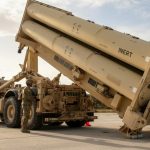
At Lockheed Martin, the backlog reached a record of approximately $230 billion in the second quarter of 2026, including the new multi-year contract for THAAD interceptors. A large backlog indicates contracted or anticipated demand — it does not automatically demonstrate rapid delivery, new industrial capacity, guaranteed access to raw materials or the availability of a skilled workforce. The gross sum of these backlogs does not, therefore, by itself demonstrate the transformation — companies also have different structures, and some include substantial civilian activities. The relevant signal is the combination of multi-year contracted orders, investment in upstream capacity and political pressure for faster production in larger volumes — pressure that is declared, but not always already translated into budgeted orders. Global data confirm this pattern at industry scale: revenues of the top 100 arms companies reached $679 billion in 2024, up 5.9%, and SIPRI notes explicitly that the size of order backlogs makes further increases likely.
The Bottleneck: Not the Shell Plant, but What Feeds It
A shell factory without propellants, explosives and electronics is an empty hall. This is where it is actually tested whether rearmament has a horizon of a decade or merely of a few years. China dominates global refining for a long list of materials critical to defence — tungsten, antimony, gallium, germanium and, above all, heavy rare earth magnets, used extensively in weapons systems. According to estimates by the Center for Strategic and International Studies, based on a technical report by the Congressional Research Service, an F-35 aircraft contains more than 400 kilogrammes of rare earth elements, an Arleigh Burke-class destroyer approximately 2,360 kilogrammes, and a Virginia-class submarine approximately 4,170 kilogrammes — figures old in origin (2013), but constantly recirculated in industrial security analyses and not officially revised since.
Washington has tightened, through defence procurement legislation, restrictions on critical materials originating in China: from 1 January 2027, DFARS rules extend the prohibitions to the entire supply chain for certain categories, including samarium-cobalt and neodymium-iron-boron magnets, tantalum and tungsten, irrespective of the stage of production — mining, refining, separation, smelting or fabrication — at which contact with China, Russia, Iran or North Korea occurred. In parallel, through the Defense Production Act, the Pentagon has directly financed alternative refining capacity in the United States; the financial instruments granted to MP Materials represented, upon conversion and exercise, approximately 15% of shares, making the Department of Defense the company’s largest shareholder.
Execution, however, remains far behind the rhetoric. The US Navy needs two Virginia-class attack submarines a year to sustain its fleet; the actual delivery rate in 2026 is around 1.2–1.3 submarines a year, and the Chief of Naval Operations announced in May 2026 that the rate of two a year would not be achieved before 2032 — a four-year slippage against the target previously set for 2028. The attack submarine fleet is projected to fall to around 46 boats by 2030, against a requirement of 66, precisely in the period in which the Navy has warned its own commanders to be ready for a possible conflict over Taiwan by 2027. The situation is similar with the production rate of Patriot/GEM-T interceptors and large-calibre ammunition across the Western alliance: the money has been allocated, but physical production capacity — forging and manufacturing capacities certified for naval nuclear programmes, specialised components, a skilled workforce — remains the real bottleneck, not the budget. This is why „watch the factories” should in fact be read as „watch the supply chain behind the factories”.
Russia, or What a War Economy Looks Like
There is already a direct comparator for distinguishing rearmament from a war economy. SIPRI estimates that Moscow spent approximately $190 billion on the military sector in 2025, the equivalent of 7.5% of GDP — total military expenditure, according to SIPRI’s methodology, not the direct cost of the war in Ukraine, nor the federal budget as a whole. In the first half of 2026, the picture became more radical: drawing on Russian Finance Ministry data, researcher Janis Kluge, of the Stiftung Wissenschaft und Politik, reconstructed military expenditure of around 10.7 trillion roubles over six months, almost 30% above the same period a year earlier — the equivalent of 43.8% of federal budget expenditure and 57.3% of budget revenues. These figures are not an official Kremlin statistic on „the cost of the war”, but a researcher’s reconstruction from the Finance Ministry’s public series — an essential distinction for any serious analysis.
Russia nevertheless displays features that Western economies do not display on the same scale or with the same intensity: military orders have become the principal determinant of domestic economic demand, there is severe pressure on the skilled workforce, classified expenditure is very high, and there is an evident redistribution of state resources towards the war effort. That is a war economy. Europe is not there. Türkiye is not there. The United States is not there. China is not there. The distinction guards the analysis against one of the most tempting and most mistaken conclusions available: the fact that a country is producing more weapons does not automatically mean it has subordinated its economy to war.
The United States: Not a New Cycle, but a Mature One with Bottlenecks of Its Own
The 7.5% fall in the American budget for 2025 tells only half the story, and the other half shows an industry already saturated with demand rather than one only now entering a rearmament cycle. Beyond Lockheed Martin’s record backlog of $230 billion, the most concrete American bottleneck is the submarine constraint described above: money allocated, physical capacity lagging behind. In the 2026 budget legislation, Congress approved a supplementary allocation of $1.9 billion specifically to prevent a halt in Virginia-class submarine production, and Australia is contributing billions more through AUKUS to the expansion of American shipyards — without the delivery rate having moved appreciably.
The real constraint for Washington is therefore not a lack of money or of orders, but the time required to certify a nuclear-qualified workforce, qualify sole-source component suppliers and expand shipyards — a process measured in years, not in budget cycles.
China Is Building Something Else: the Capacity to Endure
China remains the most difficult case to interpret, not least because the sources do not measure the same thing. According to the Ministry of National Defense in Beijing, the national budget for 2026 allocates 1.94 trillion yuan (some $281 billion) to defence, an increase of 6.9% on the previous year’s execution; the centrally administered component stands at 1.91 trillion yuan, 7% higher — the eleventh consecutive single-digit increase. SIPRI, however, separately estimates Chinese expenditure for 2025 at around $336 billion — a figure higher than the official budget, because it includes elements Beijing does not account for publicly. Earlier Pentagon reports, widely cited in the security press, go further still, estimating that the real budget could be 32–63% higher than the official figure. The two sets of figures are therefore not directly comparable — one is a declared budget, the other an external reconstruction.
Beyond the budget, Beijing has recently commissioned the aircraft carrier Fujian, the first in the Chinese fleet with an electromagnetic catapult system. In parallel, the Chinese nuclear arsenal is estimated by SIPRI and the Federation of American Scientists at around 620 warheads at the beginning of 2026 — with projections by the US Department of Defense suggesting Beijing could reach some 1,000 warheads by 2030 — at a moment when SIPRI and FAS assessments indicate modernisation programmes in all nine nuclear-armed states.
None of these data demonstrates an intention on Beijing’s part to start a war. They support a more precise reading: China is building strategic autonomy and the capacity to keep functioning in a possible confrontation with the United States and its allies — including in an environment of sanctions, trade disruption and technological blockades. Preparing an economy for the possibility of war is not the same as deciding to begin one.
The Indo-Pacific: the Chain Reaction
China is not rearming in a vacuum, and its neighbours are not waiting passively. According to SIPRI data, Japan spent approximately $62.2 billion in 2025, 9.7% more than a year earlier — a share of 1.4% of GDP, the highest since 1958. Taiwan increased its military expenditure by 14%, to $18.2 billion, the largest annual rise SIPRI has recorded for the island at least since 1988. South Korea reached $47.8 billion, continuing to invest in a deterrence system oriented explicitly against North Korea’s nuclear and ballistic capabilities.
AUKUS, the expansion of Japanese capabilities, South Korean industry’s exports and the consolidation of American alliances in the region do not amount to an Asian NATO, but they are creating an increasingly industrialised deterrence network. This is the defining characteristic of the present period: the rearmament of one power produces the rearmament of its neighbours, even when all parties state that they are seeking to prevent war rather than to start one.
The Middle East: a War, Then a Pause, Then Another
It would be wrong to reduce this flashpoint to a simple „Israel–Iran confrontation”, and the chronology matters for understanding exactly what kind of conflict has been fought here. On 28 February 2026, the United States and Israel launched a coordinated air campaign against Iran — designated Operation Epic Fury on the American side and Operation Roaring Lion on the Israeli side — targeting the leadership, the nuclear programme and Iranian military infrastructure; among the targets struck was Supreme Leader Ali Khamenei himself. Iran retaliated under the codename Operation True Promise IV, while allied militias — Hezbollah and the Popular Mobilisation Forces in Iraq — in turn attacked Israeli, American and other regional states’ military and energy infrastructure.
The conflict has not been of constant intensity. The White House described the American military operation as concluded „in just 38 days”, and the United States and Iran reached a ceasefire on 7 April 2026, initially conceived for two weeks; according to successive updates cited by American conflict-monitoring organisations, the pause was subsequently extended indefinitely, alongside peace negotiations resumed in Pakistan. The situation on the ground nevertheless remained fragile, with tensions and isolated incidents reported in the following months, while the American naval blockade of Iranian ports — described in those terms by President Trump himself — remained in force. This pause, followed by an unstable situation, matters for the general argument of this analysis: the intensity of a modern regional conflict does not rise in a straight line, but alternates acute phases with periods of fragile negotiation and the relocation of fronts — precisely why the industrial capacity being built today must be conceived for a horizon of years, not for a single campaign.
Yemen’s Houthis did not initially enter this war alongside the rest of the „Axis of Resistance”, maintaining, since the Gaza peace plan of October 2025, a negotiated pause in their Red Sea attacks — a doctrinal autonomy from Tehran greater than that of Hezbollah or the Iraqi militias, though without a rupture in their relationship with Iran. The Houthis effectively re-entered the conflict on 28 March 2026, launching ballistic missiles towards Israel, and resumed attacks on Saudi targets on 13 July 2026. The front has grown considerably more complicated in recent days: since 3 September 2026, heavy fighting has broken out between the Houthis and the internationally recognised Yemeni government (the Presidential Leadership Council), with a Houthi offensive in Taiz governorate and a government counter-offensive in Al-Jawf and Al-Bayda — the most intense confrontations in Yemen since the collapse of the 2022 truce. According to Yemeni government sources cited by Reuters, the Houthis captured the port of Mocha on 10 September and reached the area of the Hanish Islands, and a day later — again according to Yemeni government sources cited by Reuters — are reported to have advanced as far as Perim and Dhubab, a position that would allow them to threaten the Bab al-Mandeb strait directly. Reuters has reported, likewise on the basis of Yemeni government, Iranian and regional sources, that the Houthi offensive along the coast benefited from direct guidance by Iran’s Revolutionary Guard, as part of the opening of a new front in the war with the United States. According to press accounts of the events of 10 September, Saudi Crown Prince Mohammed bin Salman is said to have requested direct American military support by telephone against the Houthi advance; accounts differ as to the American response, some indicating a refusal of direct combat intervention, others an offer of targeting intelligence and personnel in a non-combatant role — which is why this detail must be treated as not definitively confirmed at this stage, beyond the general signal of American reluctance to become directly involved militarily on this particular front.
Whatever the precise outcome of the offensive, the threat to the Bab al-Mandeb strait remains the central economic stake of this front: through it pass, according to estimates previously circulated in the press — an order-of-magnitude figure rather than an officially established statistic for the current year — trade flows worth close to $1,000 billion a year. This map of overlapping fronts — Iran, the United States and Israel, Hezbollah, Iraq, the Houthis and Yemen, Saudi Arabia, contested maritime routes — confirms precisely the central pattern of this analysis: not an isolated conflict, but a flashpoint involving states, militias and critical trade arteries simultaneously, capable at any moment of drawing additional military and fiscal resources from Western and regional actors alike. SIPRI’s data for 2025 (the region at approximately $218 billion, almost unchanged on the previous year) predate the war that began in February 2026 and therefore do not capture the military cost of the current regional escalation; updated figures for 2026 will become available only in SIPRI’s annual report scheduled for April 2027.
Other Flashpoints, Less Visible, Equally Relevant
The Middle East is not the only such node of tension. NATO’s eastern flank — the Baltic Sea, the Black Sea, Kaliningrad — remains a zone of permanent friction with Russia, alongside the Caucasus, the Sahel, the Balkans and the Arctic. Cyberspace and outer space have in turn become arenas of strategic competition that are difficult to quantify financially, yet are treated explicitly as security priorities in the NATO and EU documents cited above — indeed, the February 2026 campaign against Iran explicitly integrated cyber and electronic warfare capabilities from the initial phase, in order to disrupt Iranian command, control and sensors. None of these flashpoints, taken separately, justifies the label of a „pre-war economy”. Together, however, they explain why Western, Chinese and Russian governments today treat defence industrial capacity as critical infrastructure rather than as a discretionary cost.
The Paradox of Deterrence
Here the mechanism that the international relations theorist Robert Jervis called the security dilemma comes into play: the measures by which a state increases its own security may reduce the security perceived by its adversary, which in turn responds by rearming — a spiral in which both states end up more heavily armed without either having initially sought confrontation. The mechanism remains theoretical, however, rather than a law permitting the prediction of war; there is also the opposite argument, equally plausible — that credible military capability strengthens deterrence and makes aggression less attractive.
Hence the paradox of 2026: Europe says it is arming in order to prevent war, China justifies its modernisation by the protection of sovereignty, the United States invokes the deterrence of adversaries, and Russia likewise presents its military policy through a declared logic of security. Whatever the proclaimed motivations, the material result is measurable: the international system is gradually acquiring greater capacity to wage a high-intensity war should deterrence fail on any of the fronts already open.
What Is Missing Before One Can Speak of a Western War Economy
There is a simple test that guards against exaggeration. Had the United States and Europe already moved to a war economy, the signs would have to be visible far beyond the armaments industry: mass conversion of civilian production, mandatory prioritisation of military orders, administrative control of resources, large-scale migration of labour into the defence industry, rationing or price controls. None of this is visible today. On the contrary, the OECD warns that rising military budgets are being layered onto pre-existing fiscal problems — high public debt, population ageing and the costs of the climate transition — and that part of this first stage of rearmament is being financed through debt rather than through the reallocation of existing resources. This is an economy financing rearmament, not one in which civilian production has been subordinated to the military effort.
This Is Not the Situation of 1938 — but the Last Binding Bilateral Limit on US–Russian Strategic Arsenals Has Gone
The difference from the situation in 1938 remains enormous — and that is precisely why facile comparisons with the period preceding the Second World War are misleading. There is rearmament, there are alliances, there are regional wars being fought simultaneously across several continents, there is intense technological and industrial competition. But there are also, at the same time, extraordinary levels of economic interdependence, active trade between rivals, integrated global markets and civilian economies that continue overwhelmingly to dominate production and employment.
There is, however, a new structural element. On 5 February 2026, the New START treaty — the last binding strategic nuclear arms control agreement between the United States and Russia — expired definitively, with no possibility of extension under its own provisions and no successor agreement negotiated. Russia suspended its participation in New START in February 2023, and the treaty’s verification mechanisms had in practice ceased to function before its expiry. In the autumn of 2025, Moscow proposed unilateral observance of the quantitative ceilings for a further year, without inspections, a proposal to which Washington did not respond officially before expiry. It is the first time since 1972 — since the beginning of the era of bilateral strategic limits inaugurated by SALT I — that no binding treaty caps the strategic nuclear arsenals of the world’s two largest stockpile holders, while China, which has never been party to such an agreement, continues its own expansion. This does not mean that every form of nuclear control or predictability has disappeared entirely: diplomatic channels remain, as do shared interests in strategic stability and — at least declaratively — a Russian proposal for unilateral observance of the ceilings. It means, more precisely, that there is no longer a binding, verifiable mechanism imposing limits on the two arsenals. Moreover, nuclear weapons fundamentally alter the historical equation: in 1914 or 1939, a war between great powers could be conceived as an extremely costly yet still usable military instrument. In a system with more than 12,000 nuclear warheads and no binding ceilings, direct confrontation between great powers carries an existential risk without equivalent before 1945 — which is why more weapons can mean, simultaneously, more capacity for war and more capacity for deterrence.
What, Then, Are the Great Powers Preparing For
The data examined here do not provide sufficient evidence to support the claim that governments are restructuring their economies for a planned world war. They do provide sufficient evidence for a more sober and, strategically, perhaps more important conclusion: the great powers and their alliances are rebuilding, across several fronts at once — Eastern Europe, the Middle East, the Red Sea, the Taiwan Strait, the Korean peninsula — the capacity to sustain high-intensity regional conflicts over long periods, with massive consumption of ammunition, missiles, interceptors, drones, electronic components and logistical resources. The pace of that reconstruction remains, as the example of American submarines or of European propellants and critical magnets shows, limited not by political will or by budgets, but by the real physical capacity of industry — a further reason why the process is measured in years rather than in annual budget cycles.
A world war does not become inevitable because Germany is building an ammunition plant, because Türkiye is expanding its production lines, because Japan is increasing its defence budget or because the Houthis are advancing along a coastline. But the international system is becoming gradually more capable of continuing to fight after the first weeks of a crisis, on any of the fronts already open — while the arms control architecture that, in the past, would have limited at least part of the stakes of such an escalation has been significantly diminished. Over the past three decades, one of the structural obstacles to a prolonged conventional war between advanced economies was precisely the absence of stockpiles, production lines and the necessary logistical capacity. That obstacle has already begun to be reduced, unevenly and with real bottlenecks in the supply chains — and it is here, rather than in the current volume of expenditure, that the real geopolitical change of this period lies: the world is not turning into a war machine, but it is methodically rebuilding, across several fronts and over the long term, the economic capacity to wage one should deterrence fail.
Read also