As the international space community prepares to gather in Antalya, IAC 2026 will offer a rare view of how governments, agencies, industry and researchers are approaching the next phase of space activity — from lunar operations and governance to strategic positioning and the growing role of emerging space nations.
The International Astronautical Federation received 8,330 abstracts from 108 countries — an all-time record in both volume and geographic reach — and selected 4,619 for the programme: 4,077 accepted papers and 542 strong back-ups. The accepted contributions are distributed across a record 204 technical sessions, complemented by daily large-scale Interactive Presentations Sessions.
The 77th International Astronautical Congress will take place in Antalya from 5 to 9 October. It is organised by the IAF, hosted by the Turkish Space Agency (TUA) and co-hosted by the SAHA Istanbul Aerospace Cluster at the NEST Congress and Exhibition Centre, under the theme “The World Needs More Space”.
For those following the sector from a policy, security or geopolitical perspective rather than a strictly technical one, the week has a distinct architecture. These are the themes, formats and actors to watch.

The high-level track
The plenary programme forms the centre of the Congress, but the meetings carrying the greatest governmental weight sit alongside it.
Antalya will host the IAF International Meeting for Ministers and Members of Parliaments and the Global Space Leaders Summit, bringing together ministers, parliamentarians, heads of space agencies and senior decision-makers. Astronauts, industry leaders, researchers and representatives of international institutions will complete a composition that reflects how far space has moved beyond the scientific portfolio and into the strategic, economic and security agendas of governments.
Two further formats warrant particular attention.
The Highlight Lectures bring major scientific and technological developments before the wider Congress community, while the Late Breaking News sessions provide a platform for announcements and results that emerge too late for inclusion in the regular programme — often including new missions, scientific findings and partnerships.
The Global Networking Forum provides a more interactive layer, allowing current questions facing the sector to be discussed in shorter and more direct formats than the principal plenaries.
The first theme to watch: the changing architecture of space governance
The Congress theme repays close reading, and two experienced figures in international space governance have offered interpretations that point well beyond the number of launches or missions.
Dumitru-Dorin Prunariu, who chaired the United Nations Committee on the Peaceful Uses of Outer Space and initiated the mechanism now known as ATLAC, told Atlas News Romania in an interview published on 22 August that “The World Needs More Space” should be understood as a call not only for more launches, but for more room for cooperation, responsibility and participation.
The strategic question he identifies is how to expand space activity rapidly while preserving the physical, political and legal conditions that make that expansion possible.
He is equally precise about what a congress can and cannot do. The IAC is not a forum for intergovernmental negotiation and does not present itself as one. What it can generate is shared language, technical standards and professional momentum that can later support governmental action.
That distinction will matter in Antalya. As commercial and governmental activity increases in orbit and beyond it, technical discussions increasingly intersect with processes taking place within the United Nations and other international institutions.
Sessions dealing with lunar operations, space sustainability and space traffic coordination will therefore be important not only for their technical content, but for the extent to which they reveal emerging areas of professional consensus.
The second theme to watch: the Moon moves closer to operations
Lunar operations will be one of the week’s most consequential strategic themes.
Governmental and commercial programmes are moving progressively from planning towards implementation, while the international mechanisms intended to facilitate consultation are developing in parallel.
The Action Team on Lunar Activities Consultation was established within the COPUOS framework in 2024 following a Romanian proposal and is co-chaired by Romania and Pakistan.
Its mandate is to develop recommendations aimed at improving consultation on lunar activities, including information exchange and coordination, while considering different options for a possible international consultation mechanism. A final report is due to the Committee in 2027 or, if appropriate, 2028.
Dr. Ulpia-Elena Botezatu, who chaired the COPUOS Scientific and Technical Subcommittee until February 2026 and co-chairs ATLAC, framed the underlying logic in an interview published by Atlas News Romania on 24 August.
The sector, she argued, has a rare opportunity to develop consultation mechanisms before they are tested by a crisis rather than afterwards.
“Trust, too, is a security infrastructure,” she said.
Her addition to the Congress theme captures one of the central questions surrounding the next phase of space activity: the world may need more space, but space also needs more trust, predictability and responsibility.
The significance of that discussion will increase as multiple actors develop lunar capabilities and as questions of information exchange, interoperability and the avoidance of harmful interference move from theoretical considerations towards operational requirements.
The third theme to watch: where emerging space nations position themselves
The distribution of accepted abstracts offers a useful picture of how widely the global space community has expanded.
Türkiye, as host country, leads with 674 accepted abstracts, followed by the United States, China, Italy, Azerbaijan, Germany, the United Kingdom, Japan, the Russian Federation, France, India and Canada.
Established space powers and newer national ecosystems now appear alongside one another in the same programme — an increasingly important feature of a Congress that has spent decades widening its geographic and institutional reach.
For delegations from mid-sized and emerging space nations, Antalya will also be a venue for positioning.
Prunariu’s advice to states that cannot and should not attempt to reproduce the capabilities of the largest space powers is to “become indispensable in a few well-chosen fields”.
The proposition is strategic rather than technological. National relevance does not necessarily require a complete space ecosystem; it can also come from developing expertise in carefully selected niches, participating consistently in international institutions and building partnerships around capabilities that others need.
Botezatu makes the complementary argument that influence in space belongs not exclusively to actors with the largest budgets, the highest number of launches or the biggest constellations.
There is also influence in identifying a problem before it becomes obvious, formulating a credible solution and building sufficient trust for others to participate in it.
For smaller space nations represented in Antalya, that may prove one of the Congress’s most important opportunities.
A host with a demanding year behind it
This is the first International Astronautical Congress held in Türkiye, and it arrives at the close of a year that has repeatedly placed the country on the international diplomatic, security and technological calendar.
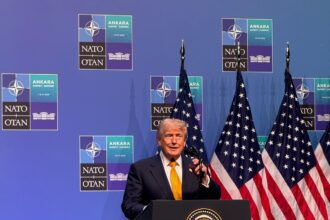
The fifth Antalya Diplomacy Forum convened from 17 to 19 April at the same NEST Congress Centre that will host the IAC in October. The 2026 NATO Summit was held in Ankara on 7 and 8 July.
Three formats and three constituencies — diplomatic, security and technological — within a single year reflect a convening capacity built through sustained institutional investment.
Atlas News Romania covered the Ankara Summit as accredited press, and that experience is relevant ahead of October: accreditation, media logistics and the working conditions provided to visiting journalists were handled with notable precision and attention to detail.
The national space and aerospace ecosystem has mobilised accordingly.
TUA, which coordinates Türkiye’s National Space Program and represents the country internationally on space matters, is the host of the Congress.
SAHA Istanbul, the co-host, brings together more than 1,300 member companies and 30 universities spanning much of Türkiye’s aerospace and defence industrial ecosystem and represents the country within the European Aerospace Cluster Partnership.
For a country whose space programme has moved within a decade from ambition towards operational capability, IAC 2026 serves both as an international showcase and as a further stage in the development of its position within the global space sector.
Antalya, meanwhile, offers the infrastructure and international accessibility required by an event of this scale, with the Federation encouraging participants to arrange registration and accommodation well ahead of the Congress.
What to expect by 9 October
The technical programme comprises 4,077 accepted presentations across 204 sessions.
New missions and results will be presented, partnerships announced, agreements developed and collaborations initiated. Much of the immediate coverage will inevitably come from the technical programme.
The questions with the longer horizon, however, will be advanced elsewhere as well: in ministerial formats, in the Global Space Leaders Summit and in the sessions where lunar coordination, space sustainability, operations and space traffic management are discussed.
IAC 2026 will not settle the institutional questions surrounding the next phase of space activity. It can, however, show where governments, agencies, industry and the scientific community are beginning to converge — and where significant differences remain.
That makes Antalya more than a showcase of missions and technology. It is also an opportunity to observe how a larger, more geographically diverse and increasingly strategic global space community is preparing for the decade ahead.
Read also