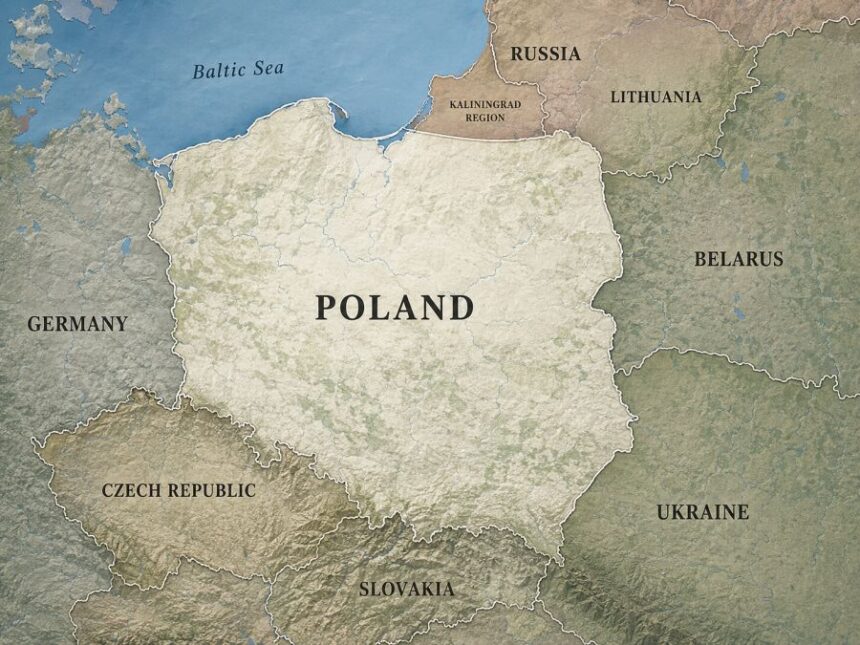
Poland is not preparing solely for the possibility of war with Russia. Taken together, its accelerated rearmament, closer alignment with the United States, efforts to make the American military presence permanent, and the attention with which Warsaw is watching the transformation of Germany and Ukraine suggest a broader objective: Poland is seeking to ensure that, whatever Europe looks like after the war in Ukraine, it can no longer be caught between centres of power larger than itself.
Russia explains the urgency. But Russia alone does not explain the scale of Poland’s response.
A defence budget that changes the proportions
Poland’s 2026 budget allocates approximately 200 billion zlotys to defence, equivalent to 4.8% of GDP — a record level and the highest share in NATO, according to the Polish Ministry of Finance. The armed forces are undergoing a massive modernisation programme, while Warsaw is simultaneously acquiring American and South Korean systems and developing its own defence industry.
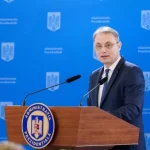
At the same time, President Karol Nawrocki has cultivated one of the closest personal relationships with Donald Trump among European leaders. On 21 May 2026, Trump announced the deployment of an additional 5,000 US troops to Poland, a decision that Reuters linked, among other factors, to the close relationship between the two leaders and Trump’s earlier support for Nawrocki.

But Warsaw did not stop at increasing troop numbers.
In June, the Polish government formally authorised steps towards establishing a permanent US military base in Poland. The document published by the Government of Poland opened the political and administrative process for negotiating such a presence, while Defence Minister Władysław Kosiniak-Kamysz subsequently announced that Washington had responded positively to the proposal. Discussions over location, infrastructure and financing are set to continue, while the final configuration will also depend on the review of the US military posture in Europe.
This sequence of decisions can be read simply as a response to Russia. But it can also be read at a deeper level.
Two insurance policies
Poland appears to be constructing two security insurance policies simultaneously.
The first is America as close as possible.
The second is Poland strong enough not to depend completely even on America.
The two are not contradictory. On the contrary, Washington’s behaviour in recent months helps explain why Warsaw has reason to pursue both in parallel. In May, the Pentagon caused concern in Warsaw following reports that a rotation involving approximately 4,000 troops could be cancelled or postponed, before Trump intervened and announced the deployment of an additional 5,000, as Reuters reported.
The US military presence in Poland currently numbers several thousand personnel, with the figure varying according to rotations and deployments. Bartosz Grodecki, head of Poland’s National Security Bureau, said in remarks published by the Polish National Security Bureau – BBN that Washington regards Poland as a central ally on NATO’s eastern flank and that the reinforcement promised by Trump would significantly increase that presence. The timetable and exact composition of the additional forces, however, remain under planning.
Poland has therefore secured something politically significant: a US presidential commitment to reinforce the American presence and Washington’s openness to making part of that presence permanent.
Yet the very volatility between the Pentagon’s initial decision and Trump’s intervention also reveals the limits of an external guarantee. Presidents change. Administrations alter their priorities. Strategic theatres shift. The Polish military remains.
The Polish lesson: it is not enough for neighbours not to be adversaries
This is where history matters — but not in the simplistic sense that Poland should view contemporary Germany through the lens of 1939.
The lesson is more subtle.
Polish strategic memory is shaped by the experience of a state geographically situated between larger centres of power and repeatedly forced to calculate its security according to decisions made in other capitals. In August 1939, the German-Soviet pact divided Eastern Europe into spheres of influence, and in September Poland was attacked from the west by Germany and then from the east by the Soviet Union. This does not mean that history is repeating itself. It does, however, produce a strategic culture.
For Warsaw, the issue is not whether its neighbours are friends or adversaries today. The issue is whether Poland possesses sufficient power of its own, and sufficient external alliances, never to depend exclusively on their intentions.
This perspective explains Poland’s current behaviour more convincingly than the simple narrative of a country rearming solely because it fears Russia.
Germany: an ally today, a greater power tomorrow
Germany and Poland are cooperating militarily more deeply than in the past. On 17 June 2026, they signed a new bilateral agreement expanding cooperation in capability development, the defence industry, exercises, military mobility, Baltic security, cyber defence and responses to hybrid threats, according to the Polish Ministry of National Defence. Symbolically, the agreement was signed 35 years after the 1991 Polish-German Treaty of Good Neighbourship.
This is an important fact precisely because it prevents a simplistic interpretation: there is currently no strategic German-Polish confrontation.
But cooperation does not suspend the balance of power.
In 2026, Germany is increasing its direct federal defence budget to €82.7 billion, supplemented by €25.5 billion from the special fund for the Bundeswehr. Berlin aims to reach defence spending equivalent to 3.5% of GDP by 2029, according to figures published by the German Federal Government.
There is no need to assume hostile German intent in order to observe the structural effect.
Europe’s largest economy is beginning to narrow the gap between its economic power and its military and industrial capabilities.
From Warsaw’s perspective, it would be almost irrational not to monitor this evolution closely.
A stronger Germany can be extremely useful against Russia.
But a stronger Germany is still a stronger Germany.
Ukraine: the wall against Russia and the question of the day after
To the east, the paradox is even more compelling.
Poland needs Ukraine. As long as the Ukrainian military absorbs Russian military capacity and holds the front hundreds of kilometres away from Polish territory, Kyiv performs a direct function in Warsaw’s security.
But a Ukraine that survives the war could emerge from it with an entirely different strategic capital from that of February 2022: extensive operational experience, doctrine adapted to modern warfare, a drone industry, electronic-warfare expertise, long-range strike capabilities and a military-industrial ecosystem increasingly integrated with the West.
The constraints, however, are equally real. The World Bank estimates that nearly $588 billion will be required for Ukraine’s reconstruction and recovery over the next decade, almost three times the country’s estimated nominal GDP for 2025, according to an assessment conducted jointly with the Ukrainian authorities, the European Commission and the United Nations.
We therefore cannot assert that Ukraine will become an autonomous regional power economically comparable to Poland or Germany.
But neither can we ignore the possibility that it may become a military and technological actor whose weight is disproportionate to the size of its economy.
For Warsaw, this evolution has two sides.
A strong Ukraine is the best barrier against Russia. A very strong Ukraine could, at the same time, become a competitor for the status of the principal political-military pole in Eastern Europe.
Not a threat. A competitor for status. The distinction is essential.
Volhynia is not merely a footnote
Recent tensions between Warsaw and Kyiv demonstrate that the bilateral relationship cannot be reduced to the formula of “allies against Russia”.
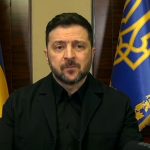
In May 2026, Volodymyr Zelenskyy named a unit of Ukraine’s Special Operations Forces after the UPA — the Ukrainian Insurgent Army, an organisation associated in Polish historical memory with the massacres in Volhynia and Eastern Galicia during the 1940s. Karol Nawrocki subsequently stripped Zelenskyy of the Order of the White Eagle, Poland’s highest distinction, in an episode widely reported by Reuters.
In parallel, exhumations of Polish victims continued in 2026 with the consent of the Ukrainian authorities, including operations documented by Poland’s Institute of National Remembrance.
It would be an exaggeration to claim that Warsaw is deliberately using Volhynia to constrain Ukraine’s rise. There is no evidence for such a conclusion. But there is a more interesting hypothesis.
Historical disputes, agriculture, access to the European market, reconstruction and Ukraine’s future position within Western structures may become arenas in which the new regional hierarchy is implicitly negotiated.
After 2022, Poland became Ukraine’s gateway to the West, its political advocate and its principal logistical corridor.
A post-war Ukraine, however, will not want to remain permanently in an implicitly subordinate position to Warsaw.
The relationship between the two states may therefore evolve from the existential solidarity produced by the war into a far more complex combination of cooperation and competition.
Berlin–Kyiv: the hypothesis Poland cannot afford not to watch
This is where perhaps the most sensitive component of the equation emerges.
In April 2026, Germany and Ukraine formally established a strategic partnership, relaunched intergovernmental consultations after 22 years and created regular 2+2 consultations between their foreign and defence ministries. The declaration published by the Office of the President of Ukraine also provides for a joint group dedicated to the defence industry.
Bilateral documents signed during the same period also include cooperation on the use of data obtained directly under combat conditions to adapt weapons systems and develop industrial capabilities, according to the Office of the President of Ukraine.
These elements do not demonstrate the existence of a “Berlin–Kyiv axis”. Nor should they be presented as such. But they do create the foundations for a potentially very powerful complementarity.
Germany possesses capital, industry, technology, market access, institutional influence and the capacity to finance reconstruction.
Ukraine possesses military experience, real battlefield data, technologies developed under the pressure of war and a defence industry that can be integrated into Western supply chains.
The question for Poland is not whether Berlin and Kyiv intend to build something against it.
The question is considerably colder:
What happens to Warsaw’s position if Europe’s largest economy and the state with the continent’s greatest recent experience of conventional warfare develop a privileged strategic and industrial relationship?
There need not be hostility for the effect to matter.
If Berlin becomes the financial centre of reconstruction, Ukraine provides the military-technological ecosystem, and the principal strategic decisions are taken between Berlin, Washington, Paris, London and Kyiv, Poland could discover a paradox:
being geographically at the centre of the system without automatically being its political centre.
Why Poland does not want to be merely a corridor
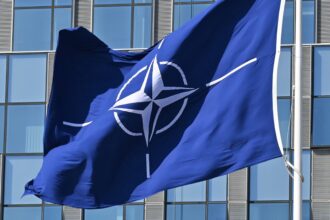
Rzeszów, Poland’s roads and railways, its Baltic ports and its military infrastructure have transformed the country into a hub without which the current architecture of NATO’s eastern flank would function far less effectively.
But there is a fundamental difference between a pivot and a corridor.
A pivot participates in the distribution of power. A corridor transports the power of others.
This may be one of the deeper explanations for Poland’s military ambition. Warsaw does not want to be merely the territory through which American tanks move eastward, German goods travel towards Ukraine, or European reconstruction flows towards Kyiv. It wants sufficient military, industrial and political weight for any future regional architecture to require its consent.
Some of Nawrocki’s initiatives suggest precisely this concern with strategic autonomy. In March, the president promoted his own “Polish SAFE 0%” concept, arguing that defence financing should provide the armed forces with the flexibility to purchase equipment both from within the EU and from other regions, without depending exclusively on developments inside the Union, according to the President of Poland.
This is not isolationism. It is the diversification of dependencies.
The strategic squeeze
This brings us back to the concept from which this analysis began.
Poland is not being “squeezed” between Germany and Ukraine in a military sense. Berlin and Kyiv are not forming a coalition against Warsaw. Germany and Poland have just deepened their military cooperation, while Poland continues to regard Ukraine’s survival as fundamental to its own security.
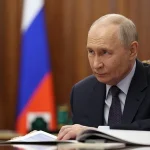
The squeeze concerns relative power. To the east, Russia remains the strategic adversary. To the west, Germany is rebuilding its hard power. Facing Russia, Ukraine could emerge from the war with a density of military and technological capability unprecedented in its modern history.
Across the Atlantic, the United States remains Poland’s most important external security guarantee, but also an actor whose global priorities can change.
Poland stands at the centre of this configuration.
And its response appears to be: to grow sufficiently strong that the transformation of everyone else’s power does not reduce its own freedom of action.
America close. But not enough
Against this backdrop, the Nawrocki–Trump relationship acquires significance beyond the political affinity between two leaders.
The presence of thousands of US troops in Poland represents more than combat power. It means that, in a major crisis, Poland’s security immediately and directly becomes an American issue.
A permanent base would deepen precisely this logic. Warsaw is, in effect, attempting to embed the United States physically into its long-term geopolitical equation. The Government of Poland explicitly describes such a permanent presence as an instrument for the lasting reinforcement of security and deterrence on NATO’s eastern flank.
Yet Poland is simultaneously investing almost 5% of GDP in its own defence.
This is the detail that completes the picture.
If Warsaw were absolutely confident that the American guarantee alone was sufficient, such an accumulation of national power would be more difficult to explain.
If it believed that its security could be built exclusively within a continental European architecture, its insistence on making the US military presence permanent would be equally difficult to explain.
Poland is doing both.
America as close as possible. Poland as strong as possible.
The lesson is not that Germany will once again become an adversary or Ukraine an enemy
That would be an easy conclusion — and one unsupported by the facts. The lesson is different. For a state with Poland’s geography and strategic memory, the good intentions of its neighbours cannot constitute a security policy.
Nor can common NATO membership. Nor European integration. Nor friendship with Washington.
All are security multipliers. None, however, can completely substitute for national capability.
This is precisely why Poland’s extraordinary rearmament can be understood through a broader lens than the Russian threat alone.
It is also an insurance policy for the Europe that will emerge after the war in Ukraine.
A Europe in which Germany will probably possess considerably greater military capability than it did in 2022.
A Europe in which Ukraine, if it survives and preserves part of the military capital accumulated during the war, could become a new centre of influence in the east.
A Europe in which Washington may increasingly expect Europeans to carry the burden of their own security.
And Poland does not appear willing to wait until then to discover what place it will occupy.
Never again caught in the middle
Perhaps this is the key to Poland’s entire strategy. Not to choose between America and Europe. Not to contain Germany. Not to weaken Ukraine. Nor to turn every neighbour into a threat.
Rather, it is to build a combination of national power, an American presence, infrastructure, industry, regional relationships and procurement freedom substantial enough that no future European configuration can be determined over Warsaw’s head.
Poland appears to have understood something its history makes difficult to ignore: a state located between major centres of power cannot afford the luxury of assuming that the current distribution of power will remain permanently favourable.
Today, Germany is an ally. Ukraine is a strategic partner against Russia. The United States is the principal external guarantor of Polish security.
Warsaw is seeking to strengthen all of these relationships.
At the same time, however, it is building the instruments it would need if the balance among them were to change.
This may be the most compelling explanation for what we are witnessing in Poland today.
Russia is the immediate reason Poland is rearming. History and geography may explain why it does not intend to stop once the immediate threat diminishes.
And the rapprochement with Washington completes this strategy with a second insurance policy: ensuring that there is enough American power on Polish territory that Poland can never again be treated merely as the space between the power of others.
For Warsaw, the lesson does not appear to be that it must permanently fear its neighbours.
It is much simpler:
better to insure yourself in advance than to discover, once again, that you have been left in the middle.
Read also