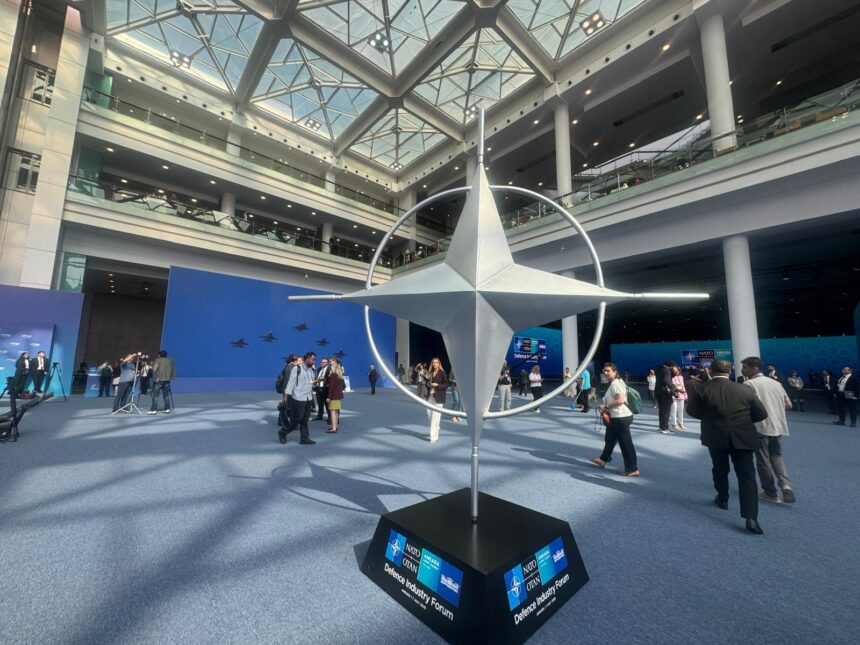
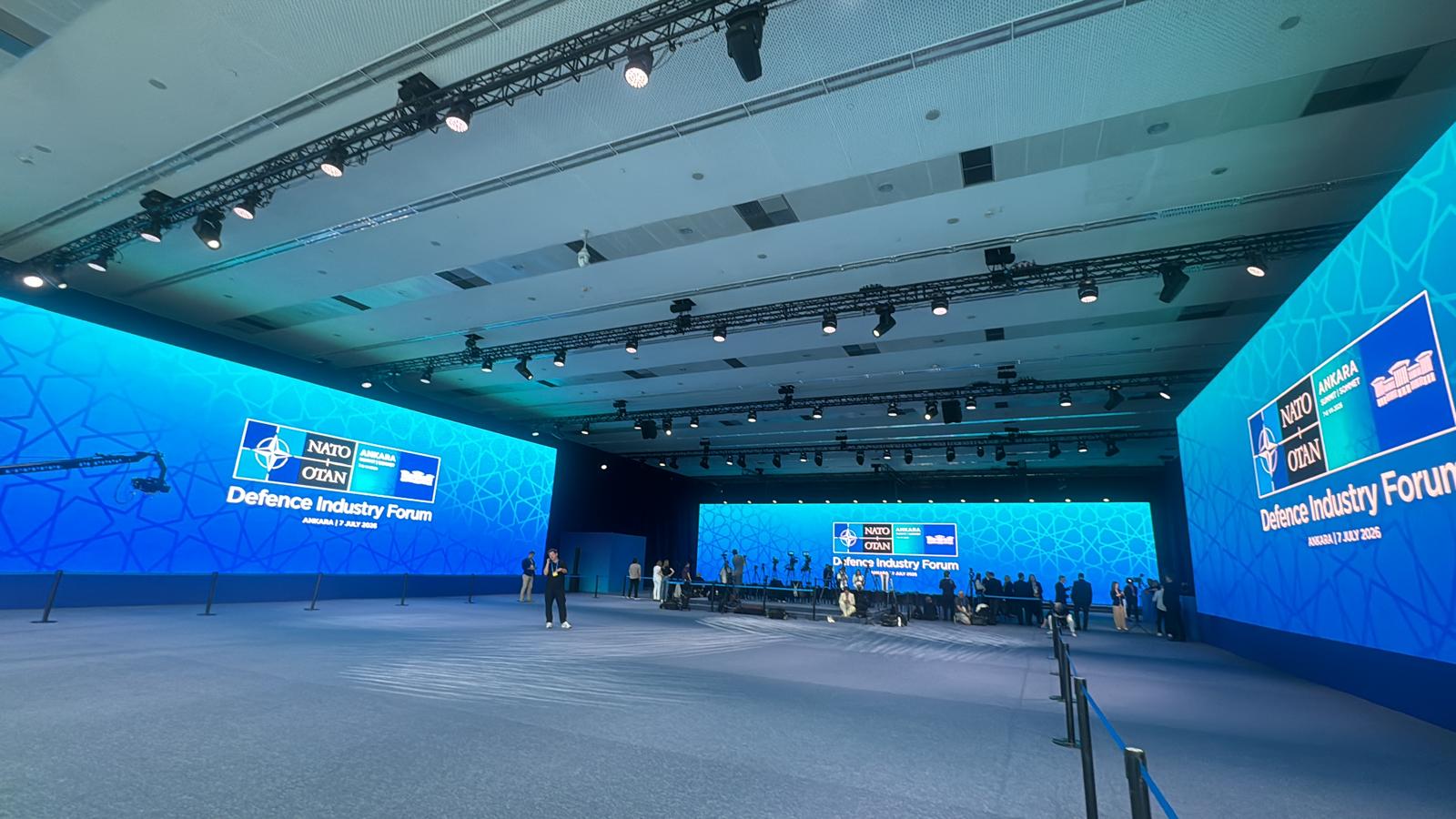
The first day of the NATO Summit in Ankara did not, in reality, begin with Allied leaders gathered around a table, nor with negotiations over the final declaration. It began at ATO Congresium, where governments, NATO structures and the major defence industry companies sought to transform the political commitments undertaken in recent years into orders, production capacity and concrete military systems.
The NATO Summit Defence Industry Forum – NSDIF26 – was neither an arms exhibition nor an economic conference organised on the margins of the Summit. It was one of its central components, designed to answer a question decisive for the credibility of the Alliance: can NATO produce, quickly enough, the weapons, ammunition, sensors, drones and interceptors required for a protracted conflict?
The Forum was allocated six restricted sessions, held behind closed doors, followed by public plenaries, speeches and signing ceremonies. For the first time within the NSDIF framework, national agreements, multinational projects and industry initiatives were announced directly at the venue of the forum, in domains such as air and maritime surveillance, space, air and missile defence, long-range strike and autonomous systems, according to the official programme published by NATO (https://www.nato.int/en/news-and-events/events/event-programmes/2026/07/2026-ankara-nsdif).
The Atlas News Romania team was present in Ankara for the duration of the entire event and captured its most significant moments. Beyond the official programme, the stages reserved for ceremonies and the publicly broadcast speeches, the forum revealed a far deeper transformation: the defence industry is no longer treated by NATO as a mere supplier, but as a component of collective military power.

The Forum That Shifted the Summit from Percentages to Production
In recent years, the debate within NATO has focused almost obsessively on the percentages of GDP allocated to defence. In Ankara, the discussion moved from budgetary accounting to industrial reality.
Increased budgets do not automatically produce deterrence. Money must be converted into stockpiles, production lines, multi-year contracts, maintenance capacity, logistical infrastructure and systems that can be rapidly integrated into the military structures of the Alliance.
The message addressed to industry was direct: the funds are available, demand will continue to grow, but NATO needs faster production, more predictable contracts and a reduction of the fragmentation across its 32 national markets.
In Ankara, the Alliance implicitly acknowledged that it can no longer measure military power solely by the number of brigades, aircraft or vessels available on the first day of a conflict. The calculation now includes the capacity of factories to replace losses, access to raw materials, the availability of a specialised workforce, the speed of repairs and the resilience of supply chains.
Industry thus becomes a military variable.

The Signing Ceremony Did Not Represent a Single Contract
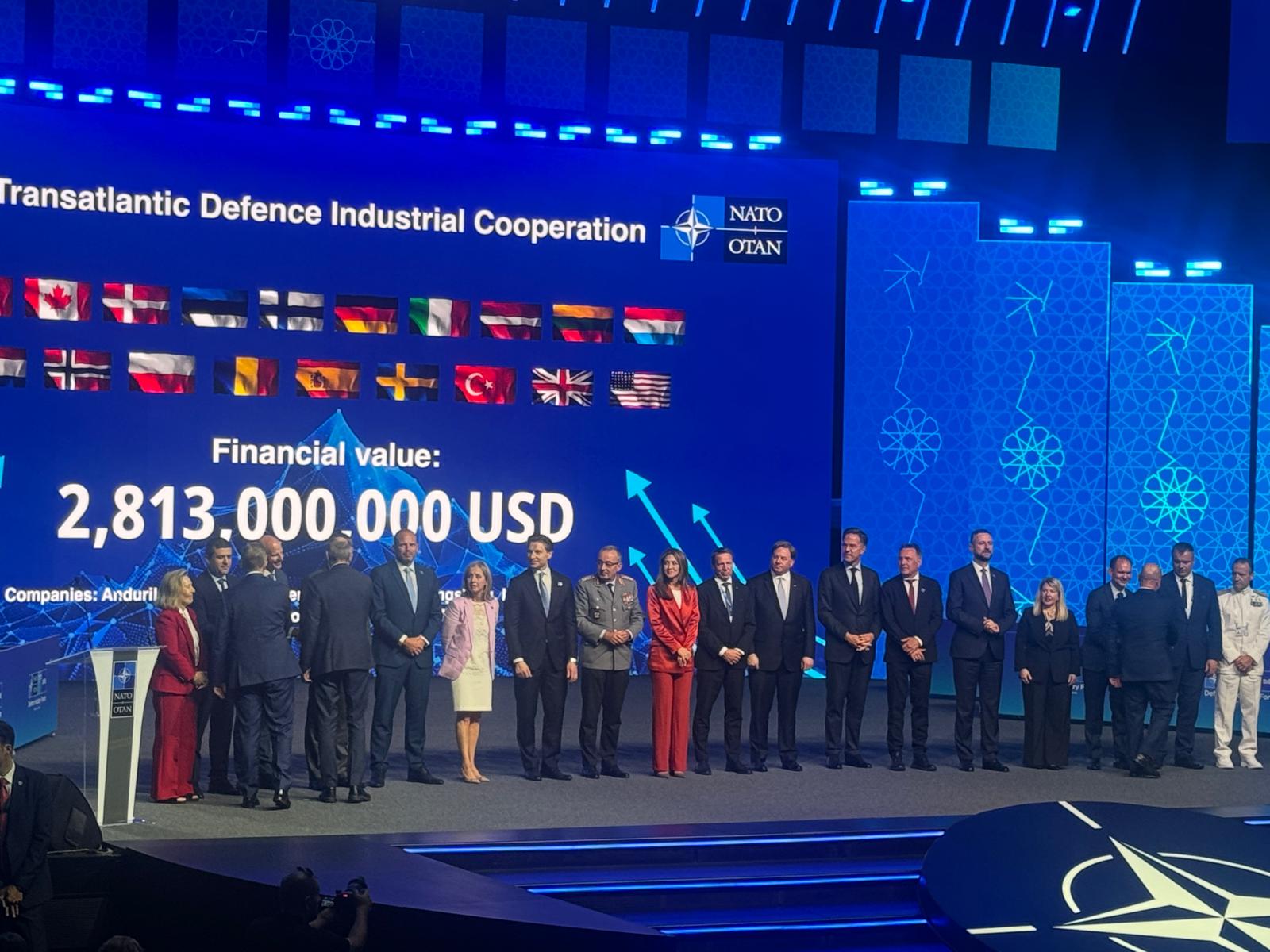
The central image of the forum was the collective ceremony at which representatives of Allied states, NATO agencies and major companies presented an extensive portfolio of procurements, joint projects and industrial agreements, officially presented by NATO as a package of new procurements worth tens of billions of dollars.
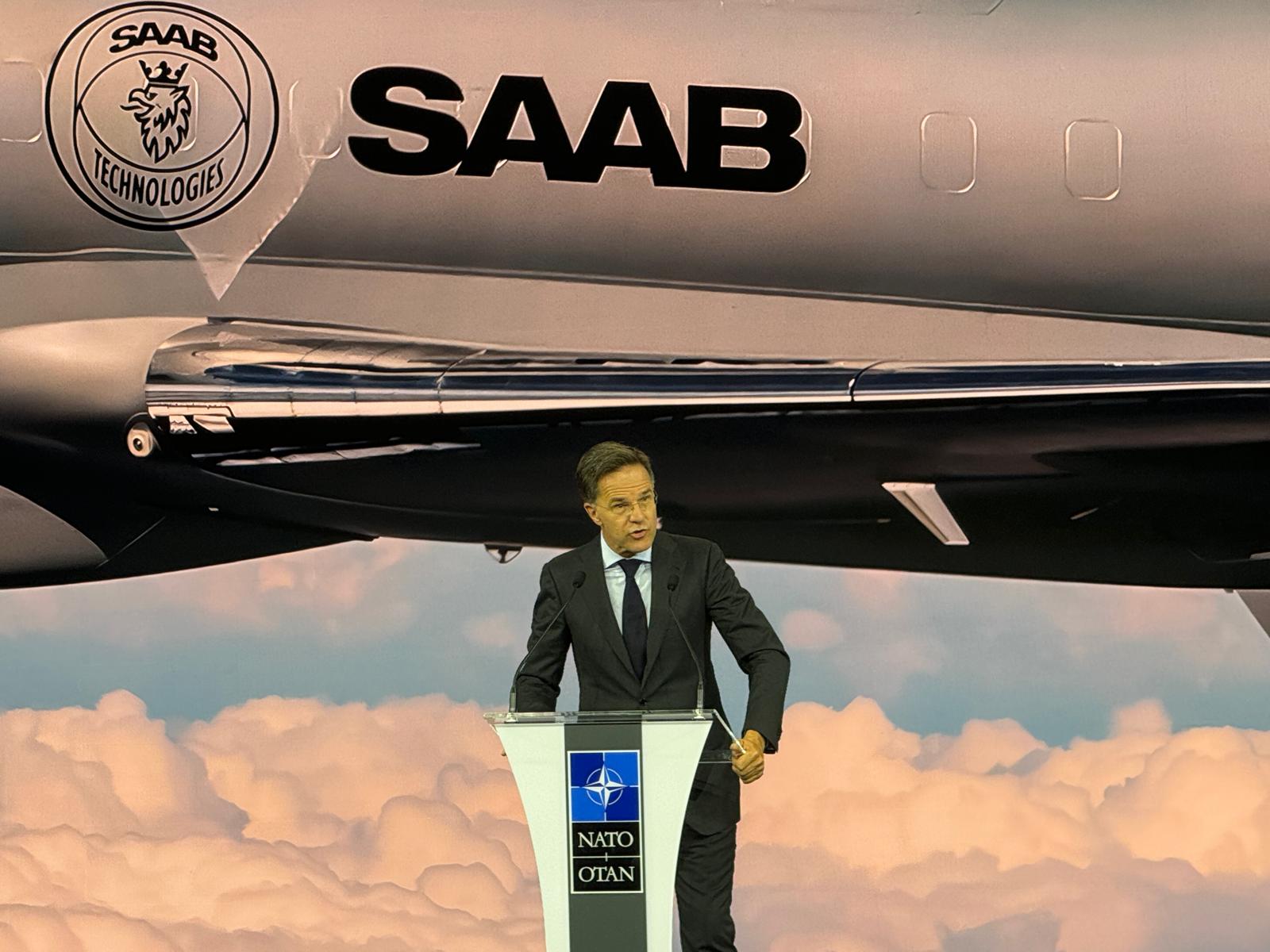
On stage stood companies such as Airbus, Saab, Northrop Grumman, Lockheed Martin, Boeing, Raytheon, Rheinmetall, Kongsberg, ASELSAN, Roketsan, STM, TÜBİTAK, Palantir, Anduril and Shield AI, alongside representatives of the institutions responsible for NATO’s procurement and technological infrastructure.
From a legal and commercial standpoint, however, there was no single „NATO contract” worth tens of billions of dollars. The announcements brought together different categories of commitments: firm contracts, political procurement decisions, letters of intent, memoranda on future co-production, multinational programmes and investments planned for the coming years.
The distinction is essential. A political selection does not automatically mean a firm order, and a memorandum of understanding does not guarantee the inauguration of a production line.
What was constructed in Ankara was, rather, an industrial portfolio of the Alliance. Some projects are already under contract, others have entered the phase of commercial negotiations, while a further part establishes the framework within which states will purchase, produce and operate together.
NATO Begins to Organise the Common Defence Market
The most important transformation announced in Ankara was not represented by a particular type of missile or aircraft, but by the new role NATO is seeking to play between governments and industry.
Through the NATO Front Door for Industry, companies will receive a single point of access to the Alliance’s procurement opportunities, innovation programmes, testing activities and events. NATO also announced the publication of a first aggregated, unclassified signal of military demand, intended to give industry a clearer picture of the capabilities that will be required, according to NATO’s official announcement.
For companies, the predictability of demand is essential. A factory cannot invest in a new production line on the basis of speeches about security alone. It needs estimated volumes, technical standards, long-term contracts and a sufficiently high probability that the products it develops will find buyers.
A second mechanism, NATO Engine, aims to connect firms in need of additional capacity with military or civilian factories that have equipment, space, technology or personnel available.
In strategic terms, NATO is beginning to function as the organiser of a transatlantic industrial market. The Alliance aggregates demand, harmonises standards, facilitates testing and seeks to channel production capacity towards the most urgent military needs.
This is a major shift. For decades, procurement was predominantly national, with differing specifications, timelines and procedures. In Ankara, the signal was that this fragmentation can no longer be sustained in an environment in which ammunition, interceptors and unmanned systems must be produced in very large volumes.
NATO and the European Union Divide Their Roles
The discussion between NATO Secretary General Mark Rutte and European Commission President Ursula von der Leyen offered the outline of a new institutional division of labour.
NATO remains responsible for military planning, operational requirements, command and control, standardisation and interoperability. The European Union can provide a significant share of the financial, industrial and legislative instruments: credit facilities, infrastructure, military mobility, production incentives and more flexible investment procedures.
This separation resolves, at least conceptually, one of the great ambiguities of European defence. NATO determines what must be built and how the systems must function together. The European Union can create the financial and industrial conditions for their realisation.
At the same time, the formula of a European autonomy constructed through the exclusion of American industry or of Allies outside the Union is losing ground. The model taking shape is that of a greater European responsibility within the transatlantic bond.
For Türkiye, this evolution is essential. Turkish industry can become a link between NATO’s military demand, European financing and the need to rapidly expand the production of ammunition, drones, armoured vehicles, sensors and air defence systems.
The Major Air Programmes: Triton, GlobalEye and the Airbus Fleets
The first series of announcements concerned the systems that enable NATO to observe, transport and coordinate forces over very long distances.
Denmark, Finland, Germany and Norway announced the acquisition of MQ-4C Triton unmanned aircraft, produced by Northrop Grumman, intended primarily for maritime surveillance and the monitoring of Arctic zones.
The industrial model is telling: the principal platform is American, but the command, data and support ecosystem will also involve European industry. This is not European autonomy vis-à-vis the United States, but rather the distribution of production and responsibilities between the two shores of the Atlantic.
Eleven Allies, including Romania, joined the GlobalEye programme for NATO’s future airborne early warning and control capability. The system is intended to gradually replace the current Boeing E-3A fleet and to integrate air, land and maritime surveillance into a common architecture, according to the Ministry of National Defence.
An important distinction must nevertheless be drawn. The selection of GlobalEye is not yet fully equivalent to the signing of a definitive commercial order. Ankara consecrated the political decision and the opening of negotiations for the future fleet.
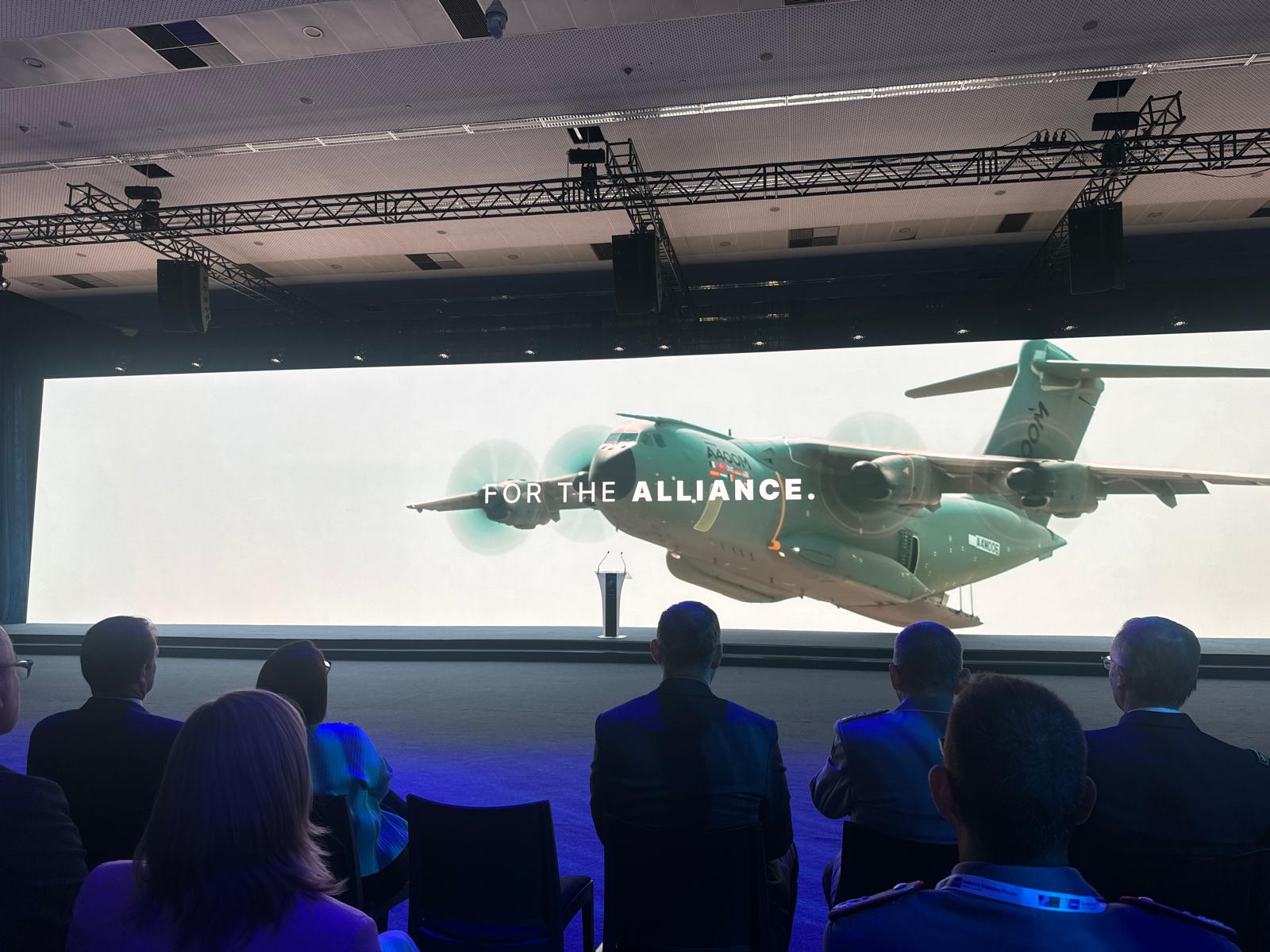
In parallel, seven Allies launched a multinational project for a common fleet of Airbus A400M aircraft, while Finland joined the multinational A330 MRTT fleet. The principle is one of shared use: states share the aircraft, the costs, the logistics and the training of personnel.
The common signal is the emergence of capabilities that no longer belong exclusively to a single state. They are built and operated in multinational formats, reducing costs and giving NATO access to systems too expensive for many individual Allies.

Air Defence and Missiles: American Co-Production Moves to Europe
Another important signal came from the field of transatlantic co-production.
Lockheed Martin and Rheinmetall advanced the project for the production of ATACMS tactical missiles in Germany. In parallel, European facilities were discussed for the maintenance and, in due course, the production of PAC-3 interceptors used by Patriot systems.
A similar model is under consideration for AIM-120 AMRAAM air-to-air missiles.
These projects reveal the limits of the simplified formula according to which Europe must choose between „buying American” and „producing European”. In Ankara, a third option took shape: American technology, European capital and industrial capacity, production located closer to the users, and contracts structured for the market of the entire Alliance.
For the United States, the advantage lies in freeing up part of the capacity of American factories. For Europe, the benefit consists of shorter delivery times, local maintenance, the transfer of expertise and more secure access to critical systems.

NATO Drone Edge: A New Military Market Worth Over 40 Billion Dollars
The largest sectoral financial promise of the forum concerned counter-drone systems.
The Allies announced investments of over 40 billion dollars over the next five years and the objective of training five times as many drone operators by the end of 2027. NATO will create a dedicated marketplace for counter-drone systems, in which equipment will be tested, validated as compatible with Alliance standards and presented to states for rapid acquisition, according to NATO’s announcement on the Drone Edge initiative ().
This mechanism may have an impact greater than the sum announced.
The NATO marketplace will function as a technical and commercial filter. Companies whose systems pass testing and certification will gain access to the aggregated demand of multiple states, while armed forces will be able to purchase products already validated, without repeating national procedures in full.
It is an attempt to shorten the interval between the emergence of a technology on the battlefield and its entry into the inventories of armed forces. In the war in Ukraine, this interval has at times been reduced to a few months or even weeks. Classic military procurement procedures, which can take years, are no longer compatible with the speed of innovation.
Long-Range Missiles and Ammunition Produced at Scale
Denmark, France, Italy, Norway, Türkiye and the United Kingdom launched a project dedicated to the development and large-scale production of long-range land strike systems.
Another project pursues the development of a common NATO 155 mm artillery munition, complemented by new contracts and multinational procurement mechanisms.
The emphasis placed on more financially accessible systems is revealing. NATO is no longer pursuing only the development of highly sophisticated weapons produced in small numbers, but also the creation of systems sufficiently capable to be manufactured in large volumes.
A war of attrition consumes ammunition faster than it can be replaced. In such a context, unit cost, simplicity of production and the number of systems available can become as important as the maximum performance of each individual weapon.
Space and Raw Materials Enter Military Planning
A significant part of the forum was devoted to the less visible infrastructure of military power.
Several Allies launched HALO – Hybrid Alliance Layered Operations in Space –, a project designed to interconnect national military satellites into a common constellation. The network is intended to provide communications, intelligence and tracking capabilities, reducing dependence on the space infrastructure of any single state.
At the same time, a joint project was launched on the critical raw materials required for military production. The initiative covers the acquisition, stockpiling, transport and management of the materials and components indispensable to the defence industry.
Space and raw materials show that NATO views preparation for conflict beyond visible military platforms. Without access to semiconductors, special metals, fuels, electronic components and space services, missile factories and modern command systems can rapidly become inoperable.
Romania Has Entered Several Procurement Architectures
For Romania, the most important announcement was its participation in the GlobalEye programme, alongside Belgium, Canada, Denmark, Germany, Latvia, Lithuania, Luxembourg, the Netherlands, Norway and Sweden.
The Ministry of National Defence signed the memoranda concerning two multinational air defence projects: countering threats operating at low altitudes and developing passive air surveillance capabilities.
Romania also signed the updated memorandum for NATO Flight Training Europe, expanded to include the training of drone operators, and joined the coalition for the Naval Strike Missile and Joint Strike Missile, alongside the United States, the United Kingdom and Norway, according to the Ministry of National Defence’s communiqué on the delegation’s participation in the NSDIF.
Romania did not leave the forum with a single spectacular national contract. It did, however, enter several mechanisms through which the Alliance’s future standards, procurement volumes and common systems will be determined.
This positioning may prove more important in the long term than an isolated acquisition. Early participation provides access to information, to the shaping of technical requirements and to joint procurement formats.
The question that remains open is whether Romania will succeed in converting institutional participation into contracts for its national industry as well.
Türkiye Did Not Merely Host the Forum. It Presented Its New Industrial Position
The choice of Ankara for this edition carried more than geographical or diplomatic significance.
Türkiye possesses one of the most dynamic defence ecosystems within NATO, with thousands of companies and a steadily growing capacity to design, produce and export complete systems.
ASELSAN, Roketsan, STM, TUSAŞ, Baykar, MKE and TÜBİTAK were present in projects concerning space, air defence, missiles, ammunition, armoured vehicles and autonomous systems.
Ankara’s message was that Türkiye no longer wishes to be assessed solely by the size of its armed forces, its control of the Straits or its position between the Black Sea, the Caucasus and the Middle East. It claims the role of an industrial supplier to the Alliance.
For Türkiye, inclusion in NATO supply chains and in projects financed by European states can yield major economic and political benefits. It means orders, investment and a form of strategic integration far more difficult to reverse than mere diplomatic cooperation.
In the discussions and interactions within the forum, we also observed an element that goes beyond official language. The moment our Turkish interlocutors learned that we came from Romania, their approach became visibly warmer.
Romania enjoys genuine esteem in Ankara, built not only on shared membership of NATO, but also on the bilateral relationship and on the perception of a strategic compatibility in the Black Sea region.
Industrial Competition Is Also Moving into the Reputational Space
The Defence Industry Forum demonstrated that the coming competition among defence companies will not unfold solely in laboratories, factories or procurement procedures.
A company may possess a high-performing product and, at the same time, remain insufficiently understood by decision-makers, the diplomatic community, analysts and the specialised public. In the defence industry, reputation does not replace technical performance, but it influences access, trust and a company’s capacity to enter new industrial ecosystems.
Technology must be explained in relation to doctrine, regional threats, NATO interoperability, operational requirements and the economic interests of the purchasing state. A product datasheet does not perform this translation. The companies that positioned themselves most clearly in Ankara were those that presented their technology as an answer to a strategic problem recognised by decision-makers.
This translation, however, requires an infrastructure that cannot be improvised: direct presence where decisions are made, an understanding of the Alliance’s institutional language, access to the diplomatic community and the ability to explain, simultaneously to a local and an international audience, why a technology matters.
This infrastructure remains insufficiently developed on the eastern flank and in the wider Black Sea region. Defence markets in the region are growing rapidly, states are entering joint procurement architectures, and Western and Turkish companies are seeking points of entry. Yet the number of platforms capable of connecting technology, doctrine and decision — in the language of decision and in the language of the market — remains disproportionately small relative to the economic and strategic stakes of the region.
In Ankara, this gap was visible. In the rooms where the Alliance’s future standards and procurement volumes were being negotiated, the eastern flank was well represented institutionally, but almost absent as an analytical voice of its own. Whoever occupies this space will shape the way the region understands its own industrial options — and the way industry understands the region.
The Signal Ankara Sent to NATO’s Adversaries
The Defence Industry Forum conveyed three strategic messages.
The first was addressed to Russia: NATO is seeking to prepare its industrial base for a protracted conflict, in which stockpiles, repairs and the speed of production will matter as much as the forces deployed in the initial phase.
The second was addressed to the United States: the European Allies are prepared to invest more and to assume a greater share of the industrial burden, but not by severing the transatlantic bond. The preferred model is co-production, with American technology and European industrial capacity.
The third message was addressed to industry: the era of limited orders, short contracts and fully fragmented national requirements must come to an end. NATO promises greater predictability, aggregated demand and simplified access, but demands in return production capacity, speed and a willingness to invest before all contracts are guaranteed.
In Ankara, the Alliance began to move beyond the logic whereby each state purchases its own weapons separately. In its place, a common industrial infrastructure is taking shape, built on multinational fleets, distributed production, interconnected factories, common standards and aggregated procurement.
The test of implementation, of course, remains. NATO has a history of industrial initiatives announced with fanfare and only partially realised, and the distance between a memorandum signed in Ankara and a functioning production line is measured in years, national budgets and sustained political will. Should the announced portfolio remain predominantly on paper two years from now, the thesis of the Alliance’s industrial reorganisation will have to be revised.
The SSB Dinner at TUSAŞ: Defence Presented as an Instrument of Diplomacy
The unseen side of the NSDIF did not end with the final signing ceremony at ATO Congresium.
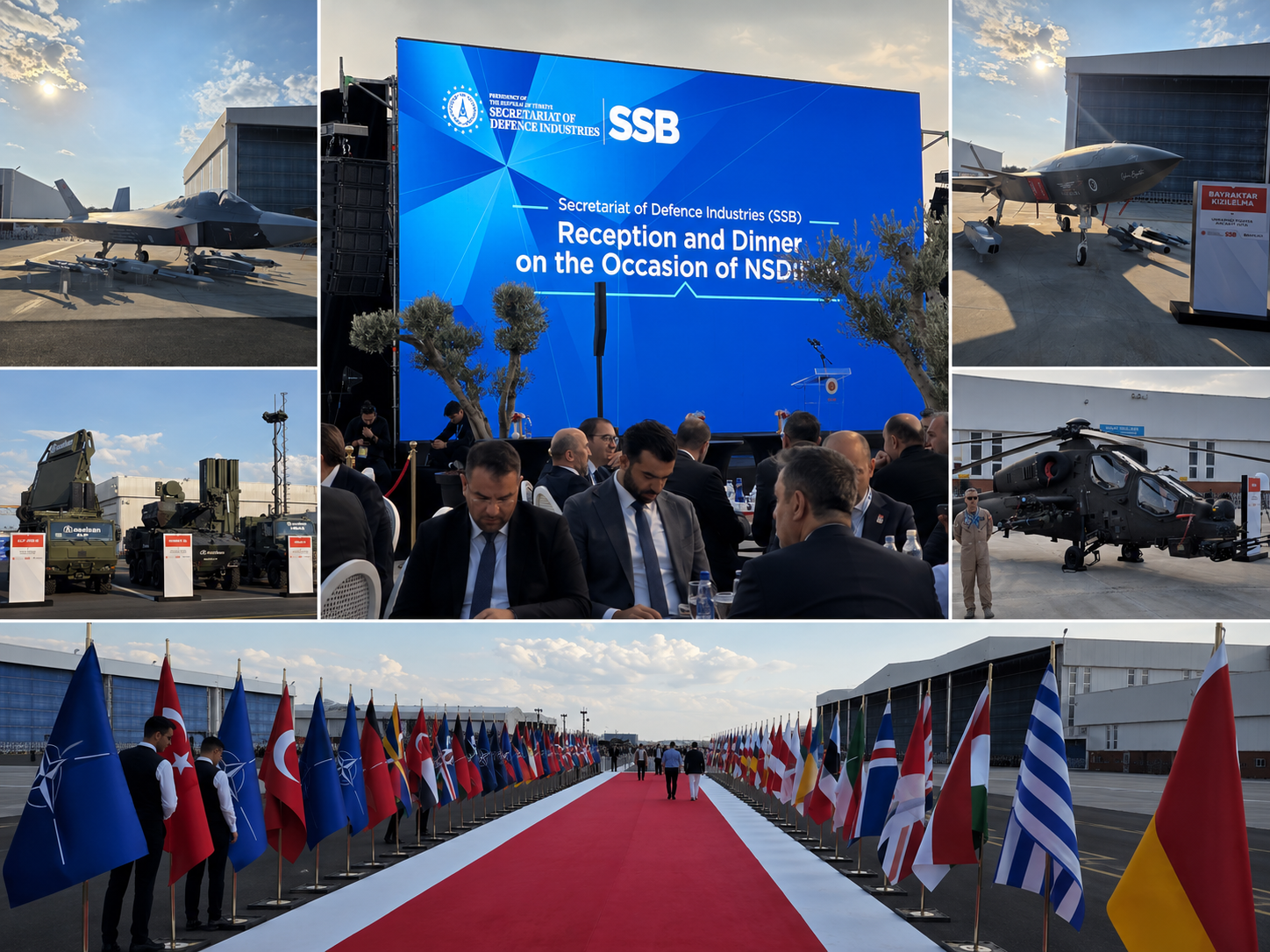
On the evening of 7 July, the Presidency of Defence Industries – SSB, the institution that coordinates Türkiye’s defence industry, hosted a reception and gala dinner at the Turkish Aerospace Industries – TUSAŞ facilities in Kahramankazan.
The event, hosted by SSB President Haluk Görgün, brought together officials, industry representatives, international delegations and journalists attending the Summit. The SSB confirmed that the reception included an exhibition of platforms produced by Turkish industry as well as flight demonstrations.
The choice of venue conveyed a calculated message. Türkiye did not invite its partners into a protocol salon, but into one of its most important centres of aerospace production and research.
Guests were able to view directly the land and air platforms and the defence systems developed by Turkish companies. The static exhibition featured, among others, the Altay main battle tank, the Arma 8×8 armoured vehicle, the Tolga air defence solution developed by MKE and missile systems produced by Roketsan, according to the account published by Daily Sabah.
The aerial demonstrations, however, provided the centrepiece of the evening.
HÜRJET, HÜRKUŞ, ANKA III, ANKA-S, GÖKBEY, the T129 ATAK, Bayraktar TB3 and AKINCI illustrated the accelerated evolution of the Turkish aerospace industry. AKINCI, for its part, performed a demonstration flight above the TUSAŞ facilities.
For the participants, it was not merely an impressive aerial display. It was a demonstration of industrial capacity carried out in the very space where these platforms are designed, tested and produced.
Türkiye did not present its military technology through catalogues or simulations. It opened the gates of a real industrial infrastructure and allowed its guests to observe, simultaneously, the products, the production capacity and the technological ecosystem that sustains them.
The gala dinner thus transformed the defence industry into an instrument of diplomacy.
By combining technology, hospitality, national symbols and direct access to production facilities, Ankara constructed a setting in which future industrial cooperation could be discussed in an environment more personal and less rigid than that of official negotiations.
For Atlas News Romania, participation in this event offered the perspective that final documents and institutional communiqués cannot fully convey: the manner in which Türkiye builds its influence not only through what it produces, but through the way it knows how to present its industrial power to its partners.
This was the less visible side of the first day of the NATO Summit.
Behind the photographs, the receptions and the ceremonies lay not only tens of billions of dollars in potential contracts, but the beginning of a reorganisation of the way the Alliance produces, finances and projects its military power.
If the commitments undertaken are implemented, Ankara will not remain merely the Summit at which NATO promised to spend more.
It will be the moment at which the Alliance began to transform the defence industry into a permanent infrastructure of collective deterrence.