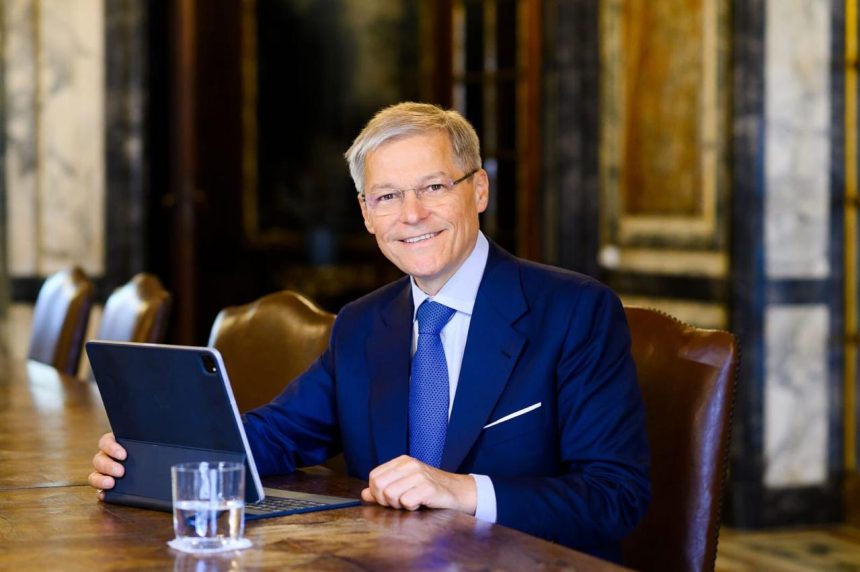
As the race for the leadership of the International Organization of La Francophonie (OIF) intensifies, Cairo has emerged as a critical strategic arena for shaping the organization’s future. In an exclusive interview with Atlas News, Dacian Cioloș—former Prime Minister of Romania, current Presidential Advisor, and official candidate for OIF Secretary-General—details his „modern, pragmatic, and inclusive” vision for the 2027–2030 mandate. Choosing Egypt as an essential early milestone in his campaign, Cioloș discusses how Cairo’s unique position as an Arab, African, and Mediterranean hub bridges regional dynamics, matching his own Central and Eastern European perspective.
Atlas News(AN) : You have officially pledged a „modern, pragmatic, and inclusive” vision for the OIF. Coming from Central and Eastern Europe, what unique geopolitical perspective do you bring to the leadership of an organization historically centered on different geographic dynamics, and what is fundamentally „new” about your agenda for the 2027–2030 mandate?
Dacian Cioloș : My ambition is that, by 2030, we will have started to benefit from what I call a Francophonie of opportunities. A Francophonie that, while keeping Africa at its heart, engages all its regions and delivers tangible results for all its citizens. A Francophonie that helps young people access quality education, find jobs, innovate, start businesses and build their future. A Francophonie that creates opportunities for women, strengthens economic cooperation, promotes cultural diversity and contributes to dialogue and stability in an increasingly fragmented world.
To achieve this ambition, we must build on the important progress already made by the OIF over the past years. The Organization has gained institutional maturity and developed valuable programmes and networks. My objective is to build on these achievements and take the Francophonie into a new stage of development.

My approach relies on two major priorities. Firstly, a new style of governance: more dialogue, more coordination, more accountability and greater participation of all actors of the Francophone ecosystem. States and governments remain at the heart of the Organization, but universities, local authorities, economic actors, civil society and Francophone operators must also be more closely connected and mobilized around common objectives.
Secondly, I aim for the financial consolidation of OIF. This means mobilizing new partners and development finance institutions, while improving the management of the existing resources.
As for what I bring to this role, I believe that Central and Eastern Europe provides a meaningful perspective for today’s Francophonie. Our region has often served as a bridge between different political, economic and cultural spaces. We have learned the value of dialogue, compromise and consensus-building. We know how to connect different experiences and perspectives in order to move forward together.
Romania also has a particular history with Africa and Egypt. We share a history of cooperation, education, development, and mutual respect, free from any colonial experience. This fosters a different kind of dialogue, based on partnership between equals. Throughout my exchanges across Africa, I have been struck by the strong aspiration for sovereignty, dignity, development and opportunity. These aspirations resonate deeply with the experience of my own country and region. Romanians also fought for freedom, democratic participation and the right to shape their own future.
Finally, I bring extensive experience in institutional transformation. Whether as Prime Minister, European Commissioner, or through my work in public policy, I have learned that institutions build trust, efficiency and legitimacy when they deliver concrete results for people. This is the approach I would bring to the Francophonie: building bridges, strengthening trust, transforming potential into opportunities and opportunities into concrete results. That, for me, is what a modern, pragmatic and inclusive Francophonie should be.
(AN) : Visit to Cairo is a crucial milestone in your campaign. How does Egypt fit into your broader electoral and strategic vision for the future of the OIF, and what specific support or alignment are you seeking from the Egyptian leadership during your talks?
Dacian Cioloș : I decided to visit Egypt very early in my campaign because it is one of the most important countries of the Francophone world. For me, Egypt is a place where the history, the present and the future of the Francophonie come together. It is also a country that helps us understand how the Francophonie can remain relevant in a changing world.
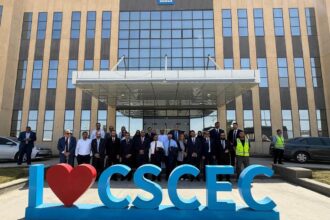
I did not come to Cairo only to seek support for my candidacy. I also came to listen, to learn and to better understand Egypt’s vision for the future of the Francophonie. Throughout my meetings in Cairo, Alexandria and Borg El Arab, we discussed how the Francophonie can create more opportunities for citizens, especially for young people. This reflects a central idea of my campaign: Africa at the heart, with all regions fully engaged.
Egypt occupies a unique place in our community. It is simultaneously an Arab, African, Mediterranean and Francophone country. It naturally builds bridges between regions, cultures and perspectives. The historical links between Egypt, France and the French language have also played an important role in Egypt’s modernization. The Description de l’Égypte, written by 160 French intellectuals brought to the country by Napoleon, the deciphering of the Rosetta Stone by Champollion, after 20 years of work, or the remarkable work of the French Institute for Oriental Archaeology in Cairo all illustrate how knowledge, culture and language can contribute to development and mutual understanding.
Egypt also has a special place in the history of the Francophonie itself. Boutros Boutros-Ghali, the first Secretary General of the OIF, helped transform the Francophonie into a major international organization and left a lasting legacy of dialogue, cooperation and peace. Another flagship francophone initiative, the Senghor University, is the shared merit of the Egyptian Boutros-Ghali and the Senegalese president Leopold Sedar Senghor.
That is why Egypt is so important to my vision for the future of the Francophonie. It is not only a key partner. It is also a source of ideas, experience and inspiration for building a Francophonie that is more dynamic, more connected and more focused on opportunities for its citizens.
(AN) : Historical and diplomatic bilateral relations between Romania and Egypt are exceptionally strong. In what ways can this robust Cairo-Bucharest axis be utilized within the institutional framework of the OIF to advance joint initiatives?
Dacian Cioloș : I can confidently say that Romania and Egypt enjoy today a relationship that is both historical and future-oriented. For more than a century, our countries have developed strong political, economic, cultural and academic ties, based on mutual respect and a shared commitment to cooperation. In 2026, we celebrate 120 years of diplomatic relations, but what matters most is that this partnership remains active and relevant, on political, economic and cultural levels.
I believe this relationship can contribute to what the Francophonie should increasingly become: a space that creates opportunities, strengthens cooperation and delivers concrete results for citizens. Egypt and Romania share a common interest in investing in education, supporting young people, promoting cultural dialogue and strengthening economic cooperation. We also share a belief in multilateralism and in the value of building partnerships between equals.
This year alone, we have seen several concrete examples of this dynamic: Romania was Guest of Honour at the Cairo International Book Fair, we continue to expand our academic and cultural exchanges, and we contributed to the development of the new Senghor University campus through a donation from the Romanian company Bitdefender. These initiatives show that Romania comes to Egypt not only with words, but also with projects and a genuine desire to build together.
I see great potential for Egypt and Romania to work together within the Francophone space, particularly in areas such as education, youth mobility, innovation, entrepreneurship, digital transformation and support for Africa’s development. This is also why my visit to Egypt has been so important. Beyond the campaign itself, it has been an opportunity to discuss how two countries with a long tradition of friendship can contribute together to a stronger, more dynamic and more opportunity-oriented Francophonie.
(AN) : Weeks ago, on May 9, President Abdel Fattah Al-Sisi and French President Emmanuel Macron officially inaugurated the magnificent new campus of Senghor University in New Borg El-Arab. How do you view the significance of this milestone—deeply supported by Egypt—for the future of African leadership training, and how will a Cioloș-led OIF expand upon this success?
Dacian Cioloș : The inauguration of the new Senghor University campus in Borg El-Arab is a major achievement for Egypt, for the Francophonie and for Africa. The Senghor University embodies one of the most valuable contributions the Francophonie can make: investing in people. It helps train future African leaders, experts and public servants, while creating stronger links between education, knowledge and development.
I greatly appreciate Egypt’s commitment to this project. The new campus reflects a long-term vision that deserves recognition. It also confirms Egypt’s role as a major centre for education, cooperation and development on the African continent. I echo President Abdelfattah El-Sisi’s message at the inauguration in Borg Al Arab, placing this project in the context of urgent development challenges and the need for stronger partnerships, especially among countries of the Global South. For me, Senghor University is much more than an academic institution. It is a concrete example of a Francophonie that delivers opportunities and prepares the future. This vision is very close to my own. I believe the Francophonie must help its member states respond to real challenges by investing in education, skills, innovation and human capital.
Romania is proud to have contributed to this effort through the recent Bitdefender donation to the new campus. It is a modest contribution, but it reflects our belief in the importance of supporting African youth and strengthening Francophone cooperation.
If elected Secretary General, I would like to build on this success by strengthening the connections between Senghor University, the AUF network, universities, research centres, public administrations and economic actors across the Francophone world. I would also like to see stronger links between education and employability, so that Senghor graduates can more easily contribute their talents to the development of their countries and communities. For me, Senghor University represents the future of the Francophonie: a Francophonie that invests in knowledge, creates opportunities and helps shape Africa’s future.
(AN) : The inauguration of Senghor University’s new headquarters, Romania recently announced concrete support for the institution via academic donations. As a candidate for Secretary-General, how would you foster deeper „Scientific Diplomacy” and cultural exchange between Romanian academic institutions and Egyptian-hosted Francophone flagships like Senghor University?
Dacian Cioloș : I was very pleased to see how fast the Romanian company Bitdefender responded when encouraged to support the new Senghor University campus. Beyond the donation itself, what matters is the message: investing in education, innovation and African youth is one of the most meaningful ways to strengthen the Francophonie. For me, this is a good example of a pragmatic Francophonie. A Francophonie that goes beyond declarations and creates concrete opportunities through partnerships, expertise, technology and investment in people.
Scientific diplomacy is an important part of this vision. It means connecting universities, research centres, public institutions and businesses to address common challenges and create new opportunities for development. Romania already contributes actively through initiatives such as the Eugène Ionesco scholarships, managed by the AUF. I am particularly pleased that six Egyptian researchers were selected this year, which illustrates the strength of academic cooperation between our countries.
If elected Secretary General, I would encourage stronger links between institutions such as Senghor University, the AUF network, universities, research centres and innovation ecosystems across the Francophone world. I would also bring together universities, the business environment and investors, for the best interest of the young people who want to access an education that provides them with life opportunities.
Romania has strong assets in higher education, digital technologies, cybersecurity and research. Egypt, through its universities and its strategic role in Africa, is a major hub for education and knowledge-sharing. Bringing these strengths together can create significant opportunities not only for our two countries but also for the wider Francophone community. We have a solid foundation to build upon: only a few days ago, the Romanian Embassy together with the Romanian Ministry of Education finalized the selection process for 35 academic scholarships fully funded by our Government, to study for one complete degree in Romania. These scholarships have been granted especially for Egypt and have been resumed after several years of interruption. Those young Egyptians who won the scholarships are truly impressive in terms of profile and potential; I am sure they will benefit from studying in Romania and mutually, the Romanian universities will be enriched by their presence. Moreover, this autumn, the first edition of the annual Romanian-Egyptian Forum of Presidents of Universities will take place in Bucharest, marking the 120 years anniversary in the academic field. This is a recent bilateral initiative stemming out of the high-level Romanian-Egyptian panel on education at the Cairo International Book Fair 2026. It has been discussed more concretely on the occasion of the meeting with H.E. Professor Abdelaziz Konsowa, Minister of Higher Education, of HRH Prince Radu of Romania during his historical visit to Cairo in April. It has huge potential for real partnerships and deliverables for our universities.
To conclude, I believe that Romania and Egypt can help promote a Francophonie that is simultaneously cultural, academic, scientific, digital and development-oriented. A Francophonie that invests in knowledge and transforms it into opportunities for its citizens.
(AN) : Is widely recognised as the demographic and cultural heart of the future of the Francophonie. How does your agenda address the critical intersection of education, investment, and employment for African youth, particularly regarding the empowerment of women and girls?
Dacian Cioloș : Africa is already at the heart of the Francophonie. It is home to much of its youth, its dynamism and its future. The real challenge is to transform this potential into opportunities. My conviction is simple: education must be connected to employment, entrepreneurship and investment. We need stronger links between education and training systems, universities, economic actors, development finance institutions and labor markets.
This is why I want the Francophonie to act as a platform that connects education, investment and employment. We should support initiatives that help young people acquire skills adapted to the realities of the economy, particularly in areas such as digital technologies, artificial intelligence, sustainable agriculture, renewable energy and entrepreneurship.
Women and girls must remain at the centre of this effort. The OIF has developed relevant projects for women that must continue. For me the guiding principle is that women’s empowerment starts with education, and must lead to better access to higher education, research, entrepreneurship, financing and leadership opportunities. Institutions such as Senghor University already demonstrate how the Francophonie can contribute to training future leaders and professionals. My ambition is to multiply these opportunities and to strengthen the pathways from education to employment.
For me, a Francophonie of opportunities is a Francophonie that helps young Africans, especially young women, build their future in their own communities and countries.
(AN): In your platform, you heavily emphasize institutional transparency, accountability, and improved governance. How do you plan to restructure the OIF’s internal mechanisms to restore confidence among member states and major international donors?
Dacian Cioloș : I would first like to emphasize that the OIF has already made important progress in strengthening its institutional capacity. My intention is to build on these achievements and take the Organization into a new stage of development. For me, restoring confidence begins with a simple principle: transparency, accountability and results must go hand in hand.
I want the OIF to work more as an ecosystem, bringing together member states, operators and partners around shared priorities and measurable objectives. This requires more dialogue, better coordination and a stronger culture of accountability. I also believe we must strengthen programme evaluation, ensure rigorous management of human and financial resources, and better evaluate and communicate the impact of our actions.
This is important not only for member states, but also for international financial institutions, development banks and donors. They are more likely to support an organization that is credible, effective and results-oriented. Ultimately, confidence cannot be decreed. It is earned through good governance and concrete results. That is the approach I would bring to the OIF.
(AN): You have stated that French must be cultivated not just as a linguistic heritage, but as a „language of economic and social opportunity.” Given your extensive background as European Commissioner for Agriculture, how do you intend to mobilize economic actors, agricultural enterprises, and development banks to build concrete Francophone value chains?
Dacian Cioloș : In my view a language becomes attractive when it creates opportunities. That is why I want the French language to be not only a language of culture and dialogue, but also a language of education, employment, entrepreneurship and economic cooperation.
The Francophonie already has many assets: business networks, chambers of commerce, entrepreneurs’ associations, women’s business networks, universities and development institutions. My objective is to connect these actors more effectively and help them work together over the long term.
Drawing on my experience in agriculture and European development policies, I believe the Francophonie can play a stronger role in sectors that are critical for the future, such as sustainable agriculture, food security, digital innovation and renewable energy. The OIF should not replace economic actors. Its role is to bring together businesses, investors, development banks, governments and universities around concrete projects and shared priorities. This is how we can help develop Francophone value chains, attract investment and create jobs, especially for young people and women.
In a more fragmented world, the French language can become a platform of trust that facilitates partnerships across regions and transforms shared language into shared opportunities.