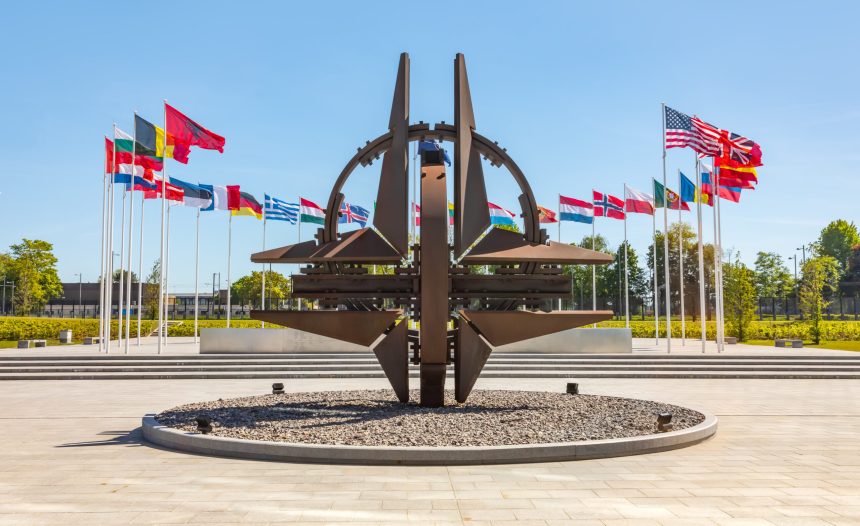
NATO in reconfiguration describes a phase of structural realignment that goes beyond the calculation of military capabilities and redefines, over the long term, the balance of power among the three poles of the Euro-Atlantic security architecture: the United States, the continental European core and Turkey. The announcement communicated to allies at NATO headquarters in Brussels last week by Alexander Velez-Green, the envoy of the U.S. Secretary of Defense, according to the German publication Der Spiegel as reported by Reuters, is not an isolated event. It is the crystallisation of a process that has been unfolding for several years and now appears to be entering a decisive phase. The NATO Summit in Ankara, scheduled for 7–8 July 2026, could become the first major political moment in which this new internal balance of the Alliance is publicly tested.
To understand the scale of this realignment, three parallel processes that condition one another must be examined: the global recalibration of the American commitment, the accelerated reconstruction of European strategic autonomy and the rising weight of Turkey within the Alliance. None of these processes is unfolding in isolation, and their interaction is producing a NATO with an internal geometry substantially different from the one built after 1991.
American contraction: global recalibration, not withdrawal
The announcement in Brussels must be read as part of a broader sequence. On 2 May 2026, the Pentagon announced the withdrawal of approximately 5,000 American troops from Germany. On 21 May, President Donald Trump announced on Truth Social the additional deployment of 5,000 U.S. troops to Poland, according to CNN and Reuters. The Pentagon has not officially confirmed that these are the same troops. Three interpretations coexist: numerical compensation, a political reversal of a previously cancelled deployment, or a new deployment motivated by the personal relationship between Trump and Polish President Karol Nawrocki. Polish Foreign Minister Radek Sikorski said, according to Al Jazeera, that the new deployment would ensure that “the presence of American troops in Poland is maintained at approximately previous levels”, which suggests a replacement operation rather than a net expansion.
The Supreme Allied Commander Europe, General Alexus Grynkewich, confirmed that the United States will not, for now, deploy the intermediate-range long-range fires planned for Germany — the Long-Range Fires Battalion.

In January 2026, the United States had already announced the elimination of approximately 200 positions from NATO commands and planning centres. The decision now communicated in Brussels, however, concerns a distinct category: the NATO Force Model, the inventory of forces that each ally commits to mobilising rapidly in the event of a crisis.
The announced reductions are quantitatively severe. According to data published by Der Spiegel and reported by Military Times, the number of American strategic bombers available to NATO is to be halved, fighter aircraft are to be reduced by one third, U.S. Navy destroyers are to be cut, American submarines are to be completely removed from the alliance pool, and armed reconnaissance drones are to be drastically reduced. Strategic aerial refuelling aircraft are also affected. If these reductions are fully confirmed at the force generation conference scheduled for early June, the recalibration will exceed any comparable adjustment of the past two decades.
Qualitatively, the significance is more serious than the figures suggest. Military expert Carlo Masala, quoted by Der Spiegel, warned that by abandoning the deployment of U.S. medium-range weapons in Europe, the Trump administration is weakening NATO’s conventional deterrence and creating a capability gap that Europeans cannot cover in the short term. EDINA Director Christian Mölling noted in parallel that the U.S. holds a “de facto monopoly within NATO” on long-range weapons, which is why the reduction in this segment is, operationally, more consequential than a reduction in personnel.
In Atlas News’ reading, the American strategic logic is not one of withdrawal, but of global recalibration on three levels: geographically, through a shift towards the eastern flank, namely Poland, away from the European centre, namely Germany; qualitatively, through the reduction of strategic capabilities while maintaining conventional troop levels relatively intact; and politically, through the conditioning of the American commitment on the behaviour of allies — visible in the attention granted to Nawrocki’s Poland and in the diminished centrality of Merz’s Germany in Washington’s calculations. The Pentagon’s priority appears to be moving gradually towards the Indo-Pacific, the Western Hemisphere and the Middle East, in the context of Operation Epic Fury against Iran. Europe is being asked to assume the costs of its own conventional security, on the basis of the commitment made at the 2025 Hague Summit to allocate 5% of GDP to defence spending by 2035.
European reconstruction: political ambition, industrial delay
The European response is unfolding across three distinct dimensions, at different speeds.
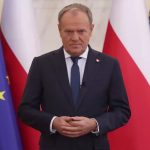
On the political dimension, Europe reacted quickly. Polish Prime Minister Donald Tusk said in a post on his official X account on 2 May 2026 that “the greatest threat to the transatlantic community is not its external enemies, but the ongoing disintegration of our alliance. We must all do whatever is necessary to reverse this disastrous trend.” German Defence Minister Boris Pistorius formulated a strategic principle that has become a reference point: “If we want to keep the United States as a reliable member of NATO, and most importantly when it comes to nuclear weapons, as a reliable partner in NATO, we have to become more European as NATO in order to remain transatlantic,” according to his interview with United24 Media. The European Commission activated the SAFE fund — Security Action for Europe — worth €150 billion, intended to finance European rearmament.
On the industrial dimension, the gap is far more difficult to close. Europe does not currently possess its own fleet of strategic bombers, a significant strategic aerial refuelling capability, or a fleet of nuclear attack submarines comparable to that of the United States. The Franco-German-Spanish FCAS programme is delayed; the British-Italian-Japanese GCAP programme is advancing more rapidly, but with first delivery expected no earlier than the end of the decade. The European ammunition industry, after three years of sustained effort to supply Ukraine, has still not reached the production pace of the Russian defence industry.
On the institutional dimension, Europe remains fragmented. Poland is, for now, the only allied capital publicly formulating scenarios of strategic continuity in the event of a severe reduction in the American role, while Berlin prefers to reiterate that NATO must remain the central pillar of European security, and the Baltic states are building societal resilience plans — evacuation, critical infrastructure and cyber defence — according to the Atlas News analysis on NATO’s “forbidden dossier”. This difference in perception between Western Europe and the eastern flank reflects, in Atlas News’ reading, an asymmetry of risk that is difficult to reconcile within a single common doctrine.
From this perspective, Europe has political will and growing financial instruments, but suffers from an industrial and operational gap that it cannot fully close in the short or medium term without a much broader industrial mobilisation than the one currently under way.
Turkey’s rise: NATO’s third emerging axis
This is where the third process comes in, transforming the realignment into a genuinely tripartite reconfiguration. Turkey’s importance within NATO is increasing significantly, on the basis of three converging quantitative, industrial and institutional realities. Ankara cannot replace the American strategic guarantee, but it is becoming a central actor in the Alliance’s operational and industrial architecture.
Turkey has the second-largest army in NATO after the United States. According to the Stockholm International Peace Research Institute — SIPRI — report published in March 2025, Turkish arms exports increased by 103% between the periods 2015–2019 and 2020–2024, raising Ankara’s global share from 0.8% to 1.7% and placing Turkey 11th worldwide among major arms exporters. The same SIPRI source documents a 155% increase in European arms imports over the same period, indicating a rapidly expanding market in which non-traditional suppliers such as Turkey are gaining ground.
In SIPRI’s ranking of the world’s top 100 defence companies for 2024, five Turkish companies recorded combined revenues of $10.1 billion, up 11% from the previous year — the highest number of Turkish companies ever listed in this ranking, according to the SIPRI Top 100 report published in December 2025. Aselsan rose to 47th place globally with $3.47 billion in arms revenues, Baykar to 73rd place with $1.9 billion, and Roketsan to 87th place with $1.39 billion.
Turkey’s industrial penetration into Europe is visible in concrete contracts. On 16 June 2025, at the Paris Air Show, Baykar and Leonardo formally announced the creation of a joint venture, LBA Systems, headquartered in Italy and owned on a 50:50 partnership basis, dedicated to the development of unmanned aerial systems, according to Leonardo’s official statement. The agreement implements the memorandum of understanding signed in Rome in March 2025 and estimates a European drone market of approximately $100 billion over the next decade. Turkish Aerospace Industries is supplying Spain with HÜRJET aircraft, Repkon is building 155 mm ammunition lines in Germany, STM is delivering logistics ships to Portugal, and ASFAT is building for Romania the TCG Akhisar corvette of the Hisar class under the MİLGEM programme. Poland, Romania, Albania, Kosovo and Bosnia and Herzegovina have already integrated Bayraktar TB2 drones.
Institutionally, Turkey is set to assume command of NATO’s Allied Reaction Force between 2028 and 2030, according to the announcement made public by Defence Minister Yaşar Güler and reported by Defense News. NATO Secretary General Mark Rutte visited Ankara on 21–22 April 2026, met President Recep Tayyip Erdoğan and toured Aselsan facilities, announcing that the Defence Industry Forum linked to the Ankara Summit would be the largest industrial event in the history of the Alliance, according to NATO.int.
The official Turkish message consciously reflects this moment. Minister Güler, speaking on 9 April 2026, stated that Turkey “is no longer a flank state on NATO’s south-eastern periphery” and is “a central ally capable of generating security across the entire European theatre”. The vocabulary is new and prepares the political ground for the Ankara Summit.
The limits of this rise, however, remain real. Turkey does not possess and does not produce strategic bombers. Its submarines are conventional and have a littoral mission. The fifth-generation KAAN fighter aircraft is scheduled to become operational in 2028, without certainty regarding serial production. Turkey can partially substitute the American pool in specific segments — drones, armoured vehicles, ammunition, corvettes and mobile air defence systems — but it cannot replace American strategic deterrence. In addition, Ankara is not a member of the EU, which limits the full access of Turkish industry to the SAFE fund, which is why it is pushing hard for greater flexibility in European rules.
The internal tensions of the new architecture
The three axes of the new NATO are not automatically complementary. There are structural tensions that will shape intra-alliance politics in the coming years.
The first tension is between Washington and European capitals over the conditions under which the U.S. maintains its collective defence commitment. President Trump’s criticism of the lack of European support for reopening the Strait of Hormuz in the context of the conflict with Iran, coupled with his statements questioning Washington’s obligation to respect the mutual defence pact, according to Reuters, has opened a file that Europeans cannot close merely by increasing defence spending. NATO Article 5 functions as long as the presumption of American involvement remains credible.
The second tension is between Paris and Ankara over European strategic autonomy and Turkish participation in the SAFE fund. France remains reluctant towards extensive Turkish integration, both for reasons of industrial competition — Naval Group, Dassault, MBDA and Thales are directly exposed to Turkish competition — and for geopolitical reasons linked to the Eastern Mediterranean, Libya, the South Caucasus and West Africa, according to the analysis published by Carnegie Endowment for International Peace.
The third tension concerns differences in perception between some Eastern European capitals and Ankara in relation to the Russian Federation. Turkey pursues a doctrine of strategic autonomy, maintains direct bilateral channels with Moscow and calibrates its regional policy according to its own security interests, including through the application of the Montreux Convention in the Black Sea. This positioning has allowed Ankara to remain an indispensable actor in the regional balance, but it sometimes generates reservations among states on the eastern flank, where the Russian threat is perceived in more direct and existential terms. According to the analysis published by Chatham House, the Russian-Turkish relationship in the Black Sea combines competition with selective forms of cooperation, while Moscow has repeatedly attempted to capitalise on tensions between Turkey and its Western partners.
The fourth tension is between the continental European core and the eastern flank over priorities. France and Germany view NATO’s realignment also as an opportunity to expand their industrial influence, while the states on the eastern flank are primarily concerned with conventional deterrence in the face of Russia.
For the eastern flank and for Romania
NATO’s realignment produces, for the eastern flank, a complex equation with three simultaneous inputs.
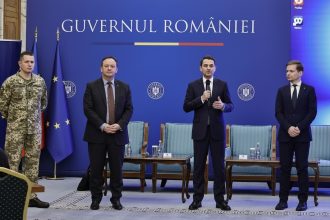
On the American dimension, at least five frontline NATO states — Poland, Lithuania, Latvia, Estonia and Romania — have expressed interest in hosting additional American forces after the announcement of the withdrawal from Germany. Trump’s announcement regarding the deployment to Poland confirms a hierarchy of American preferences on the eastern flank that is not neutral. Romania remains, in this landscape, a node of increased strategic value, but it competes with Poland for Washington’s political attention. According to the analysis published by Atlas News, Bucharest remains deeply anchored in the strategic partnership with the United States and has neither the interest nor the political instinct to turn this debate into a frontal public confrontation — unlike Poland, Romania has not publicly formulated the idea of a Plan B in the event of an American departure from NATO. This cautious positioning gives Bucharest diplomatic flexibility, but leaves it less prepared than Warsaw for a scenario of major strategic discontinuity.
On the European dimension, access to the SAFE fund and to common European programmes becomes vital. Criticism regarding the slow pace of the Romanian Ministry of National Defence, which has signed only 3 of the 15 contracts scheduled through SAFE and risks losing billions of euros, according to Digi24, points to a procedural vulnerability that must be urgently corrected.
On the Turkish dimension, the contracts already concluded with Turkish industry — the TCG Akhisar corvette under the MİLGEM programme, Cobra II armoured vehicles and Bayraktar TB2 drones — represent the first generation of a relationship that will grow in volume and complexity. In Atlas News’ reading, the stake for Romania is not to choose one of the three axes, but to deliberately diversify its sources of capability: American for strategic deterrence and political legitimisation, European for industrial integration and financing, and Turkish for rapid and immediately available operational capabilities.
What the Ankara Summit may confirm
The Ankara Summit of 7–8 July 2026 may become the first major public moment in which the Alliance’s new geometry is reflected at the highest level. According to data published by NATO.int and the statement by Secretary General Mark Rutte at the meeting of NATO foreign ministers in Helsingborg, four formal directions are expected to be reflected: discussions on the new NATO Force Model and the American reductions communicated in Brussels, recognition of Turkey’s increased weight through the assignment of command of the Allied Reaction Force, reform of the NATO-EU relationship including on the SAFE issue, and review of the 5% of GDP defence commitment undertaken at The Hague.
What the summit will not automatically resolve is the fundamental question of the credibility of the American commitment in the medium and long term. This issue depends on American political cycles, developments in the Indo-Pacific and the Middle East, and the cumulative pressure on the Pentagon.
NATO is entering a period of transition that, in Atlas News’ reading, is not a weakening, but a reconfiguration. The Alliance is not entering a process of rupture, but neither does it still operate according to the unipolar logic of the 1990s or the American-centric logic reactivated after 2014. The three axes — American in global recalibration, European in industrial reconstruction, and Turkish in regional and industrial ascent — appear to coexist in a dynamic balance, with real internal tensions and with the need for each individual ally to redefine its own portfolio of relationships within the Alliance. Romania is located, geographically and strategically, at the centre of this recomposition, and its ability to articulate its own interests across all three channels will decide the weight of the Romanian state in the new post-Ankara NATO.
Read also