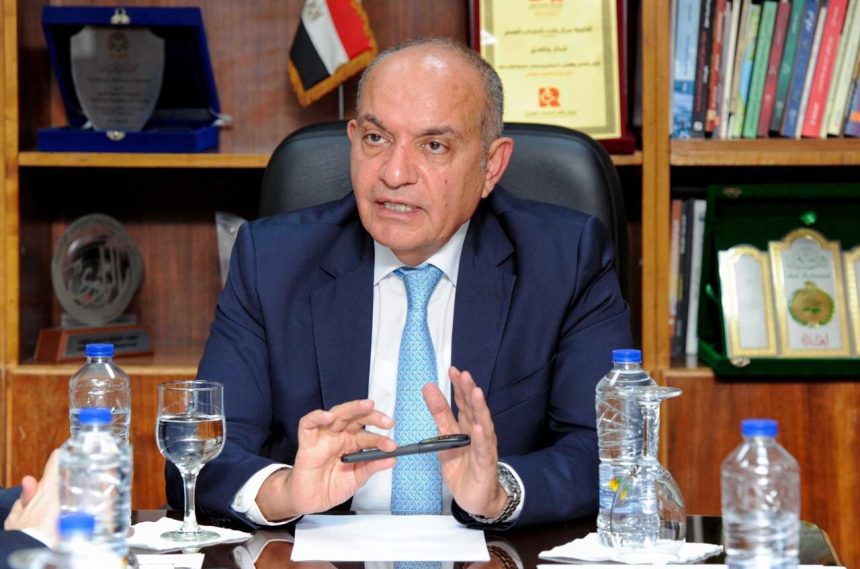
The Ambassador of the Hashemite Kingdom of Jordan to Cairo and its Permanent Representative to the League of Arab States, Amjad Al-Adayleh, affirmed Jordan’s pride in the deep-rooted and close relations it shares with Egypt, founded on an extended and rich history and a solid, fruitful course of diplomatic ties. The two countries are marking the 80th anniversary of those relations this week.
In a press statement on the occasion, Ambassador Al-Adayleh stressed that the 80th anniversary of Jordanian–Egyptian relations represents an important diplomatic milestone for both countries. They take pride in what has been achieved and look ahead to a future befitting the nature and strength of their ties, meeting shared ambitions for a path that links past, present and future, builds on and compounds achievements, and keeps relations at the forefront of excellence while expanding their scope and opportunities.
He noted that the launch of diplomatic relations between Jordan and Egypt coincided with the independence of the Hashemite Kingdom of Jordan in May 1946 — a national milestone Jordanians commemorate on May 25 each year — making this concurrence a further marker of the importance and weight of the relationship for both states.
Jordan, he said, views its relations with Egypt with great pride, deep appreciation and high confidence, and approaches them through the lens of long-standing history, entrenched bonds, political convergence and contiguous geography. All institutions in Jordan, he added, are committed to maintaining these ties at their productive, strategic level and advancing them toward new, broader horizons and a future shaped by the visions of both political leaderships, the efforts of both governments, and the aspirations of the two peoples.

Al-Adayleh added that political alignment, convergence of visions, constructive cooperation and continuous consultation form the pillars of the relationship across all levels — political leadership, government, and diplomatic representation. This, he said, has entrenched a model of close and productive ties in the region, preserved their sustainability, and sustained their strength and momentum despite regional instability.
Al-Adayleh pointed to the breadth of Jordanian–Egyptian relations across multiple shared fields, growing economic, commercial and developmental levels, and the ability to overcome obstacles and turn many challenges into opportunities. He noted the continuity of joint committees without interruption, especially the Joint Higher Committee, considered the longest-running and most continuous on the Arab arena since its first session. Preparations are now under way for its 34th session. This continuity, he said, has been reflected in tangible growth, progress and prosperity in the trajectory of relations between Jordan and Egypt.
These distinguished and close ties, he stressed, are the product of mutual commitment, foresight and determination embodied by His Majesty King Abdullah II and his brother, President Abdel Fattah El-Sisi, and are operationalized by officials in both countries in managing political, diplomatic, economic and trade relations, as well as cooperation across sectors.
Politically, Al-Adayleh cited key indicators in the recent history of Jordanian–Egyptian relations that reflect both countries’ commitment to durability and strength. Since 2014, there have been nearly 30 reciprocal visits at the leadership level bilaterally, in addition to multilateral summits and meetings with Gulf Cooperation Council states and Iraq — a record number for relations between any two states in the region. The most recent was the visit by King Abdullah II to Cairo and his consultative summit with President El-Sisi on February 1, 2026, followed by phone calls between the two leaders on February 28, March 15 and March 22, 2026.
He said regional conditions — chiefly the Palestinian issue, the war on Gaza and the U.S.–Israeli–Iranian war, as well as Iranian attacks on Jordan and Gulf states — alongside the two countries’ pivotal role in efforts to achieve security and bolster regional stability, given their political weight and regional and international standing, have prompted both sides to enhance consultation and intensify efforts through meetings and communications at the leadership level and consultative contacts between the foreign ministers of Jordan and Egypt. These aim to strengthen bilateral coordination, support Arab positions and issues, and contribute effectively to addressing regional crises.
Clarity, consistency and alignment between the Jordanian and Egyptian positions on the Palestinian issue and the rights of the Palestinian people have played a prominent role, he said, in confronting plans targeting Palestine — land, people and rights — particularly rejecting displacement schemes; in serving the justice of the Palestinian cause in regional and international forums; and in boosting humanitarian efforts to alleviate suffering and keep Palestinians steadfast on their land.
In this context, he stressed that the Palestinian cause is a common and principal constant in the foreign policy of both Jordan and Egypt. The level of Jordanian–Egyptian bilateral coordination, trilateral cooperation with Palestine, and broader regional and international collaboration, he said, underscores the centrality of this just issue for both states and translates into real diplomatic efforts in Arab and international political contexts and on the ground.
On mutual cooperation in vital sectors, Al-Adayleh emphasized ongoing convergence, mutual desire and firm commitment to maximize shared interests. He noted that exchanging expertise, leveraging successful experiences and generalizing productive projects characterize relations in executive and vital sectors between Egypt and Jordan, implemented through executive programs, bilateral agreements and memoranda of understanding in the Joint Higher Committee and specialized technical committees.
Economically, he said the wheel of bilateral cooperation has not been impeded by challenges stemming from the region’s political and security landscape or the repercussions of global crises. Technical and executive officials and committees from both sides, he added, keep pace with these dynamics and seek to capitalize on competitive advantages and complementarities across bilateral sectors to build on them and achieve mutual interests and benefits.
He highlighted major joint projects in water, electricity and maritime transport involving distinguished Jordanian and Egyptian companies and cadres. Chief among them is the participation of Egypt’s Orascom Construction and Arab Contractors in implementing Jordan’s National Water Carrier Project — the Kingdom’s largest infrastructure project, estimated at $5.8 billion. The project aims to desalinate 300 million cubic meters of water annually from the Red Sea–Gulf of Aqaba and transport it via pipelines to Amman and other governorates. He praised the private sectors in both countries for bolstering bilateral ties and contributing to the economy, investment, trade exchange, transport and ICT, with efforts that raise exchange levels and benefits for both sides.
Regarding bilateral trade, he affirmed that serious intent and continuous efforts by officials in both governments persist to achieve ambitious levels of trade exchange, commensurate with the high political and economic standing of relations.
According to the latest data, Jordanian exports to Egypt in 2025 totaled $226.745 million, while imports from Egypt reached $907.394 million. Total trade between the two countries in 2025 was $1,134.139 million.
Jordan’s main exports to the Egyptian market include fertilizers, tobacco, plastics and articles thereof, machinery and appliances, pharmaceutical products and inorganic chemicals. Key Jordanian imports from Egypt include mineral fuels, vegetables and fruits, animal or vegetable oils, clothing, and electrical machinery, equipment and appliances.
In investment, 3,764 Jordanian companies operate in Egypt, with investments across productive sectors valued at nearly $3 billion, according to official Egyptian estimates. Meanwhile, the balance of Egyptian investments in Jordan in 2023 stood at approximately $568.6 million, representing 3.2% of total Arab investments in the Kingdom and ranking 10th among Arab states by investment volume. The Jordanian-Egyptian Fajr Company for Natural Gas Transport and Supply is among the most significant Egyptian investments in Jordan; the Egyptian Fajr Company holds 100% of its capital. Since its establishment in 2003, it has achieved integration between Jordan and Egypt in natural gas projects.
Statistics indicate a diverse Jordanian presence in Egypt, including students at all university levels — numbers comparable to Egyptian students studying in Jordan, reflecting successful cultural and educational exchange — as well as Jordanian tourists, for whom Egypt is the first, nearest and preferred destination, and Jordanians residing for investment purposes.
Conversely, the Kingdom hosts a large number of Egyptians working across development sectors. Estimated at about 900,000 Egyptian nationals, according to Egyptian statistics, they play an important role in the development and construction of vital sectors such as construction, agriculture and industry, and are held in esteem and respect by the Hashemite leadership, the government and the Jordanian people.
Cultural participation and representation continue uninterrupted across this pivotal sector — in art, acting, singing, painting and dance. The Jerash Festival and the Amman International Book Fair regularly feature Egyptian artists and intellectuals, while Jordanian artists and intellectuals are present at festivals, forums and cultural and art exhibitions in Egypt, foremost the Cairo International Book Fair and the Arab Music Festival, among other ongoing events.
Ambassador Al-Adayleh said he feels great pride in representing Jordan as ambassador in Cairo and as the Kingdom’s permanent delegate to the Arab League. He expressed pride in the cooperation, welcome and fruitful, valued communication he has received from various officials and institutions in Egypt, which has greatly facilitated bilateral relations and his mission.
He commended the development and progress witnessed in Egypt across sectors under President Abdel Fattah El-Sisi — a renaissance evident to all visitors and a source of pride for Egyptians — placing Egypt in an advanced position in urban development, infrastructure and successes in agriculture and industry.
He concluded by expressing his aspiration to build on what has been achieved in Jordanian–Egyptian relations and to continue performance and periodic evaluation by joint committees to achieve progress, address challenges and overcome obstacles. He affirmed that the 80th anniversary of the establishment of diplomatic relations between the Hashemite Kingdom of Jordan and the Arab Republic of Egypt will drive both sides to exert further joint efforts to elevate ties, enhance successes, broaden horizons and realize desired aspirations.
Read also
Egyptian Scholars Join Global Symposium in Astana on Golden Horde History and Mamluk Ties