The week of 19–24 October 2026 highlighted the increasingly close relationship between military security, the protection of economic infrastructure and political stability. Attacks on commercial shipping prompted NATO to strengthen surveillance in the Black Sea, while tensions in the Middle East continued to put pressure on vital energy routes and Gulf states.
Across Europe, demonstrations over the cost of living, housing and public services confronted governments with mounting social demands. Meanwhile, diplomatic efforts to end the war in Ukraine continued, without a corresponding reduction in the intensity of military attacks.
Atlas News Romania examines five major geopolitical developments from the past week, focusing on political decisions, strategic implications and events that could shape the international security landscape in the period ahead.
1. Europe: Protests Over the Cost of Living and Public Services Increase Pressure on Governments
Social unrest continued across several European countries, driven by grievances over housing, education, pensions and economic conditions. The demonstrations reflected different demands and were organised by separate groups, rather than forming a single, coordinated European protest movement. The Associated Press documented protests in Milan, Madrid, Lisbon and Tirana, illustrating the range of concerns bringing people onto the streets.

France experienced one of the largest mobilisations. On 24 October, hundreds of thousands of people took part in demonstrations that remained largely peaceful before clashes erupted later in the evening in Paris and Marseille. Authorities deployed 70,000 police officers and gendarmes, 10,000 more than the previous week. The interior minister said the violence was less severe than during the protests on 17 October, according to Reuters.
In Belgium, demonstrations in Brussels included demands for improved funding and working conditions in the education sector. Clashes occurred and police used tear gas, although the incidents were less extensive than those recorded the previous week, Reuters reported.
The geographical spread of these demonstrations does not justify portraying Europe as engulfed in violence. Distinguishing peaceful protests from isolated clashes, and recognising the specific demands in each country, remains essential to understanding the situation.
Strategic implications: Social pressure could narrow governments’ room for manoeuvre as they seek to balance spending on public services, economic support and defence. The geopolitical significance of these protests will depend on their impact on government stability and budgetary decisions, rather than simply on the scale of public mobilisation.
2. Black Sea: Attacks on Commercial Shipping Prompt NATO to Strengthen Surveillance
The security of commercial shipping in the Black Sea has become an immediate priority for allied coordination. On 20 October, NATO announced additional surveillance capabilities following discussions within the North Atlantic Council.
According to Reuters, the allies planned to deploy maritime patrol aircraft, radar systems, drones and specialised personnel. The measures followed a series of deadly attacks on commercial shipping in the region.
The escalation continued to threaten vessels and port infrastructure. On 20 October, The Guardian reported further attacks on ships at Reni and vessels heading towards Odesa, alongside rising security risks and insurance costs for maritime transport.
On 22 October, Romania announced plans to accelerate the development of its Black Sea capabilities following attacks on cargo vessels. The national response, together with NATO’s additional measures, places the protection of civilian maritime traffic at the centre of regional security concerns, Reuters reported.
Enhanced surveillance should not be confused with the establishment of a naval escort operation. Threat detection, identifying those responsible for attacks and providing direct protection to vessels are distinct elements of the security response.
Strategic implications: For Romania, the vulnerability of commercial shipping creates a direct link between military security and the functioning of the maritime economy. NATO’s ability to translate surveillance intelligence into effective protective measures will be important both for deterrence and for maintaining the confidence of commercial operators.
3. Ukraine: Diplomatic Talks Regain Momentum as Attacks Continue
Diplomatic efforts concerning the war in Ukraine focused this week on meetings in Oslo and American contacts with Moscow. On 20 October, Ukrainian President Volodymyr Zelensky met Finnish President Alexander Stubb and Norwegian Prime Minister Jonas Gahr Støre.
According to the Ukrainian presidency, the programme also included discussions with representatives of the US administration, Steve Witkoff and Jared Kushner, with the latter participating online. The meetings provided an opportunity for coordination between Kyiv, Washington and European partners.
A US official quoted by Reuters said Ukraine had presented new ideas and proposals, and that participants had made progress towards a coordinated approach to talks with Russia. That assessment reflected the position of the US administration, rather than confirmation of an agreement between the warring parties.
Military operations continued despite the diplomatic activity. On 22 October, Russia struck Kyiv with ballistic missiles, while Ukraine launched drones towards Moscow. Following his meeting with Witkoff, Russian President Vladimir Putin said Moscow was prepared to resume US-mediated negotiations with Ukraine in November, according to Reuters.
The distinction between renewed dialogue and an actual reduction in hostilities remains central. A stated willingness to negotiate does not, in itself, establish the terms of a ceasefire or the mechanisms required to monitor its implementation.
Strategic implications: The value of these diplomatic efforts will depend on whether contacts can be translated into concrete commitments. For Kyiv and its European partners, a ceasefire and credible security guarantees must be considered together, ensuring that any pause in fighting does not leave unresolved the vulnerabilities that have allowed the war to continue.
4. Strait of Hormuz: Maritime Pressure Intensifies as Washington Raises the Prospect of Further Military Action
The Strait of Hormuz remained a major flashpoint between the United States and Iran. On 22 October, Tehran claimed that seven oil tankers had been attacked or damaged overnight. The Associated Press said it could not independently verify the Iranian account.
Oil shipments continued through a corridor protected by US forces. According to maritime data and assessments cited by the Associated Press, maintaining these flows involved substantial costs and increasingly complex logistical operations.
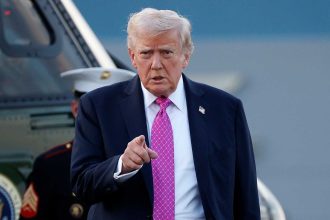
On 23 October, US President Donald Trump said Washington could undertake another military operation against Iran, raising the prospect of further escalation, Reuters reported.
Diplomatic channels nevertheless remained open. Iran’s ambassador to Pakistan said Tehran was willing to resume talks under the interim understanding brokered in June. He linked Iran’s proposal to reopen the strait to the lifting of the US blockade on Iranian ports, according to the Associated Press.
Strategic implications: Energy security cannot be measured solely by the volume of oil reaching international markets. Shipping costs, risks to crews and reliance on military protection can sustain economic pressure even when exports continue. Against this backdrop, claims of attacks must be carefully distinguished from independently confirmed incidents.
5. Saudi Arabia and Yemen: Houthi Attacks Prompt Broader International Military Support
The confrontation between the Houthi movement and Saudi Arabia intensified, affecting both civilian and military infrastructure. In Yemen, a missile attack on a training centre in Shabwa province killed at least 53 members of government forces, according to local authorities cited by the Associated Press. The Houthis claimed responsibility for the strike.
On 24 October, the Houthis announced that they had targeted Saudi oil facilities and airports. The Saudi-led coalition reported intercepting two ballistic missiles. Reuters noted that it remained unclear whether the targets claimed by the Houthis had been hit or whether the attacks had been intercepted. Separately, Yemen’s internationally recognised government reported strikes against coastguard facilities in Aden.
The United Kingdom announced an expansion of defensive support for Saudi Arabia, including patrols by Typhoon fighter jets to intercept threats to cities, civilians and critical infrastructure. The announced mission does not include strikes against Houthi targets inside Yemen, according to the Associated Press.
The response demonstrates that protecting Saudi territory is drawing increasingly on the military resources of external partners. At the same time, distinguishing between the kingdom’s air defence and participation in offensive operations remains essential when assessing the extent of their involvement.
Strategic implications: Attacks on Saudi infrastructure increase the risk of a regional conflict drawing in broader external military commitments. The effectiveness of air defences and the operational limits placed on support missions will influence both the kingdom’s security and the prospects for preventing a wider confrontation.
Atlas News Perspective: Protecting Critical Infrastructure Emerges as a Shared Strategic Priority
These five developments demonstrate how conflicts and economic vulnerabilities can have consequences far beyond their immediate geographical settings. Maritime security, the functioning of energy infrastructure and the protection of public services belong to different policy areas, yet they increasingly compete for the same state resources and decision-making capacity.
In the Black Sea and the Persian Gulf, the continuity of commercial activity depends increasingly on military security measures. Across Europe, governments must address social demands while meeting their defence commitments. Diplomatic efforts concerning Ukraine are taking place against this backdrop, as the costs of prolonged conflicts extend well beyond the countries directly involved.
For Romania, Black Sea security remains the most immediate priority. Strengthening allied surveillance has direct relevance, but its effectiveness must ultimately be assessed by its ability to reduce threats to navigation and safeguard regional economic activity.
Three developments will require particular attention in the coming period: the actual deployment of NATO’s announced Black Sea surveillance capabilities, progress towards substantive negotiations on Ukraine, and the evolving balance between diplomatic initiatives and military preparations in the Middle East.
Read also
Atlas Geopolitical Brief: The Week of 12–17 October 2026 in Five Key Dossiers