The emerging energy rapprochement between Washington and Moscow, the deteriorating relationship between the Trump administration and Kyiv, the widening confrontations in the Middle East, and attacks on commercial shipping defined a week of heightened strategic instability.
Meanwhile, the European Union sought to strengthen its economic autonomy and defence capabilities, as the annual meetings of the International Monetary Fund and the World Bank in Bangkok brought the economic consequences of regional conflicts into sharper focus.
Atlas News România examines the week’s five most consequential geopolitical dossiers, focusing on political decisions, strategic implications, and developments that could shape the international balance of power in the months ahead.
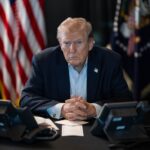
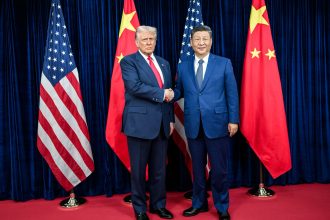
1. Washington–Moscow: Russian Diesel Agreement Deepens the Rift Between Trump and Zelenskyy
Relations between the United States and Russia underwent a significant development this week following the resumption of Russian diesel exports under an arrangement announced by US President Donald Trump. On 15 October, the Kremlin confirmed that shipments had resumed, with the first deliveries departing from the Baltic port of Primorsk.
The arrangement is intended to ease pressure on fuel prices at a time when the war in the Middle East and disruptions to energy markets are weighing on the American economy. However, the volumes announced remain relatively modest compared with global demand, limiting the agreement’s potential to produce a sustained decline in prices.
Tensions intensified after Ukraine resumed attacks on Russian oil refineries in response to continued strikes against Ukrainian energy infrastructure. Trump publicly criticised Kyiv’s decision, while President Volodymyr Zelenskyy rejected the prospect of energy arrangements that could strengthen Russia’s financial position without bringing the war to an end.
A further development followed on 16 October, when Trump decided to suspend the implementation of a newly enacted package of sanctions against the Russian economy, citing the national interest of the United States. The decision widened political divisions in Washington and heightened concerns among European allies.
Strategic implications: Washington is prioritising the stabilisation of energy markets and the reduction of domestic economic pressures, while Kyiv and its European partners remain committed to maintaining pressure on Moscow. This divergence risks undermining Western unity over the war in Ukraine at a time when Russia is seeking to preserve revenues from its energy exports.
2. Middle East: Attacks on Saudi Arabia and Escalation in Hormuz Threaten Global Energy Security
The regional conflict in the Middle East entered a further phase of escalation amid attacks launched by Yemen’s Houthi movement against Saudi infrastructure and intensifying Iranian threats to commercial shipping.
Following the 10 October attack on King Khalid International Airport in Riyadh, which left at least 13 people dead and more than 300 injured, Saudi Arabia faced further missile and drone attacks during the week. The headquarters of Saudi Aramco in Dhahran was also struck, prompting Saudi authorities to reinforce defensive and security measures.
The escalation comes against a complex strategic backdrop. Saudi Arabia is seeking to protect its energy infrastructure and commercial routes through the Red Sea, while the Houthis continue to challenge the security of maritime transport around the Bab el-Mandeb Strait.
Separately, on 14 October, Iranian officials confirmed to Reuters a change in tactics targeting vessels transiting the Strait of Hormuz. According to those officials, the objectives include maintaining upward pressure on international oil prices ahead of the US congressional elections scheduled for 3 November.
The confrontation between the United States and Iran, which began with US-Israeli strikes in February, therefore continues to affect two critical chokepoints in global energy transportation: the Strait of Hormuz and Bab el-Mandeb.
Strategic implications: The principal risk extends beyond a reduction in oil production to the increasingly uncertain ability to transport energy supplies to international markets. Further attacks on commercial vessels, rising insurance premiums, and disruptions to maritime routes could transform the regional crisis into a prolonged global economic shock.
3. European Union: Brussels Summit Reinforces Support for Ukraine and Advances the Enlargement Agenda
The European Council meeting of 15–16 October brought three strategic priorities to the forefront: energy security, support for Ukraine, and the strengthening of European economic competitiveness.
European leaders reaffirmed their support for Kyiv and welcomed the adoption of the twenty-first package of sanctions against Russia, alongside measures targeting nearly 1,600 individuals and entities linked to the Russian military-industrial complex.
The European Council also welcomed an agreement to make €6.6 billion available through the European Peace Facility to support Ukraine’s military requirements. At the same time, leaders called for intensified preparations to protect Ukrainian energy infrastructure ahead of the winter season.
Another important development during the week was progress in the European Union’s enlargement process. On 13 October, Ukraine and the Republic of Moldova opened negotiations on Clusters 2 and 3, covering the internal market, competitiveness, and inclusive growth. These advances were subsequently acknowledged by the European Council.
In parallel, Member States continued negotiations over the EU’s next long-term budget for 2028–2034. Pressures arising from high energy prices, commercial competition with China, and the need for greater defence investment are complicating efforts to reach a compromise among European capitals.
Strategic implications: The European Union is seeking to translate its economic weight into greater strategic capability. Enlargement towards Ukraine and the Republic of Moldova, the development of the European defence industry, and the reduction of energy vulnerabilities form part of the same geopolitical realignment. The central challenge remains converting political commitments into financing, industrial projects, and tangible security capabilities.
4. Black Sea: Attacks on Commercial Vessels Prompt Bulgaria to Seek a Stronger NATO Presence
Maritime security in the Black Sea deteriorated significantly during the week of 12–17 October following a series of drone attacks against commercial vessels operating near the Romanian and Bulgarian coastlines.
On 13 October, the Guinea-Bissau-flagged cargo vessel HS Dignity sank near the Bulgarian coast following a drone attack. Five crew members were rescued, while another eleven were reported missing. A second commercial vessel, the Maltese-flagged Chelsea-3, was struck during the same period, although its crew survived.
The incidents intensified concerns about the war in Ukraine spilling over into civilian maritime transport. Bulgarian authorities identified Russia as the principal suspect, although responsibility for the attacks had not been conclusively established through publicly available evidence.
On 16 October, Bulgaria announced that it had formally requested the deployment of additional NATO military aircraft and counter-drone defence systems. Sofia intends to strengthen coordination with Romania and Türkiye to safeguard regional maritime routes.
The European Council condemned attacks against civilian shipping, including incidents occurring within the exclusive economic zones of Romania and Bulgaria, and called for the restoration of safe conditions for the transportation of Ukrainian grain.
Strategic implications: The Black Sea risks becoming an increasingly contested maritime environment in which the war in Ukraine directly affects the economic security of NATO Member States.
For Romania, the implications extend well beyond border protection. At stake are access to Danube ports, the functioning of the Port of Constanța, the insurability of commercial shipping, and the credibility of Allied deterrence along NATO’s southeastern flank.
5. Bangkok: IMF and World Bank Warn of the Economic Consequences of War and Global Fragmentation
The Annual Meetings of the International Monetary Fund and the World Bank, held in Bangkok from 12 to 18 October, placed the energy crisis, public debt, and global economic vulnerabilities at the centre of international discussions.
In its World Economic Outlook, published on 13 October, the IMF projected global economic growth of 3.1% in 2026 and 3.4% in 2027. Global inflation was forecast at 4.7% for the current year, before potentially moderating to 4.1% in 2027.
The Fund warned that the repercussions of the conflict in the Middle East continue to constrain economic prospects, particularly for countries heavily dependent on energy imports. Fuel prices, financing costs, and trade imbalances are placing additional pressure on vulnerable economies.
At the same time, advances in artificial intelligence are supporting investment and productivity in certain sectors. Nevertheless, the IMF cautioned that a sudden reassessment of investor expectations could trigger financial instability.
Discussions also revealed a divergence in perspective between IMF leadership, which called for stronger international cooperation, and the US administration, which emphasised the resilience of the American economy and the opportunities arising from technological innovation.
Strategic implications: The global economy is entering a period in which resilience increasingly depends on access to energy, technological infrastructure, and financing.
Countries capable of managing these vulnerabilities are strengthening their strategic positions, while heavily indebted and import-dependent economies risk bearing a disproportionate share of the costs associated with international instability.
Atlas News Perspective: Energy and Security Are Becoming Inseparable Dimensions of Global Competition
The five dossiers examined this week point to a common trend: the distinction between economic policy and security policy is becoming increasingly difficult to sustain.
The United States is attempting to ease domestic energy pressures through an arrangement with Russia at a time when its relationship with Ukraine is deteriorating. Iran is exploiting the vulnerability of maritime routes to influence its balance of power with Washington. Saudi Arabia is seeking to protect its economic infrastructure in an increasingly unstable regional environment.
The European Union is responding through sanctions, defence investment, and an accelerated enlargement agenda, while international financial institutions warn that these crises could have lasting economic consequences.
For Romania, the week brought two developments of direct strategic relevance: the deterioration of security conditions in the Black Sea and the continued progress of the Republic of Moldova towards European integration.
Beyond individual developments, the central conclusion is that energy, control over commercial routes, and defence capabilities have become interdependent instruments of competition among major powers.
Three developments will require particular attention in the coming period: the implementation of US decisions concerning sanctions against Russia, the possibility of further escalation across the Hormuz–Bab el-Mandeb maritime corridor, and NATO’s practical response to threats against commercial navigation in the Black Sea.
Together, these dossiers will indicate whether the principal centres of international power can contain the consequences of ongoing conflicts or whether their competing priorities will further accelerate the fragmentation of the international order.
Read also
Atlas Geopolitical Brief: The Week of 5 October – 10 October 2026 in Five Key Dossiers