Energy, the security of trade routes and negotiations among major powers dominated the international agenda. Washington temporarily opened its market to Russian diesel while ruling out further strikes on Iran before the midterm elections. Saudi Arabia, Türkiye and Pakistan moved to implement their collective defence commitments, while the European Union and China negotiated measures to ease trade tensions. In the Indo-Pacific, Taiwan reaffirmed that dialogue between Washington and Beijing must respect the island’s security and freedom.
1. The Trump–Putin diesel agreement alters economic pressure on Russia
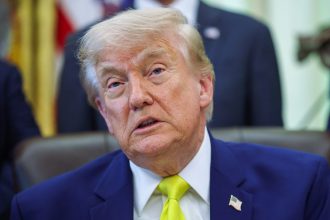
On 9 October, Donald Trump announced an agreement with Vladimir Putin to supply Russian diesel to US and global markets. The US Treasury Department issued a waiver authorising the relevant transactions until 7 April 2027. The measure applies to diesel and does not amount to lifting the broader sanctions regime against Moscow.
The announcement coincided with talks in Miami between Ukrainian negotiators and US envoys Steve Witkoff and Jared Kushner. Volodymyr Zelenskyy criticised the easing of sanctions, arguing that it provides Russia with additional revenue without a corresponding commitment to scale back attacks. Kyiv reiterated its readiness to reach a reciprocal agreement on protecting energy infrastructure.
Geopolitical significance: the decision illustrates how directly energy costs influence US policy towards Russia. In negotiations over Ukraine, the central question is increasingly what conditions are attached to concessions: what Moscow receives and what verifiable commitments it offers in return. The impact on the war will depend on that reciprocity, not merely on the resumption of certain trade flows.

Sources: Reuters, US Treasury Department and Anadolu.
2. Trump rules out strikes on Iran before the elections, but the maritime crisis persists
On 8 October, the US president stated that the United States would not attack Iran before the midterm elections on 3 November and referred to productive discussions with Tehran. The statement sets out Washington’s declared intentions for the coming weeks; it constitutes neither a peace agreement nor a guarantee concerning the period after the vote.
Meanwhile, reports of attacks on oil tankers near Qatar and the United Arab Emirates highlighted the continuing risks to shipping. The Financial Times documented the expansion of attacks attributed to Iran beyond the Strait of Hormuz, at a time when operators were seeking to restore shipping flows.
Geopolitical significance: a pause in US strikes does not mean that normal shipping conditions have been restored. Vessel security, insurance costs and predictable transit remain critical to global supplies. The distinction between reducing direct military confrontation and restoring commercial traffic is essential to assessing any diplomatic progress.
Sources: Reuters and Financial Times.
3. Saudi Arabia, Türkiye and Pakistan move to implement collective defence commitments
At an emergency meeting in Riyadh on 5 October, Saudi Arabia, Türkiye and Pakistan agreed to proceed with implementing their collective defence commitments under the Makkah Alliance for Defense. The communiqué provided for making the agreed forces and capabilities available and ensuring their rapid deployment in the Kingdom, in accordance with approved arrangements and national legislation.
The decision came amid intensified Houthi attacks on Saudi Arabia. Turkish Foreign Minister Hakan Fidan subsequently clarified that Ankara was assessing defensive support for Riyadh and ruled out participation in offensive operations. The distinction matters: a commitment to protecting Saudi territory should not be confused with a joint intervention in Yemen.
Geopolitical significance: the trilateral framework is moving from diplomatic commitments to practical military coordination. This development tests the three states’ ability to establish regional deterrence while containing the spread of the conflict. Operational roles, command arrangements and rules of engagement will matter more than general declarations of solidarity.
Sources: Ministry of Foreign Affairs of the Republic of Türkiye and Reuters.
4. The European Union and China negotiate an easing of trade tensions with major industrial stakes
Talks held in Beijing on 8–9 October produced an understanding on moderating Chinese exports of hybrid vehicles to the European Union. Commissioner Maroš Šefčovič presented the outcome as a first step towards rebalancing the trading relationship. The negotiations also addressed access for European goods to the Chinese market and the facilitation of export licences for rare earths and permanent magnets destined for Europe.
The scale of the reduction in vehicle exports requires careful interpretation. According to the Financial Times, the comparison is with projected volumes over the next four years, meaning that the agreed limits do not automatically imply halving imports from their current levels. Implementation details remain essential to assessing the outcome.
Geopolitical significance: Brussels is seeking to protect European industry and secure raw material supplies without triggering a broader trade escalation with Beijing. The understanding shows that vehicles and critical materials are being negotiated within the same interdependent economic relationship. Success will depend on effective market access and compliance with commitments, not merely on the political announcement.
Sources: Euronews, Anadolu and Financial Times.
5. Taiwan calls for US–China dialogue to respect its security
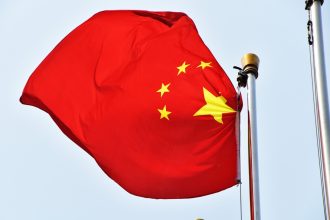
In his National Day address on 10 October, President Lai Ching-te welcomed efforts to manage US–China competition through dialogue but called for respect for the right of Taiwan’s people to exist. He urged democracies across the Indo-Pacific to work together to preserve regional peace and stability.
Lai presented defence investment as a means of deterring war and supporting dialogue on the basis of parity and dignity. His message reaffirmed Taiwan’s openness to exchanges while rejecting subordination to Beijing.
Geopolitical significance: the address reflects Taipei’s concern that stabilisation in relations between Washington and Beijing should not diminish its ability to make its own decisions. It does not, in itself, mark a change in the island’s status or a new security agreement. It does, however, set out Taiwan’s position at a time when dialogue among major powers and the credibility of US support are being closely watched across the region.
Source: Office of the President of Taiwan – address of 10 October 2026.
Read also
Atlas Geopolitical Brief: The Week of 28 September–3 October 2026 in Five Key Dossiers