Germany is expanding its intelligence capabilities, Poland is shaping its strategy for a post-war Europe, while the Black Sea and the Strait of Hormuz once again show how quickly infrastructure and trade routes can become instruments of strategic pressure. On NATO’s Eastern Flank, repeated drone incursions are turning airspace defence into a permanent test of resilience.
The week of 10–15 August was dominated by a question increasingly reflected in the decisions of major capitals: what does security look like in a world where established guarantees remain important, but are no longer regarded as sufficient?
Berlin has taken an important step towards strengthening its intelligence autonomy. Warsaw is already shaping its security policy around the premise that the Russian threat will outlast the war in Ukraine. In the Black Sea, strikes on Novorossiysk confirm the extent to which commercial and energy infrastructure is becoming part of the confrontation. In the Middle East, the Strait of Hormuz is once again emerging as a mechanism of pressure on the global economy. And in Latvia, another drone shot down by NATO aircraft shows how increasingly difficult it is to draw an operational boundary between the war in Ukraine and Allied territory.
Atlas News România brings together these five developments in a strategic review of the week.

1. Germany is no longer content with rearmament. Berlin is also seeking intelligence autonomy
This week, Germany took one of its most consequential steps towards reforming its post-Cold War security architecture.
On 12 August, the Federal Cabinet approved draft legislation under which the Bundesnachrichtendienst, Germany’s foreign intelligence service, and the Bundesamt für Verfassungsschutz, its domestic agency for the protection of the constitutional order, would receive significantly expanded operational powers. The reform still requires Bundestag approval. According to Associated Press, the new powers would enable the German services not only to collect intelligence, but also to act proactively against sabotage operations and cyberattacks. (AP News)
The change is all the more significant because Germany’s intelligence services operated for decades within a deliberately restrictive legal framework, shaped by the country’s historical experience with the repressive apparatuses of the Nazi regime and the former GDR.
An analysis published this week by Atlas News România placed the reform in a broader context: after military rearmament, Berlin is also seeking to reduce its intelligence dependence on its partners.
This interpretation is supported by the German government’s own rationale. The Federal Chancellery has explicitly acknowledged that Germany must strengthen the “national sovereignty and operational capabilities” of its intelligence services and close the gap with Europe’s leading agencies. As early as March, the Bundestag had documented the objective of a systematic reform of the BND Act, combining expanded capabilities with mechanisms of constitutional oversight. (Deutscher Bundestag)
The stakes extend well beyond the modernisation of individual agencies.
For decades, Germany was able to separate the relative modesty of its own intelligence instruments from its status as a major economic power because it was part of a Western system in which strategic intelligence was produced and shared to a considerable extent by the United States, the United Kingdom and other partners.
The war in Ukraine, hybrid threats and uncertainty over Washington’s future priorities have altered that equation.
Berlin is beginning to accept that strategic autonomy cannot exist without intelligence autonomy.
This does not mean breaking away from American or British intelligence. It means having the capacity to make national decisions without access to the necessary intelligence being structurally dependent on an ally’s willingness to provide it.
Following the military Zeitenwende, Germany is therefore embarking on a quieter but equally important process: building its own instruments to see, anticipate and, in certain circumstances, counter threats.
2. Poland is already preparing for a post-war Europe
While Germany is seeking to close a deficit in intelligence autonomy, Poland has for some time been building a security architecture around a different premise: the war in Ukraine may end, but the strategic challenge posed by Russia will not disappear with it.
This is the central argument of the analysis published this week by Atlas News România.
Poland’s official national security strategy treats Russia as a structural threat to the Euro-Atlantic order and explicitly sets as objectives the preservation of the strategic partnership with the United States, shaping NATO and EU policies, strengthening regional cooperation and supporting an independent, pro-Western Ukraine capable of defending itself. The government document also calls for preparing the state for an armed conflict “of long duration and high intensity”. (Gov.pl)
That says a great deal about Warsaw’s outlook.
Poland is not calibrating its military investments solely to the current phase of the war. It is building forces, infrastructure and resilience mechanisms for a period in which Russia may begin rebuilding the military capabilities depleted in Ukraine.
At the same time, the relationship between Warsaw and Kyiv is becoming more complex.
This week, Russia heavily exploited the Polish-Ukrainian dispute over the memory of the Volhynia massacres, amplifying anti-Ukrainian messaging online. According to Reuters, Polish authorities and experts believe Moscow is seeking to turn a genuine historical dispute into a political vulnerability. (Reuters)
This is where one of the paradoxes of Poland’s strategy emerges.
Warsaw needs Ukraine to remain strong enough to prevent Russia’s military power from moving closer to the Polish border. But that strategic interest does not automatically erase the historical, commercial or political disputes between the two countries.
Poland is attempting to manage both realities at the same time.
Moreover, Warsaw is not basing its future exclusively on the American security guarantee. Prime Minister Donald Tusk has already publicly raised questions about the credibility of the US commitment and called for Europe’s defence capacity to be transformed into a far more concrete mechanism. (Financial Times)
In this respect, Poland is not distancing itself from the United States.
It is doing precisely the opposite: seeking to keep its relationship with Washington as strong as possible while simultaneously building sufficient national and European capabilities to ensure that its security does not depend on a single political assumption.
This is the difference between preparing for the end of a war and preparing for the order that comes after it.
3. Novorossiysk confirms the changing nature of the war in the Black Sea
On 12 August, Ukraine launched one of its most complex attacks on the Russian port of Novorossiysk, simultaneously striking naval and commercial infrastructure.
The attack disrupted operations at several grain terminals and damaged assets of Russia’s Black Sea Fleet. Russia is the world’s largest wheat exporter, and the market reaction was immediate: wheat futures rose following reports that port operations had been suspended. (Reuters)
Two days later, the pressure extended to energy infrastructure.
The Sheskharis oil terminal in Novorossiysk suspended loadings after another drone attack. The facility handles approximately 700,000 barrels per day and serves both Russian exports and Kazakh oil flows. (Reuters)
The development reinforces a thesis Atlas News România had already examined in the previous week’s analysis of the changing nature of maritime insecurity in the Black Sea.
For a long period, Russia was the actor capable of imposing costs on the Ukrainian economy by attacking ports, contesting navigation and threatening trade routes.
That relationship is beginning to become more symmetrical.
Ukraine does not control the Black Sea and cannot impose a conventional blockade on Russia. But it can raise the operational and commercial cost of using certain ports sufficiently for the effects to be felt in insurance, vessel availability, loading rates and international prices.
Novorossiysk is where this strategy becomes visible.
The port is simultaneously a naval base, an oil hub and a major node for agricultural exports. As a result, the same strike can have military, commercial and energy effects.
There is, however, an important constraint.
The United States has asked Ukraine to avoid strikes on certain tankers and infrastructure associated with the Caspian Pipeline Consortium, precisely because the route also carries Kazakh oil and involves the interests of US companies. According to reports on the Washington–Kyiv discussions, previous attacks had already affected volumes transported through this route. (Reuters)
This shows how quickly the economic war in the Black Sea can come into conflict with the energy interests of Ukraine’s own allies.
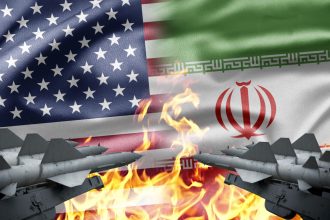
4. Hormuz: Iran turns geography into leverage over the global economy
In the Middle East, the week brought a further deterioration in security in the Strait of Hormuz.
On 14 August, two ADNOC-operated tankers were attacked while in transit, with the United Arab Emirates attributing responsibility to Iran. Associated Press confirmed the incidents, while maritime traffic through the strait continued at levels far below those seen before the war. (AP News)
The situation deteriorated against the backdrop of the deadlock between Washington and Tehran.
Shipping data cited by Reuters showed that on one day only a handful of vessels crossed the strait, compared with more than 130 daily transits before the war. The United States threatened to intensify economic pressure, while Iran continues to link the normalisation of traffic to political and economic concessions from Washington. (Reuters)
This is where the real power of Hormuz lies.
Iran does not need to defeat the United States militarily for the confrontation to produce global consequences. It is enough for the level of risk to become so high that commercial operators, insurers and shipowners alter their behaviour.
Tehran is thus turning geography into leverage.
There is no rapid substitute for the strait, and disruption there can transfer the costs of the conflict to states that are not directly involved in the confrontation: Asian energy importers, European economies and American consumers.
From this perspective, the confrontation in Hormuz is not merely naval.
It is a negotiation in which the price of energy becomes part of the balance of power.
For Washington, the issue is delicate. The greater the pressure on Iran, the stronger Tehran’s incentive to demonstrate that it can raise the economic cost of that strategy.
That is precisely why freedom of navigation through Hormuz remains one of the few regional issues capable of producing almost immediate effects on the global economy.
5. NATO shoots down another drone in Latvia. The Eastern Flank enters an era of permanent defence against low-cost threats
On 14 August, an Italian Eurofighter operating under NATO command shot down a drone of unknown origin that had entered Latvian airspace.
The incident occurred near Rugāji, approximately 35 kilometres from the border with Russia. NATO mobilised both Italian aircraft from Lithuania and Turkish F-16s from Estonia. Latvian authorities said the drone’s origin could not be determined before the wreckage was recovered. (Reuters)
That detail matters.
At this stage, there is insufficient information to attribute the drone to either Russia or Ukraine. Russian electronic warfare has, however, previously been cited by Baltic authorities as one of the factors that can divert Ukrainian drones from their intended flight paths.
Beyond the drone’s origin, the problem is structural.
Drone incursions have become frequent enough that NATO has moved from exceptional responses towards building a permanent response architecture. This month, the Alliance conducted the Baltic Trust exercise in Latvia, explicitly focused on integrating counter-drone systems and testing interoperability in scenarios involving mass UAV incursions. (NATO)
This creates a difficult economic and operational problem for NATO.
A relatively inexpensive drone can force the Alliance to launch fighter aircraft that cost tens of thousands of euros per flight hour and, in some cases, to use munitions far more expensive than the target itself.
This asymmetry cannot be resolved through fighter aviation alone.
Hence the need for layered systems: sensors, electronic warfare, low-cost interceptors, short-range air defence and common procedures for rapidly identifying threats.
For Romania, the Baltic dossier is directly relevant.
The same challenges are emerging in the Black Sea, where drones and drifting mines now intersect with offshore energy infrastructure. On 11 August, Romanian military divers neutralised two Gerbera-type drones adrift near the Neptun Deep project. The origin of the drones was not established. (Reuters)
NATO’s borders no longer need to be defended only against aircraft, missiles and conventional military formations.
They require permanent protection against low-cost platforms that are difficult to detect and, at times, difficult to attribute.
Bottom line: Europe is beginning to build for what comes after the crisis
At first glance, the week’s five dossiers appear to concern different problems.
Germany is reforming its intelligence services. Poland is preparing its security for the period after the war in Ukraine. Kyiv is seeking to turn Novorossiysk into an economic vulnerability for Russia. Iran is using Hormuz’s geographic position to transfer the costs of its confrontation with the United States to the global economy. NATO is trying to find a sustainable response to the proliferation of drones on the Eastern Flank.
The common thread, however, is clear.
States are beginning to invest not only in responding to the current crisis, but also in their ability to operate in a strategic environment that will remain unstable even after the crisis ends.
Germany is not expanding its intelligence capabilities solely for the next cyberattack. Poland is not building military capabilities solely for the current war. NATO is not developing counter-drone defences for a single incident. Ukraine is not striking Russian infrastructure solely for the immediate tactical effect. And the confrontation in Hormuz shows that the security of trade routes can no longer be separated from geopolitical competition.
The week of 10–15 August therefore points to a broader shift.
Major powers and frontline states are no longer preparing merely to survive the next crisis. They are beginning to build positions for the order that will follow it.
Read also
Atlas Geopolitical Brief: The Week of 3–9 August 2026 in Five Key Dossiers