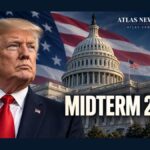
Donald Trump’s address, delivered on 16 July 2026 from the East Room of the White House, was read swiftly — in the European press and in part of the American one — as an intervention dominated by resentment over the 2020 election and by the desire to shield his party ahead of November’s midterm vote. The reading is convenient, but it ignores the context in which the Trump administration is operating.
The United States is engaged in an active war in the Gulf. Its competition with China is entering a phase of structural negotiation. The relationship between the White House and the intelligence community has remained tense since the first term. And the American electoral system, compared with that of any Western democracy, carries vulnerabilities that Europe would have considered long overdue for reform.
At such a moment, the fact that the President addresses the nation is not an aberration. It is an obligation. And the fact that the speech covered the war, foreign interference and electoral reform simultaneously reflects less a strategy of „narrative control” than the impossibility of treating these files separately.
Iran: A Victory Defined Too Early Is a Victory Handed to the Adversary
Trump did not define what victory in Iran means. The United States is winning „categorically”, and Americans will see the fruits of this effort „very, very soon”.

The press immediately interpreted the phrasing as evasion. There is, however, a second reading — one closer to strategic logic than to rhetoric.
The logic is straightforward: if you publicly announce exactly what you are pursuing, the adversary knows precisely how much to concede in order to escape. Ambiguity forces him to assume more than you would ever demand. It is the principle Thomas Schelling formalised in the 1960s under the name of the doctrine of coercion, and one that American administrations, Republican and Democratic alike, have applied consistently in major crises.
Both readings are legitimate, and between them lies a genuine tension. Effective coercion requires ambiguity toward the adversary. Democratic accountability requires clarity toward one’s own electorate. The Trump administration is prioritising the former. This is a strategic choice, not an evasion.
Events on the ground confirm the escalation. On the sixth consecutive night of strikes, American forces targeted bridges, energy installations and a tower associated with port infrastructure in Chabahar, on the Gulf of Oman — a facility located along a trade route essential for Afghanistan, according to the Associated Press. In parallel, Iran struck targets in Qatar, Kuwait and Bahrain. In Kuwait, a plant supplying both the electricity grid and the country’s water desalination capacity was damaged. The interim understanding reached last month has collapsed, and the Iranian military has stated that security in the Strait of Hormuz has been irreversibly altered.
The shift from purely military targets to critical infrastructure indicates what Washington is pursuing: raising the cost for Tehran to a threshold sufficient for negotiation, not a campaign of annihilation. This is precisely the type of escalation in which the explicit objective cannot be communicated publicly without forfeiting one’s leverage.
An open question remains. For how long can a campaign of this kind be sustained before regional allies and domestic public opinion begin demanding clarification?
Ambiguity Carries a Cost for Allies, and the Administration Appears Willing to Bear It
The cost of this approach is not borne by Iran alone. Qatar, Kuwait and Bahrain host American military capabilities. All three have become targets of Iranian retaliation. The strike on the Kuwaiti facility is illustrative: in a country where drinking water comes overwhelmingly from desalination, such an attack directly affects the daily lives of millions.
For the monarchies of the Gulf, the promise of an imminent American victory is not enough. They need to know whether Washington is pursuing a rapid negotiation, a prolonged campaign of coercion, or a fundamental shift in the balance of power with Iran.
The Trump administration appears to calculate that regional allies will continue to cooperate because they have no alternative. In the short term, the calculation holds. In the medium term, it encourages them to complement military support with their own diplomatic channels to Tehran, which erodes the coherence of the pro-American front in the Gulf.
The risk is real. If the campaign is prolonged, it becomes structural. Offsetting it requires consistent private communication with Doha, Kuwait City, Manama and Riyadh — a diplomatic effort that Washington downplays in public but cannot avoid behind the scenes.
China: The Collection of 220 Million Voter Files Is a Genuine Incident, but Its Political Interpretation Remains Contested
The bulk of the speech was dominated by allegations concerning the security of the American electoral system and China’s involvement in the 2020 election. Trump announced the declassification of documents according to which Beijing allegedly obtained approximately 220 million American voter files — names, addresses, phone numbers, political preferences.
The American press reacted swiftly. The 2021 intelligence community assessment had already established that no foreign actor altered voter records, ballots, the tabulation process or the outcome of the presidential election, according to ABC News. Senator Mark Warner, Vice Chair of the Senate Intelligence Committee, countered that access to voter files does not amount to interference: much of that information is publicly available and is routinely purchased by political consulting firms, as NPR reports.
Both objections are technically correct. They are, however, insufficient to close the debate.
The systematic collection of data on more than two hundred million voters by a foreign intelligence service is not a trivial fact. Even if part of the information is commercially available, consolidating it into a single database — correlated with political preferences, online behaviour and personal vulnerabilities — is precisely the raw material of any modern influence operation. What one buys from an American data broker is fragmentary. What one builds on the basis of 220 million integrated files is a strategic instrument.
The distinction between „altering the result” and „interference” has been used frequently in recent years to minimise the latter under the argument that the former did not occur. Trump rejects that distinction.
His rejection can legitimately be criticised: it blurs distinctions that matter in law and in public policy — between espionage, data collection, influence and fraud. But the underlying question he raises remains valid. What does „interference” mean in an era in which control over voter data is at least as valuable as ballot manipulation?
The administration has not answered this question in full. It has, however, placed it on the agenda. That in itself matters, regardless of the assessment one makes of the rhetorical instruments used.
Electoral Reform: A Legitimate International Comparison, but an Open Domestic Debate
Trump backs legislation that would introduce additional requirements for proof of citizenship and voter identification. The bill passed the House of Representatives but has been blocked in the Senate, where contested legislation requires 60 votes to overcome procedural obstruction — a threshold Republicans do not currently meet.
Republicans are now attempting a workaround: incorporating certain provisions into a budget reconciliation package — a special procedure that allows passage by simple majority, but is restricted to measures with a direct budgetary impact. It remains uncertain whether all the electoral provisions will survive these procedural constraints.
From the administration’s standpoint, the reform amounts to bringing the United States closer to the standards prevailing in most Western democracies. All European Union member states require the presentation of an identity document at the polls. Most maintain electoral rolls linked to population registers, with systematic citizenship verification. In the United States, these elements are fragmented, handled at state level and, in some jurisdictions, simply absent.
Critics of the bill argue, however, that differences between systems make the comparison incomplete. They do not contest the principle of identification, but three concrete issues: how the reform would be implemented, its foreseeable effects on certain categories of voters (the elderly, rural minorities, women who changed their name after marriage), and the distribution of powers between the federal government and the states — a matter traditionally protected in electoral affairs.
These arguments carry real weight and cannot be dismissed as mere partisan reflex. The debate is not between „reformers” and „obstructionists”. It is between a uniform federal approach and an American tradition of electoral decentralisation. Both are compatible with democratic practice. Both come with costs.
The Press: A Moment That Fuels a Debate the American Media Has Long Avoided
The three major broadcast networks reacted differently to the White House’s request to carry the speech.
ABC and NBC announced during the day that they would not interrupt their primetime programming, but offered the address on their digital platforms. Fox News carried it in full. CBS began broadcasting the speech but cut away after roughly fifteen minutes to fact-check the President’s claims. CNN did not air the address on its main channel. MS NOW, the former MSNBC, began broadcasting and then interrupted the transmission for fact-checking, according to CNN Business.
The United States is at war. The President has a constitutional duty to communicate directly with the nation, and the public has a democratic interest in hearing the executive’s message without intermediary filtering. The decision by two of the three major networks not to carry the address was perceived by the administration as a significant editorial precedent and has fuelled a genuine debate about the role of television networks in a wartime context.
Trump’s reaction — suggesting that broadcasting licences be revoked — is legally simplistic. The FCC licenses local stations that use the public spectrum, not national networks as unitary entities. And the Commission cannot penalise a broadcaster for an editorial decision without triggering a major constitutional problem.
The presidential critique nonetheless highlights a real question. To what extent can national networks assume an active editorial stance against the executive in wartime without themselves becoming political actors? It is a debate the American press has systematically avoided since 2016. Trump is forcing it into the public sphere.
The manner in which he does so can legitimately be criticised. It substitutes regulatory threat for editorial dialogue and turns a substantive disagreement into an institutional trial of strength. That he does it, however, is not in itself illegitimate.
The Intelligence Community: A Conflict That Did Not Begin in 2026
Trump has once again accused members of the intelligence community of concealing information about Chinese activities, including through alleged modifications of presidential briefings. He has called for investigations and possible criminal prosecutions, without specifying, within the speech itself, the facts and evidentiary standards on which any judicial proceedings would rest.
The American press has interpreted these accusations as a new round in the presidential war against the „deep state”. The interpretation overlooks a well-documented context.
The relationship between the first Trump administration and the intelligence community was marked by repeated institutional controversies concerning intelligence assessments, federal investigations and the interaction between the security apparatus and the executive. These disputes, extensively documented throughout the first term, produced a structural — not merely emotional — reciprocal suspicion.
Trump is therefore drawing on a conflict that predates the current mandate. The way he frames it — with a public call for prosecutions and no specification of the underlying facts — is contestable and hands his adversaries the argument of a politicisation of justice. The principle that the intelligence community must be held institutionally accountable for questionable past assessments is legitimate in any functioning democracy. What distinguishes democratic reform from executive pressure on institutions with a counterweight role, however, is measured in instruments, not in principles.
The Trump administration must offer additional guarantees regarding procedural integrity and the independence of investigations. For the moment, those guarantees have not been formalised. Their absence remains one of the principal vulnerabilities of the presidential approach.
An Internal Republican Tension the Speech Does Not Resolve
Trump’s decision to use this moment for the electoral security file is not shared by the entire Republican leadership.
Senators such as John Cornyn of Texas and Mike Rounds of South Dakota stated publicly, ahead of the speech, that they would prefer the party’s focus to remain on the 2026 election rather than on 2020, according to The Hill. Beyond the rhetoric, this reflects a genuine strategic debate inside the party: to what extent does mobilising the base through identity themes electorally compensate for the cost of missed economic messaging, at a time of rising energy prices and dissatisfaction with the war in the Gulf?
The speech does not settle that debate. It confirms it.
The administration has chosen a strategy centred on structural themes — security, foreign interference, institutional integrity. It is a strategy that generates loyalty within the base but does not directly address the everyday concerns of the median voter. A legitimate choice, with political costs that moderate Republicans are already flagging publicly.
The Real Stakes for European Chancelleries
For the European partners of the United States, the address of 16 July should be read less through the filter of American domestic political reactions and more through what it concretely means for European strategic planning.
First observation: the Trump administration is managing a regional conflict with a resolve that suggests the United States remains prepared to use force in defence of its strategic interests in the Gulf. This is significant news for European energy security, even if the manner in which Washington communicates its objectives remains opaque and complicates alliance coordination.
Second: the US–China relationship is entering a phase of structural negotiation in which the Trump administration is combining commercial pressure with the exposure of hostile Chinese behaviour. Europe has here a strategic opportunity that it should not squander out of an atlanticist reflex of reserve. Partial alignment with the American agenda on data security, critical technology and supply chains is in the EU’s own interest, regardless of European public opinion about Donald Trump.
Third: the American political system is entering a period of contested institutional reform. European states should avoid both the temptation of interpreting every decision by the Trump administration as a „democratic crisis” and the symmetrical temptation of uncritically endorsing every reform. Several of the debates opened in Washington — on electoral security, institutional accountability, protection of critical infrastructure — are likely to become central themes in European democracies in the coming years. Chancelleries that study them now, with analytical detachment, will be better prepared than those that choose to reject them for reasons of image.
An Administration That Refuses to Treat Separately Files the Press Prefers to Keep Distinct
Donald Trump’s speech was neither an evasion of the war with Iran nor an obsession with the 2020 election. It was an acknowledgement that, in 2026, the Iran, China, electoral security, press and intelligence community files cannot be treated separately.
The Trump administration rejects the grid according to which each of these subjects carries an „expert consensus” the executive is merely required to apply. In its place, it proposes an alternative: the executive holds the electoral mandate to critically evaluate the institutions bequeathed to it and to impose reforms where it deems necessary.
It is an approach with genuine risks — of politicisation of institutions, erosion of their independence, subordination of expertise to a political agenda. These risks exist and must be monitored closely. They are not simple objections of image, but issues of institutional architecture that may leave traces well beyond the current mandate.
At the same time, rejecting the principle that the executive is entitled to challenge institutional assessments is not a conservative stance in defence of democracy. It is a stance in defence of the institutional status quo. And the American institutional status quo — the intelligence community, the broadcast networks, the electoral infrastructure, the policy toward China — has, over the past decade, produced enough failures for the very act of challenging it to constitute a legitimate political option.
Trump does so with his own instruments: rhetorical brutality, personalisation of conflict, emotional escalation. These instruments carry a cost. They reduce the administration’s ability to build broad coalitions around the reforms it proposes, and turn every substantive file into a loyalty test. Part of the opposition it encounters concerns not substance but style. Yet style, in politics, carries real consequences.
For Europe, the question is not whether it prefers an American President who speaks differently. The question is whether it understands that many of the problems placed on the table in Washington — the security of voter data, accountability within the intelligence community, the redefinition of the editorial role of television networks in wartime, the calibration of coercion in the Gulf — are real problems, regardless of the identity of the one raising them.
The sooner European chancelleries address them on their merits, the better they will be able to safeguard their own strategic interests in a transatlantic order undergoing profound reconstruction.
Read also