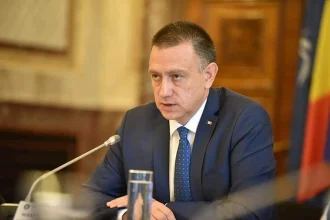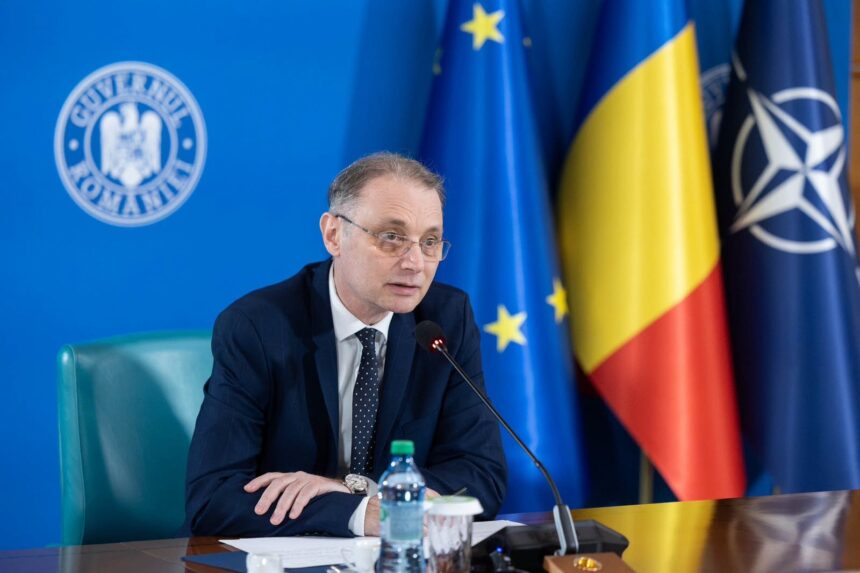
Romania is seeking to rebuild investor confidence and attract fresh international capital as Prime Minister Luca Niculescu places economic recovery at the centre of the government’s agenda. During a meeting with representatives of foreign investors in Bucharest on November 4, the prime minister outlined plans to reduce administrative barriers, strengthen economic diplomacy and establish regular consultations with the business community. The initiative comes as Romania seeks to restore economic momentum following a period of political uncertainty.
Speaking at Victoria Palace, Niculescu emphasised the importance of restoring trust between public institutions, domestic companies and international investors. He acknowledged the contribution of foreign businesses to Romania’s development and presented closer cooperation with the private sector as a prerequisite for sustainable economic recovery.
The government also announced plans for quarterly meetings with representatives of foreign investors, creating a more structured channel for addressing business concerns and discussing measures to stimulate investment.
Romania’s €4.5 Billion Bond Issue Sends a Market Confidence Signal
One of the principal developments highlighted by the prime minister was Romania’s recent return to international debt markets.

The country raised €4.5 billion through international bond issuance in early November, an outcome Niculescu described as evidence of improving external confidence following the resolution of political uncertainty in Bucharest.
The prime minister linked the market response to the installation of a fully empowered government and the adoption of a budget revision, arguing that greater political stability could help restore investment activity and generate employment opportunities. His assessment was reported in the Digi24 account of the meeting.
For international investors, the bond issuance provides an indication of continued access to external financing. However, sovereign borrowing should not be confused with foreign direct investment. Its longer-term significance will depend on fiscal management, financing costs and the government’s ability to implement credible economic reforms.
Cutting Red Tape and Advancing OECD Accession
The government’s economic agenda places particular emphasis on simplifying administrative procedures, improving efforts to combat tax evasion and strengthening economic diplomacy.
These priorities address issues directly relevant to foreign companies assessing Romania as an investment destination, including regulatory predictability, administrative efficiency and the quality of public institutions.
Romania’s accession to the Organisation for Economic Co-operation and Development (OECD) remains another major objective. The government views membership as an opportunity to strengthen the country’s international credibility and align domestic policies more closely with established standards of economic governance.
Niculescu also referred to discussions held on November 3 with OECD Secretary-General Mathias Cormann, underlining the importance attached to the accession process, according to the government’s statement.
Foreign Investment Remains a Critical Challenge
The government’s renewed engagement with international businesses comes against a difficult investment backdrop.
Foreign direct investment in Romania declined to approximately €2.12 billion during the first eight months of 2026, compared with €5.66 billion over the same period in 2025, according to figures reported by Digi Economic. The decline of more than 62% illustrates the scale of the challenge facing policymakers.
Investors have also called for a consistent programme of structural reforms over the next six months, while the government faces the additional tasks of reducing the budget deficit and containing inflation.
For international companies considering investments in Romania, the government’s latest commitments signal a willingness to improve dialogue and address obstacles to business activity. The proposed quarterly consultations could provide a practical mechanism for monitoring progress.
Nevertheless, the November 4 meeting did not produce a detailed implementation timetable or a new investment incentive package.
The significance of the government’s message will therefore be determined not simply by its stated priorities, but by whether improvements in administrative efficiency, fiscal predictability and institutional cooperation translate into measurable changes in Romania’s investment environment.
Read also
The American Way of Life and the 2026 Midterm Vote: Why the Democrats Won