The G7 summit in France is no longer the classic gathering of a West confirming its consensus around a single table, but the first major test of a post-consensual Western order, in which major decisions are made before allies can deliberate them together. At Évian-les-Bains, between 15 and 17 June 2026, the G7 leaders meet in the shadow of the US-Iran agreement, confirmed by the Iranian side and scheduled for signing on Friday in Geneva, but whose essential details — particularly those concerning the Iranian nuclear programme, sanctions and the full implementation timeline — remain open. At a moment when the Strait of Hormuz, Ukraine, critical minerals, China and global economic imbalances form part of the same strategic question, the summit raises a single fundamental issue: who can still organise the economic and security order when American power acts transactionally and Europe is still searching for its critical mass?
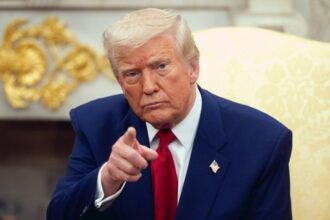
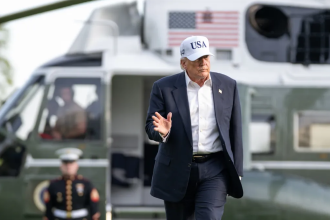
The underlying thesis of this summit is that the G7 no longer functions as a directorate of liberal globalisation, but as an emergency council of the major industrialised economies. The real stake is not the family photograph, but control over the four flows that sustain contemporary power: energy, security, capital and critical minerals. Donald Trump arrives in France not as a mere disruptor, but as an actor without whom the major dossiers cannot be closed. Emmanuel Macron, by contrast, is seeking to turn the summit into an instrument for re-anchoring America within a collective framework, without provoking an open rupture.
The G7 Returns to Its Origin: the Economy as a Security Issue
To understand Évian 2026, one must return to the forum’s original logic. Reuters recalls that the G7 emerged after the 1973 oil embargo, as a forum of the major economies for managing global economic crises. The current agenda brings precisely this function back to the fore: energy, inflation, trade and the security of supply chains once again weigh on the negotiating table.
The G7 is not „obsolete” because it can no longer dictate the global order alone. It is relevant precisely because the major industrialised economies must jointly manage the consequences of crises that none of them can control on its own. The French presidency has set as priorities the reduction of global imbalances, the reform of development financing and the resilience of critical mineral supply chains, according to the Élysée.

The US-Iran Agreement Changes the Summit: Trump Arrives With a Tactical Advantage, Allies Demand Verification
The agreement between the United States and Iran reshapes the balance of power within the G7, but it must be treated with caution. Reuters reports that the United States and Iran have reached a framework agreement to end the war, lift the American blockade on Iran and reopen the Strait of Hormuz, with the memorandum to be formally signed on Friday in Switzerland. The Guardian points to Geneva as the expected venue of the signing ceremony on 19 June. The Iranian side has confirmed the agreement, but the precise terms are not yet fully public, and the Iranian nuclear programme and sanctions are to be discussed at a later stage, over a 60-day period.
The leaders of France, the United Kingdom, Germany and Italy have welcomed the memorandum, but have tied European support to clear implementation conditions. According to their joint statement published by the Élysée, the unconditional reopening of the Strait of Hormuz, freedom of navigation, nuclear verification and the gradual lifting of sanctions solely in exchange for clear and verifiable Iranian steps remain essential conditions.
Here lies the underlying tension of the summit. Trump enjoys the advantage of arriving at Évian with a major diplomatic move, but the Europeans cannot automatically endorse an agreement whose verification mechanisms, nuclear timeline and economic concessions are not yet fully clarified. The difference is not one of objective, but of method: for Washington, the outcome precedes the architecture; for the European capitals, it is the architecture that makes the outcome durable.
Hormuz, the Practical Test of the Agreement
The Strait of Hormuz is the operational centre of the summit. It is not merely an energy route, but a test of the G7’s capacity to transform an armistice into a functioning maritime security regime. Trump stated that the Strait of Hormuz would be reopened on Friday, with the signing of the agreement, and that he had ordered an end to the American blockade of Iranian ports. The European leaders’ statement calls, according to the Élysée, for the urgent reopening of the strait with unconditional freedom of navigation, alongside an independent defensive mission to reassure commercial shipping and demining operations.
The scale of the disruption justifies this urgency. The IEA announced on 11 March 2026 the largest coordinated oil stock release in the agency’s history — 400 million barrels — in response to the disruptions generated by the Middle East conflict. The agency shows, in its analysis dedicated to the region, that restricted traffic through Hormuz has led to cumulative losses of more than 1 billion barrels from the Middle East’s oil production, with over 14 million barrels per day of production blocked, sustaining pressure on inventories and energy markets.
If Hormuz does not effectively reopen, the US-Iran agreement risks remaining a political communications victory rather than a strategic stabilisation. Freedom of navigation is the line separating an announced armistice from an implemented one, and effective implementation remains — alongside Israel’s position on the inclusion of the Lebanese file in the architecture of the agreement and the subsequent nuclear negotiations — one of the major uncertainties hanging over the agreement.
Ukraine, a Secondary Dossier in Attention, Central in European Security
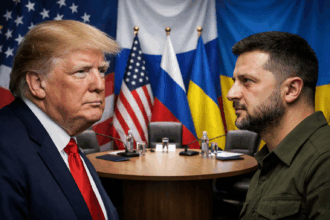
Ukraine enters the summit not as an appendix, but as a test of the relationship between Washington and Europe. Reuters reports that Volodymyr Zelensky spoke with Trump ahead of the summit and stated that Ukraine’s position on the battlefield had strengthened, with a meeting at Évian expected.
The European position was set out earlier. The joint statement by France, the United Kingdom, Germany and Ukraine of 7 June, published by the Élysée, establishes that any peace effort must be made in close cooperation with Ukraine, the European partners and the United States, that the current line of contact must be the starting point of negotiations, that international borders cannot be changed by force and that Ukraine needs robust and legally binding guarantees.
In the Atlas News Romania strategic reading, the stake for the Europeans is not only to persuade Trump to support Ukraine, but to prevent the Ukrainian dossier from being treated with the same transactional logic as Iran: a rapid ceasefire, implicit territorial concessions and pressure on the party more dependent on American support.
Critical Minerals: the Summit’s True China Dossier
Critical minerals are the economic key to the meeting and must be read strategically, not technically: defence, energy, artificial intelligence, electrification, industry and technological autonomy all depend on the same supply chains. The communiqué of the G7 trade ministers, published by the Élysée, speaks of the vulnerability of these chains, of excessive concentration, distortive practices and the risk that economic dependencies may be turned into instruments of coercion.
The statement of 10 June on accelerating investment in critical mineral projects, available in the G7/G20 Documents Database, calls for the mobilisation of private capital, shared-risk instruments, long-term offtake agreements and the aggregation of demand among trusted partners.
The G7 is not seeking merely to reduce dependence on China. It is attempting to build a parallel strategic market, in which financing, standards, traceability and industrial buyers reduce the blackmail power of Chinese concentration. In the new strategic economy, whoever controls refining, financing and offtake contracts controls more than the resource: they control the industrial pace of their rivals.
China Produces Too Much, America Consumes Too Much, Europe Invests Too Little
This is the French strategic formula, and it must be explained, not repeated mechanically. The Directorate General of the French Treasury shows, according to the Direction générale du Trésor, that current-account imbalances, industrial policies and pressures on supply chains amplify geopolitical and trade tensions, and that France wishes the G7 to discuss collective measures and the monitoring of the link between macroeconomic imbalances and economic security.
Reuters provides the framework: China accumulates trade surpluses fuelled by overcapacity, the United States absorbs global demand through persistent deficits, and Europe converts domestic saving into an external surplus owing to underinvestment. Three major poles, three incompatible behaviours — surplus production, debt-financed consumption and saving without strategic investment. Here lies the structural stake of the summit: not merely trade, but the question of whether the global economic model can still function.
Wine Is the Symbol, Technology Is the Stake
Trump’s tariff threat against French wines should not be overstated, but neither should it be treated as an anecdotal episode. Reuters, citing the New York Post, reports that Trump threatened 100% tariffs on French wines unless France eliminates the 3% digital tax applied to major American technology companies, with the White House and the Élysée not immediately offering comment.
Wine is the visible political instrument; the real stake is who has the right to tax the digital rents of the American technology giants. The dispute shows that among allies there is no longer a clear separation between trade, taxation, technology and geopolitics — everything has become a single field of negotiation.
What Évian Actually Tests
The Évian summit will not produce a definitive solution to any of the crises that dominate it, nor should it be judged by that standard. The G7 remains an informal forum, without direct legal power, but it is precisely this informality that allows it to coordinate positions ahead of the G20, NATO, the energy markets and the financial institutions.
The question that remains open is whether the results obtained unilaterally by Washington can be transformed into a common architecture, verifiable and strategically sustainable for the allies. Europe cannot dictate the American agenda, but it can condition the collective legitimacy of agreements: a maritime mission in Hormuz, nuclear verification through the IAEA, gradual sanctions, guarantees for Ukraine. Évian 2026 does not measure the strength of Western consensus, but the capacity of the major industrialised economies to jointly control the vital flows of a world in which power has become, above all, transactional.
Read also
Bulgaria Recalibrates Its Black Sea Strategy: Fewer Arms for Ukraine, More Self-Defence Within NATO