Armenia has turned a dispersed population into an architecture of attachment, philanthropy, cultural visibility, and external influence. Georgia has built globally recognizable cultural assets while projecting political and economic relationships toward Europe. Romania, despite having one of Europe’s largest diasporas and a strategically valuable Black Sea position, still treats its citizens abroad primarily as consular clients, remittance senders, cultural communities, or potential returnees.
Assessment
A state does not end at its border. Its formal territory does, but its influence extends wherever people, institutions, capital, and cultural networks continue to act in relation to it.
This distinction is particularly visible in the South Caucasus. Armenia and Georgia are small states operating under severe geographic constraints. Yet both have developed forms of international projection that exceed their demographic and economic weight. Armenia’s diaspora policy is the clearest example: it does not rely exclusively on encouraging permanent return. It creates graduated pathways through which people can visit, study, volunteer, work, invest, donate, and advocate without first relocating.
Romania has a larger resident population, greater economic resources, NATO protection, European Union membership, and direct access to the Black Sea. It nevertheless lacks an equally coherent architecture for integrating its diaspora into the country’s future.

The strategic lesson is not that Romania should copy Armenia, Georgia, or Israel. Their histories and security environments are different. It is that diaspora becomes an instrument of influence only when identity, institutions, opportunity, and national direction reinforce one another.
Geography Is Not a Backdrop
In the Caucasus, geography is not an abstraction. It is a constraint renegotiated in every generation.
Armenia is a landlocked country of just over three million people, positioned between Turkey, Azerbaijan, Georgia, and Iran. Russia is its principal security guarantor and remains an unavoidable human, economic, and linguistic reality. Russia hosts one of the world’s largest Armenian communities, Russians tourists abound in the region, while Russian continues to serve as a practical language of communication across the region.
Iran provides Armenia with another indispensable relationship: trade, connectivity, hard-currency income, and tourismTurkey represents a regional power, a largely closed border, and the unresolved historical trauma of the Armenian genocide. Azerbaijan is wealthier, better armed, and closely supported by Ankara.
Armenia has no luxury of pretending that it is located somewhere else. Its foreign relationships are a balancing system created by necessity.
Yet Armenia projects an identity larger than its territory. During more than two decades working in diplomacy, strategic communication, and the wider Black Sea region, I have seen well-funded states fail to generate influence and fragile states achieve disproportionate visibility. The difference is rarely patriotism alone. It is the ability to turn identity into a repeatable system.
Seven Million Abroad, Three Million at Home
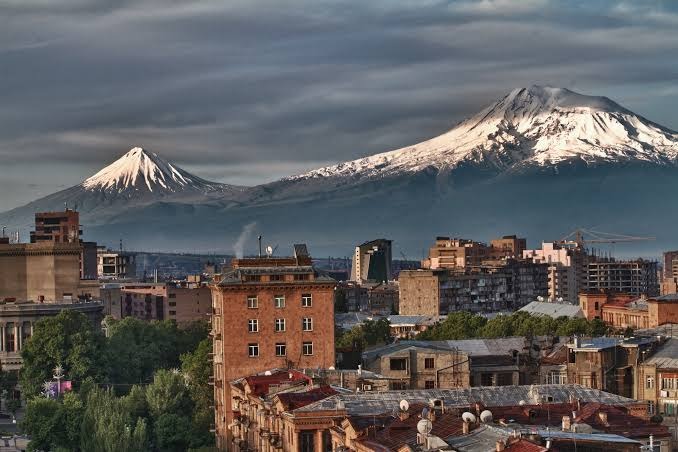
Armenia’s Office of the High Commissioner for Diaspora Affairs estimates that approximately seven million Armenians live across more than 100 countries. Armenia itself had roughly 3.08 million residents at the beginning of 2025. Definitions vary, but the strategic reality is clear: substantially more Armenians live outside Armenia than within it.
Georgia’s demographic equation is less extreme but still significant. The country had approximately 3.7 million residents, while its foreign ministry stated in 2025 that more than 1.5 million Georgian citizens lived abroad.
Romania has 19 million residents. The OECD estimated that, by 2022, approximately 5.7 million Romanian citizens had lived in another country for at least twelve months. By any reasonable measure, this is one of Europe’s largest diasporas.
Romania has consular services, grants for cultural associations, festivals built around folk clothing, food, music, and religious traditions, and financial programs intended to encourage return and entrepreneurship. Each may have value. Together, however, they do not yet constitute an identity strategy.
People do not maintain a meaningful national connection merely because a government offers another form, subsidy, or heritage celebration. They remain connected when they believe they are participating in a collective project that has direction and in which they have a credible role.

The Three Layers of External Identity
Identity can be understood through three interacting layers.
The first is behavioral: what a society repeatedly does, rewards, and tolerates. The second is environmental: institutions, cities, symbols, neighboring states, geography, and material constraints. The third is the imagined community—not an invented or false community, but the collective aspiration through which people interpret both their past and future.
Influence emerges when these layers reinforce one another. When they diverge too sharply, identity becomes performance without institutional substance.
Armenia’s existing reality is difficult: a less wealthy, landlocked state with imperfect institutions and much more powerful adversaries. Its aspirational identity is nevertheless strong. Armenians often describe themselves through survival, Christianity, historical continuity, construction, commerce, education, and an ability to endure displacement without disappearance.
An Armenian taxi driver once summarized this doctrine to me without intending to. He attempted to extract the maximum possible value from foreign visitors, offering private excursions and dinner at a friend’s home. This is hardly unique in tourist economies. Yet, during the same conversation, he spoke proudly of “our churches,” “our Ararat”—temporarily located in Turkey, in his formulation—and “our seas,” invoking the period of Tigranes the Great, when the Armenian kingdom reached the Mediterranean.
He was simultaneously a merchant, an informal historian, and an influence actor. The combination was slightly comic, occasionally exhausting, and entirely coherent with the national story he carried.
Armenia Produces Attachment, Not Only Return
Armenia’s most important innovation is that it does not present permanent repatriation as the only meaningful relationship with the homeland. It offers stages of proximity.
The government’s Step Toward Home program brings diaspora teenagers to Armenia for language training, history, excursions, and contact with Armenian peers. A recent cycle attracted 1,524 applicants from 30 countries for 600 places. Birthright Armenia combines volunteer placements and professional internships with host families and Armenian-language classes. The iGorts program places diaspora professionals inside public administration. The Diaspora Youth Ambassador initiative trains young Armenians to return to their communities as active nodes in a transnational network.
The mechanism matters. Participants receive more than cultural exposure: they receive a role. They gain access rather than nostalgia alone, and a cohort rather than an isolated holiday. They leave with friends, professional contacts, shared experiences, and evidence that their participation can matter.
This is influence architecture.
Israel has developed the same principle on a larger and more institutionalized scale. The Law of Return translates belonging into a legal route toward citizenship. Taglit–Birthright Israel has brought hundreds of thousands of young Jewish adults to Israel through group experiences, while Masa Israel Journey offers more than 200 longer programs involving study, professional development, and volunteering.
Israel’s model cannot be transferred mechanically. Its legal foundations, security doctrine, institutions, and relationship with global Jewish communities are distinct. Its value as a comparison lies in the sequence: states cannot first demand advocacy and only later offer belonging. They must construct the human network before expecting the network to generate influence.
Armenia has adapted this logic without Israel’s resources. For an Armenian living in Los Angeles, Paris, or Moscow, moving to Yerevan will not usually provide a higher salary or more capable public institutions. The attraction is not based solely on material benefit. It offers identity density, significance, and participation in the continuity of a vulnerable nation.
When Identity Becomes Infrastructure
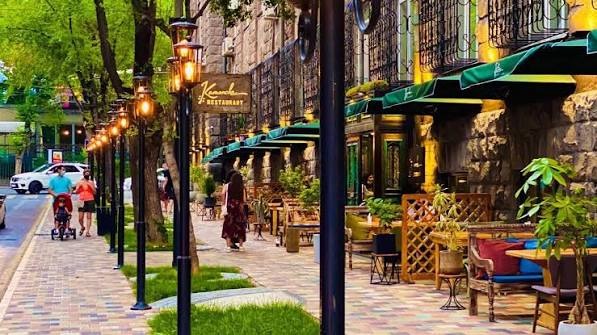
The same coherence is visible in central Yerevan. The city is not uniformly well planned, but its center has a recognizable idea of itself. Alexander Tamanian’s urban design, Republic Square, buildings made from pink volcanic tuff, the Opera district, cafés, public spaces, and the Cascade create a capital that is visually distinctive, lively late into the evening, and notably clean.
From direct observation, parts of central Yerevan are more coherent and attractive than the centers of much wealthier capitals, including Bucharest. This is not evidence that Armenia possesses greater resources. It demonstrates what accumulated design, cultural identity, maintenance, discipline, and public ambition can achieve.
Diaspora philanthropy is physically embedded in that landscape. Armenian-American businessman Gerard Cafesjian invested more than $35 million in completing the Cascade and transforming it into a major arts center. Kirk Kerkorian’s Lincy Foundation financed housing, roads, and other critical infrastructure, as well as schools and cultural institutions. Charles Aznavour connected global prestige to humanitarian and cultural projects. Networks including AGBU, TUMO, and COAF have supported schools, technology centers, scholarships, and social infrastructure.
Such philanthropy can create dependencies, competition among donors, and informal political influence . It nevertheless generates visible public assets: children attend schools, residents use infrastructure, and visitors encounter cultural landmarks. Identity acquires a physical address.
Romania does have significant diaspora philanthropy. Ion Rațiu, the Romanian-American Foundation, and numerous donors supporting education, health, and civil society refute any claim that it does not exist. A 2025 study found that 72 percent of surveyed Romanian diaspora members had donated or intended to donate.
The gap is institutional visibility and scale. Romania has few urban, scientific, or cultural projects comparable to the Cascade that citizens immediately recognize as a diaspora investment in the country’s future. Bequests left to Romanian institutions, including the Romanian Academy, are another opaque area. Public information is fragmented: the Academy describes a patrimony administration service, but there is no easily identifiable public register showing what was received from citizens abroad, how those assets are managed, what income they produce, and who benefits.
If a donor leaves a property to finance scholarships and, a decade later, that property is primarily a file inside a patrimony department, the state has not converted philanthropy into public value. It has converted it into institutional entropy.
Cultural Projection Without Cultural Erasure
Georgia provides a related lesson. Georgian dance is not simply inherited folklore; it is a disciplined export industry and a form of public diplomacy. The Sukhishvili Georgian National Ballet, founded in 1945, has performed in 98 countries, staged more than 20,000 performances, and reached an estimated 60 million spectators.
Its global recognition rests on decades of training, artistic selection, organizational consistency, and an unmistakable cultural signature. The company did not become international by suppressing its origins. It became international by making those origins impossible to confuse with anyone else’s.
Romania has also produced successful cultural exports. INNA represents a Romanian pop industry capable of reaching global markets, largely through English- and Spanish-language music. This is a legitimate international strategy, but it is not the only one.
“Dragostea din tei,” composed by Dan Bălan and released by the Moldovan group O-Zone, offers an instructive counterexample. Sung in Romanian, it topped charts across multiple European markets and reportedly sold more than 12 million copies worldwide. Bălan—a Romanian from the Republic of Moldova whose career has included number-one Russian-language releases—demonstrates that engagement with the East need not weaken Romanian identity. It can expand its operational range.
This is the difference between defensive and high-performing identity. Defensive identity fears contact and equates international success with imitation. High-performing identity enters other markets while remaining legible on its own terms.
Europe as an Instrument, Not an Imaginary Address
Armenia and Georgia seek deeper relations with the European Union not because they have forgotten their geography, but because they understand it. The EU lies beyond the Black Sea and a corridor of political, logistical, and security vulnerabilities. Both countries nonetheless project relationships toward Europe in pursuit of market access, mobility, investment, standards, institutional modernization, and diplomatic space.
They use Europe as a multiplier of strategic options. Neither assumes that closer European relations will physically remove it from the Caucasus.
This reverses the conventional Romanian perspective. If landlocked Caucasian states can project interests toward Brussels, why does Romania—an EU and NATO member on the Black Sea—project so little sustained political, commercial, educational, and cultural ambition in the opposite direction?
Georgia and Armenia should be natural areas for Romanian investment, connectivity initiatives, academic cooperation, cultural activity, and diplomatic influence. Romania’s communities in major Western capitals could help build coalitions around a distinct Romanian Black Sea agenda. Bucharest’s position inside the EU could make it one of the principal European interlocutors for the South Caucasus.
The Black Sea should not be treated as Romania’s eastern boundary. It should function as a platform for projection.
Implications for Romanian Strategy
Romania’s current weakness is not primarily a lack of resources. It is a lack of integration between identity, geography, diaspora, and foreign policy.
Part of the Romanian elite presents Western integration as if it were a substitute for geography. Romania is imagined as intellectually located on the Potomac, the Thames, or the Seine rather than on the Danube and the Black Sea which is seen as a threat area not an opportunity area. Yet Romania’s value to Western institutions comes precisely from where it is: adjacent to, the Balkans, the South Caucasus, and the routes connecting Europe with Central Asia.
Western integration remains essential. But a state that offers only alignment provides conformity, not influence.
A more capable diaspora strategy would require at least five institutional mechanisms:
- A Birthright Romania program for second-generation teenagers and young adults, combining language, history, travel, peer networks, and exposure to contemporary Romania rather than heritage alone.
- Structured placements inside government, universities, cultural institutions, and companies for diaspora professionals.
- A verified network of Romanian experts, investors, researchers, media figures, and institutional connectors in major global capitals.
- A transparent co-investment vehicle for emblematic philanthropic projects with visible public benefit.
- A public register of institutional donations and bequests, including assets, income, beneficiaries, and measurable outcomes.
These mechanisms should not be designed exclusively to bring people home. Their purpose should be to enable participation in Romania’s future regardless of where participants live.
In diplomacy, influence is not limited to the message delivered by an ambassador. It includes who can call whom, who is trusted in a newsroom, who leads a laboratory, who finances a university chair, who convenes investors, and who can explain a country without either inferiority or propaganda.
Outlook
Armenia demonstrates that a state can be constrained in territory and resources while remaining rich in continuity. Georgia demonstrates that a small country can make a highly specific cultural form globally recognizable through discipline and consistency. Israel demonstrates how belonging can be institutionalized across generations, even when relations between the state and its diaspora remain politically complex.
Romania possesses a larger population, stronger formal alliances, more economic capacity, direct Black Sea access, and millions of citizens and descendants abroad. Its unrealized advantage lies in connecting these assets.
The frontier of a state is marked on a map. The frontier of its influence lies wherever people still speak and act in terms of “we.”
About the Author
Dr. Andrei Stoiciu is a senior expert in strategic communication, currently serving as Team Leader for Strategic Communication & Multilateral Public Diplomacy within the Global Gateway Strategy. He is a long-term observer with the OSCE/ODIHR, an evaluator for European Commission People-to-People programs, author of „Influence- Architects 52 Human blueprints. Dr. Stoiciu holds a PhD in Behavioral Sciences and works as a licensed profiler and associated researcher on FIMI and information warfare, with a focus on mapping social trends, persuasion dynamics, and disruptive social games. He has also served as a trainer for law enforcement officials and prosecutors in interrogation and intelligence gathering.
Read also