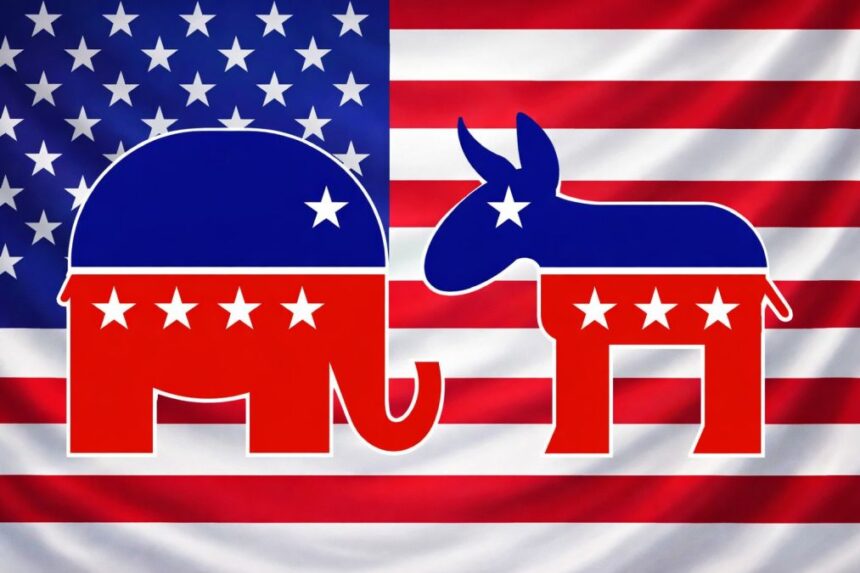
The Democrats’ victory in the midterm elections of November 3, 2026, reveals a breakdown in the relationship between the Trump administration’s political promises and the outcomes experienced by voters. According to NBC News projections, Democrats have won majorities in the Senate and the House of Representatives and will take control of both chambers in January 2027. Republicans entered Election Day with narrow advantages: 53–47 in the Senate and 219–214 in the House. The cost of living, dissatisfaction with the war against Iran, and demands for greater constraints on presidential power converged in a vote described by Reuters as a sweeping repudiation of the president.
The outcome is consistent with a structural hypothesis advanced in April 2026: formal control of political power does not amount to command of the infrastructure that sustains legitimacy, mobilization, and political continuity.
What Changes in Washington
Democratic majorities in both chambers alter the balance of power. The Trump administration will face opposition in passing legislation, negotiating the budget, and securing confirmation of nominees requiring Senate approval. The House of Representatives gives Democrats investigative and executive oversight powers, while the Senate provides crucial leverage over appointments to the administration and the federal judiciary. The new majorities will begin exercising these powers when the new Congress convenes in January 2027.
Control of the legislature does not, however, give Democrats authority over the conduct of foreign policy or the ability to redirect the executive branch on their own. The president retains his powers and veto authority, and power remains divided.

Several results gave the victory particular symbolic significance. According to NBC News projections, Democrats won previously Republican-held Senate seats in North Carolina, South Carolina, Texas, Ohio, Kansas, Iowa and, in a subsequent update, Maine, where Troy Jackson defeated Senator Susan Collins. In Texas, James Talarico defeated Ken Paxton, securing the first statewide Democratic victory since 1994. Some races remained undecided at the time of writing.
The American Way of Life Is an Economic and Political Compact
The American way of life encompasses more than abundant consumption. It rests on a relationship between work, reward, and autonomy: those who work should be able to support a family, afford transportation, maintain a financial cushion, and look forward to better circumstances.
When that relationship weakens, dissatisfaction extends beyond household finances. A sense emerges that the pathways to upward mobility no longer function. A family may earn more in nominal terms while experiencing a decline in its standard of living if housing, food, energy, and essential services absorb an increasing share of its budget. This is the distinction between the economic performance presented by an administration and the economic reality experienced by voters. Aggregate indicators are no substitute for disposable income, and slowing inflation does not mean prices are returning to earlier levels.
On Election Day, gasoline averaged approximately $4.12 per gallon nationwide, according to GasBuddy figures shared by Patrick De Haan and reported by Mediaite. This was the highest Election Day level recorded in the data series cited, with significant differences between states.
The political significance of this price lies in how frequently people encounter it. Fuel is a recurring expense, and its price is publicly displayed. For households dependent on cars, every increase constrains autonomy: commuting and family travel become more expensive before voters can make decisions about other spending. The four-dollar threshold does not, by itself, explain the vote. It does, however, capture in an easily understood figure the distance between the promise of prosperity and everyday life.
Trump Was Judged Against the Promise That Brought Him to Power
A mandate secured on the promise of change becomes vulnerable when the change people experience runs counter to their expectations. For voters who supported a leader on economic grounds, that support may be conditional: political backing in return for an improvement in living standards. When results are slow to emerge, loyalties can be reconsidered without voters abandoning their values.
Nearly nine in ten voters identified the cost of living as a crucial or important factor in their decision, while almost two-thirds attributed high prices to Trump’s policies, according to the Reuters overview of SSRS polling. These figures indicate where the electorate assigns political responsibility, rather than establishing economic causation. Prices in the United States are influenced by global markets, monetary policy decisions, and supply constraints, none of which the president fully controls.
Electoral accountability, however, is not apportioned in the same way as causation in an economic study. An administration is judged on the solutions it proposes, the consequences of its own decisions, and the credibility of the explanations it offers. A leader who promised to resolve economic difficulties swiftly has less political latitude to invoke their complexity later.
Foreign Policy Was Felt Through Household Budgets
Research published before the elections by the Chicago Council on Global Affairs captures the connection between foreign policy and economic security at home. Only 2% of Americans identified the US–Iran war as their most important electoral issue, yet 86% believed it had adversely affected the cost of living. In the same research, 81% considered import tariffs to have had a negative impact on living costs.
These responses measure voters’ perceptions of political responsibility, rather than providing a comprehensive economic assessment of the impact of the war or tariffs on prices.
Opposition to particular foreign policies therefore appears not only in responses concerning diplomacy or security, but also in those concerning gasoline, shopping, and household finances. For the administration, the difficulty lay in the relationship between promised strategic benefits and immediate sacrifices. Reindustrialization, reduced trade dependencies, and the pursuit of military objectives can be defended politically, but they require the public to regard the costs as bearable, fairly distributed, and limited in duration. A policy can have a strategic rationale and, at the same time, carry a substantial electoral cost.
Voters Also Called for Limits on Presidential Power
Preliminary findings from the AP Voter Poll showed that roughly four in ten voters considered the economy the country’s leading issue, while around three in ten identified the state of democracy. Approximately seven in ten wanted Congress to exercise stronger checks on presidential power. Neither party, however, enjoyed broad popularity.
The vote can also be understood as a call for an institutional correction. When a government disappoints economically, the concentration of power becomes an additional vulnerability: if the executive and the congressional majority belong to the same party, the argument that opponents are obstructing results loses force. Changing the majorities in Congress is the means by which the electorate can intervene before the next presidential election. The president’s term continues, but the political conditions under which he exercises his authority change.
Republicans Could Not Take the 2024 Coalition for Granted
The result challenges the notion that Trump’s gains among certain groups of voters represented an irreversible realignment. Initial estimates published by CIRCLE, the research center at Tufts University, drawing on the SSRS survey, indicated that 72% of voters aged 18–29 had supported Democratic candidates for the House of Representatives, compared with 25% who had voted Republican. These figures were preliminary and subject to revision.
Among Latino voters, Pew Research Center had identified declining assessments of Trump and stronger electoral engagement among Democratic supporters before the vote, while also highlighting the role of turnout differences in shifting electoral outcomes. Comparisons between elections require caution: the electorate in a presidential election is not identical to that in a midterm election, and changes in vote shares can reflect shifts in preferences, differences in mobilization, or both.
Gallup reports that 45% of American adults identified as political independents in 2025. This group does not, however, constitute a homogeneous electoral bloc: many independents consistently lean toward one of the two parties. According to the same survey, 20% of adults were Democratic-leaning independents, 15% were Republican-leaning independents, and 10% leaned toward neither party. Gallup also notes that negative assessments of presidential performance tend to prompt independents with weaker partisan attachments to support the opposition party.
Democratic Infrastructure Turned Dissatisfaction into Votes
The mechanism through which dissatisfaction becomes an electoral outcome had already been examined by Atlas News România on April 13, 2026, in the analysis “The Anatomy of Power Without Change: The Two Political Americas and the Paradox of the Trump Administration.” Its central argument was that the Democratic and Republican parties are not two symmetrical teams, but two differently constructed systems of power. The Democratic system had invested more consistently in infrastructure: foundations and funding networks, think tanks, advocacy and strategic litigation organizations, channels for amplifying messages, and electoral coordination. The Republican system had been more effective at mobilization, channeling anti-establishment energy, and building leaders capable of rapidly concentrating loyalty and discontent.
This asymmetry gave rise to the paradox facing the Trump administration: substantial formal power, but a more limited capacity than might appear to translate it into lasting change. The analysis identified several structural constraints: an executive governing through executive action without a stable legislative foundation; a bureaucracy that cannot be reshaped through loyalty alone; legal networks prepared to challenge measures in court; and narratives dependent on a limited number of media hubs. It also warned that emotionally driven loyalty, however strong, is a volatile form of political capital, vulnerable when promises fail to materialize at the expected pace.
The November election provides a context in which this interpretation can be assessed against the results, but it does not allow the precise contribution of infrastructure to the Democratic victory to be established experimentally. Losing the White House did not mean that Democrats’ local organizations, donors, expertise, and mobilization networks disappeared. These structures make it possible to identify voters’ concerns, adapt messages, and organize participation, even in the absence of a national leader who commands public attention. America Votes, which describes itself as the coordination hub of the progressive community, worked with more than 400 organizations, according to its own figures. On October 30, the same coalition reported more than 5.1 million conversations with voters across 27 states, including 3.5 million face-to-face conversations, and more than 1.2 million voters registered by its partners. These are self-reported figures documenting the stated scale of mobilization; they do not allow its exact contribution to the result to be calculated.
Mobilization nevertheless operated alongside other factors. According to Reuters, Democrats made gains in both the wealthiest and the poorest counties, in counties with higher and lower proportions of college graduates. Their advances were particularly pronounced in counties with large Latino populations, including Texas border counties that had shifted toward Trump in 2024. The breadth of this pattern suggests that economic dissatisfaction and opposition to the administration extended beyond the party’s traditional bases of support.
The 2026 elections support this explanation without proving it: infrastructure mattered, but how much of the victory can be attributed to it cannot be determined. The same analytical framework recognizes the vulnerabilities of Democratic infrastructure, from the risk of group conformity to the perception that civic organizations may become partisan extensions, as well as the strengths of the right, particularly in conservative media and legal networks. The Republican ecosystem is not devoid of durable institutions or resources. The relevant explanation is therefore more precise: enduring political infrastructure can shorten the time needed to turn an opponent’s crisis into an electoral opportunity, but it requires genuine dissatisfaction. Organization alone does not explain the vote, just as dissatisfaction alone does not guarantee victory.
The Personalization of Power Extended the Costs to the Entire Party
Organizing a party around a single leader provides a recognizable message and enables rapid mobilization. Once in government, the same concentration makes it difficult to separate assessments of the president’s performance from those of the party’s candidates. When the leader is popular, candidates benefit from the association; when he becomes vulnerable, their local records can be overshadowed by national dissatisfaction.
The April analysis observed that the new infrastructure built around the MAGA movement was younger and more dependent on its leader than the Democratic network, leaving fewer alternative sources of support when public attention shifts or the leader weakens. For Republicans, the dilemma is structural: distancing themselves from Trump risks weakening their relationship with the party’s core supporters, while unconditional backing means bearing the full political cost of the administration’s decisions.
The AP-NORC survey conducted in October showed that the economy and the cost of living were priorities for more than eight in ten voters, ranking above immigration and crime, while eight in ten wanted substantial changes or a complete transformation in how the country was governed. Identity-related issues and confrontation with the establishment retain their capacity to mobilize, but their effectiveness diminishes when voters’ most pressing concern is the household budget. The leader who had promised change had thus become the principal holder of the power that part of the electorate wanted to correct.
What the Democrats Have Won—and What They Still Have to Prove
The scale of the victory does not establish that Americans have embraced the Democratic platform in its entirety. A majority can be built on differing motivations: financial pressure, opposition to war, institutional concerns, or rejection of the president’s governing style. This diversity made victory possible, but it may complicate the exercise of the resulting mandate. Voters who demanded a lower cost of living will judge the new majority by its ability to deliver solutions, rather than solely by the intensity of its confrontation with Trump.
For the administration, the consequences are twofold. A governing approach heavily reliant on executive action was already vulnerable because it lacked a durable legislative foundation, and the loss of both chambers further narrows the legislative path. At the same time, the legal and institutional networks challenging executive measures remain active, while the new majorities bring additional congressional oversight powers.
The 2026 election shows that a leader’s political project cannot be separated from citizens’ material circumstances. Military power, the protection of industry, and the assertion of sovereignty retain electoral value insofar as people can connect them to their own security and prosperity.
The Democrats won at the intersection of three demands: protecting living standards, limiting presidential power, and changing the direction of government. Democratic infrastructure helped translate these grievances into electoral participation. Trump’s vulnerability was that, for a sufficiently large share of the electorate, the costs of transformation had become certain, while the promised benefits remained to be demonstrated.
Read also