And the permanent war remains the actual policy.
Dr Andrei Stoiciu | 24 November 2026
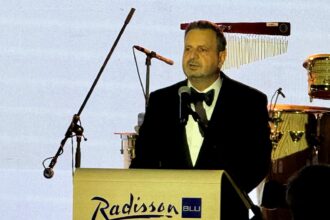
I participated in a debate led by General David Petraeus that captured a central contradiction in contemporary American strategy. He described an extraordinary transformation in how wars are fought: autonomous systems, inexpensive drones, new command arrangements, and engineers working beside combat units. He then returned to a familiar prescription for ending wars: apply enough pressure, demonstrate enough resolve, and adversaries will eventually accept the outcome Washington wants. His weapons belong to the future. His theory of political submission still sounds like the unipolar 1990s—and, more precisely, like the motivational briefings of the First Gulf War.
This is a serious argument about strategy. The untested step is the one between imposing military costs and producing an acceptable political settlement. The strikes on ships near Libya and in the Baltic Sea make that gap urgent. They show how a campaign designed to raise Russia’s costs can acquire third states, new legal questions, and further escalation pathways. Beneath the new technology, however, sits an older and more durable policy preference: the maintenance of a long, open-ended war whose continuation itself is treated as a strategic good. Everything else—drone loops, production figures, resolve speeches—functions as theater and performance layered on top of that core choice.

The authority behind the argument
Petraeus was the commander associated with the U.S. surge in Iraq, led U.S. Central Command, commanded coalition forces in Afghanistan, and later directed the CIA. He now chairs the KKR Global Institute.Reuters His views are heard by governments, militaries, investors, and those who design the next generation of weapons. That experience makes him an essential witness to institutional strengths and failures. It also makes his underlying assumptions about what American power can accomplish especially consequential.
His firsthand accounts of Ukrainian command posts and conversations with drone commanders deserve attention. He has described visiting military leaders and manufacturers in Ukraine and watching how soldiers, designers, and producers adjust systems during combat.AP News He has also acknowledged that Russia is learning and producing more. Yet the sophistication of these operational descriptions sits uneasily beside a permanent narrative of American supremacy that has barely changed since 1991. The language of “resolve,” the confidence that sufficient pressure will produce political submission, and the comfort with covert or deniable methods all belong to an earlier era in which American primacy was assumed to be both natural, effeicient and sufficient.
An operational revolution is underway
Ukraine’s war has shortened the distance between a problem at the front and an answer in the factory. A unit can identify an electronic warfare weakness; engineers modify hardware or software; the result is tested in combat; and the next design incorporates the feedback. Unmanned aircraft, maritime drones, and ground systems operate inside this loop. In Petraeus’s account, Russia’s countermeasures force constant revision. The advantage lies in the whole cycle of observation, procurement, training, and replacement, not in any one spectacular drone.AP News
Brave1 illustrates the structural change. Ukraine’s defence ministry says the cluster brings together manufacturers, service members, and investors, offers testing, and lets authorised units order equipment through a marketplace. Its ePoints programme connects verified missions to procurement. The ministry reported more than 900,000 items ordered through Brave1 Market by early November 2026.Insurancebusinessmag Those are Ukrainian government figures and should be read as such. They nevertheless describe an institution that has learned to make battlefield feedback matter to purchasing decisions.
This system also reveals a psychological risk. A scorecard can reward what is visible and countable: a destroyed target, a completed mission, a successful prototype. Political success is harder to score. An army can improve its rate of verified strikes while the opponent adjusts, mobilises, and continues to fight. The measure of performance may rise without settling the question for which the performance was intended. That is not a reason to discard the technology. It is a reason to keep its metric subordinate to the strategic objective—and to ask whether the strategic objective has quietly shifted from ending the war to sustaining it.
Petraeus has praised the Ukrainian Flamingo missile’s reported range and heavy warhead in comparison with a U.S. cruise missile.AP News Range and payload alone cannot prove that one system is better than another. Reliability, accuracy, production at scale, survivability, and the choice of target determine its military value. An impressive prototype is a capability claim; a repeatable campaign that alters an adversary’s decisions is a strategic claim. The two need separate evidence. The gap between them is widened when the public narrative celebrates technological and organisational innovation while the underlying policy continues to treat American primacy, covert enablement, and legal flexibility as permanent facts rather than choices that carry their own accumulating costs.
The old equation beneath the new weapons
Petraeus cites an estimated 46,000 Russian troops killed and wounded in a month, refinery strikes, Crimea’s alleged isolation, and slower recruitment, then imagines Putin looking in the mirror and deciding the war is no longer worth it.Fox News That mirror is the most revealing piece of equipment in his analysis. It reflects an American habit of reducing an institutional war to one man’s change of heart, as though Putin—or Iran’s supreme leader—could start and stop a conflict independently of command structures, security institutions, and political constraints. The U.S.–Israeli campaign killed Iran’s supreme leader and dozens of senior officials; the governing system survived. The casualty ledger deserves equal scrutiny. Petraeus’s monthly figure is an estimate, while Ukrainian losses, recruitment, and Western replacement capacity receive little comparable attention in this argument. Western analysts estimate substantially greater Russian losses; Russian sources have claimed Ukrainian losses were ten times Russia’s. None of these figures establishes which side will exhaust its usable capacity first, still less when Moscow’s institutions would accept a settlement. If Russia can absorb losses longer than Ukraine and its backers (like China, mentioned by Petraeus) can sustain resistance, the promised progression from inflicting pain to winning concessions—which is Petraeus’s core narrative—collapses. Treating that unproved progression as a strategy is superficial and dangerous. Underestimating your opponent is a reckless strategy.
Moscow can mobilise, change its tactics, accept a lower operational tempo, or shift costs onto households. It can also decide that conceding its war aims is more dangerous to the regime than sustaining losses.Stripes In that environment, a policy that treats the prolongation of the war itself as acceptable—or even preferable—becomes self-reinforcing. The rest (the drone metrics, the production boasts, the 1991-style insistence that “resolve” will break the other side) functions as performance.
This is the Influence Architects distinction between performance and structure. Destroying a refinery is performance. The structure includes replacement capacity, state revenue, imported components, domestic repression, elite cohesion, the willingness of Ukrainian society to continue, and the capacity of Europe and the United States to fund the response. A strike changes the balance only to the extent that those structures transmit its effect into decisions. When the actual policy is the maintenance of a long war under conditions of American enablement, the performance layer can continue indefinitely without ever confronting whether the structure is moving toward settlement or simply adapting to permanent conflict.
Petraeus is aware that Ukraine has its own vulnerabilities. He has written about air defence shortages and a large financing gap, and he has described Putin’s bet that Western support will weaken first.Stripes In a separate proposal to help Ukraine target Russian ballistic missile launchers, he acknowledged that the resulting pressure might still fail to produce a settlement.Moderndiplomacy That admission is important. It is less frequently accompanied by an examination of whether the combination of American supremacy narratives, covert support, and legal exceptionalism is itself part of what makes settlement harder.
The difference matters because objectives accumulate. Petraeus wishes to support Ukraine’s army, enlarge its ability to strike Russia, strengthen security guarantees, open a path to NATO and the EU, use frozen Russian assets, and compel reparations: each has its own legal, fiscal, and political conditions and consequences. Several of them depend on European institutions and national parliaments or on industrial capacities which do not exist yet. A menu of desirable outcomes does not become a negotiated settlement merely because one party can impose pain. The opposing party has a vote, even when its demands are labelled as unacceptable. When the core policy is the continuation of the war rather than its termination on specific terms, the menu remains aspirational while the conflict remains real.
Iran exposes the same strategic reflex
In the presentation, Petraeus discussed additional military pressure to bring Iran to a settlement and warned that unresolved issues could produce another war. He also acknowledged the absence of visible fractures in the Iranian and Russian security structures. That observation cuts against the easy assumption that one more round of costs will produce political surrender. If the institutions that preserve a regime remain intact, leaders may treat coercion as proof that a concession would invite the next demand.
The United States can still inflict enormous damage. Its own facilities and priorities, however, are exposed across several theatres. Petraeus has described U.S. bases in the Middle East as vulnerable to Iranian systems and has raised concerns about the rate at which American interceptors are consumed.AP News Ukraine needs air defence while the United States must also deter China and protect its forces and partners elsewhere. These are allocation choices, not problems that disappear when leaders become more resolute. The same resolve language that accompanied the First Gulf War continues to be applied to situations in which the underlying conditions—multipolar constraints, resilient adversary institutions, and the political costs of permanent war—have drastically changed.
The question for a negotiator is therefore concrete: What could Iranian decision makers accept and survive politically? Which concessions would they view as an opening offer for another ultimatum? What measure would show that pressure is moving them toward compromise rather than hardening their position? Negotiation requires a theory of the other side’s incentives. A demand backed by force is not yet a strategy. Neither is the assumption that American primacy, maintained through a combination of overt support and covert enablement, can indefinitely substitute for such a theory.
Covert action still has a political author
Petraeus’s discussion of seizures, sabotage, and deniable responses captured an old attraction of great-power policy: cause pain while leaving just enough uncertainty about who acted. The adversary need not prove authorship in court to retaliate. It needs a belief, an opportunity, and an audience. “They know we know” can be a theory of deterrence; it can also become a mechanism for reciprocal escalation. This comfort with deniability sits alongside a broader pattern in which legal constraints—whether international humanitarian law, the sovereignty of third states, or the geographic limits of hostilities—are treated as secondary to the operational opportunity and the narrative of American-enabled success.
Title 50 provides a U.S. statutory framework for presidential findings and reporting of covert action to Congress.Al Jazeera It does not erase international obligations or the interests of third countries. A covert operation can satisfy a domestic authorisation process and still create a crisis in a neutral port, an allied sea lane, or an already fractured state. The legal and political chain of consequences has to be considered when the operation is authorised, rather than after an adversary responds. The persistent gap is between a narrative that emphasises technological and organisational transformation and a practice that continues to rely on American supremacy, covert methods, and a selective inattention to the legal and third-party consequences of expanding the war’s geography.
The recent Ukrainian naval drone strikes on Russian vessels in the Baltic and off Libya represent a clear geographic expansion of the war, enabled in significant part by Western intelligence support, and they raise serious questions about escalation, third-party sovereignty, and the selective application of international norms.
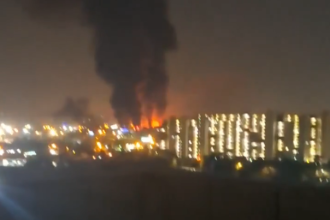
On 21 November 2026, a drone attack set fire to the Sparta II, a Russian cargo ship operated by the defence logistics firm Oboronlogistika, in international waters in the Gulf of Finland. The vessel drifted into Finnish territorial waters; Finnish authorities assessed the strike was likely Ukrainian..Babel The following day, Ukraine’s Security Service (SBU) launched seven Ukrainian-made naval drones against targets near Benghazi in eastern Libya. These sank the Russian corvette Merkury (commissioned in 2023) at the naval base and hit the cargo vessel MV Angara, which Ukraine’s government said was used to transport weapons. President Zelenskyy called the operation “exemplary.” Eastern Libyan authorities (aligned with Khalifa Haftar and Russian-linked forces) condemned the use of their territory and waters, and called for a UN investigation.Politico
These strikes are a major escalation because they move combat operations thousands of kilometres from the main frontlines into the Mediterranean and Baltic, involving the ports, waters, and political dynamics of third countries. They risk drawing more states into the conflict (Libya’s rival administrations, NATO members bordering the Baltic), threaten freedom of navigation and commercial shipping, and expand the “shadow fleet” campaign into new theatres. Under international law, such actions raise issues of territorial sovereignty of non-belligerents, the requirement of consent or necessity for basing operations on foreign soil, distinction between military and other targets, and the risk of spillover into neutral or allied waters.The Guardian
Former CIA Director and retired Gen. David Petraeus has repeatedly praised Ukraine’s drone production, system integration (including the Delta platform), and operational ingenuity during multiple visits to Ukraine.AP News His public assessments focus on tactical innovation, manufacturing scale, and lessons for Western militaries. They do not address the legal constraints of international humanitarian law, sovereignty of third states, proportionality, or the political risks of widening the war’s geography. This omission is striking: capability is celebrated while the broader consequences of enabling distant strikes are treated as someone else’s problem.
This matters because the United States is a primary intelligence enabler of Ukraine’s long-range campaign. Reporting from the Financial Times, Wall Street Journal, and others has documented that U.S. (and in some cases French) intelligence has assisted with route planning, air-defence evasion, timing, and target vulnerability assessments for deep strikes inside Russia, particularly against energy infrastructure. U.S. satellite, signals, and targeting data are integrated into operations. Precise real-time tracking of specific vessels’ movements, locations in foreign ports, defensive postures, and operational windows at ranges of 1,500+ miles is not something Ukraine can sustain independently .Treating the expanding geography of the war as solely Ukraine’s responsibility while celebrating the intelligence and technology partnership is inconsistent—especially when the partnership is itself an instrument of a broader policy that treats long-duration conflict as manageable.
Consequences could include Russian retaliation in new theatres, heightened maritime insecurity and insurance costs in the Baltic and Mediterranean, diplomatic friction with Libya’s factions and NATO Baltic states, greater risk of miscalculation near allied waters, and precedents for future conflicts in which advanced intelligence and drone technology are used to project strikes through third countries while maintaining plausible deniability. When the core policy is the continuation of the war, these costs are not temporary side-effects; they are structural features of the performance.
Intermediate conclusions: when performance begins to consume structure
What is visible in Benghazi and the Gulf of Finland is the moment at which the operational score begins to detach from any strategic objective other than the maintenance of the conflict itself. Each sunk or damaged vessel can be recorded as a measurable success. But measurable success says nothing about Russia’s capacity to shift costs, the reaction of local regimes in Libya, or the tolerance of alliances for spillover risk. Influence Architects insists on precisely this distinction: performance is what can be counted; structure is what decides whether the number matters politically.
The gap is not accidental. Petraeus can describe, accurately, a real shift in the technology and organisation of warfare. That description does not require him to confront the more durable elements of U.S. policy: the assumption of primacy, the utility of covert action, the selective attention to international law, and the motivational insistence that sufficient pressure and will must eventually produce submission. Those elements predate the drone revolution. They remain the substrate on which the new performance is staged. Long, permanent war is the core policy. The rest is theater.
What a strategy capable of ending the wars would ask
A serious theory of pressure should identify the concession it seeks, the route by which the opposing leadership could make it, the cost to the coalition sustaining the pressure, and the signs that the policy is moving farther from its goal. The same test applies to proposals for Iran: the desired agreement and the conditions under which Tehran might accept it must be defined before “more pressure” is called a negotiating strategy. It should also ask whether the policy in question is actually designed to reach a settlement or to manage an indefinite conflict under conditions of American enablement.
I would ask Petraeus the question I was left with after the debate ended; If technology and military organisation are changing as radically as you say, why does the strategic premise still resemble the 1990s assumption—and the First Gulf War insistence—that sufficient American resolve can impose a political outcome? At what point do we test whether the constraint is the capacity to produce that outcome, rather than a shortage of will? And at what point does the narrative of technological and organisational transformation become a way of avoiding the political choice to treat permanent war as the default rather than the exception?
To me, the phrase “American resolve,” repeated as a mantra by Petraeus, describes the reflex of answering each failed coercive effort with a larger one. It is a test of an approach, not an assertion about one man’s private motives. The stakes are visible in Benghazi and the Gulf of Finland. The missing revolution is in strategic judgment: choosing objectives that capabilities, partners, law, and political time can actually sustain—and deciding, explicitly, whether the goal is to end the war or to continue it under more technologically sophisticated conditions.
Sources
1. David Petraeus, biography, KKR
2. Petraeus interview and transcript, Forecast 2050, 8 October 2026
3. Petraeus, The race to make Putin’s aggression unaffordable, 15 September 2026
4. Petraeus, Washington should allow Ukraine to hit Russia’s ballistic missile launchers, 20 November 2026
5. Petraeus interview, SpyCast, 27 October 2026, on estimated Russian casualties
6. Ukraine Ministry of Defence, How Brave1 works, 6 November 2026
7. Reuters, Ukraine sinks Russian warship in Libya, 23 November 2026
13. Reuters, drone attack on Sparta II in the Gulf of Finland, 21 November 2026
15. ICRC, San Remo Manual, paragraphs 14–22, neutral waters
19. 50 U.S.C. § 3093, presidential findings and oversight for covert action
About the Author
Dr. Andrei Stoiciu is a senior expert in strategic communication, currently serving as Team Leader for Strategic Communication & Multilateral Public Diplomacy within the Global Gateway Strateg.. He is a long-term observer with the OSCE/ODIHR, an evaluator for European Commission People-to-People programs, author of „Influence- Architects 52 Human blueprints. Dr. Stoiciu holds a PhD in Behavioral Sciences and works as a licensed profiler and associated researcher on FIMI and information warfare, with a focus on mapping social trends, persuasion dynamics, and disruptive social games. He has also served as a trainer for law enforcement officials and prosecutors in interrogation and intelligence gathering.
Read also
The Architecture of Influence: What McChrystal Tells Us About Power, Resilience and Audiences