On February 28, 2026, as the first missiles struck Iran, India was being described in Western chancelleries as an actor capable of playing chess while others were playing checkers. New Delhi had not condemned, had not aligned, had not provoked. It appeared to be applying the classic manual of strategic autonomy: maintaining relations with all sides, extracting advantages from every direction, and refusing irreversible commitments. Two months later, the picture is more complicated. India is not losing — but nor is it winning simply. It is paying the particular price of ambiguity in a world where strategic distances are compressing.
The Logic of Multi-Alignment and the 2026 Test
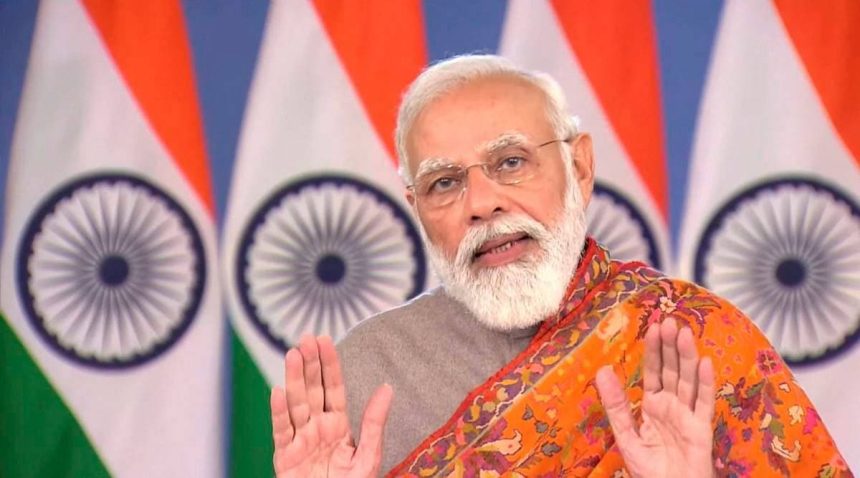
India’s foreign policy doctrine is not officially called “hedging”. It is called “strategic autonomy” — a concept rooted in Nehru’s non-alignment movement and later refined into “multi-alignment” under Narendra Modi and Foreign Minister S. Jaishankar. Its essence is clear: India does not choose permanent camps, but manages relations with all major powers simultaneously, according to the calculations of the moment.
This doctrine worked spectacularly during the Ukrainian crisis of 2022. India refused to condemn Russia, bought heavily discounted Russian oil, refined part of it and resold petroleum products to Europe — turning neutrality into a profitable enterprise. Washington protested, but did not impose sanctions. New Delhi demonstrated that major states can be “indulgent toward the friends they need”.
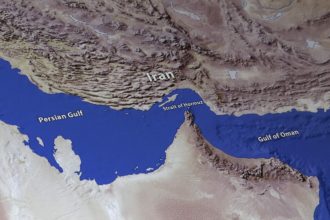
The 2026 crisis appears, at first glance, to reproduce the same template. According to Kpler data cited by Reuters, India’s imports of Russian oil reached a record of approximately 2.25 million barrels per day in March, almost double the February level, offsetting the 61% collapse in supplies from the Persian Gulf. In parallel, international media reported that Washington had used temporary waivers and sanctions relief measures to limit pressure on global energy supply. Iran, for its part, facilitated the passage of Indian oil tankers through the Strait of Hormuz, invoking its “friendship with India”. According to Reuters and India’s Ministry of Petroleum, India also resumed direct imports of Iranian oil — its first such purchases since 2019 — after refineries secured supplies from more than 40 countries.

Apparently, the same formula. Apparently.
The Real Price of Equidistance
The first and most visible cost is economic. The price of the Indian crude basket rose from approximately $69 per barrel in February to $111.39 per barrel in March, according to Business Today — a severe fiscal shock for a country that imports roughly 85% of its oil needs. Delays, local shortages and pressures on the distribution of liquefied petroleum gas were reported in several urban areas, according to The Guardian, with LPG serving as a basic household fuel in India. Several regional legislative elections scheduled for 2026 turn this crisis into a domestic political vulnerability as well.
The second cost is strategic and more difficult to recover. Chabahar Port — the project in which India invested $120 million to build an access route toward Central Asia, bypassing Pakistan and countering the China-controlled Gwadar Port — has entered a phase of operational retreat and sanctions risk. The U.S. sanctions waiver, valid until April 26, 2026, expired without a clear public continuity arrangement, while, according to Business Standard, India was considering transferring operational control to an Iranian entity in order to avoid sanctions exposure. Reuters had previously reported that Washington had granted India a six-month waiver for Chabahar, confirming the temporary and vulnerable nature of the arrangement. India Ports Global Ltd, the state-owned company operating the Shahid Beheshti terminal, reduced its operational exposure, while the 2026–2027 budget allocated no new funds for Chabahar. The working proposal — transferring India’s stake to an Iranian entity, with the possibility of returning after sanctions are lifted — amounts, in practice, to a disguised withdrawal. Ten years of diplomatic construction and $120 million in public funds are now placed in severe strategic uncertainty.
The third cost is diplomatic and, probably, the most serious in the long term. On March 4, 2026, a U.S. submarine sank the Iranian frigate IRIS Dena in the Indian Ocean, according to Reuters and Associated Press. The vessel was returning from the MILAN 2026 naval exercise, hosted by India, and the episode struck directly at New Delhi’s image as a security provider in the Indian Ocean. New Delhi issued no substantive public comment. According to communications from India’s Ministry of External Affairs, Foreign Secretary Vikram Misri later visited the Iranian embassy to sign a condolence book on behalf of the Government of India — an act of damage limitation, not a strategic position.
India’s absence from the negotiating table completes the picture. According to Asia Times and The Wire, Pakistan — alongside Turkey and Oman — became one of the visible interlocutors in the crisis, assuming a back-channel role between Washington and Tehran. According to reports in the Indian press, Jaishankar reportedly rejected the idea that India should play the role of an interested intermediary, in a reference to Pakistan — a formulation that quickly circulated in international circles as confirmation of New Delhi’s strategic frustration. India presented itself as the voice of the Global South, the moral leader of non-aligned nations and a candidate for a permanent seat on the UN Security Council. In the most significant conflict of the year, it is not mediating — Pakistan is doing so instead.
Active Neutrality or Strategic Inertia?
Critics at home and abroad are asking the same question: is there a difference between principled neutrality and diplomatic paralysis disguised in the language of strategic autonomy?
According to an analysis published by The Diplomat, India effectively repeated the Ukrainian model — refusal to condemn, continuation of economic relations with all sides — but in a context where the geographic and energy stakes affect it directly, rather than from a distance. Another analysis published by The Diplomat argues that the war in Iran is forcing India to confront the tension between strategic autonomy and its proximity to the U.S.-backed Indo-Pacific architecture. Unlike in 2022, when India was a privileged spectator of a European conflict, in 2026 it is part of the affected ecosystem: energy routes through Hormuz supported a major share of its supply, Chabahar was its connectivity project, and IRIS Dena had been invited to a naval exercise hosted by India.
According to South Asian Voices / Stimson Center, India’s position in the U.S.–Israel–Iran conflict should be read as careful navigation between contradictory pressures, not as a simple lack of strategic direction. But this is precisely where the limit appears. The postponement of irreversible commitments works only as long as the strategic environment allows ambiguity. When the Strait of Hormuz closes, when the United States revokes or restricts sanctions waivers, when Pakistan occupies the space of mediation, ambiguity begins to be paid for in hard strategic currency.
At the same time, reducing India’s position to mere paralysis would be incorrect. According to 9Dashline, the war in Iran exposed real vulnerabilities, but also the objective difficulty of managing simultaneous relations with the United States, Russia, Iran, Israel and the Gulf states. New Delhi navigated three structurally contradictory relationships — with the United States, Russia and Iran — without a formal rupture with any of them. It maintained high-level diplomatic contacts with Tehran, including a telephone conversation between Modi and Pezeshkian on March 12, confirmed by India’s Ministry of External Affairs. This is not the behaviour of a paralysed state. It is the behaviour of a state managing simultaneous costs with limited instruments.
The Limits of a Model
What the 2026 test reveals is not that Indian multi-alignment has failed. It reveals that it has a ceiling — and that this ceiling is reached when conflicts no longer remain peripheral, but become structural for the state’s energy security, strategic connectivity and maritime credibility.
India remains too important an actor for any of the great powers to afford alienating it completely. The United States needs it as a counterweight to China. Russia needs it as a market and a source of legitimacy. Iran needs the line of communication. This structural indispensability is the real foundation of Indian autonomy — not diplomatic rhetoric.
But indispensability is not free. It is paid for through the costs of ambiguity: blocked connectivity projects, eroded maritime credibility, and absences from negotiating tables where smaller states have a seat. It is also paid for through a question that is becoming increasingly difficult to ignore in India’s domestic debate: how long can a doctrine built on the refusal to choose continue to function in a world where polarisation is reducing the space for manoeuvre?
The answer has not yet been given. But 2026 is the first year in which India truly feels the price of the question.