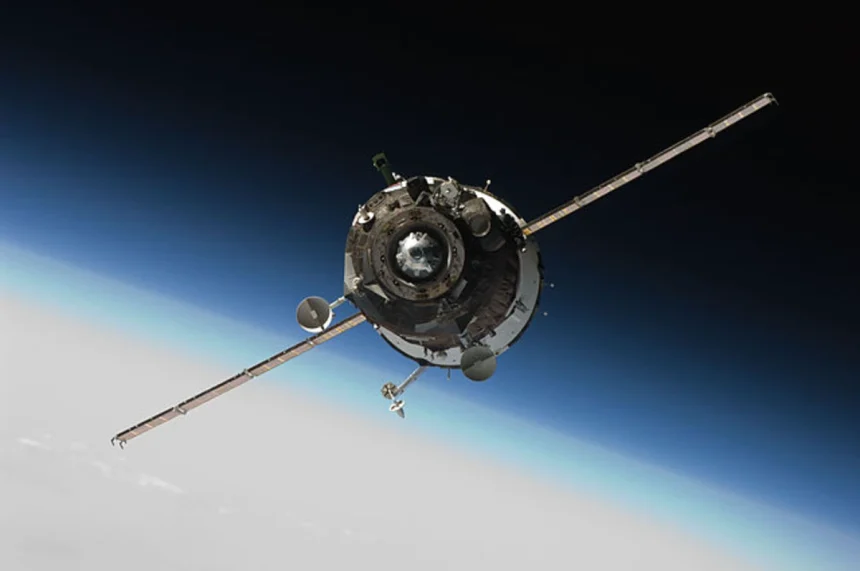
An army may have its drones ready, its ammunition available and its orders issued. Yet a change to the communications service on which it depends can compromise a mission before the adversary fires the first shot. The equipment is there, as are the troops. What is missing is full access to the infrastructure that enables them to operate together.
The restrictions reported by Ukraine on Starlink and Starshield satellite communications have placed this vulnerability at the centre of a political dispute. Beyond the controversy involving Kyiv, Washington and SpaceX, the episode raises a question for every state rebuilding its armed forces: how much of the military capability it purchases is actually under its control?
War continues to consume ammunition, fuel and equipment. Increasingly, however, the way these resources are employed depends on communications, data, software and computing power. Authority over that infrastructure does not always rest with the state conducting the fighting.
What the Starshield Episode Revealed
On the night of 13–14 October, Ukrainian forces reported restrictions on Starshield communications, including for terminals in motion. According to military information reported by Atlas News România, drone missions, reconnaissance activities and logistics operations were disrupted, and some missions were cancelled.

The threshold of approximately 160 kilometres per hour referred to the speed at which a terminal was moving, rather than its data transfer rate—an important distinction in understanding the incident.
There are also indications of political intervention. Citing two US officials and a Western official, Reuters reported that the order to restrict Starshield had originated within the White House. The sources did not specify who had taken the decision or who had implemented it. A senior US official denied that the request had come from Donald Trump.
According to Atlas News România, Elon Musk attributed control over the conditions governing Starshield’s use to the US authorities. Marco Rubio, for his part, denied that the White House had ordered Starlink to be slowed down. These statements require careful reading: the commercial Starlink service and the government-oriented Starshield capabilities are not interchangeable, and a denial concerning one does not automatically clarify the position regarding the other.
What is known: Ukrainian service personnel described disruptions and their effects on operations. Accounts gathered by Reuters on the front line indicate an immediate deterioration in communications with command. They document the experience of the units concerned, without providing a comprehensive assessment.
What remains unknown: the full decision-making chain, the precise motivation, the extent of the US president’s personal involvement and the scale of the effects across all missions.
Interpreting the episode as a political signal to Kyiv is plausible, with more to support it than a mere coincidence of timing. There is nevertheless insufficient publicly available information to assert that it was a show of force personally devised by Trump or Musk.
For military planning, the lesson is nonetheless clear: some of the conditions under which the Ukrainian armed forces conduct operations can be altered outside their own chain of command. Who exercised that power, with what intention and under whose authority remain open questions. The vulnerability itself can no longer be ignored.
The Tank Has Not Disappeared. The War It Must Fight Has Changed
Images of drones striking armoured vehicles have created the impression of an instantaneous transition from tank warfare to unmanned warfare. It is a compelling image, but an incomplete one.
The technologies behind this shift have developed over decades. In Ukraine, their proliferation, large-scale deployment and adaptation to the needs of small units have accelerated. Surveillance and information-sharing capabilities that once required specialised resources have become far more accessible to troops on the front line.
A detected position can be struck more quickly, movement can be tracked, and a vehicle whose protection once depended on armour and mobility must now contend with threats from multiple directions.
This does not mean that tanks or artillery have lost their utility. It means that their employment requires different forms of protection and closer coordination. Drones can identify targets for artillery, adjust fire and assess the effects of a strike.
RUSI researchers caution against the temptation to replace conventional firepower with excessive reliance on drones. Their effectiveness in Ukraine must also be understood in light of the constraints that mines, artillery and other strike systems impose on the adversary.
For European governments, reducing the lessons of the war to a choice between old and new weapons would be a costly mistake. A more useful question is whether the equipment they purchase can operate together, and whether units have the personnel, training and support they need. A modern inventory can conceal a poorly integrated force. War quickly exposes the difference.
AI Changes the Pace of Decision-Making, Not the Responsibility
Artificial intelligence has not replaced artillery. It can, however, shorten the time needed to understand a situation and employ artillery, air power or other assets.
Armed forces collect more information than people can analyse in the time available: imagery, signals, reports and observations, some redundant, others incomplete or inaccurate. Possessing data is not the same as understanding what is happening. Between collection and decision lies the work of verification, correlation and interpretation. This is where AI can contribute.
The US Army describes the use of the Maven Smart System in V Corps exercises as supporting the analysis of large volumes of information and the development of a common operational picture. It also makes clear that results depend on integrating the system into a unit’s processes and data structures. This is relevant experience gained in exercises, rather than a guarantee of effectiveness in combat.
The stakes become apparent when two forces possess comparable assets: the one that recognises a change in the situation sooner may be able to employ its resources before the opportunity disappears. But speed is valuable only when the information underpinning it is accurate. An erroneous assessment, rapidly disseminated and accepted without verification, can trigger a succession of flawed decisions. Time pressure may itself encourage excessive confidence in a system’s recommendation.
This is why reliability, traceability and human control matter—principles also reflected in NATO’s AI strategy.
The advantage will lie with armed forces that gain time without sacrificing judgement. An AI model that performs impressively in a demonstration is not yet a capability on which a commander can rely under conditions of incomplete information and disruption.
What Does It Now Mean to Own a Weapon?
States have always depended on suppliers. Ammunition, spare parts, fuel and maintenance constrained military freedom of action long before digital communications. What is new is the speed at which that dependence can take effect.
If an ammunition delivery is halted, stockpiles may provide a respite. If a service required continuously is altered, the consequences may emerge in the midst of an operation. The user has no reserve to draw upon while seeking another provider.
This is where ownership of equipment diverges from control over its operation. A state may own the drone, the terminal and the command system, pay for the service and authorise the mission, while certain functions nevertheless remain under someone else’s authority.
Procurement questions must therefore extend beyond price and performance. Who can alter access? What happens if the supplier stops providing updates? How long would a transition to another service take? Which missions would remain possible in the meantime? These are defence questions, even when the answers lie in commercial contracts. A sound political relationship may reduce the risk, but it is no substitute for a tested alternative.
Dependence Becomes Leverage When the Costs of Disruption Are Unequal
For Ukraine, a poor connection can have immediate consequences for troops and missions. For the provider, the costs of a controversy emerge more slowly, through reputational damage, contracts or relations with governments. This asymmetry explains why technological dependence can become such a powerful source of strategic leverage. The affected force must restore the service immediately; it cannot retroactively deploy an alternative to salvage a compromised mission.
An indispensable provider generally has more time to respond to public pressure.
Nor does the network need to be shut down altogether. Restrictions on certain functions can affect some operations while others continue. An available connection does not mean that every military application remains possible. This is an implication of the underlying structure of dependence, rather than an automatic explanation for every technical incident.
Over the longer term, an unpredictable provider also stands to lose. Customers may opt for more expensive or initially less capable solutions simply to avoid finding themselves in the same position again, while states may accelerate investment in alternatives. For the service member who needs that service today, however, this prospect changes nothing.
It is precisely the gap between these two time horizons that makes the relationship so unequal: the provider may pay for its mistake later, while the customer pays immediately.
The Company and the State Are Distinct Actors, but the User Depends on Both
SpaceX’s role may suggest that states’ military power has come to rest at the discretion of a handful of companies. The reality is more nuanced. Operators act within national jurisdictions, subject to authorisations, contracts and obligations. Governments can fund services and impose conditions on their provision, while themselves depending on private expertise and infrastructure that they could not quickly replicate.
Power is thus distributed between public authority and the company’s technical capacity, and both matter to an external beneficiary. Providers of communications, software and computing services become actors of strategic significance. Not every commercial decision is geopolitical, but some can have geopolitical consequences regardless of their original intent.
In such a system, paying the bill does not necessarily confer full control. Political solidarity must be translated into terms of access sufficiently clear to withstand a crisis.
Satellites, AI and Semiconductors Are Part of the Same Race
The space industry, artificial intelligence and semiconductors are often presented as separate sectors. On the battlefield, they converge: sensors collect information, networks carry it, computing systems process it, and software supports interpretation and coordination. A weakness at one point diminishes the value of the whole. Computing power cannot compensate for a lack of relevant data, while a weapon’s precision offers little benefit if the information arrives after the situation has changed.
Security of semiconductor supply is not solely a matter of obtaining the most advanced AI processors. Military equipment also requires components for which reliability, power consumption and availability are decisive. Local drone assembly may create the impression of greater autonomy than actually exists: if critical parts come from a source that is difficult to replace, production remains vulnerable. A RUSI analysis underscores the link between supply and the capacity to adapt.
It is not enough for states to acquire high-performing equipment. They must be able to maintain, modify and reproduce it as demand grows, losses accumulate and the adversary changes tactics. This is the less conspicuous dimension of the technological race. In a prolonged war, it may prove decisive.
Why Washington Wants to Accelerate
The AI Action Plan presented by the White House in July 2025 links innovation to infrastructure, diplomacy and security. It envisages promoting American technology packages encompassing hardware, models, software, applications and standards, alongside facilitating the construction of data centres and semiconductor fabrication plants.
The stakes extend beyond product sales. Once adopted, technologies gradually become embedded in the functioning of institutions: personnel are trained to use them, procedures are adapted, and other applications are built around them. Changing providers later requires money, time and acceptance of a transition period. Whoever establishes the infrastructure first may shape standards and secure a lasting advantage.
It would be excessive to attribute a specific military intention to every AI investment. It would be equally mistaken to regard the competition as exclusively commercial. For Europe, the issue is the cumulative effect: each procurement decision may appear reasonable in isolation, yet together they can create a dependence that is difficult to reduce once political interests cease to align.
Europe Has a Project. Ukraine Has an Immediate Need
Pace also matters strategically in space. Starlink’s operator describes the continuous expansion of its constellation and the introduction of improved versions, supported by satellites, terminals, inter-satellite links and ground infrastructure. Not every launch forms part of a military plan, but a competitor must build and sustain the entire system: manufacturing, launch, operations, upgrades and replacement.
Comparing constellations therefore involves more than counting satellites.
IRIS² addresses a genuine strategic need. In August 2026, the European Commission announced the expansion of the core constellation to 348 satellites: 330 in low Earth orbit and 18 in medium Earth orbit. The first launches are scheduled for 2029, while ESA indicates that initial services will be phased in during 2030. This timetable describes future milestones, rather than the simultaneous availability of every function.
For Ukraine, the difference between a promised capability and a usable one is measured in the operations that must be conducted in the intervening period. Europe can finance, manufacture and supply a great deal, but it cannot provide today the services that a constellation still under development is intended to deliver. Even after launch, autonomy will not be guaranteed by the satellites’ European origin alone: sustained production, access to launch services, suitable terminals and military integration will also be required.
There is also a political question of priority. If resources are insufficient to meet every request, who receives access: civilian institutions, member states’ armed forces or a partner at war? Shared infrastructure does not, by itself, resolve that choice.
European services are already available, but replacing a network on the front line requires more than changing a contract. Reuters has highlighted differences between terminals and the difficulty of rapidly replacing Starlink for Ukrainian applications. Eutelsat provides connectivity in Ukraine, but this does not mean that it can immediately take over every existing use.
IRIS² must be pursued and rigorously assessed. In parallel, Europe needs a solution for the years before the promised services become available.
What If Transatlantic Differences Deepen?
A deeper rift between Washington, Kyiv and European capitals would expose dependencies that cannot immediately be addressed through budget allocations. Funding can accelerate development, but it cannot eliminate the time required for production, training, integration and validation.
The assertion that Europe can assume responsibility for the support provided by the United States must therefore be broken down: what can it replace immediately, what can it provide in part, and what would remain unavailable for a time? IRIS² cannot answer all these questions. Communications, observation, early warning and intelligence analysis are distinct functions. A communications constellation cannot replace an ally’s entire technological and intelligence contribution.
Nor do European resources automatically constitute a common European capability: they become usable through political decisions, access rules and commitments that can withstand the pressures of a crisis.
Recognising the lag is important. Closing it, however, requires industrial and political choices that deliver results before the next shock.
An Army Must Know How to Fight Without a Connection
It would be dangerous to assume that modernisation means permanent dependence on perfectly functioning networks. Forces can fight without advanced AI or uninterrupted satellite communications, albeit with weaker coordination, a slower tempo and greater risks. An army must not, however, be structured in such a way that the loss of a service amounts to paralysis.
Disruptions are not all alike: the loss of satellite communications, GPS unavailability and a cloud outage affect different functions. Without a satellite link, essential local communications must continue. Without GPS, alternative means of positioning, navigation and timing are needed. Without access to the cloud, indispensable data must remain available locally.
If a unit loses contact with higher headquarters, its commanders need delegated authority and clear limits within which to exercise it.
US Army professional publications emphasise training under conditions in which GPS and SATCOM are unavailable. Programmes for resilient navigation and positioning also demonstrate that the solution is not simply a return to analogue methods. The loss of GPS does not disable every guided munition; the type of equipment matters.
A resilient force loses some performance when its infrastructure is disrupted. What matters is knowing in advance how much it will lose, for how long, and what it can continue to do.
What States Should Actually Be Buying
A terminal, a drone or an application is only one part of a capability. Without personnel, training, maintenance and integration, equipment falls short of the potential for which it was purchased. Delivery timing also matters: a programme may meet every contractual deadline and still arrive too late if the adversary has already adapted its countermeasures.
Diversification must be assessed beyond the names of the providers. Two services may depend on the same vulnerable infrastructure or the same authority. Two contracts do not always provide two alternatives. Costs must be assessed against the military effect achieved. Comparing the price of a drone with that of the target it strikes tells only part of the story: lost aircraft, unsuccessful attempts, operators and the infrastructure supporting the mission also count.
The appeal of a striking new product is considerable. Less easy to showcase publicly, but essential, are stockpiles, repairs, compatibility, exercises and the capacity to sustain systems over the long term.
The Implications for Romania: A Critical Dependencies Dossier
Romania does not need to replicate every element of a major power’s infrastructure on its own. It does, however, need to know what it depends on and what would happen if those dependencies were disrupted. This principle can be translated into a practical procurement instrument.
Before purchasing a drone, command or communications system, the Ministry of National Defence could require the supplier to submit a standard document—a critical dependencies dossier—with four components:
- Critical dependencies: the external services, components, software and infrastructure without which the system cannot function, identifying the actor that controls each;
- Rights of use in a crisis: who can restrict, suspend or impose conditions on access, under what circumstances and on what authority, whether contractual, commercial or governmental;
- Time required for substitution: how long it would take to move to another service or provider, and which missions would remain possible in the meantime;
- Ability to operate offline: which functions would continue without a satellite link, GPS or cloud access, at what level of performance and for how long.
Such a document would shift the discussion from statements to verifiable commitments. It would allow offers to be compared on resilience as well as price and performance, reveal dependencies concealed within the supply chain and, where necessary, provide a contractual basis for seeking remedies. It would also establish a common reference for training: units could practise the very scenarios that the supplier had identified as possible.
The effort involved would be modest relative to the value of a defence procurement contract. The result would be a procurement criterion applicable regardless of the supplier or type of equipment.
The same reasoning applies to participation in European programmes. An industrial or financial contribution generates strategic value when it translates into a capability the state can use. There are also areas in which domestic development can deliver tangible results: integration, software, maintenance, testing, components and training. They lack the visibility of a major military platform, but they can reduce significant vulnerabilities.
Within an alliance, autonomy also means the ability to continue operating when a shared or external service is temporarily unavailable. An ally capable of absorbing such a shock is more useful to the alliance as a whole.
Power Is Also Measured by What Remains Operational
The war in Ukraine has not rendered heavy industry, logistics or conventional forces irrelevant. It has demonstrated how profoundly their effectiveness can be altered by the technologies that connect them. Drones have extended surveillance and strike capabilities, AI can reduce the time required to exploit information, and satellites can sustain communications where ground infrastructure is no longer dependable. Behind all of these stand factories, energy, components, people and political decisions.
The Starlink–Starshield episode exposed a dependence that, as long as the service functions, appears acceptable and almost free of strategic cost. Restrictions change that perspective: what was treated as a supporting service proves to be one of the conditions for executing the mission. This is precisely why IRIS² matters to Europe. Its value will be demonstrated by the services actually available and the capacity to sustain them even when political relations become difficult.
States count their tanks, aircraft and artillery systems. They will need to examine just as carefully the infrastructure that enables them to use those assets. At the end of that assessment, one very concrete question remains: if connectivity is restricted tomorrow, how much of the force can still carry out its mission?
Read also
The Theatre of Power: Trump, Zelensky and the War Behind the Headlines