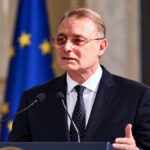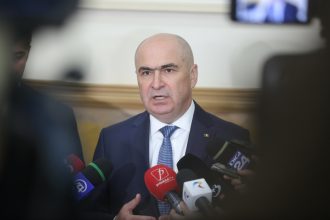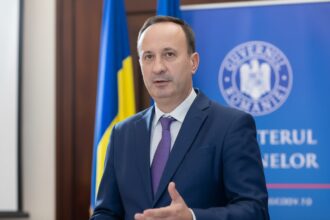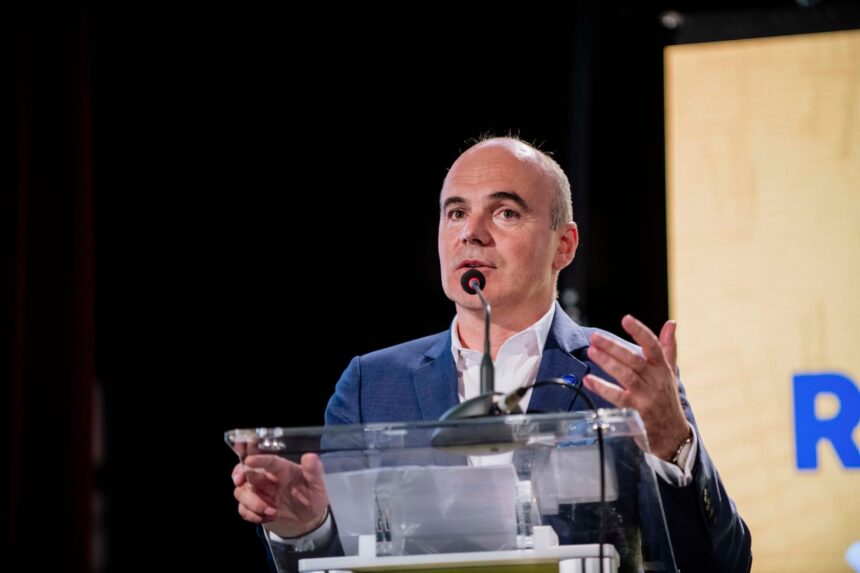
Romanian Member of the European Parliament Rareș Bogdan has criticised former Prime Minister Ilie Bolojan for prioritising austerity measures over efforts to attract foreign investment. In a Facebook post, the National Liberal Party (PNL) politician said he had repeatedly urged Bolojan to focus on investment-led economic growth and expressed hope that Romania’s new prime minister, Luca Niculescu, would take a different approach.
“Investment is Romania’s only chance to end the endless debate over the deficit, belt-tightening and the lack of money to pay the bills,” Bogdan wrote.
The MEP said he had raised the issue with Bolojan both during his tenure as Romania’s acting president and after he became prime minister.
“I told Ilie Bolojan this repeatedly, when he was acting president and later prime minister, but it was like talking to a brick wall. He simply didn’t understand,” Bogdan said.

He accused the former prime minister of relying on budget-tightening measures that affected pensioners, Romanian businesses, small entrepreneurs and property owners. According to Bogdan, expanding gross domestic product through investment should have been a central objective of the government’s economic policy.
Investment from Gulf States at the Centre of the Dispute
Bogdan pointed to growing interest among investors from Saudi Arabia, Qatar and the United Arab Emirates in Central and Southeastern Europe. He compared Romania’s performance with projects announced in Hungary, Serbia, the Czech Republic and Greece, arguing that Bucharest had failed to capitalise on similar opportunities.
One of his most significant claims concerned approximately €4 billion that he said Gulf investors had earmarked for Romania around three years ago. According to Bogdan, less than €500 million was effectively deployed, while the remaining funds were withdrawn after the proposed investments failed to move forward.
The MEP did not identify the investors, projects or financial documents supporting these figures. Without such information, his claim that Romania lost approximately €3.5 billion in potential investment cannot be independently verified.
Concerns about foreign investment are nevertheless supported by official economic data. According to the National Bank of Romania, foreign direct investment inflows totalled €2.12 billion in the first eight months of 2026, compared with €5.66 billion during the same period in 2025, a decline of approximately 62.5%.
These figures reflect net foreign direct investment flows and do not, on their own, establish that the decline was caused by the policies of any particular government.
Bogdan argued that Romania remains an attractive destination for international capital, citing its energy resources, agricultural potential and metals industry. He also identified the reconstruction of neighbouring Ukraine as a possible source of future opportunities for Romanian companies.
What Bogdan Expects from Prime Minister Luca Niculescu
The criticism comes days after Romania’s new government, led by Luca Niculescu, took office on 20 October following nearly six months of political deadlock. Bolojan’s government had been removed by a parliamentary no-confidence vote in May.
Niculescu, a former Romanian ambassador to France, previously coordinated the country’s accession process to the Organisation for Economic Co-operation and Development (OECD). Bogdan suggested that this experience could help improve Romania’s relationship with international investors.
“I sincerely hope that at least Luca Niculescu understands the role of investors in stabilising Romania and then helping it prosper,” the MEP wrote.
In its March 2026 economic assessment of Romania, the OECD emphasised both the need to strengthen public finances and the importance of investment, competitiveness and a predictable business environment. Its findings indicate that reducing the budget deficit and encouraging investment are not mutually exclusive objectives.
Bogdan acknowledged that he would have preferred these economic priorities to be pursued by a government with a strong liberal presence. However, he argued that Romania’s economic interests should take precedence over political rivalries.
“Romania must move forward. With or without the old parties,” he concluded.