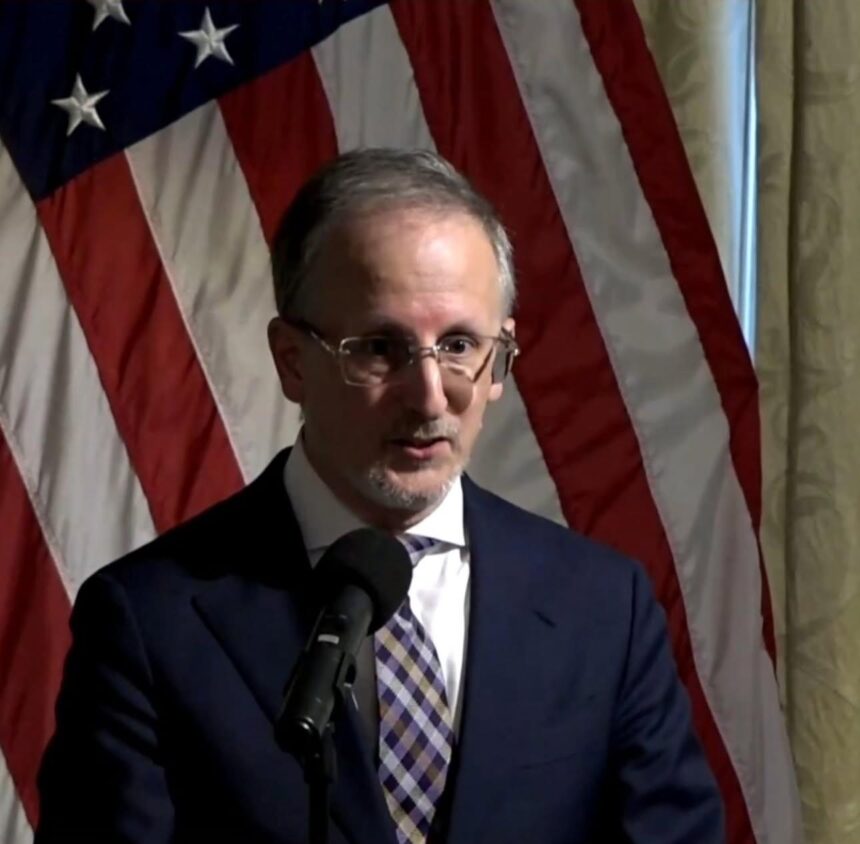
By Eli M. Gold
As we mark the 250th anniversary of the United States of America, we are not merely commemorating the founding of a nation, but the birth of an idea unlike any the world had ever seen. It is truly wondrous to reflect on how this great nation has evolved, from a bold experiment in governance to a global force shaping the course of history.
Looking back across the past millennium, it becomes increasingly clear that the greatest invention of the last 1,000 years was not a machine, a scientific breakthrough, or a technological marvel. It was the United States of America itself. The term “invention” is not used lightly. This nation was not formed out of precedent, but out of imagination. It was a deliberate creation, a Democratic Republic consciously forged through a fusion of Greek democracy and the Roman republic, grounded in Judeo-Christian values and moral philosophy.
Throughout history, many peoples have sought independence, sovereignty, and self-determination. Yet what distinguished the American founding was not simply the desire to break free, but the clarity of vision that followed. Our founders, with what can only be described as divinely inspired wisdom, established a nation where rights were not granted by rulers, but inherently possessed by the people, rights that “are endowed by their Creator.”

This was a nation that did not wait for permission. It did not depend on approval, funding, or partnership from foreign powers, even from those sympathetic to its cause. It was built on conviction. It was an idea so powerful that it entrusted ordinary people, not government, with the responsibility of shaping their own destiny. In doing so, it altered the trajectory of human history.
As written in a 2 July 1776 letter from John Adams to his wife Abigail,
“The second day of July, 1776, will be the most memorable epocha in the history of America. I am apt to believe that it will be celebrated by succeeding generations as the great anniversary festival. It ought to be commemorated, as the day of deliverance, by solemn acts of devotion to God Almighty. It ought to be solemized with pomp and parade, with shows, games, sports, guns, bells, bonfires, and illuminations, from one end of this continent to the other, from this time forward, forevermore.
You will think me transported with enthusiasm, but I am not. I am well aware of the toil, and blood, and treasure, that it will cost us to maintain this declaration, and support and defend these States. Yet, through all the gloom, I can see the rays of ravishing light and glory. I can see that the end is more than worth all the means, and that posterity will triumph in that day’s transaction, even although we should rue it, which I trust in God we shall not.”
What Adams foresaw was not merely independence, but endurance, and more importantly, influence. It is without doubt that the invention of the United States catalyzed the modern age. The freedoms enshrined at its founding, freedom of thought, freedom of inquiry, freedom of expression, and freedom to create, unlocked human potential on a scale never before witnessed.
In the 250 years since its founding, the pace of technological and scientific advancement has not only accelerated, it has eclipsed the progress of the previous millennium. Every major technological advancement we see globally today rests on foundations first laid by the United States, whose inventions, institutions, and capital made such progress possible. Innovations such as electricity, aviation, telecommunications, computing, and space exploration did not emerge in isolation. They flourished within a system that protected curiosity and rewarded ingenuity. The United States became the epicenter of this transformation, not by accident, but by design.
From the Industrial Revolution’s expansion on American soil to the digital revolution of the 21st century, the environment of liberty allowed inventors, entrepreneurs, and thinkers to challenge limits and redefine possibility. The same principles that empowered a small group of colonists to defy an empire also empowered generations to push beyond the boundaries of science and technology.
Consider a simple illustration. For most of human history, travel was limited to the speed of a horse or a ship. Within less than two centuries of America’s founding, humanity not only mastered powered flight but set foot on the moon. Similarly, communication evolved from handwritten letters carried over weeks or months to instantaneous global connectivity. These leaps were not merely technological, they were philosophical, rooted in the belief that individuals should be free to imagine, to question, and to build.
The American model demonstrated that when human freedom is protected, innovation becomes inevitable. It created a ripple effect felt across continents, inspiring democratic movements, economic systems, and technological ecosystems worldwide.
As we stand at this 250-year milestone, we are called not only to celebrate what has been achieved, but to recognize the responsibility that comes with such an inheritance. The same principles that gave birth to this nation, and fueled its unprecedented progress, must be preserved, strengthened, and renewed for generations to come.
For it was never just about independence. It was about possibility.
Eli M. Gold is the president of the Gold Institute for International Strategy, a Washington, DC based think-and-do tank.
Read more:
Eli M. Gold — The Discreet Architect of Strategic Dialogue in a World Out of Balance