The week of 16–22 November 2026 was marked by the first trilateral meeting between the leaders of the United States, China and Russia, further military incidents affecting NATO territory, and continued attacks on commercial shipping in the Strait of Hormuz. In Europe, negotiations over security guarantees for Ukraine moved forward, but no agreement was reached to end the war.
The Shenzhen summit brought together Donald Trump, Xi Jinping and Vladimir Putin, who agreed to continue discussions on strategic stability and nuclear security. On the same day in Berlin, European and Ukrainian leaders, joined by US representatives, discussed the conditions for a potential peace settlement and measures to protect Ukraine against renewed aggression.
Meanwhile, Poland reported that two Russian missiles and a drone had landed on its territory during an attack on Ukraine. In the Persian Gulf, several oil tankers were struck by unidentified projectiles, while the European Union received a revised proposal for its 2028–2034 long-term budget.
1. United States, China and Russia: First Trilateral Summit Ends Without Agreement on Ukraine
On 19 November, US President Donald Trump, Chinese President Xi Jinping and Russian President Vladimir Putin met in Shenzhen, China, for the first trilateral summit at the level of heads of state.

The meeting focused on strategic stability and international security at a time when relations among the three powers are shaped by the war in Ukraine, tensions in the Middle East and disagreements over nuclear security.
According to the joint declaration released by the White House, the three leaders agreed to continue dialogue aimed at reducing nuclear risks and preventing the proliferation of nuclear weapons. The document reaffirms the principle that a nuclear war cannot be won and must never be fought.
The declaration also sets out the three countries’ intention to increase the production and supply of refined petroleum products and to cooperate on reforming the United Nations. The leaders also addressed the immunity of state officials and limits on the exercise of jurisdiction by the International Criminal Court and similar institutions.
China’s Ministry of Foreign Affairs confirmed that the discussions covered the war in Ukraine, the situation in the Middle East and the Korean Peninsula. However, the trilateral declaration contains no agreement on ending the war in Ukraine, nor does it establish concrete commitments to resolving territorial disputes.
The summit opened a channel for direct dialogue among the three leaders on international security issues, but it produced neither a new arms control treaty nor an agreement on the future European security architecture.
2. Poland: Two Russian Missiles and a Drone Enter NATO Territory
On 20 November, Polish authorities announced that three Russian airborne objects had entered Polish airspace during a large-scale attack on Ukraine.
According to a statement issued by the Polish government, a Kh-101 cruise missile landed near Nowy Lipowiec. A second missile was found in woodland near Rudnik nad Sanem, while debris from a jet-powered drone was discovered in Mołodycz.
No casualties or significant property damage were reported. Prime Minister Donald Tusk confirmed that the objects were of Russian origin and said the incident could have been a deliberate provocation.
Polish authorities’ suspicions were also linked to military exercises being conducted by the Coalition of the Willing for Ukraine during the same period. One of the objects landed near an area where these activities were taking place, although no connection between the incident and the exercises had been established.
Tusk discussed strengthening security on NATO’s eastern flank with Secretary General Mark Rutte and European leaders.
The incident demonstrated how Russian attacks on Ukraine can directly affect Allied territory. For Poland and other countries on NATO’s eastern flank, the immediate concerns are air surveillance and defence capabilities, alongside the need to prevent uncontrolled military escalation.
3. Strait of Hormuz: Three Oil Tankers Struck in Two Days Amid Regional Tensions
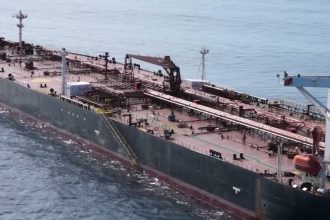
Maritime security in the Strait of Hormuz deteriorated again on 20–21 November, following three incidents reported by the United Kingdom Maritime Trade Operations (UKMTO).
On 20 November, an oil tanker leaving the Persian Gulf was struck by an unidentified projectile approximately eight nautical miles north of Khasab, Oman. The vessel’s security officer reported that a fire had broken out on board. No casualties were reported.
On the morning of 21 November, UKMTO recorded two further attacks on tankers travelling through the strait towards the Gulf’s exit. The first vessel was struck near its stern, approximately 11 nautical miles north of Khasab. The second was hit in its engine room, around 17 nautical miles east of the same town.
According to official UKMTO incident reports, none of the three incidents had resulted in casualties at the time they were reported. The potential environmental consequences of the two attacks on 21 November had yet to be established.
Authorities were investigating the incidents, and those responsible had not been officially identified. The available information does not establish that Iran was responsible for all the strikes.
The attacks have prolonged a period of uncertainty for commercial shipping through Hormuz, one of the principal maritime routes for energy exports from the Persian Gulf. The risks facing vessels could affect shipping and insurance costs, as well as the reliability of oil and gas deliveries.
4. European Union: António Costa Proposes Cuts to the 2028–2034 Budget
European Council President António Costa presented a revised proposal for the European Union’s long-term budget on 21 November, seeking to narrow differences among member states ahead of crucial negotiations.
According to Costa’s official statement, the proposal is 10% smaller than the European Commission’s original plan, representing a reduction of €204 billion at current prices.
Costa argued that the new budget must support economic competitiveness, defence and the EU’s international role without neglecting agriculture and cohesion policy. Funding for these two policy areas would remain the largest component of the budget.
To limit increases in national contributions, the proposal includes five sources of revenue, among them revenue from digital services provided by large companies, the Carbon Border Adjustment Mechanism, unrecycled electronic waste and the EU Emissions Trading System.
The proposal does not constitute a final agreement. Negotiations were due to continue at a special European Council meeting on 26–27 November.
For Romania, the main issues include funding for agriculture and cohesion projects, alongside resources allocated to security and competitiveness. The final distribution of funds will depend on agreement over the overall financial framework.
5. ASEAN: Manila Summit Ends Without a South China Sea Code of Conduct
The 49th Summit of the Association of Southeast Asian Nations (ASEAN) concluded in Manila on 17 November without finalising the Code of Conduct being negotiated with China for the South China Sea.
Philippine President Ferdinand Marcos Jr. said at the closing press conference that substantial progress had been made in the negotiations, but the document remained unfinished.
The code is intended to establish rules for managing maritime incidents and reducing tensions in a region where China and several ASEAN countries have competing territorial and maritime claims. Its adoption remains difficult because of disagreements over the document’s provisions and implementation.
The summit also addressed the conflict in Myanmar. ASEAN leaders maintained the organisation’s Five-Point Consensus peace plan and called for an end to violence against civilians, humanitarian access and the resumption of political dialogue.
According to the summit’s official documents, the organisation also adopted initiatives covering economic cooperation, trade security, critical minerals and relations with international partners.
At the close of the meeting, the Philippines symbolically handed over the ASEAN chairmanship to Singapore, which will assume the role on 1 January 2027.
6. COP31: Climate Negotiations in Antalya Continue Beyond Scheduled Deadline
The United Nations Climate Change Conference, COP31, held in Antalya, Türkiye, continued beyond its scheduled closing date of 20 November amid difficult negotiations over the final text.
The principal disagreements concerned reducing dependence on fossil fuels, climate finance and support for countries vulnerable to the effects of climate change.
On 20 November, Chris Bowen, President of the COP31 Negotiations, confirmed that discussions were continuing over how the transition away from fossil fuels should be reflected in the agreement. In a statement published by the UN Climate Change Secretariat, Bowen emphasised the role of electrification and renewable energy in reducing emissions.
On the morning of 22 November, negotiators were still examining a revised compromise proposal. No final agreement had been confirmed in the official documents reviewed.
The dispute in Antalya concerns both the pace of the energy transition and how its costs should be shared among developed economies, fossil fuel-producing countries and nations seeking greater financial support to adapt to climate change.
SPECIAL REPORT | Ukraine: Europe and the United States Discuss Post-War Security Guarantees
The Coalition of the Willing meeting in Berlin on 19 November brought together representatives of Ukraine, European countries and the United States to discuss ending the war and establishing future security guarantees.
The meeting was hosted by German Chancellor Friedrich Merz and attended by Ukrainian President Volodymyr Zelenskyy, French President Emmanuel Macron and British Prime Minister Andy Burnham. More than 40 representatives took part, either in person or remotely, including Romanian President Nicușor Dan.
The US administration was represented by Steve Witkoff and Jared Kushner, both involved in diplomatic efforts to bring the war to an end.
Security Guarantees Under Discussion for Ukraine
In a joint statement published by the French Presidency, the leaders of Germany, France, the United Kingdom and Ukraine called for robust, legally binding security guarantees that would take effect following a potential ceasefire.
Measures under discussion include continued military and financial assistance, participation in a proposed US-led ceasefire monitoring mechanism, and the establishment of a European-led multinational force with American support.
Another potential element is a commitment by participating countries to take action to restore peace and security in the event of another Russian attack, subject to their respective national procedures.
These arrangements remain under discussion. They do not amount to an automatic extension of NATO’s collective defence guarantees to Ukraine.
The leaders called on Russia to halt attacks on energy infrastructure during the winter and to take steps to facilitate food exports through the Black Sea.
The statement reaffirms that international borders must not be changed by force and that any negotiations concerning the European Union or NATO require the consent of the institutions and member states concerned.
European Union Approves a Further Payment of Nearly €8 Billion
Financial support for Ukraine was reinforced on 16 November, when the Council of the European Union adopted a decision allowing a payment of nearly €8 billion under the Ukraine Facility.
Of that amount, approximately €5 billion comes from resources made available through the EU’s 2026 loan support for Ukraine.
According to the Council of the EU’s official press release, the decision followed Ukraine’s fulfilment of more than 20 reform targets, including measures relating to the judiciary, anti-corruption efforts, public asset management and the energy sector. It is the largest individual payment approved under the facility to date.
The decision authorises the transfer of funds in the following period; it does not mean that the entire amount had already been disbursed when approval was granted.
Meanwhile, the United Kingdom announced in Berlin that it would supply Ukraine with 1,000 British-made long-range strike drones. London and Oslo also agreed to finance two fast military vessels for the Ukrainian Navy.
Diplomatic discussions are therefore continuing alongside military and financial support for Kyiv. By the end of the week, no ceasefire agreement had been announced, and the main disagreements over occupied territories, the terms of peace and security guarantees remained unresolved.
Read also