Macron’s invitation to El-Sisi highlights Egypt’s regional weight
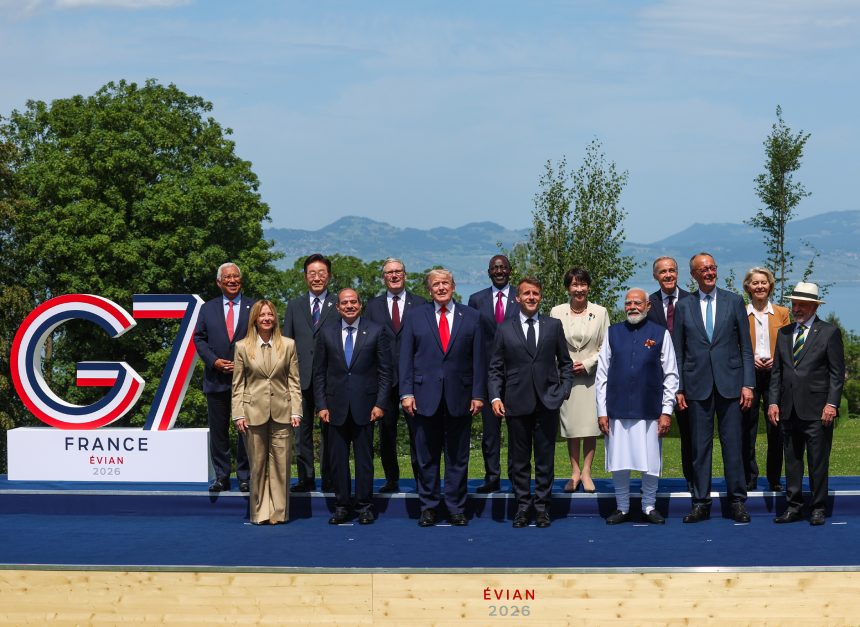
President Abdel Fattah El-Sisi is in Évian-les-Bains for the 52nd G7 Leaders’ Summit, following a personal invitation from French President Emmanuel Macron. This is Egypt’s second time at a G7 summit, following the 2019 meeting in Biarritz. But the 2026 invitation means something entirely different. Cairo isn’t here as a placeholder or a rotating African representative. It was invited for its own geopolitical weight. The global community views Egypt as an essential partner to keep the Middle East stable and to build real economic connections between major industrial powers and the Global South.
Under France’s summit theme, „Convergence and Tangible Action,” leaders are confronting deep cracks in the international order. The immediate priorities are clear: managing geopolitical crises to protect global trade and shipping lanes, fighting sticky inflation, and securing broken supply chains. There is also a major push to overhaul development finance for emerging markets and establish clear international boundaries for artificial intelligence.
Cairo arrived in Évian with a practical agenda focused on fixing system imbalances. At the top of the list is regional security. Egypt is using its diplomatic ties to stabilize the Middle East, pushing to build on the Sharm El-Sheikh Declaration for Peace—brokered late last year with the US, Türkiye, and Qatar—to secure a lasting ceasefire in Gaza. Behind the scenes, Egyptian negotiators are working to lower broader regional friction. On the economic side, Cairo is pushing global development banks for easier lending rules and real debt relief, shielding African economies from global shocks they didn’t cause. President El-Sisi is also making the case for Egypt as a green energy hub. He is showcasing major green hydrogen projects in the Suez Canal Economic Zone and highlighting Egypt’s capacity to export clean power and LNG to Europe.
This active role is backed by solid partnerships with the world’s top economies. Take France: centuries of cultural history have evolved into modern defense and development ties. Just last month, the new Senghor University campus opened in New Borg El-Arab with backing from both presidencies to train Africa’s future leaders. Relations with the US are just as deep, rooted in decades of security cooperation since Camp David. This continues during President Donald Trump’s second term. The upcoming bilateral meeting between El-Sisi and Trump in Évian will focus heavily on securing regional shipping lanes and making the Sharm El-Sheikh peace accord stick. Meanwhile, Mediterranean trade and energy ties with Italy have deepened through Rome’s Mattei Plan for Africa, which addresses migration by investing in local economies and farming. Massive infrastructure projects with Germany, Japan, and the UK also continue to move forward, including the giant Siemens high-speed rail network.

While the Évian summit will undoubtedly end with smooth statements on AI rules and African climate funds, a massive gap remains between high-level talk and real-world needs. Critics often call the G7 an exclusive club that protects wealthy northern capitals without making structural changes. Too often, their financial promises are just recycled money rather than new capital injections. This leaves developing markets to handle food insecurity and currency devaluations alone. For Egypt, the real value of the trip is on the sidelines, where direct face-to-face talks offer a concrete way to get the economic and security guarantees the country needs right now.
To maximize its leverage at the summit and beyond, Egypt should focus on three clear diplomatic tracks. First, a „Multipolar Nexus” strategy. Cairo can use its recent entry into the expanded BRICS bloc as a diplomatic counterweight, signaling to the G7 that the Global South has alternative economic options if Western promises fall short. Second, turning „Scientific and Digital Diplomacy” into real action. By building on the success of the new Senghor campus, Egypt can propose a permanent G7-Africa Digital and AI Academy on its soil, changing vague tech declarations into physical training centers and jobs for young people. Finally, Egypt must maintain a strict „Peace-for-Development” equation in its talks with the US and Europe. Regional stability cannot be maintained through security measures or policing alone. Long-term security requires G7 nations to invest directly in local manufacturing, job creation, and water and food security across the region.