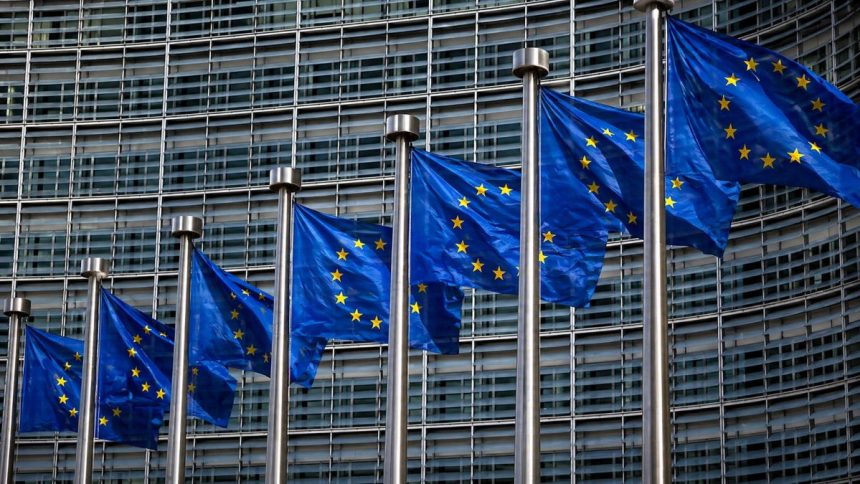
The European Union’s 20th sanctions package against Russia, adopted on 23 April 2026, marks far more than another round of restrictive measures against Moscow. It signals a structural shift in the logic of European sanctions: from the direct isolation of Russia to the dismantling of the international networks sustaining its war economy. And at the centre of this shift — in a manner more explicit and expansive than in any previous package — stand companies from China.
The stakes are not merely strategic. This is a decision with immediate geopolitical consequences. In parallel with the adoption of the 20th package, Beijing activated another instrument of pressure, placing seven European defence and aerospace entities on its export control list, in a dossier officially justified on Taiwan grounds. The simultaneity of the two moves is politically significant, even if their official justifications belong to separate dossiers. It points to a EU–China relationship in which files can no longer be treated in isolation.
Anatomy of the 20th Package: From Energy to Evasion Networks
According to the official communiqué of the Council of the EU, the package designates 16 entities from China, the United Arab Emirates, Uzbekistan, Kazakhstan and Belarus that have supplied dual-use goods or weapons systems to Russia’s military-industrial complex. Additionally, 60 entities have been added to the list of those providing direct or indirect support to Russia’s military-industrial complex or engaged in sanctions circumvention, of which 28 are located in third countries: China, including Hong Kong, Turkey, Thailand and the United Arab Emirates.
This marks the first activation of the anti-circumvention tool. According to the European Commission, the instrument prohibits the export of specific items to designated third countries in order to prevent onward supply to Russia, and has been applied for the first time with respect to Kyrgyzstan.
The package strikes simultaneously at multiple sources of Russian resilience. According to the same Council of the EU communiqué, transaction bans are introduced against 20 Russian banks, while four financial institutions in third countries are targeted for circumventing EU sanctions or connecting to Russia’s financial messaging system, SPFS. A further 46 vessels are added to the sanctioned shadow fleet, bringing the total to 632, and transactions with the Russian ports of Murmansk and Tuapse, as well as the oil terminal at Karimun in Indonesia, are prohibited.
According to the analysis by Baker McKenzie / Global Trade & Sanctions Law, the package also introduces prohibitions on the provision of cybersecurity services to Russia, expanded restrictions on crypto assets — including a full sectoral ban on any Russian crypto asset service provider — as well as new legal protections for European companies affected by Russian expropriations or abusive litigation.
The structural significance of the package lies in the transition from territorial sanctions to network sanctions. It is no longer sufficient for Russia to be formally isolated; Brussels is now attempting to sever the routes through which its war economy breathes.
Beijing’s Response: Two Instruments, Two Vectors of Pressure
China’s reaction came through two distinct and simultaneous channels — diplomatic and commercial — indicating a coordinated approach rather than improvisation.
On the diplomatic front, according to the official statement of the Mission of the People’s Republic of China to the European Union, published on 25 April 2026, „despite China’s strong opposition and repeated solemn representations, the EU announced its 20th package of sanctions against Russia, which once again includes listings and sanctions against Chinese entities and a Chinese individual. China once again expresses strong dissatisfaction and firm opposition to this move and has lodged solemn representations with the EU.” The same statement makes clear that Beijing „firmly opposes the EU’s attempts to shift blame onto China and to smear China over the Ukraine crisis” and that it will take „all necessary measures to firmly safeguard the legitimate rights and interests of Chinese enterprises and citizens.”
On the commercial front, according to the official announcement by China’s Ministry of Commerce / MOFCOM, carried by Xinhua on 24 April 2026, seven EU entities were added to China’s export control list, citing the need to protect national security and fulfil international non-proliferation obligations. The entities concerned are FN Herstal / Fabrique Nationale de Herstal, OMNIPOL a.s., HENSOLDT AG, EXCALIBUR ARMY spol. s r.o., SPACEKNOW INC. odštěpný závod s.r.o., VZLU AEROSPACE a.s. and FN Browning.
According to the South China Morning Post, the measure prohibits Chinese export operators from supplying dual-use items to these entities and bars organisations and individuals outside China from transferring or providing Chinese-origin items to them, with the immediate cessation of any ongoing activities required. MOFCOM stated that the targeted entities are „predominantly major European defence contractors, aerospace research institutes and satellite intelligence firms” accused of involvement in arms sales or military cooperation with Taiwan.
The Taiwan justification is contextually significant. Beijing is signalling its readiness to connect dossiers and to treat each sensitive European decision as part of a broader strategic calculus, regardless of the formal justification invoked in any given instance.
China’s Legal Arsenal: From Rhetoric to a Sanctions Infrastructure
China’s capacity to respond is not limited to export control lists. It is encoded in law through a legislative architecture built systematically over recent years, one that entered a more assertive phase of enforcement in 2026.
China’s State Council promulgated two decrees in April 2026, effective immediately and without any transitional period, confirmed through their official publication in the Chinese government’s legislative register. Decree 834, on Industrial and Supply Chain Security, extends regulatory scrutiny beyond the measures of foreign governments to encompass the commercial conduct of multinational companies deemed to affect supply chain stability — including compliance with foreign sanctions in ways that disrupt commercial relationships with Chinese counterparties, the reconfiguration of supply chains for geopolitical reasons, or the conduct of due diligence processes that Chinese authorities may consider excessive. Decree 835, on Countering Foreign Improper Extraterritorial Jurisdiction, introduces a new „Malicious Entity List” targeting those who „promote” foreign sanctions — a formulation broad enough to capture public advocacy or pressure applied to industry peers to sever ties with Chinese entities. The personal dimension of risk is made explicit: managers and representatives of foreign companies based in China may be subjected to travel bans or visa restrictions for non-compliance. The concrete legal implications of both decrees are analysed by Morgan Lewis and Pinsent Masons, which describe them as marking a transition from reactive countermeasures to proactive behavioural deterrence.
Recent precedents confirm that these instruments are not merely declaratory. According to the Council on Foreign Relations report on China–Europe relations, August 2025, in August 2025 China sanctioned two Lithuanian banks in response to the EU’s decision to sanction two Chinese banks accused of helping Russia circumvent sanctions, calling on the EU to „correct its wrongdoings.” According to the same source and the analysis by Chambers and Partners / International Trade 2026, also in 2025, following the Dutch government’s temporary assumption of control over Nexperia, China suspended export licences for auto-grade microcontrollers and power semiconductors produced by Nexperia-affiliated facilities for four weeks, causing severe disruptions to just-in-time deliveries for several European automotive suppliers.
Structural Dependency: The Vector That Makes Retaliation Genuinely Costly
The element that lends real weight to any Chinese retaliatory action is Europe’s structural dependency on Beijing’s supply chains in critical segments of its industrial economy.
According to the European Court of Auditors report analysed by Euronews, published in February 2026, China accounts for 60% of global critical raw materials production and 90% of global refining capacity, while the EU is struggling to diversify its supply of critical raw materials by the end of the decade, risking sustained high dependence on China. According to the same analysis, China supplies approximately 97% of EU magnesium imports and holds dominant positions in the supply of gallium, germanium and graphite — materials essential to the defence industry, electric vehicles and energy infrastructure.
According to the multi-institutional analysis cited by Rare Earth Exchanges, China controls 90% of global rare earth processing and dominant shares of tungsten (80%) and antimony (60%). More than 80% of European companies sit within just a few supply chain steps of Chinese inputs, while rebuilding independent alternatives would require between 20 and 30 years.
European Commission President Ursula von der Leyen has assessed, according to 9Dashline, that EU–China relations „have reached an inflection point”, while the EU’s total trade deficit with China is on course to reach a record €700 billion in 2026.
This vulnerability is not uniform across member states. According to the Brookings Institution analysis, Germany, the EU’s largest exporter to China, has repeatedly opposed coercive measures against Beijing. Major German automotive and chemical companies are deeply dependent on profits generated in China and actively lobby against any European decision that could damage their relationship with the Chinese government. This internal fracture is far from negligible: according to The Moscow Times, the adoption of the 20th package required Hungary and Slovakia to withdraw their vetoes, secured only after the completion of repairs to the Druzhba pipeline, which allows the resumption of Russian oil flows to both countries.
Europe’s Internal Fracture and the Budapest Lever
The tension is not only external. The unanimity required to adopt European sanctions creates a structural vulnerability that Beijing understands and exploits with precision.
According to the same Brookings Institution analysis, the unanimity requirement means that any disagreement limits the scope of action, particularly when politically sensitive entities such as Chinese companies are targeted. Germany voted against permanent tariffs on Chinese electric vehicles principally out of concern over Beijing’s potential retaliation.
Hungary remains the most explicit vector of Chinese influence within the bloc. According to the Council on Foreign Relations report on China in Europe — February 2026, Chinese Foreign Minister Wang Yi visited Budapest at the outset of his 2026 European tour, where he praised Hungary as „a stellar example of a new type of international relations”, while Prime Minister Orbán confirmed that Chinese investment „has ranked first for years in a row” in the Hungarian economy.
The European Dilemma: Strategic Efficiency or the Risk of Escalation
The listing of seven European defence entities in the same week as the adoption of the 20th package signals that Beijing is prepared to react swiftly across parallel but strategically connected dossiers. The response was calibrated: it targets the defence sector and sends a message on Taiwan, without mounting a frontal assault on civilian goods trade or market access for the broader range of European companies operating in China.
According to the Chambers and Partners / International Trade 2026 analysis, Beijing’s retaliatory actions are likely to remain calibrated rather than explosive: targeted measures, mirror investigations, regulatory friction and supply chain leverage — large enough to affect sensitive EU sectors without triggering a full retaliatory spiral. According to Lawfare Media, China’s response may ultimately depend on whether the EU continues to target a relatively limited number of Chinese companies: if Beijing determines that European sanctions will have no significant impact on its economy or international standing, they may remain below the threshold that would justify broader retaliation.
In the medium term, Europe’s strategy of reducing its dependency on China is advancing, but at a pace incompatible with the geopolitical urgency. According to the European Commission communiqué on the documents signed in Washington on 24 April 2026, the EU and the United States agreed a memorandum of understanding and an Action Plan on critical minerals, covering the entire supply chain — exploration, extraction, processing, recycling and substitution — with the stated objective of reducing exposure to Chinese strategic leverage. The strategic significance of this framework is analysed by Second Line of Defense. Yet according to the multi-institutional analysis cited by Rare Earth Exchanges, rebuilding independent alternatives to China in the critical minerals sector would require between 20 and 30 years — a timeframe that far exceeds any relevant geopolitical window.
The 20th sanctions package is not a technical foreign policy decision. It is a strategic choice with the potential to reshape the EU–China relationship over the medium and long term. If Brussels does not normalise the sanctioning of Chinese intermediaries, the anti-Russia sanctions will become partially ineffective over time. If it does normalise and extend the practice, it enters into systemic conflict with a partner on which it remains structurally dependent in critical segments of its industrial supply chains.
The logic of the 20th package suggests that Brussels has nonetheless chosen to press forward — with a prudence demonstrated by the relatively limited number of Chinese entities targeted, but also with a precedent that Beijing has treated with sufficient seriousness to signal political and economic costs with speed.
Sources: Council of the EU · European Commission · Mission of China to the EU · MOFCOM / Xinhua · South China Morning Post · Baker McKenzie / Global Trade & Sanctions Law · Morgan Lewis · Pinsent Masons · Council on Foreign Relations — August 2025 · Council on Foreign Relations — February 2026 · Chambers and Partners / International Trade 2026 · Lawfare Media · Brookings Institution · European Court of Auditors / Euronews · 9Dashline · Rare Earth Exchanges · Second Line of Defense · The Moscow Times