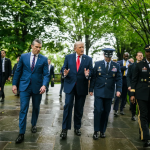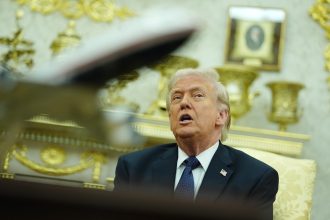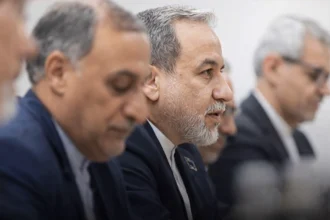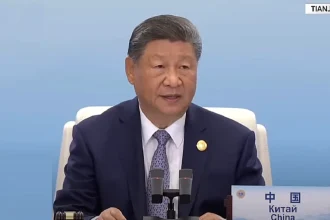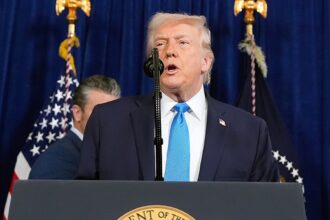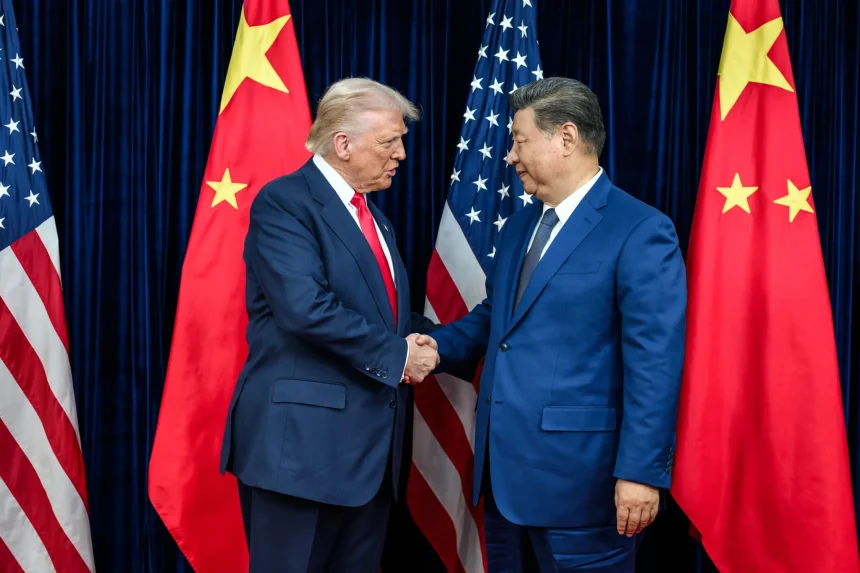
The Beijing Summit between Donald Trump and Xi Jinping, scheduled for 14–15 May 2026, is not merely an important bilateral episode. It is a test of strategic calibration in a year in which the relationship between the United States and China is being strained simultaneously by the war with Iran, the disruption of the Strait of Hormuz, competition over rare earths, tensions surrounding Taiwan and the fragility of the trade truce negotiated last autumn.
The stakes of the summit are not the transformation of the Sino-American relationship, but the limitation of risk. In an international system where regional crises are overlapping at an increasingly rapid pace, Washington and Beijing are seeking to avoid a shift from strategic competition to open confrontation.
A summit delayed by the war with Iran
The Trump–Xi meeting had been expected to take place earlier. Reuters Breakingviews notes that the visit had initially been planned for late March, but was postponed after U.S. forces, together with Israel, launched the attack against Iran on 28 February. This delay is not a mere scheduling detail. It shows that the summit is taking place in a fundamentally different context from the one in which it had originally been conceived.
If the initial agenda was expected to be dominated by tariffs, exports, technology and rare earths, the war with Iran has pushed a global energy-security issue, with direct effects on both economies, to the centre of the discussions. Kpler, cited by CNN, indicates a severe collapse in maritime traffic through the Strait of Hormuz, down to approximately 5% of the pre-conflict average. The figure should be read as an indicator of the logistical blockage, not as a complete measure of all regional energy flows. The price of a gallon of regular gasoline in the United States reached $4.54, 52% above its level before the war with Iran, according to Associated Press, which cites data from the American Automobile Association.

The macroeconomic context in which Trump travels to Beijing is therefore marked by energy inflation, domestic pressure and a narrower diplomatic margin than Washington would have had in a moment of regional stability. For Washington, the Iran file is no longer merely a regional security issue. It has become a domestic economic issue, with effects on prices, transport, inflation and public perceptions of the administration’s ability to manage the consequences of the war.
Iran and Hormuz: the file that turns China into an indispensable actor
The U.S. Department of the Treasury states that China buys approximately 90% of Iran’s oil exports, with independent Chinese “teapot” refineries accounting for most of these imports. The department argues that these revenues help support the Iranian regime, its weapons programmes and its military structures.
On 2 May, Beijing responded with a legal blocking measure. Under the order published by the Ministry of Commerce of the People’s Republic of China, Chinese companies are prohibited from recognising, executing or complying with the U.S. measures applied to the five companies targeted over transactions related to Iranian oil: Hengli Petrochemical Dalian Refinery, Shandong Shouguang Luqing Petrochemical, Shandong Jincheng Petrochemical Group, Hebei Xinhai Chemical Group and Shandong Shengxing Chemical.
Beijing has therefore not limited itself to criticising American sanctions. It has activated a legal instrument through which it seeks to block the extraterritorial application of Washington’s decisions to Chinese companies. In strategic terms, the message is clear: China does not accept the United States unilaterally defining the rules of global energy trade, especially when those rules affect Chinese companies and China’s own energy supply.
The diplomatic context became more complicated in the days leading up to the summit. On 6 May, Foreign Minister Wang Yi received his Iranian counterpart Abbas Araghchi in Beijing. The Ministry of Foreign Affairs of the People’s Republic of China states that Wang Yi supported the need for a complete ceasefire, rejected the resumption of hostilities and said that restoring normal and safe passage through the Strait of Hormuz is a common concern of the international community.
The Chinese wording is carefully calibrated. Beijing is not presenting itself as an ally of Washington, but as a responsible power interested in the stability of trade and energy. CSIS observes that the Iranian foreign minister’s visit to Beijing, only days before the summit, is a deliberate positioning signal: China is trying to present itself as a credible mediator before Trump arrives in Beijing, without appearing to execute the American agenda.
If Trump obtains from Xi a credible diplomatic signal on de-escalation and the gradual restoration of traffic through Hormuz, the White House may present the summit as a political success. But such an outcome would remain fragile: China can encourage Tehran, but it cannot control it. Beijing has real leverage over Iran, but that leverage does not amount to an operational capacity to rapidly reopen one of the world’s most sensitive maritime arteries.
Taiwan: the strategic stake behind diplomatic language
If Iran is the tactical urgency of the summit, Taiwan is the strategic file that can change the perception of the entire event. In the February 2026 phone call, Xi Jinping told Trump that the Taiwan question is “the most important issue in China–U.S. relations” and urged Washington to handle arms sales to Taipei “prudently”. The Ministry of Foreign Affairs of the People’s Republic of China published the full wording of Beijing’s position. This is Beijing’s baseline and will almost certainly remain one of Xi’s central demands in Beijing.
The tension is amplified by an internal contradiction in American policy. In December 2025, the Trump administration approved an $11.1 billion arms package for Taiwan — the largest in the history of the bilateral relationship, announced by Taipei and confirmed by Reuters. At the same time, Trump suggested that he had discussed those sales with Xi, triggering concerns in Taipei and legislative initiatives in the U.S. Congress to codify the Reagan Six Assurances, which explicitly prohibit consultation with Beijing on matters related to arms for Taiwan.
The issue is not only whether Washington continues arms sales. The issue is political language. Beijing would like the United States to move from the traditional formula that it “does not support” Taiwan independence to a stronger formulation stating that it “opposes” Taiwan independence. The difference may seem technical, but it is strategic: the first formula preserves the established American ambiguity; the second would be read in Beijing as a significant move closer to China’s position.
CSIS warns that a possible shift from “does not support Taiwan independence” to “opposes Taiwan independence” would be critical, because it could alter Beijing’s perception of the American commitment to the island. The risk is not necessarily a formal agreement against Taiwan. The risk is a concession of tone, an ambiguous sentence or a deliberately open-ended formulation — one that Beijing could immediately exploit in its domestic and regional messaging.
Zack Cooper, an analyst at the American Enterprise Institute, cited in a The Straits Times/ANN article carried by The Star, warns that Xi could offer Trump a large investment package in exchange for a pause in arms sales to Taiwan. Such a prospect would severely damage Taiwanese confidence in American guarantees and would signal to allies in the Indo-Pacific that Washington’s security support can become an object of economic negotiation.
Trade, rare earths and the economics of a managed truce
On the economic front, the summit is taking place under the pressure of a trade truce that has not eliminated competition, but has temporarily frozen some of its forms. The truce negotiated in October 2025 expires in November 2026, and both capitals know that a broader agreement must now be negotiated.
China’s economic reorientation during this period has been significant. In the first two months of 2026, China’s exports rose by 21.8% compared with the same period of the previous year, reflecting accelerated diversification toward non-U.S. markets, according to data cited by the World Economic Forum. Exports to the United States fell by 11% over the same period. Beijing therefore has less need for American trade concessions than it did in the earlier phase of the tariff confrontation.
Trump will be accompanied to Beijing by a smaller CEO delegation than in 2017, according to Reuters, which indicates more cautious expectations and an emphasis on managing a truce, not on announcing spectacular deals. U.S. Trade Representative Jamieson Greer summarised the administration’s objective in a simple formula: “We seek stability with China”, according to Asia Times. It is a formulation that signals the realistic limits of the dialogue, not its ambitions.
This is where the structural limit of the summit lies. The United States and China are not negotiating only tariffs, agricultural purchases or deliveries of critical minerals. They are indirectly negotiating the rules of a systemic competition. Washington is trying to limit China’s ability to turn economic interdependence into strategic advantage, while Beijing is trying to demonstrate that the Chinese economy can no longer be constrained through the classical instruments of the Western commercial order.
The most likely economic outcome, according to experts at the Brookings Institution, is an extension of the trade truce and the maintenance of rare earth flows, in exchange for some easing of American tariff and technology pressures. Jörg Wuttke, former president of the European Union Chamber of Commerce in China, cited by The Wire China, offers one of the toughest conclusions about the evolution of the economic balance between the West and Beijing: “It looks like China has won the long game. In 2001, the idea was that if China joins the World Trade Organization, it will become more like us. No. We have become more like them.”
That observation captures the underlying shift. The U.S.–China economic relationship is no longer dominated by the idea that Washington can shape Beijing’s behaviour through trade integration and tariff pressure. It is increasingly defined by the management of conflictual interdependence: the United States needs rare earths, supply chains and selective access to the Chinese market; China needs trade stability, technology and time to consolidate its industrial autonomy.
Technology and artificial intelligence: the less visible front
Beyond oil, tariffs and Taiwan, the summit also has a technological dimension that is less visible in the short term, but decisive in the long term. Semiconductors, artificial intelligence, advanced equipment, export controls and supply-chain security form the infrastructure of the new rivalry between the United States and China.
Reuters reports that Beijing is seeking the relaxation of American restrictions on exports of advanced semiconductors, while Washington wants Beijing to allow deliveries of rare earths and critical minerals to American companies. This symmetry is relevant: each side holds something the other needs, and the summit becomes an exercise in managing reciprocal vulnerabilities.
CSIS notes that both governments have indicated an interest in discussions on artificial intelligence, the safety of autonomous systems and associated risks. The absence of communication mechanisms in sensitive areas — from military AI to strategic surveillance systems — increases the risk of misinterpretation in crisis situations, and the summit may produce at least a preliminary framework for dialogue.
Such a framework would not stop technological competition. It would not eliminate American restrictions, nor would it reduce China’s ambition for industrial autonomy. But it could create a channel of communication in a domain where the absence of dialogue can itself become a strategic risk.
What the summit can realistically deliver
Most likely, the summit will produce an extension of the trade truce, a formula for dialogue on rare earths and technology, and a diplomatic signal regarding the need to stabilise the Strait of Hormuz. The Brookings Institution points precisely in this direction: a limited outcome, focused on managing tensions, not on changing the relationship.
It is possible that Xi Jinping will become more actively involved in the de-escalation of the Iranian crisis, but more through diplomatic language than through a direct operational commitment. CSIS notes that Beijing will seek to avoid the appearance of pressuring Iran in support of the United States, even though it has an interest in seeing the Strait of Hormuz reopened.
It is unlikely that the summit will produce a strategic reset, a real solution for Taiwan or a major easing of technological competition. At best, Beijing and Washington can temporarily freeze certain frictions and reduce the risk of accidental escalation. This is not a minor objective. In a year in which energy, trade and military chains are simultaneously under strain, the mere stabilisation of competition can be a strategically relevant outcome.
The summit as a mechanism of stabilisation, not transformation
Expectations must be calibrated against the history of this relationship. The Asia Society Policy Institute, in an analysis reproduced by Foreign Policy, tracked 136 direct exchanges between American presidents and Chinese leaders, from the Nixon–Mao meeting in 1972 to the present, concluding that such meetings rarely transform the relationship. What they can do, when managed well, is make a potentially dangerous rivalry less volatile.
The Brookings Institution warns that the relationship remains fragile, defined more by the absence of immediate friction than by a shared agenda or a deep dialogue on structural differences. Chinese analysts anticipate a return by Washington to a more competitive policy toward Beijing, either after the midterm elections or after Trump leaves office in 2029. Beijing is using this interval to consolidate its positions, not to make concessions.
There will be no real reset. There will be no structural solution for Taiwan. There will be no full strategic convergence on Iran. At best, there will be a temporary form of competition management — and only if things go well.
For Europe and Romania, the stakes are closer than they may appear. If the Strait of Hormuz remains unstable, the effects will be transmitted directly into energy prices and European inflation. If Taiwan becomes the object of a language concession, the signal will be read not only in Taipei, but also in Tokyo, Seoul, Canberra, Brussels and Bucharest. If the trade truce breaks down, supply chains, the automotive industry and commodity markets will feel the consequences quickly.
In a year dominated by war, maritime blockages and industrial competition, delaying the crisis is not diplomatic failure. It is the minimum necessary form of success.
Read also