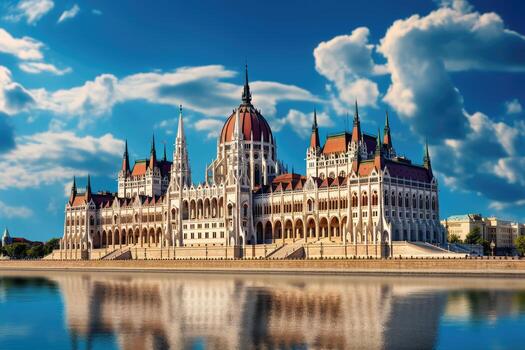
On April 12, 2026, Hungary will hold parliamentary elections whose implications extend well beyond those of an ordinary national vote. This is not merely a contest for power in Budapest, but a ballot that may influence the balance of power within the European Union, the relationship between Budapest and Brussels, the regional positioning shaped by the war in Ukraine, and the broader political equilibrium in Central Europe. Unsurprisingly, the election is being watched closely not only in Hungary, but also in European capitals and in Washington.
The importance of these elections also stems from the place Hungary has occupied in the European debate over the past sixteen years. Under Viktor Orbán, Budapest has become one of the most visible centres of conservative sovereigntism within the European Union: a member state that has frequently challenged the dominant consensus in Brussels and insisted on the primacy of the national interest in matters of migration, security, foreign policy and the internal organisation of power. For Orbán’s supporters, this reflects an autonomous and coherent political course; for his critics, it signals an increasingly conflictual relationship with European institutions and with Western liberal standards. It is precisely this polarisation that gives the April 12 election a significance greater than that of a simple alternation in government.
At the same time, the meaning of the vote cannot be reduced to the dispute between the governing party and the new opposition. Hungary’s elections have also become a test of the resilience of a political model that has influenced conservative debates across Europe and even in the United States. Conversely, they also test the ability of an internal alternative to challenge that model without proposing a complete ideological break with the country’s conservative electoral base. This is where the true geopolitical significance of the vote lies: not only in who governs Hungary after April 12, but in what kind of balance of power will take shape in Central Europe thereafter.
Viktor Orbán and the logic of continuity
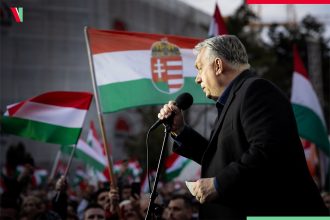
Viktor Orbán enters this race after sixteen uninterrupted years at the helm of government. Having returned to power in 2010, he built one of the most stable political architectures in post-communist Europe. For his electorate, Orbán’s central argument remains continuity: the idea that under Fidesz, Hungary has enjoyed political direction, institutional coherence and the ability to defend its positions in a Europe increasingly perceived as bureaucratic, centralising and ideologically driven. In this reading, Orbán presents himself not merely as head of government, but as the guarantor of a national-conservative political formula built around sovereignty, border control, the protection of identity and resistance to external pressure.

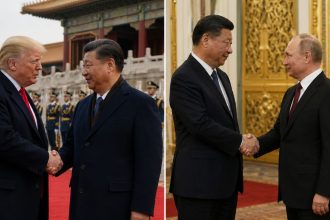
That external relevance has also been visible during the current campaign. The support expressed by Donald Trump, the favourable signals coming from American conservative circles, and the interest shown in Orbán’s campaign all confirm that the Hungarian leader is seen in certain Western milieus as one of the most important European allies of the sovereigntist right. Such gestures do not decide elections, but they do reinforce Orbán’s image as a political figure whose significance extends beyond the confines of a strictly national government.
That said, Orbán’s external capital should neither be ignored nor overstated. It strengthens his international profile and reinforces his ideological positioning, but the vote will ultimately be decided primarily by domestic realities: the economy, the cost of living, public services, trust in institutions and perceptions of political fatigue after many years in office. External support may validate the image of a leader; it cannot replace the direct relationship between government and electorate.
Péter Magyar and the challenge emerging from within the same political space
Orbán’s principal challenger is Péter Magyar, the leader of the Tisza party. His rise is significant precisely because it does not come from outside Fidesz’s political universe, but from its immediate proximity. A former insider, Magyar became a central opposition figure after the rupture of 2024, amid the political scandal that seriously damaged the government’s image and opened a new space for contestation.
Since then, Tisza has grown rapidly and established itself as the main opposition force. Its rise should be interpreted neither as a political accident nor as an automatic guarantee of change. What Magyar has nonetheless achieved is significant: he has built a credible alternative without placing himself outside the conservative reflexes of Hungarian society. He did not emerge as a leader of the left, nor as the representative of militant liberalism. On the contrary, he is seeking to occupy a centre-right space, appealing in particular to voters who retain conservative instincts but are dissatisfied with the way Fidesz has managed power, public resources and Hungary’s relationship with the European Union.
This is precisely where one of the keys to the election lies. Had the opposition been represented by a formula perceived as alien to Hungary’s dominant political culture, Fidesz would have faced a more predictable race. Instead, Tisza is attempting to compete with Orbán’s party on far more sensitive ground: that of the disillusioned conservative voter, rather than the traditional ideological opponent. This shift helps explain why the current contest is more serious than many of those that preceded it.
At the same time, Magyar’s rise should not be treated triumphantly. Tisza has momentum, visibility and the capacity to mobilise discontent, particularly among younger voters and in urban environments. Fidesz, however, retains a territorial network, electoral experience, the reflexes of government and a disciplined electorate. The election is therefore not merely a contest between two leaders, but between two types of political force: one consolidated through years of institutional control and organisation, the other accelerated by timing, energy and the promise of change.
The economy, the electoral system and the strategic significance of the vote
Beyond identity and geopolitics, the campaign is heavily influenced by the state of the economy. This is one of the most sensitive points for the government. European forecasts point to modest growth in 2025 and an acceleration in 2026, following a period of stagnation or very limited expansion. At the same time, the budget deficit remains elevated and public debt is projected to edge upward. These figures do not indicate economic collapse, but they do show clearly that the government is entering the election without the comfort of an economic performance strong enough to neutralise opposition criticism with ease.
Two competing narratives meet here. The government insists that economic difficulties are largely linked to external factors: the regional war, energy shocks, imported inflation and prolonged tensions with Brussels. The opposition argues that stagnation and fiscal imbalances reflect primarily domestic problems of governance, corruption, poor administration and the costs of a structural conflict with European institutions. From an electoral standpoint, the decisive question is how voters distribute responsibility between the international context and the quality of domestic governance.
Another crucial factor is the electoral system. In Hungary, the national vote share does not automatically translate into the same balance of power in parliament. The mixed system favours parties with strong territorial organisation and a high capacity for local mobilisation. From this point of view, Fidesz enters the race with a clear structural advantage built over time, beyond the snapshot offered by polling. That is precisely why the election remains open, yet difficult to reduce to simple formulas: there are signs that the opposition has become competitive, but the governing party retains important advantages of structure and organisation.
Against this backdrop, the external dimension of the election assumes particular importance. The campaign has unfolded in a climate heavily marked by themes such as Ukraine, the European Union, energy security and foreign influence. This means that the vote has not been fought solely over administrative or socio-economic issues, but also against a pronounced geopolitical backdrop in which political actors have defined their legitimacy through their positioning on the war, on Brussels and on the major centres of power.
For the European Union, the result in Budapest carries practical consequences. In recent years, Hungary has frequently acted as a blocking actor on issues related to Ukraine, sanctions and strategic decisions at EU level. For Orbán’s supporters, this is the expression of a firm foreign policy and a consistent defence of the national interest. For his critics, it is evidence of a conflictual relationship with the Union’s common mechanisms and of a willingness to use the veto as an instrument of political leverage. The election will not resolve that contradiction on its own, but it will show whether the Hungarian electorate wishes to preserve it or recalibrate it.
For Romania, the stakes are direct. Hungary is an important neighbour, and the bilateral relationship combines strategic interests, regional issues and recurring historical and political sensitivities. A new Orbán victory would mean continuity and predictability with regard to Budapest’s current political line, but also the persistence of possible frictions on European and regional dossiers. A change of government, by contrast, could alter the tone and style of relations with Brussels and with neighbouring states, though it would not automatically eliminate all structural differences. For Bucharest, a lucid reading of this election must therefore be pragmatic rather than emotional.
In conclusion, on April 12 Hungarian voters will decide not only who will govern in Budapest in the years ahead. They will also decide whether Hungary will continue along the path of a sovereigntist government consolidated around Viktor Orbán, or whether it will attempt a recalibration through the formula proposed by Péter Magyar and Tisza. Orbán enters the race with the strength of continuity, experience and a clearly defined political model, but also with the burden of power fatigue and a more difficult economic context. Magyar enters the race with the impetus of change, the advantage of freshness and the ability to compete within the same conservative space, but also with the limitations of a political construction that remains relatively new on a national scale.
It is precisely this symmetry of strengths and vulnerabilities that makes the election truly important. Not because it offers a simple choice between two caricatured formulas, but because it expresses a strategic decision by Hungarian society between continuity and recalibration at a moment of geopolitical pressure and European uncertainty. That is why the vote in Budapest will be watched closely not only in Hungary, but also in Brussels, Washington and across the region. What is being decided here is not the future of Europe as a whole, but it is undoubtedly one of the important variables shaping the direction Central Europe will take in the years ahead.
Sources: Reuters, European Commission, ODIHR/OSCE, Associated Press.
Read also
NATO’s Iranian Test: From Declared Solidarity to Concrete Operational Limits