The Houthis have entered the war, turning the Red Sea from a zone of latent risk into a potential active front in the regional conflict. The attack claimed by the Yemeni rebels against Israel, the first since the beginning of the current war, does not decisively alter the military balance in the conventional sense. It does, however, materially change the strategic geometry of the crisis. At this stage, the issue is no longer confined to the direct confrontation between Iran, Israel and the United States, but extends to the ability of the pro-Iranian camp to broaden the cost of the conflict to maritime routes, supply chains and global markets. Reuters and the Associated Press reported that on March 28, 2026, the Houthis claimed their first attack on Israel in the current war, while the Israeli military announced that projectiles launched from Yemen had been intercepted.
From a geostrategic perspective, this is the central point of the story. We are not merely witnessing another actor joining an already expanding confrontation. We are witnessing the activation of a vector capable of transforming a regional war into a crisis with disproportionate global consequences. The Houthis do not possess the conventional military weight of a major regional state, yet they have already demonstrated their ability to disrupt one of the world’s essential arteries of trade. Their explicit re-entry into the battlefield, at a moment when the conflict between Iran and its adversaries has already moved beyond a narrowly bilateral framework, raises the level of risk in a way that clearly exceeds the strictly military dimension.
Why the Houthi attack matters more than it appears
At first glance, the attack may be read as a symbolic gesture, intended to demonstrate Houthi solidarity with Iran and the wider so-called “Axis of Resistance.” Yet such a minimalist reading would seriously underestimate the significance of the moment. Reuters reported that the Houthi leadership explicitly linked its intervention to the attacks on Iran, Lebanon, Iraq and the Palestinian territories, and stated that operations could continue for as long as those fronts remain active. A day earlier, the group’s military spokesman had warned that the rebels had their “finger on the trigger” and were prepared to intervene if the war expanded or if the Red Sea were drawn into the military logic of the conflict.
This sequence of statements suggests that we are not dealing with an impulsive act, but with a calibrated entry into the war. More precisely, the Houthis are testing the adversary’s response space. A limited strike can, strategically, be more dangerous than a massive one, because it allows the actor launching it to measure the cost and determine whether further escalation is worth pursuing. The Wall Street Journal cited analysts describing precisely this logic: a strike clear enough to convey the political message, yet sufficiently limited to avoid, for now, a maximal retaliation.

In the cold language of strategic assessment, the Houthis are seeking to prove three things. First, that they remain an active and useful actor within the pro-Iranian regional architecture. Second, that pressure on Iran cannot be geographically compartmentalized. Third, that war can generate costs far beyond the front line itself, including for global trade, energy and logistics. That is the group’s true strategic value: the ability to produce global effects from a local position.
The Red Sea, the true stake behind the Houthis’ entry into the conflict
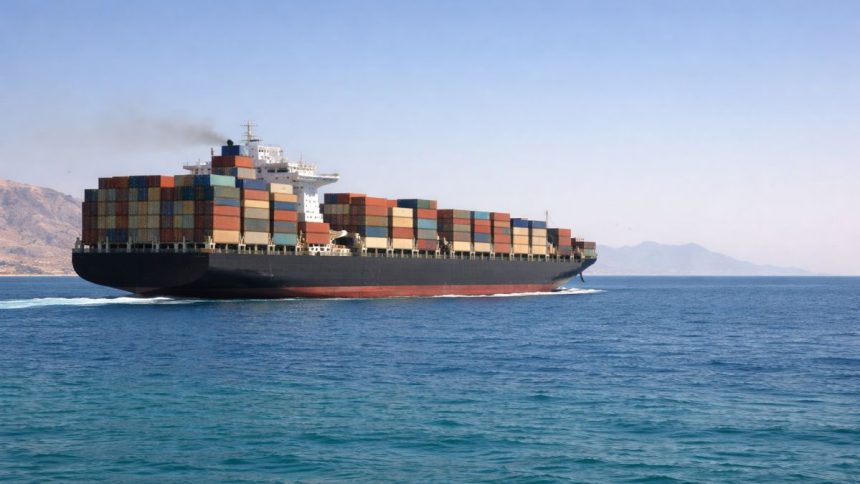
If the attack on Israel carries immediate political and propaganda value, the real strategic stake is the Red Sea. Bab el-Mandeb, the strait linking the Gulf of Aden to the Red Sea and, beyond it, to the Suez Canal, is one of the most sensitive transit points in the global economy. The Associated Press underscored that roughly 12% of global trade passes through this area, while the U.S. Energy Information Administration classifies Bab el-Mandeb as a major energy chokepoint for oil and petroleum product shipments.
This reality immediately changes the way the attack must be understood. It is no longer merely a threat to Israeli territory. It is also the possible reactivation of a pressure lever against the commercial flows linking Asia, the Middle East and Europe. In such a context, the Houthis’ value to Iran lies not in their ability to secure a decisive conventional military advantage, but in their ability to strike a sensitive node of the global system, where the cost for the adversary, and for the wider world, can become disproportionately high.
This makes clear why the Red Sea is once again emerging as a strategic front. In a classical war, actors pursue territorial control, the neutralization of military infrastructure and the degradation of the adversary’s combat capability. In a regional war with asymmetric components, however, an actor such as the Houthis may pursue something different: raising the global costs of the conflict to the point where political, economic and logistical pressure on the adversary begins to rival military pressure itself. That is precisely the vulnerability of the Red Sea.
The precedent that requires caution
The current risk is not theoretical. It is grounded in precedent. The Associated Press recalled that in the previous wave of Houthi attacks on maritime traffic, more than 100 vessels were targeted between late 2023 and early 2025, forcing major reroutings and changing the commercial calculations of major operators. The IMF showed that traffic through the Suez Canal fell sharply in the early months of the previous crisis, while the World Bank noted that the shock affected ports and economies across the region. The International Energy Agency, for its part, warned that the disruptions in the Red Sea had exposed the vulnerability of the logistical and commercial infrastructure tied to energy markets, including LNG.
Accordingly, when the Houthis now enter the current war officially, markets and analysts are not reacting to an abstract hypothesis, but to the possibility of reactivating a shock mechanism already tested in practice. Put differently, the question is not whether the Houthis could affect global trade, but how quickly and at what scale they might do so again if they choose to move from strategic signaling to a sustained campaign.
What Iran gains from Houthi activation
For Iran, Houthi activation offers more than ideological solidarity. It offers strategic depth and diversification of pressure. At a moment when Tehran is already engaged in direct and indirect confrontation across multiple theaters, the emergence of a new flashpoint in the Red Sea forces its adversaries to disperse their attention, resources and response capacity. For that reason, even without assuming total mechanical control by Iran over every Houthi action, it is clear that their activation serves Tehran’s strategic interest.
Moreover, if the Strait of Hormuz already remains a sensitive zone for the global energy market, the simultaneous reactivation of Bab el-Mandeb would produce precisely the scenario most feared by the maritime and energy sectors: pressure at two essential chokepoints. Lloyd’s List explicitly warned of the risk of a logistical “nightmare” in the event of simultaneous disruption in Hormuz and Bab el-Mandeb. This does not mean that such a scenario is already a reality as of March 28, 2026. It does mean, however, that the Houthis’ entry into the war materially increases its probability in the global strategic calculation.
The effect on Israel: the multi-front war becomes harder to manage
For Israel, the problem is not simply that a new threat is now emerging from Yemen. The problem is that this new front overlaps with a theater already saturated by strategic pressure. The Associated Press noted that Israel is preparing for a multi-front war, and Houthi activation reinforces precisely that logic. Even if interceptions reduce the immediate tactical effect, the simple fact that a new axis of attack has become operational compels Israel to distribute its defensive resources, strategic attention and planning more widely.
In addition, Israel is being pushed into a classic dilemma. A strong response against the Houthis could further widen the footprint of the conflict and legitimize a new round of regional escalation. A limited response, by contrast, risks being read by the Houthis and other actors in the pro-Iranian camp as evidence that the cost threshold remains acceptable. In wars of this networked type, it is precisely this dispersal of decision-making and attention that constitutes one of the decisive advantages of asymmetric actors.
The effect on the United States: a new deterrence dilemma
For Washington, the Houthis’ entry into the conflict deepens an already difficult problem. If the United States treats the Houthi front as a secondary theater, it risks leaving open a corridor for economic and maritime escalation. If it treats it as a central node of the conflict, it increases the risks of overextension and deeper entanglement in an even more complex regional architecture. Reuters reported that 12 U.S. service members were wounded in an Iranian strike on Prince Sultan Air Base in Saudi Arabia, a reminder that for the United States, the costs of the war are already direct and tangible.
At the same time, Reuters also reported remarks by Marco Rubio suggesting that the objectives of the campaign against Iran could be achieved in weeks rather than months, without resort to U.S. ground troops. That calculation, however, becomes far more fragile if the Red Sea begins to function as a front of economic and logistical attrition. The more autonomous points of instability the conflict generates, the more difficult it becomes to close it quickly through a simple formula of central de-escalation.
The economic dimension: from energy shock to systemic vulnerability
The true weight of the Houthis’ entry into the conflict also lies in its economic dimension. Reuters reported that the OECD believes the war has erased the expected improvement in global growth and reignited inflation, chiefly through its effects on energy. India has officially warned that it sees risks to growth, energy costs and supply chains. At the same time, Reuters reported that Maersk temporarily suspended operations at the port of Salalah in Oman following a security incident, a sign that logistical tensions in the region are no longer merely an analytical concern but are beginning to shape the decisions of major actors in global shipping.
This means that the war no longer threatens only oil supply or energy infrastructure. It threatens the network linking energy, maritime transport, insurance, trade finance costs, transit times and, ultimately, imported inflation in economies dependent on global flows. In this equation, the Houthis become an actor of strategic value far beyond their conventional military power, precisely because they can affect one of the most sensitive nodes of the system.
Is this the beginning of a full-scale maritime campaign?
At this stage, the serious answer is that there is not yet evidence of a renewed full-scale maritime campaign, but there is a clear rise in risk. The data available as of March 28, 2026 point to a controlled entry into the conflict and a powerful strategic signal, not to confirmation that the Houthis have already resumed, on a broad scale, the offensive that shook the Red Sea in previous years. Yet all the conditions for such an evolution are now more favorable: the political message has been delivered, the precedent exists, the region’s strategic infrastructure remains vulnerable, and the regional war provides both ideological and operational justification for escalation.
For this reason, the essential question is not whether the attack launched from Yemen was intercepted. The essential question is whether the Houthis will stop at the level of strategic signaling or turn the Red Sea into the next stage of the conflict. If that happens, the Middle East war will cease to be merely an expanded regional confrontation and become a crisis in the architecture of global economic security.
The Atlas News assessment
The sober assessment is that the Houthis’ entry into the war does not decisively alter the military balance of forces, but it does fundamentally alter the map of risk. It gives Iran an additional indirect lever, compels Israel to manage the logic of multi-front warfare more intensively, and pushes the United States into a new deterrence dilemma. Yet the most important consequence is not, at least for now, strictly military. The most important consequence is the possible re-emergence of the Red Sea as an instrument of systemic pressure on global trade, markets and economies dependent on the stability of maritime routes.
If this trajectory continues, Bab el-Mandeb will matter almost as much as Hormuz in the calculations of all regional and global actors. And if both chokepoints enter simultaneously into a logic of instability, the conflict will extend well beyond the boundaries of the Middle East and become, in the most concrete sense, a global crisis of economic security. That is why Houthi activation must be read not as a marginal episode, but as the possible beginning of a new strategic phase in the war.
Sources: Reuters, Associated Press, The Wall Street Journal, OECD, U.S. Energy Information Administration, IMF, World Bank, International Energy Agency, Lloyd’s List.
Read also