Amr Yehia – Atlas News – Cairo
The strategic partnership between Kazakhstan and Egypt stands as a pillar of stability and constructive diplomacy bridging Central Asia, the Middle East, and Africa. Grounded in deep historical ties—symbolized by the enduring legacy of Sultan Al-Zahir Baybars—the two nations continue to expand their multifaceted relations across political, economic, and humanitarian dimensions.
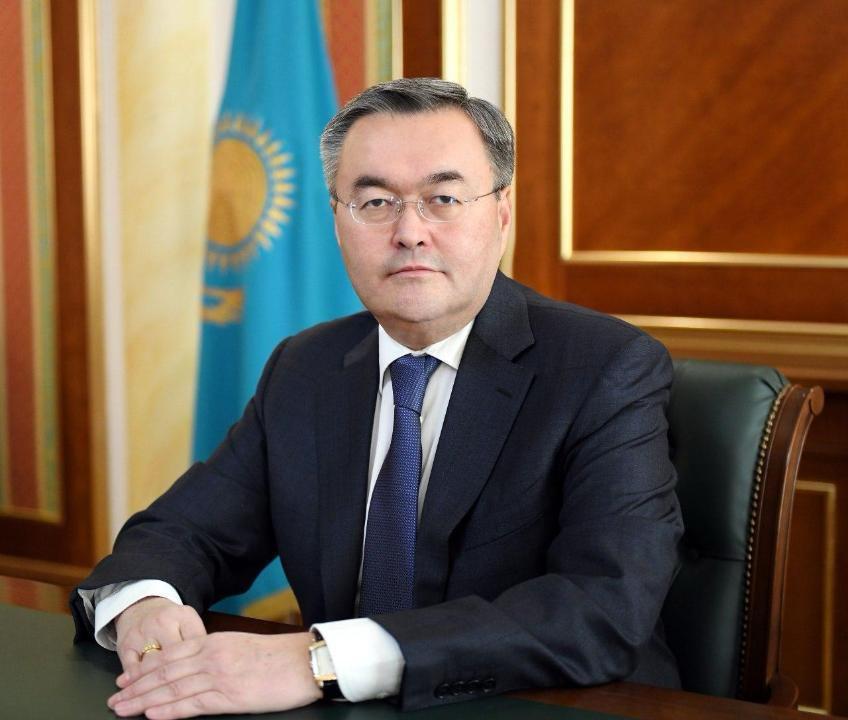
In this exclusive interview during his official visit to Cairo, Kazakhstan’s Minister of Foreign Affairs Mukhtar Tileuberdi highlights the key objectives of his visit. He outlines Astana’s foreign policy vision under President Kassym-Jomart Tokayev, addresses pressing geopolitical challenges in the Middle East and Red Sea region, and details concrete steps to elevate trade, logistics, and multilateral cooperation between the two pivotal states.
What are the primary objectives and key expected outcomes of your current visit to Egypt, and how do you assess the present trajectory of bilateral relations between Astana and Cairo across political and diplomatic dimensions?

Mukhtar Tileuberdi: Kazakhstan and Egypt enjoy longstanding relations based on mutual respect, political trust, and a shared commitment to international peace and stability. We regard Egypt as one of our key partners in the Arab world and Africa, and highly appreciate its important role in regional and international affairs.
The development of our partnership is consistent with the foreign policy course pursued by President Kassym-Jomart Tokayev, which places particular emphasis on constructive dialogue, balanced international engagement, and practical cooperation. We are keen to further strengthen our relations with Egypt in line with these priorities. President Abdel Fattah El-Sisi’s official visit to Kazakhstan in February 2016 marked an important milestone, and continued engagement between our two leaders provides a solid foundation for bilateral cooperation.
My visit to Cairo is aimed at giving fresh impetus to our cooperation and identifying practical steps to advance common priorities, focusing on three key areas: deepening political dialogue, expanding trade and investment cooperation, and strengthening coordination on pressing regional and international issues. We also attach importance to revitalizing bilateral mechanisms, including the Kazakhstan-Egypt Business Council and the Intergovernmental Commission, to ensure our political understanding translates into concrete economic and humanitarian outcomes.
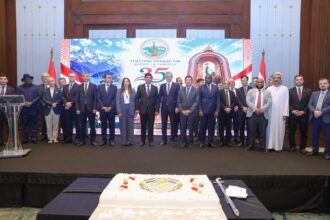
Importantly, our friendship is rooted in centuries of historical and cultural connections. Sultan Al-Zahir Baybars remains a powerful symbol of this common heritage. The joint restoration of his historic mosque in Cairo, reopened in 2023, stands as a testament to our commitment to preserving these ties for future generations.
Given severe regional tensions, how can Kazakhstan and Egypt coordinate diplomatic efforts to restore Middle East stability?
Mukhtar Tileuberdi: Kazakhstan follows developments in the Middle East with deep concern. Our position reflects President Kassym-Jomart Tokayev’s consistent emphasis on peaceful conflict resolution, respect for international law, and the primacy of diplomacy over confrontation.
We highly appreciate Egypt’s constructive efforts to promote regional stability, particularly its role in addressing the situation in Gaza and facilitating humanitarian assistance to the Palestinian people. Kazakhstan supports a just, comprehensive, and lasting settlement of the Palestinian question based on the two-state solution, in accordance with relevant UN resolutions. An enduring ceasefire, unhindered humanitarian access, and a credible political process remain essential.
Beyond these crises, the security of the Red Sea and the Gulf is of considerable importance to the international community. Disruptions to maritime navigation and energy supplies have implications extending far beyond the region, including for landlocked countries such as Kazakhstan.
Under President Tokayev’s leadership, Kazakhstan continues to advocate stronger preventive diplomacy. At the Seventh CICA Summit, the President proposed establishing a Mechanism for Preventive Diplomacy to address differences before they escalate. We also remain ready to support constructive diplomatic efforts in practical ways, such as offering a platform for peace negotiations in the city of Turkestan. By strengthening consultations and coordinating positions within international organizations, Kazakhstan and Egypt can complement each other’s diplomatic efforts toward a region secured through dialogue rather than confrontation.
How are Astana and Cairo coordinating within international bodies like the UN, OIC, and CICA?
Mukhtar Tileuberdi: Kazakhstan and Egypt share a strong commitment to the UN Charter, including respect for sovereignty, territorial integrity, and peaceful settlement of disputes. Cooperation within international organizations provides an important foundation for advancing these principles.
A notable example is Egypt’s decision to co-sponsor the March 2025 UN General Assembly resolution establishing the UN Regional Centre for the SDGs for Central Asia and Afghanistan in Almaty. Within the Organization of Islamic Cooperation (OIC), our countries work together on regional security, sustainable development, the Palestinian question, and intercultural dialogue. An important practical dimension is the Islamic Organization for Food Security (IOFS), headquartered in Astana. Egypt signed its Statute in 2016 and was elected to its Executive Board in May 2026.
We also attach particular importance to Egypt’s participation in the Conference on Interaction and Confidence Building Measures in Asia (CICA). We welcome Cairo’s continued support for CICA’s institutional development into a full-fledged international organization, and we see opportunities to strengthen cooperation between CICA and the League of Arab States. More broadly, Kazakhstan considers Egypt an important partner in developing stronger links between Central Asia, the Arab world, and Africa.
What concrete steps are being taken to boost economic ties, transit routes, and agriculture between our nations?
Mukhtar Tileuberdi: Economic cooperation is one of the most promising areas of our relationship. President Tokayev has made economic diversification, investment attraction, and transit development key priorities. Egypt’s National Economic Development Narrative aligns perfectly with Kazakhstan’s strategic trajectory.
Our trade relations show encouraging growth: in January–July 2026 alone, trade turnover exceeded $600 million. However, we believe this level does not yet fully reflect our potential.
Agriculture and food security remain key priorities. Kazakhstan has traditionally supplied high-quality wheat to Egypt, and we are keen to expand into processed foods and Halal-certified goods, alongside pharmaceuticals and industrial investments.
In logistics, Egypt’s Suez Canal is a major maritime gateway, while Kazakhstan is actively developing its role as a Central Asian transit hub along the Trans-Caspian International Transport Route (Middle Corridor). The critical next step to leverage these two massive hubs is closing the aviation gap by establishing regular direct flights linking Cairo with major cities in Kazakhstan, which will significantly strengthen business, tourism, and investment ties.
Following Kazakhstan’s Kurultai reforms, how do you see future ties and potential high-level visits?
Mukhtar Tileuberdi: Kazakhstan is undergoing an important political and institutional transformation under President Tokayev. The constitutional reforms and the establishment of the new unicameral Kurultai are integral to building a „Just Kazakhstan” and strengthening state governance.
These reforms reinforce our commitment to a balanced, constructive, and predictable foreign policy. President Tokayev consistently advocates closer engagement with the Arab world in trade, transport, energy, and technology, with Egypt holding a special place due to its political influence and economic capabilities.
We highly value President El-Sisi’s personal contribution to Kazakhstan-Egypt relations since his 2016 visit to Astana. Sustained high-level dialogue remains essential, and we would welcome opportunities for reciprocal presidential visits at mutually convenient dates to advance shared priorities and elevate bilateral relations to a new level.
How can our countries collaborate on food security, water management, climate resilience, and energy transition?
Mukhtar Tileuberdi: Food security, water management, and sustainable energy are closely connected challenges. As an exporter of agricultural products, Kazakhstan seeks to contribute to resilient international food supply chains through agricultural trade, food processing, and technological exchanges with Egypt, supported by our work in the IOFS.
On water security, we value Egypt’s extensive experience. President Tokayev has proposed establishing an International Water Organization within the UN system, as well as a CICA Water Partnership to encourage research and technology exchange. We welcome Egypt’s constructive contribution to these discussions.
Regarding the energy transition, both nations are actively diversifying their energy sectors and promoting renewable energy. Through joint initiatives, investment partnerships, and exchanges of expertise, Kazakhstan and Egypt can meaningfully address these global challenges while creating new economic opportunities.
How does Kazakhstan project its model of religious tolerance and interfaith dialogue globally in partnership with Al-Azhar?
Mukhtar Tileuberdi: Kazakhstan consistently promotes interfaith harmony and mutual respect as foundations for social stability. This philosophy is embodied in the Congress of Leaders of World and Traditional Religions, convened in Astana since 2003. The Eighth Congress in September 2025 reaffirmed the vital importance of interfaith engagement in countering global polarization.
We highly value the invaluable contributions of Egypt and Al-Azhar toward advancing moderation and tolerance. We hold the Grand Imam of Al-Azhar, Sheikh Ahmed El-Tayeb, in the highest regard; his personal participation in the Seventh Congress in 2022 was deeply appreciated.
Our partnership extends to education through the Egyptian University of Islamic Culture Nur-Mubarak in Almaty, which trains specialists in Islamic studies. Kazakhstan stands ready to expand academic exchanges with Al-Azhar to counter extremism and promote human dignity and peaceful coexistence.
Read also