Amr Yehia
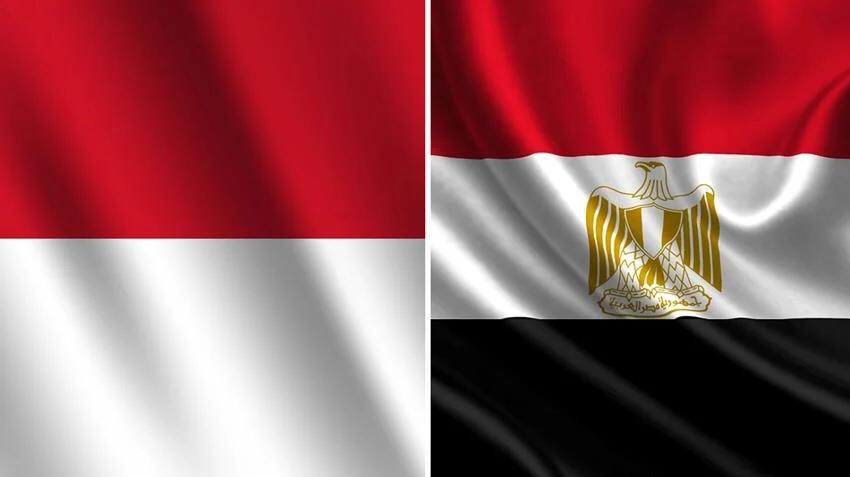
All eyes are turning toward President Abdel Fattah El-Sisi’s upcoming Asian tour, with Jakarta—the Indonesian capital—serving as a pivotal stop to deepen a new phase of comprehensive strategic partnership between Egypt and Indonesia. This visit holds immense significance given its timing amidst rapid geostrategic shifts; it aims to fulfill both nations’ aspirations to deepen political and economic cooperation and to build a cohesive front among Global South nations and rising powers to support regional and international stability.
From Historic Ties to Strategic Partnership
The anticipated summit crowns a long-standing legacy of active diplomacy and mutual official and direct engagement between the two leaderships. Egyptian-Indonesian relations have been characterized by growing political momentum; notably, Egypt was the first Arab and African nation to recognize Indonesia’s independence in 1947 and to sign an official treaty of friendship in Cairo. This highly anticipated summit crowns a long-standing legacy of active diplomacy and mutual official and on-the-ground engagement between the leaderships of both nations. Egyptian-Indonesian relations have been characterized by growing political momentum ever since Egypt’s historic recognition of Indonesia’s independence.
This trajectory of bilateral cooperation culminated in the official announcement—made by Egyptian President Abdel Fattah El-Sisi and Indonesian President Prabowo Subianto in April 2025—to elevate ties to the level of a „strategic partnership.” The upcoming summit in Jakarta aims to solidify direct communication and full consensus between the two presidents on advancing bilateral relations and enhancing coordination regarding Middle East issues, while propelling the partnership toward broader horizons.

Recent years have also witnessed an intensive exchange of high-level visits—most notably the Egyptian Foreign Minister’s visit to Jakarta in March 2022 and the participation of high-level Indonesian delegations in the COP27 climate summit in Sharm El-Sheikh (2022). These interactions have contributed to establishing institutional mechanisms designed to transform agreements and memoranda of understanding into concrete projects across the defense, security, and technical implementation sectors.
Regarding multilateral engagement, Egypt and Indonesia maintain well-established coordination frameworks within the United Nations, the Non-Aligned Movement (which both nations co-founded at the 1955 Bandung Conference), the G-15, and the D-8 Organization for Economic Cooperation. This is further reinforced by their pivotal roles in modern international economic and political blocs—such as BRICS and various North-South initiatives.
Political coordination between the two sides centers on upholding the principles of international law, maintaining international peace and security, reforming global governance, and aligning their visions on climate and food security crises. Consequently, the combined demographic and political weight of Egypt and Indonesia constitutes a decisive force—spanning the Arab world, Africa, and Southeast Asia (ASEAN)—on the global stage.
Maritime Security: Connecting the Suez Canal and Southeast Asia
Amidst current geopolitical crises, the issue of maritime navigation security and the safety of international trade routes is certain to emerge as a key strategic priority on the agenda of the Egyptian-Indonesian summit. Given Egypt’s strategic geographical control over the Suez Canal and the Bab al-Mandab Strait, and Indonesia’s pivotal geopolitical location overlooking the Strait of Malacca—through which approximately 40% of global trade passes—these discussions take on heightened significance. This is particularly true in light of the repercussions of ongoing unrest in the Red Sea and the risks associated with the Strait of Hormuz, which have caused maritime shipping costs to surge by over 300% on certain routes and led to supply delays.
Cairo and Jakarta approach these maritime transport crises by addressing the political root causes of regional conflicts rather than relying on temporary military solutions, while emphasizing the central importance of the Suez Canal, which handled about 12% of total global trade prior to the current crisis.
Egypt and Indonesia Align on Palestinian Rights and Humanitarian Relief
At the heart of the upcoming political discussions lies the two nations’ unified and decisive stance on the Palestinian cause. Jakarta values Egypt’s pivotal, leading role in managing the crisis and its firm position—categorically rejecting attempts to forcibly displace the Palestinian people from their land and viewing such a move as a „red line” that threatens the region’s national security and political future.
Indonesia has translated its political support into a massive relief effort, coordinated directly with Egyptian authorities and channeled through the Rafah land crossing; Jakarta has dispatched humanitarian and medical aid shipments in coordination with Egyptian authorities and the Egyptian Red Crescent. This direct, on-the-ground coordination reflects Jakarta’s absolute confidence in Egypt’s approach to managing relief operations and upholding the rights of the brotherly Palestinian people.
Al-Azhar and the Foundations of Religious and Educational Cooperation
These positions are further aligned under the umbrella of the Organization of Islamic Cooperation (OIC); As two of the Organization’s largest and most influential member states, Egypt and Indonesia are spearheading joint efforts to combat hostility and Islamophobia, while promoting a culture of tolerance and steering clear of sectarian and political extremism.
Al-Azhar Al-Sharif plays a pivotal role as a fundamental pillar and a primary instrument of soft diplomacy connecting the two peoples; Al-Azhar University and its affiliated institutions host over 14,000 Indonesian students—the largest single group of international students in Egypt. Cooperation also extends to the „Al-Azhar International Academy for Training Imams and Preachers,” which has graduated numerous cohorts of Indonesian religious cadres, equipping them to disseminate values of peace and citizenship and to counter intellectual extremism.
Trade and Investment: Expanding Access to African and Asian Markets
On the economic and trade fronts, statistical data reflect significant growth in the volume of trade between Egypt and Indonesia , Bilateral trade volume ranges from $1.5 billion to $2.1 billion annually, making Indonesia one of Egypt’s leading trading partners in Asia. Indonesian exports to Egypt are led by palm oil—with Indonesia supplying approximately 20% of the Egyptian market’s needs—as well as raw coffee, electronic devices, and textiles. Meanwhile, Egyptian exports to Indonesia consist primarily of phosphates, chemical fertilizers, and agricultural produce such as citrus fruits and dates.
Economic discussions during the presidential summit aim to narrow the trade gap, facilitate market access for Egyptian exports, and explore joint investment opportunities within the Suez Canal Economic Zone, envisioning it as an Indonesian logistics hub and a gateway to African and Arab markets.
Economic and trade relations are bolstered by the activities of the „Egyptian-Indonesian Joint Committee”—co-chaired by the foreign ministers of both nations, which held its inaugural session in Jakarta—as well as political consultation committees and the „Trade and Economic Coordination Committee.” The latter was established via a 2021 memorandum of understanding to overcome customs and logistical barriers. Additionally, the „Egyptian-Indonesian Joint Business Council” (established in 2009) plays an active role in connecting the business communities and private sectors of both countries and organizing reciprocal trade exhibitions, such as „Trade Expo Indonesia” and specialized Egyptian trade fairs.
Culture, Tourism and Direct Flights: Bringing Egyptians and Indonesians Closer
The partnership extends to the realms of culture, tourism, and archaeology; both nations are committed to fostering heritage exchanges and organizing cultural weeks and joint art exhibitions to showcase ancient Egyptian civilization alongside rich Islamic and Indonesian heritage.
In the tourism sector, the ministries of tourism and aviation in both countries are working to boost tourist inflows, with thousands of Indonesian tourists visiting Egypt annually to explore archaeological sites and religious landmarks. A top priority is examining the operational steps to launch direct flights between Cairo and Jakarta, given the immense importance of such a link in opening broad horizons to strengthen the enduring ties between the two peoples.
Read also
Egypt and Malaysia Seek Deeper Strategic Partnership Ahead of President El-Sisi’s Kuala Lumpur Visit