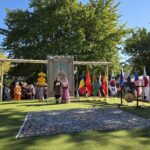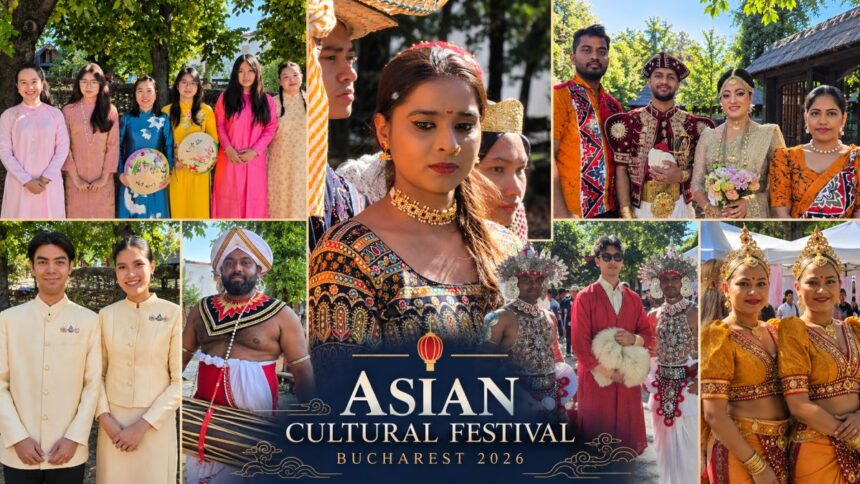
Bucharest hosted the fourth edition of the Asian Cultural Festival on Saturday, 3 October 2026, bringing together the diplomatic missions of 13 Asian countries at the Dimitrie Gusti National Village Museum. Traditional attire, music, dance and gastronomy transformed the festival into a vibrant expression of cultural diplomacy and dialogue between societies.
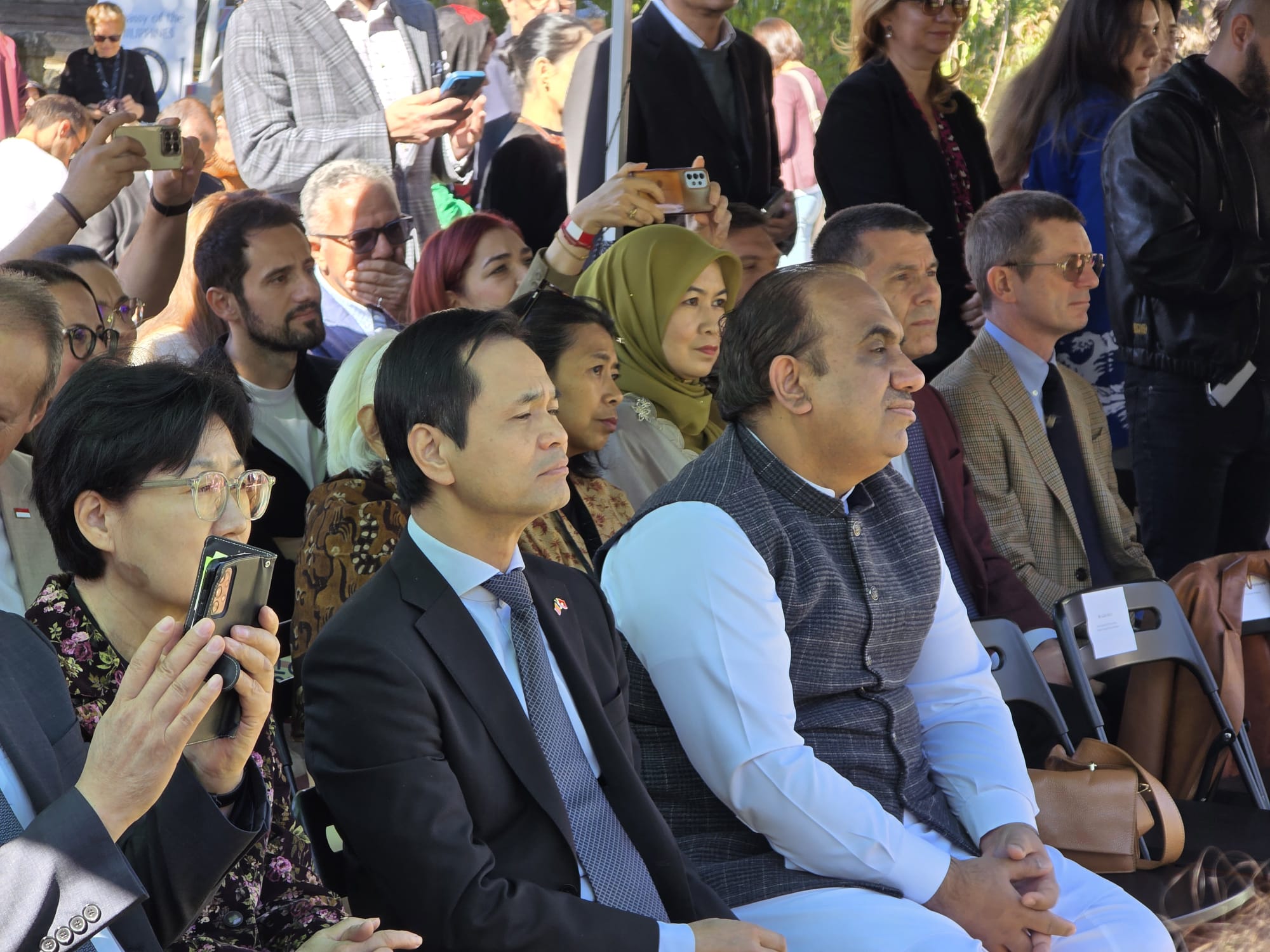
Atlas News Romania attended the event at the invitation of His Excellency Ilyas Mehmood Nizami, Ambassador Extraordinary and Plenipotentiary of the Islamic Republic of Pakistan to Romania. Atlas News Romania extends its sincere appreciation to His Excellency for the invitation and for the opportunity to attend this event dedicated to intercultural dialogue.
Cultural diplomacy beyond official protocol
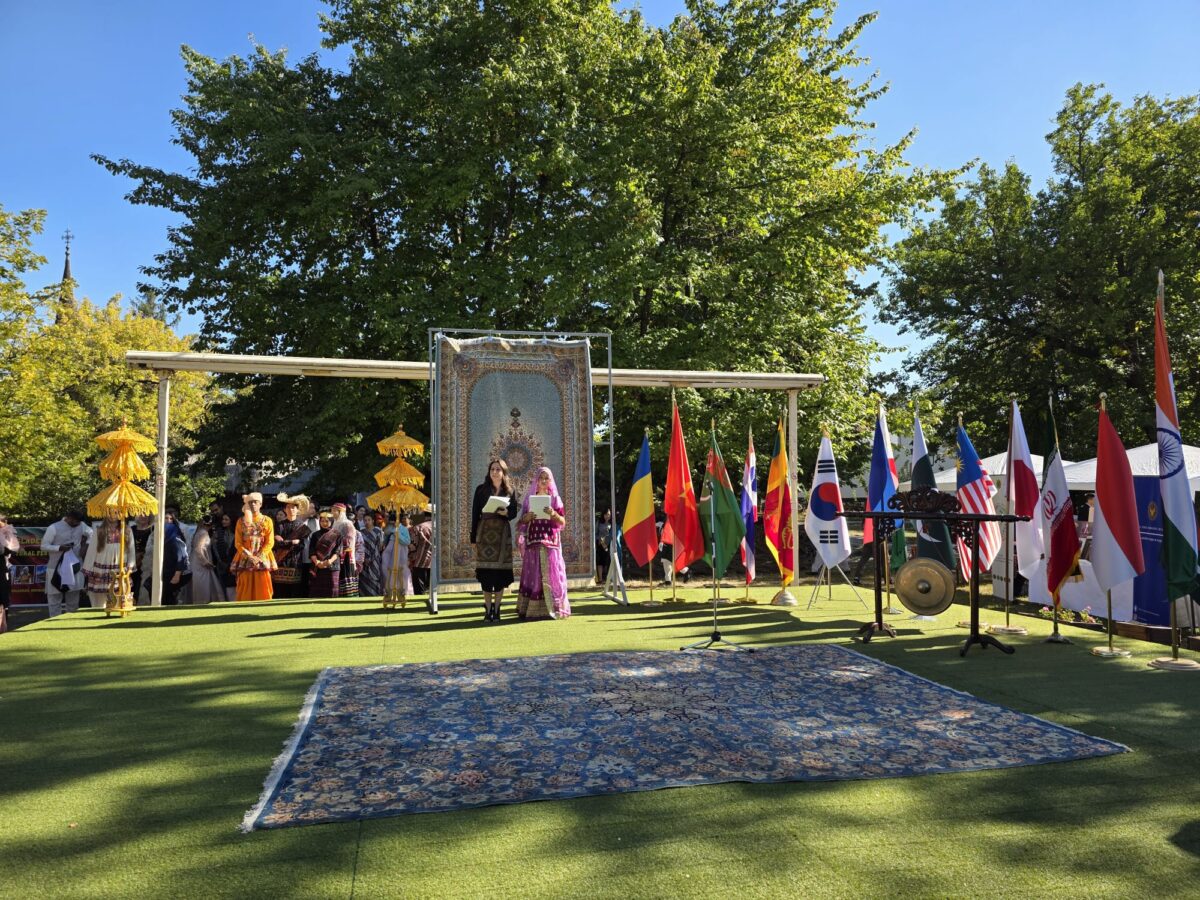
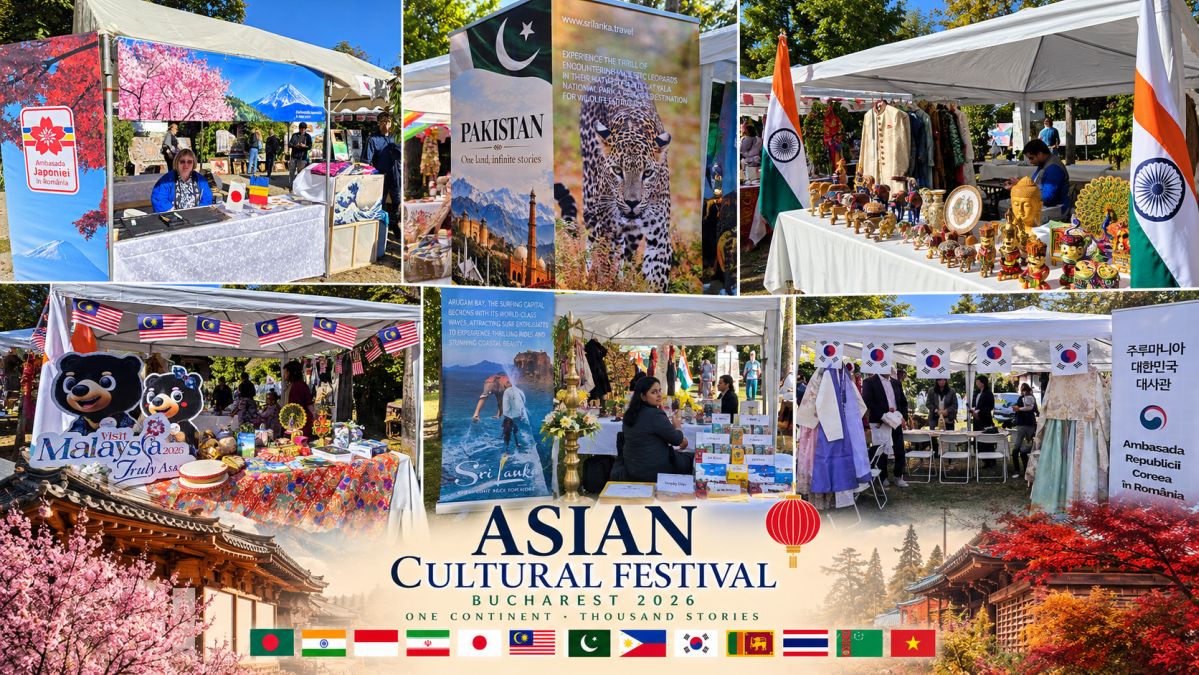
Bangladesh, India, Indonesia, Iran, Japan, Malaysia, Pakistan, the Philippines, the Republic of Korea, Sri Lanka, Thailand, Turkmenistan and Vietnam were the 13 countries represented at this year’s edition.
The programme offered the public an opportunity to discover the distinctive cultural identities of each participating country. Traditional costumes and national attire were presented alongside an artistic programme featuring music and dances characteristic of the cultures represented at the festival.

The succession of artistic performances highlighted the remarkable diversity of the Asian continent, bringing together traditions from South Asia, Southeast Asia, East Asia and Central Asia in a single cultural setting in Bucharest.
The event concluded with a reception featuring a carefully selected range of culinary specialities representative of the participating countries, with gastronomy completing the cultural experience presented by the organisers.
In this way, the festival illustrated that diplomacy extends well beyond political negotiations, official meetings and bilateral agreements. Culture remains one of the most direct and effective means through which a country can present its identity and foster meaningful connections with the public of another nation.
From cultural heritage to public diplomacy
The Asian Cultural Festival stands as a compelling example of cultural and public diplomacy. Rather than engaging exclusively with the diplomatic community, the participating embassies interacted directly with the Romanian public, using cultural heritage, art, music, dance, traditional attire and gastronomy as channels of communication.
The choice of the Dimitrie Gusti National Village Museum as the venue gave the event particular significance. One of Romania’s foremost institutions dedicated to preserving traditional heritage became a meeting place for the cultural traditions of societies located thousands of kilometres away.
Under the theme “One Continent · Thousand Stories,” the 13 countries presented their cultural identities within a shared setting, while preserving the distinctive character of their individual traditions.
For diplomacy, events of this kind carry particular value. They foster familiarity and direct engagement between societies in a setting distinct from formal political and economic relations. This is one of the established dimensions of soft power: a country’s ability to build interest, understanding and closer ties through its culture, values and heritage.
Pakistan and the cultural dimension of its relationship with Romania
Pakistan’s participation forms part of a broader diplomatic engagement in Bucharest under the tenure of Ambassador Ilyas Mehmood Nizami.
Ambassador Nizami has also emphasised on other occasions the importance of cultural exchanges and people-to-people contacts in strengthening relations between Pakistan and Romania. In May 2026, during the inauguration of the photographic exhibition “Pakistan: Pages of a Story” at the Buzău County Museum, the Ambassador highlighted cultural exchanges and direct contacts between people as an important dimension of bilateral relations.
The Asian Cultural Festival reflects the same approach: bilateral relations are not built solely at the institutional level, but also through opportunities for the public to discover and engage with the culture, heritage and traditions of another country.
One continent, thirteen cultures, a shared space for dialogue
The fourth edition of the Asian Cultural Festival demonstrated how effectively cultural heritage can serve as an instrument of dialogue.
Traditional attire, dance, music and gastronomy were more than elements of an artistic programme. Together, they created an accessible and engaging form of cultural diplomacy, allowing the public to encounter the identities and traditions of the participating countries directly.
At a time when international relations are often viewed primarily through the lenses of geopolitical competition, security and economic interests, events such as the Asian Cultural Festival bring another fundamental dimension of international relations to the forefront: the ability of culture to create spaces for dialogue where formal diplomacy traditionally speaks through institutions.
In Bucharest, for one day, that dialogue took the form of traditional attire, music, dance and a shared table.
Read also
Malaysian Deputy PM officially opens MIHAS 2026, announces $1.2 billion in sales in two days