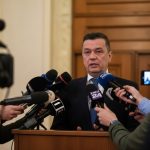
MEP Rareș Bogdan delivered a forceful speech in the European Parliament on the social crisis, energy costs, migration pressure and the Christian identity of the continent, warning that Europe is going through a moment of political and cultural vulnerability.
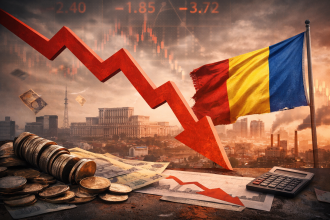
His intervention began from the economic difficulties felt by European citizens, in a context in which fuel and energy costs continue to weigh heavily on the population, the business environment and the middle class.
“Let us see where we stand: 450 million citizens are waiting for solutions. The cost of fuel and energy has become so high that consumption has fallen dramatically, small businesses are closing, and the middle class can barely breathe. Europe is struggling,” Rareș Bogdan said.
The MEP argued that the current difficulties did not emerge suddenly, but are the result of older problems aggravated by successive crises. “We are looking for solutions to a problem that did not begin now. It has only worsened now,” he said.


Migration, European identity and internal tensions
A central part of the speech addressed migration and the effects of conflicts in Europe’s neighbourhood on the stability of the European Union. Rareș Bogdan warned that instability in the Middle East and Africa could generate new migratory pressures on Europe.
“The conflicts in the Middle East and Africa will fuel new waves of migration, which will change the architecture of the Union even more dramatically,” the MEP stated.
In his speech, Rareș Bogdan strongly criticised the way in which the European Union has, over time, managed the relationship between the economic need for labour and the cultural integration of newcomers. He argued that Europe had been pushed, including through economic calculations, towards a policy of accepting migration without sufficient cultural and social filters.
“This is where greed has brought us, the desire to have cheap labour. If they had come from another galaxy and worked at a reduced cost, we would have accepted labour from there as well. Without making a distinction between migration and invasion,” Rareș Bogdan said.
The MEP used a direct register, denouncing difficulties of integration and a lack of respect for European values among some communities that have arrived on the continent:
“Many integrated with difficulty, did not accept our Christian customs. They do not respect us; they defy us.”
Rareș Bogdan continued with a vivid formulation about the relationship between those received in Europe and the rules of the host societies:
“When someone welcomes you into their home, you do not move the furniture, you do not go through the refrigerator, you do not beat the host. You do not try to change the rules; you do not overturn the values.”
His speech also touched on the issue of political correctness, which the MEP described as part of an ideological pressure exerted on European societies. Rareș Bogdan spoke of “a great deal of lobbying, fuelled by Europe’s enemies, but also by excessive political correctness absurdities imposed from within,” arguing that the Union had changed the rules “so as not to upset” those arriving from outside the European space.
“It chose to upset Christians, who after 9 p.m. hesitate to leave their homes,” he said.
Warning over the rise of extremism
Rareș Bogdan linked the tensions generated by migration and integration policies to the rise of radical political forces in Europe. In his view, the excesses of inclusive policies have produced a dangerous political reaction.
“We have come to watch helplessly as far-right extremist forces grow dangerously, as a consequence of inclusive policies taken to absurdity,” the MEP stated.
This observation places the speech in a sensitive area of the European debate: the relationship between security, identity, integration, civil liberties and the internal political balance of the Union. Rareș Bogdan did not present migration merely as a demographic or economic phenomenon, but as a challenge affecting Europe’s political and value-based architecture.
At the end of his intervention, the MEP shifted the focus from economic and social crises to the Christian identity of the continent. He stated that Europe must remember its historical and spiritual foundations, even if it cannot immediately solve the fuel or energy crisis.
“We may not be able to solve the fuel crisis, but at the eleventh hour, perhaps we will remember who we are. Those who are our friends and do not want us to disappear are welcome. But this continent is and must remain Christian,” Rareș Bogdan said.
The MEP concluded on an explicitly religious note, evoking the historical defence of Christian Europe and the role of faith in defining the continent’s identity.
“We defended ourselves for hundreds of years and worshipped Jesus Christ, only Jesus Christ, and the Virgin Mary. Let us remember this every day and say that the European Union stands like an immense dome over the towers of all Christian churches in Europe. God help us,” Rareș Bogdan declared.