One day before the United Arab Emirates announced its withdrawal from OPEC, Atlas News published the analysis “The Petrodollar Is Not Collapsing. It Is Being Renegotiated”. The central thesis of that text was that discussions between Abu Dhabi and Washington over a possible currency swap line did not signal a crisis of the dollar order, but its transformation: from an implicit contract, based on strategic inertia, into an explicit one, negotiated term by term. The UAE’s decision to leave OPEC and OPEC+, effective May 1, 2026, confirmed by WAM, does not contradict that analysis. It confirms it. If the first text addressed the financial dimension of the renegotiation — access to the dollar — this new episode concerns its energy dimension: freedom of production. Abu Dhabi is not abandoning the system. It is forcing the system to recognize its value.
A Blow to OPEC, Not to the Dollar
The first reflex in media commentary was to read the Emirati decision through the lens of the dollar — either as an anti-Western gesture or as a possible alignment with alternatives promoted by Beijing. Both readings are wrong and inconsistent with the available evidence.
The Gulf’s financial architecture remains deeply dollarized, through currency pegs, foreign reserves, sovereign assets and exposure to U.S. markets. The Central Bank of the UAE states that it intervenes automatically in the foreign exchange market to maintain the stability of the dirham’s peg to the dollar. There is no credible signal in the public record that Abu Dhabi is preparing to abandon this architecture. What has changed is not the financial anchor — but the terms of the political contract behind it.
Between April 18 and 19, the Governor of the Central Bank of the UAE, Khaled Mohamed Balama, met in Washington — on the margins of the IMF and World Bank meetings — with U.S. Treasury Secretary Scott Bessent and Federal Reserve officials, raising the possibility of a dollar currency swap line. Reuters reported that, on April 22, Bessent said several Gulf and Asian allies had requested swap lines to manage energy shocks and the effects of the war in the Middle East. On April 24, Reuters reported that the United States was discussing swap lines with partners in the Gulf and Asia, and that Bessent argued such mechanisms could strengthen the international use of the dollar and help create new dollar-financing centres in the Gulf and Asia. On April 28, the UAE announced its exit from OPEC. This sequence cannot be read as a simple coincidence of timing. It points to an ongoing negotiation, with visible stages and overlapping stakes: the dollar, energy, security and strategic autonomy.

Why Abu Dhabi Could No Longer Tolerate OPEC+ Quotas
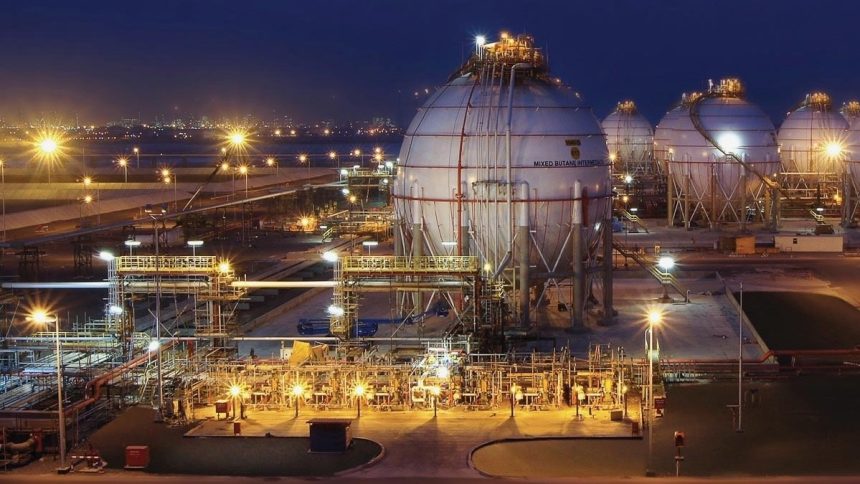
The structural argument behind the Emirati decision is not political — it is economic and technical. Reuters reported that ADNOC, the Emirates’ national oil company, had reached a production capacity of 4.85 million barrels per day, while ADNOC indicates its objective of increasing capacity to 5 million barrels per day by 2027. The paradox was clear: a state that had systematically built up its energy capacity was being required, through the OPEC+ quota mechanism, to produce significantly below that capacity.
Reuters reported that UAE oil production, at around 3.4 million barrels per day before the conflict, was affected by the blockage of the Strait of Hormuz and by export restrictions in the Gulf. At a time when oil revenue was already being compressed by the maritime security crisis, membership in a cartel imposing additional production restrictions had become increasingly difficult to justify in terms of national interest. UAE Energy Minister Suhail Al Mazrouei linked the decision to the country’s objective of increasing production capacity and to the need for greater freedom of action.
The official state news agency WAM stated that the decision reflects the UAE’s long-term strategic economic vision and its evolving energy profile, and that additional production will be brought to the market gradually and in a measured manner, depending on demand and market conditions. The wording suggests not an abrupt departure, but a medium-term calculation, carefully prepared.
Saudi Arabia Loses Its Monopoly on Oil Discipline
Reuters notes that the UAE’s departure weakens OPEC+’s ability to control the market and strikes at Saudi Arabia’s position as the group’s de facto leader. Alongside Riyadh, the UAE was one of the few members with significant spare production capacity — capacity that could be mobilized rapidly in moments of crisis, giving the organization real relevance in managing the global oil price. The UAE’s departure removes one of the central pillars of this mechanism.
Tensions between Abu Dhabi and Riyadh are not limited to oil production. The two states have backed opposing forces in the Yemeni conflict and are in direct economic competition, including for the attraction of talent and international investment. Minister Al Mazrouei suggested that the decision was taken unilaterally, on the basis of the UAE’s assessment of its national interest, adding a new dimension to the shifting balance of power between the Gulf’s two major economies. Saudi Arabia remains the central actor in the organization, but it can no longer assume that major Gulf producers will automatically accept the framework of collective discipline.
Washington Gains Room for Manoeuvre, but Not Full Control
The Atlas News analysis of April 27 () identified the core issue correctly: the petrodollar is being transformed from an implicit guarantee, based on inertia, into an explicit political contract, negotiated and guaranteed. The UAE’s exit from OPEC is the other side of the same coin. Washington is not merely gaining an ally that will be able to pump more oil after traffic through Hormuz normalizes. It is gaining a major producer freed from cartel discipline, integrated into the American financial architecture and structurally interested in keeping prices at levels compatible with the global economy.
Reuters recorded Bessent’s remarks on strengthening the international use of the dollar, ensuring liquidity in global markets and the possibility of creating new dollar-financing centres in the Gulf and Asia. This is not the language of a mere emergency instrument. It is the language of a long-term financial architecture.
Washington, however, does not fully control the picture. IEA reported that global oil supply fell by 10.1 million barrels per day in March, to 97 million barrels per day, while OPEC+ production declined by 9.4 million barrels per day. The Strait of Hormuz remains the central variable: the production freedom Abu Dhabi gains in theory will become relevant in practice only after maritime routes return to normal. Iranian variables remain unpredictable, and markets absorbed the announcement without a reaction proportionate to the political weight of the decision — confirming that, for traders, the Hormuz risk and supply pressures dominate any other OPEC dynamic.
China Does Not Replace the Dollar, but It Changes the Negotiation
Atlas News had warned, in its April 27 text, against the analytical trap of treating the yuan as an imminent replacement for the dollar in energy trade. That warning remains valid in reading the new decision. The UAE is not changing sides — it is multiplying its options and increasing the political cost of loyalty to the American architecture.
China matters in this equation not because it offers a credible alternative financial system, but because it offers the UAE real commercial options: major oil buyers, markets, technology and institutional presence. The IEA shows that most oil exports transiting the Strait of Hormuz are destined for Asia, with China and India together representing an essential share of these flows. In parallel, alternative financial infrastructures such as mBridge, described by the Central Bank of the UAE as CBDC-based platforms for cross-border payments, do not replace the dollar, but gradually create parallel settlement mechanisms. BIS has noted that the mBridge project has reached the minimum viable product stage, confirming that these infrastructures are no longer merely theoretical exercises.
The UAE shows that this strategy can work: not by breaking with Washington, but by increasing the political cost of loyalty to the American architecture.
Europe and the Eastern Flank: The Impact Comes Through Prices, Inflation and Defence
Romania, Poland and the Baltic states are not directly affected by the UAE’s exit from OPEC. The effect comes indirectly, through macroeconomic mechanisms already under way. The World Bank projects a 24% increase in energy prices in 2026, warning that the energy shock is transmitted into inflation, food prices, borrowing costs and vulnerability for indebted economies. The IMF forecasts global growth of 3.1% in 2026 and warns that the war in the Middle East, higher commodity prices and tighter financial conditions are testing the resilience of the global economy. UNCTAD describes the Strait of Hormuz as one of the critical arteries of global energy trade, through which roughly one quarter of seaborne oil trade passes, alongside significant volumes of LNG and fertilizers.
The fiscal space of governments in Central and Eastern Europe is being compressed simultaneously from several directions — expensive energy, persistent inflation and structurally rising defence spending. This remains a reality regardless of OPEC’s fate.
The Gulf’s New Rule: Those Who Have Capacity Negotiate Directly
The Atlas News analysis of April 27 ended with a sentence that now functions as the premise of this text: “The petrodollar remains powerful precisely because the main actors still want access to it. But the fact that access must be negotiated more aggressively shows that the dollar order no longer operates by inertia alone.”
The UAE’s exit from OPEC is the exact illustration of that logic, applied to energy production. The old order assumed that the collective discipline of producers generated stability in the global price and that Saudi Arabia was the guarantor of that discipline. The new order shows that states with real energy capacity, solid financial infrastructure and proven strategic relevance no longer need the cartel in order to secure a seat at the global negotiating table.
Abu Dhabi is not leaving the system. It is changing how it relates to it: instead of negotiating with global markets through OPEC, it is negotiating directly — with Washington on the financial dimension, with major Asian buyers on the commercial dimension and with its own energy capacity as the central argument. The swap line and the exit from OPEC are not two separate decisions. They are two clauses of the same renegotiated contract.
The petrodollar is not collapsing. It is reinventing itself — and the United Arab Emirates has negotiated a better place in the new arrangement.