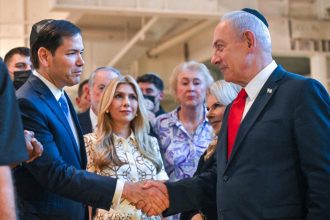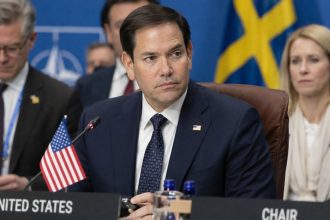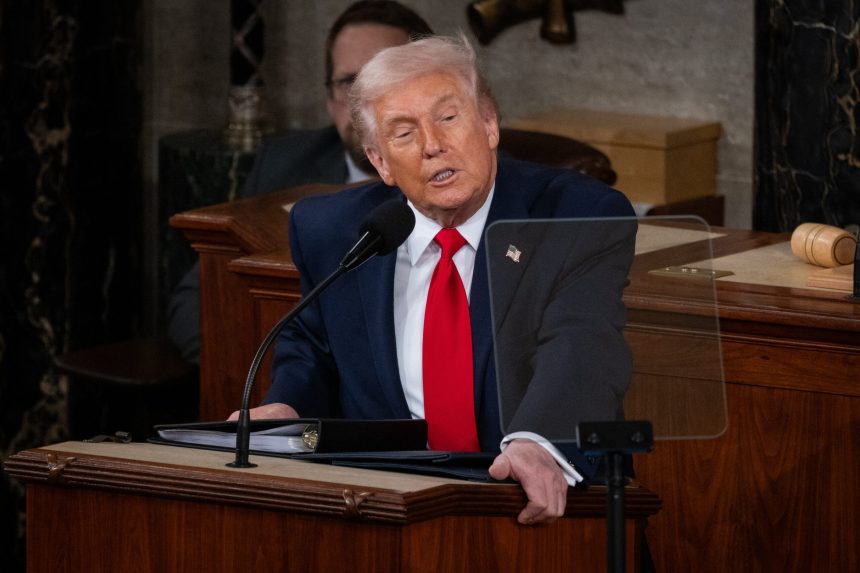
The Trump administration is seeking to reposition the American initiative in the Middle East following the confrontation with Iran, and Gaza is re-emerging as the next major file through which Washington will test whether it can convert strategic pressure into political outcome. This is not merely a succession of crises, but a broader question of how the United States intends to manage the regional order after a major episode of tension.
If the war with Iran represented a test of strength, Gaza is now becoming a test of diplomatic control. In the logic of any great power, the use of military influence without a subsequent stage of stabilization leaves behind an open field for new escalations, new actors, and new vulnerabilities. From this perspective, it is natural for Washington to seek to shift the emphasis from confrontation to the construction of a political formula capable of reducing regional pressure and reaffirming the American role.
Why Gaza Is Returning to the Forefront
The return of the Gaza file to the center of attention should not be seen as a mere coincidence of timing. After a major confrontation with Iran, the American administration needs to show that it can do more than respond militarily. It must signal that it can also shape, mediate, and stabilize. Gaza offers precisely this kind of test.
Moreover, the conflict in Gaza carries a strategic weight distinct from that of the Iranian file. It combines the military dimension, humanitarian pressure, the political sensitivities of both Israel and the Arab world, and the broader issue of American credibility. Any movement on this file is watched simultaneously by allies, adversaries, mediators, and markets. This means that any progress in Gaza could be presented by Washington not merely as a tactical diplomatic success, but as proof that the United States remains the indispensable center of the regional equation.

Gaza and Iran Are Part of the Same Strategic Equation
It would be a mistake to treat Iran and Gaza as two entirely separate files. In reality, they are part of the same space of security and influence. For Israel, for the key Arab actors, and for Washington, developments in one file inevitably affect the balance in the other.
Following the confrontation with Iran, any initiative concerning Gaza will also be interpreted through the prism of the regional balance of power that emerges from that episode. If the Trump administration seeks to advance a stabilization formula in Gaza, it will be assessed not only as a peace initiative, but also as a strategic signal: how much control Washington still retains, how much room for maneuver Israel has, what role Arab states may play, and to what extent hostile actors can be constrained.
This is one of the keys to the entire analysis. Gaza is not merely a humanitarian or diplomatic file. It is also a theatre in which it will become clear whether the United States can transform strategic leverage into a new regional framework of power.
What the Trump Administration Is Realistically Seeking
A balanced and fair analysis must begin by acknowledging a simple fact: it is legitimate for the United States to seek to stabilize the region after a major confrontation. Any American administration, under such circumstances, would seek to limit the risk of further escalation, protect relations with allies, reduce pressure on markets, and preserve its strategic credibility.
In this context, the Trump administration may be pursuing several objectives at once. The first is strategic: to reduce the risk that the region slides into a new spiral of escalation. The second is diplomatic: to reaffirm that Washington remains the principal actor capable of bringing the relevant parties to the table. The third is political: to demonstrate that American pressure does not produce confrontation alone, but can also open a window for stabilization.
These objectives should not automatically be interpreted negatively. Great powers almost always operate through a combination of strategic interest and diplomatic initiative. The real question is not whether Washington has interests of its own, but whether those interests can be translated into a sustainable, acceptable, and functional outcome.
The Real Limits of Such a Plan
This is precisely where the difficulties begin. The first limitation is that a regional conflict does not come to an end through a single sequence of pressure or negotiation. Even if the Iranian front were to diminish in intensity, its political, economic, and military effects would continue to shape the wider Middle East. Any pivot toward Gaza therefore remains vulnerable to the re-emergence of tension.
The second limitation lies in Israel’s position. For the Israeli government, any stabilization formula will be filtered through the lens of security and effective control. This means that Washington cannot easily impose a political architecture if it does not align with Israeli calculations regarding risk, deterrence, and post-conflict control.
The third limitation relates to the Palestinian actors and to the terrain itself. Any formula for ending the war requires guarantees, sequencing, verification mechanisms, and at least a minimal degree of agreement on what follows a ceasefire. It is precisely here that negotiations become most fragile. There is a considerable distance between a political announcement and actual stability, and that distance is usually filled with distrust, conditions, and deadlock.
The Real Stake Is Not Only Peace, but the Order That Follows It
In the current regional context, peace does not simply mean the cessation of fire. It also means the establishment of a new hierarchy of influence. Who guarantees the arrangement, who oversees implementation, who finances reconstruction, who controls security, and who acquires political legitimacy after the conflict — all these questions, in reality, define the order that follows.
For that reason, any attempt by the Trump administration to move the Gaza file forward must be read on two levels. On the immediate level, it may represent an effort to reduce pressure and promote stabilization. On a deeper level, however, it is also an attempt to define the parameters of a new regional order after the confrontation with Iran.
This strategic dimension explains why the file is so important. Gaza is not merely the next crisis to be managed. It is the place where it will become clear whether Washington can still convert power into political architecture.
Can the Trump Administration Deliver a Durable Outcome?
The answer depends not only on the will of the White House. It depends on the degree of convergence between American interests, Israeli calculations, the willingness of the relevant Arab actors, and the possibility of constructing a credible mechanism for the post-conflict phase. In other words, success will not be measured in declarations, but in the durability of the resulting formula.
The Trump administration undoubtedly has both the interest and the capacity to push the process forward. But in the Middle East, the ability to open a negotiation is not the same as the ability to impose a stabilization framework that can endure. That is precisely why the Gaza test is more difficult than it may appear. It requires not only pressure, not only diplomacy, but a rare combination of authority, timing, and realism.
After the war with Iran, Gaza is becoming the new strategic stake of the Trump administration in the Middle East. Not because it is an easier file, but because it is the point at which all the region’s major lines intersect: Israel’s security, the Arab balance, American influence, and the prospect of a post-crisis order.
A fair and accurate reading is this: Washington has serious and legitimate reasons to seek a stabilization formula in Gaza after the confrontation with Iran. The problem is not the intention, but the difficulty of execution. If the Trump administration succeeds in transforming strategic pressure into a functional arrangement, it will reaffirm the central role of the United States in the region. If it does not, Gaza will remain not the symbol of a new order, but proof that in the Middle East, the distance between force and stabilization is far greater than it seems.
Sources: Reuters, Associated Press
Read also:
Hungary’s Elections and the New Balance of Power in Central Europe