Atlas Diplomatic | 30 March 2026
Major wars almost always generate two theatres of operations: one military and one diplomatic. The former is visible, measurable, and mappable. The latter is less transparent, harder to track and, often, more important than it appears while it is unfolding. On the thirtieth day of the conflict between the United States, Israel and Iran, the diplomatic theatre has become nearly as intense, as opaque and, in certain respects, as consequential as the military theatre itself. While missiles, maritime blockades, deterrence and escalation calculations continue to dominate the surface of events, a different contest is taking place beneath it: who keeps channels open, who becomes useful, who accumulates influence, and who builds, even from within the war itself, the political capital that will matter in the order that follows it.
Washington and Tehran are not in official direct contact. In practice, however, indirect exchanges do exist, and messages are moving through intermediaries, discreet contacts and deliberately ambiguous strategic formulas. It is precisely around this absence of formal dialogue that a number of middle powers — Pakistan, Turkey, Saudi Arabia and Egypt — have begun to play a more significant role than many observers anticipated at the outset of the conflict. Not because they control the military dynamics of the war, but because they understood more quickly than others a fundamental reality: in a crisis of this magnitude, influence belongs not only to those who strike, but also to those who remain indispensable.
Understanding who these actors are, what they seek, what they risk and what they stand to gain from the roles they have assumed is essential to understanding not only the diplomatic dynamics of the present, but also the configuration of the regional future that will emerge from this conflict. Because beyond the immediate military outcome, the war is already producing a redistribution of diplomatic relevance across the Middle East and its wider strategic neighbourhood.


Pakistan: the channel that became relevant precisely when no one expected it
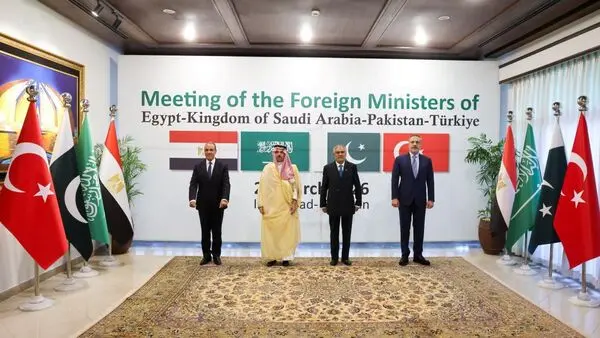
Only a few months ago, Islamabad did not feature among the capitals seriously mentioned in any prospective mediation equation between Washington and Tehran. Today, Pakistan appears to be one of the principal channels through which indirect messages are moving between the two sides. It is not necessarily the exclusive mediator in this conflict, but it is clearly one of the actors that has acquired real diplomatic relevance in a file where very few are still able to speak credibly to both camps.
US Special Envoy for the Middle East Steve Witkoff has publicly confirmed that the United States conveyed to Iran, through the Pakistani government, a 15-point list presented as the basis for a possible peace agreement. For his part, Pakistan’s Deputy Prime Minister and Foreign Minister Muhammad Ishaq Dar stated that indirect US-Iran exchanges are being conducted through messages relayed by Pakistan and that Turkey and Egypt are supporting this effort. From a diplomatic standpoint, this is not a mere footnote. It is confirmation that Islamabad has moved from the periphery of the crisis into a role of direct strategic utility.
This role did not emerge from some grand diplomatic doctrine, nor from any special preparation for this particular crisis. It resulted from a rare combination of historical relationships, institutional flexibility and simultaneous acceptability. Pakistan has maintained functional ties with Tehran for decades without detaching itself from the security architecture supported by the United States. In a regional context where many capitals are seen either as too closely aligned with Washington or as lacking credibility in Tehran, this dual positioning has become a remarkable advantage.
Islamabad understood the opportunity quickly and acted accordingly. Prime Minister Shehbaz Sharif held an extended direct contact with Iranian President Masoud Pezeshkian, while China’s support for the idea of indirect talks hosted by Pakistan added a further layer of legitimacy and weight to the initiative. This is not, of course, a guarantee of success. But it is a clear indication that Pakistan is regarded, at least at this stage, as a useful, acceptable capital capable of functioning as a diplomatic node.
More importantly, diplomatic relevance is already beginning to produce tangible effects. Iran’s decision to allow the limited transit of Pakistani-flagged vessels through the Strait of Hormuz was interpreted in Islamabad as a gesture carrying political significance, not merely technical or commercial value. At a moment when the transit regime through Hormuz has itself become an instrument of strategic pressure, any selective permission automatically acquires diplomatic meaning. Pakistan is not merely obtaining access; it is securing implicit recognition of its utility.
For that reason, Islamabad stands to emerge stronger almost regardless of the outcome. If indirect talks move forward, Pakistan will consolidate its position as a first-rank mediator. If they fail, it will still retain a diplomatic profile incomparably stronger than the one it had at the beginning of the crisis. In either scenario, it gains visibility, influence and a new position in the regional architecture that is already beginning to shift.
An almost impossible diplomatic exchange: 15 American points, 5 Iranian conditions
In its current form, the diplomatic structure of the conflict can be read as an exchange of maximalist positions that, at least publicly, appear extremely difficult to reconcile. On the Washington side, the framework transmitted through Pakistan has been presented in terms of a profound strategic reordering of Iranian behaviour. On the Tehran side, the response has come in a language of resistance, sovereignty and strict conditionality for any end to the conflict.
According to reports in the international press and accounts relayed by Pakistani sources, the American proposal includes demands for the drastic limitation or elimination of the core components of Iran’s nuclear programme, a significant reduction in its ballistic capabilities, and the severing of Tehran’s operational ties with allied non-state actors across the region, in exchange for the lifting of sanctions. Beyond the variations in detail across the different reports, the overall meaning of the American proposal is clear: the United States is seeking to convert its initial military advantage into a political framework that would structurally reduce Iran’s strategic room for manoeuvre.
The Iranian response came in an equally hard register. Tehran laid out five conditions for ending the war: the cessation of military action and assassinations attributed to the United States and Israel, guarantees against a recurrence of the conflict, payment of war reparations, the end of hostilities on all fronts — including with respect to Iran-aligned groups — and recognition of Iranian sovereignty over the Strait of Hormuz.
This final demand is plainly the deepest point of friction. For Washington and for the major economies dependent on the stability of global energy routes, the immediate objective is the reopening and securing of maritime movement through Hormuz. For Tehran, by contrast, control over the strait has become, in this conflict, not only a military or economic instrument but also an expression of strategic sovereignty and of its capacity to impose order on the regional environment according to its own will. For that reason, the contradiction is not merely technical; it is strategic in nature. It concerns not only freedom of navigation, but also the political hierarchy of the region.
This is precisely why a distinction must be made between public rhetoric and actual diplomatic activity. Iranian Foreign Minister Abbas Araghchi denied the existence of negotiations and rejected the idea of a mere ceasefire, insisting instead on an end to the war “on our terms.” Witkoff, for his part, warned that Iran must not “miscalculate.” On the surface, the two positions appear not merely incompatible, but almost designed to rule out any bridge between them. Beneath the surface, however, indirect contacts continue, and the very fact that the American deadline was extended indicates that a space for diplomatic testing remains open.
This is one of the classic paradoxes of high-intensity conflicts: the more rigid public discourse becomes, the more necessary informal channels become as well. Diplomacy here does not appear as an alternative to war, but as a way of continuing it by other means, in a more discreet register, though not a less strategic one.
Turkey: not merely a facilitator, but a possible builder of a regional framework
Turkey is not seeking only to facilitate an exchange between Washington and Tehran. More ambitiously, Ankara appears to be testing the possibility of building a regional framework for crisis management at a moment when traditional multilateral mechanisms are proving less effective, and when American arbitration is no longer perceived in every capital as either sufficient or neutral.
Turkish Foreign Minister Hakan Fidan articulated Ankara’s position in strikingly direct language, assigning Israel primary responsibility for the war that has pushed the region into an unprecedented crisis. Beyond the political substance of that formulation, what matters is the diplomatic calculation it reflects. Turkey is seeking to preserve its credibility with Tehran and with a significant part of the Arab world, without at the same time rupturing its channels with Western actors. This is a difficult balancing posture, but one that is characteristic of a power determined to remain indispensable in a fragmented strategic environment.
Ankara brings to this equation a set of advantages that, taken together, are rare: NATO membership, an extensive diplomatic infrastructure across the Islamic world, a defence industry in full ascent, and relationships that, although often tense, have not been severed with either Washington or Tehran. In a region where many capitals are constrained either to choose sides or to scale back their ambitions, Turkey is attempting to operate across several registers at once.
The approach advocated by Hakan Fidan in Islamabad — a step-by-step, sequential process in which issues are dealt with separately rather than within an all-encompassing package — reflects a realistic understanding of the political obstacles involved. A full and immediate agreement would require politically costly concessions from all parties. A modular negotiation, by contrast, reduces pressure, makes partial results possible, and creates room for the gradual accumulation of operational confidence even in the absence of genuine political trust. In Iran’s case, at a time of adjustment at the apex of power, such a method may prove more feasible than an attempt at a total settlement.
For Turkey, the stakes clearly extend beyond the present crisis. If this format yields even a limited outcome, Ankara will be able to claim a role as an indispensable actor in the region’s future architecture. If it does not produce an immediate result, the mere fact that Turkey is at the coordination table alongside Pakistan, Saudi Arabia and Egypt strengthens its status as a balancing power with strategic autonomy of its own. In that sense, Ankara is operating not only for de-escalation, but also for the order that will follow de-escalation.
Saudi Arabia: between direct exposure and long-term strategic calculation
Saudi Arabia occupies what is probably the most uncomfortable position among the regional actors examined here. On the one hand, it hosts American military infrastructure and is bearing the direct consequences of a conflict it neither initiated nor appears to have wanted. On the other hand, that very exposure compels it to follow very closely the political configuration of any possible endgame.
The Iranian attack on Prince Sultan Air Base illustrated this dilemma in brutal fashion. The fact that a Saudi base hosting American forces became a direct target shows how quickly a security architecture can be transformed into a strategic vulnerability. For Riyadh, this is not merely a matter of military protection or air defence. It is also a matter of positioning: how to remain a core American ally without becoming, at the same time, the territory onto which the costs of a war it does not control are projected.
At the same time, the Saudi position toward Iran has evolved significantly from the hard-line logic of the previous decade. Today, in Riyadh, the perceived risk is no longer only that of an influential Iran, but also that of a chaotic Iranian collapse, a wider destabilisation of the Gulf, and an indefinite prolongation of conflict in an already overloaded regional environment. This shift does not signal any profound strategic reconciliation; rather, it reflects a pragmatic recalibration of threats.
The participation of the Saudi foreign minister in the Islamabad consultations confirms precisely that logic. Saudi Arabia does not wish to be merely a passive beneficiary of any de-escalation achieved by others. It wants to be present at the stage where the outcome itself is being shaped. Any arrangement concerning Hormuz, energy security, the status of Iran-aligned actors, and the balance of power in the Gulf will affect Saudi interests directly. Absence is not, for Riyadh, an acceptable option.
For the Kingdom, diplomatic success does not necessarily mean high-profile mediation or maximum visibility. It means, above all, avoiding marginalisation and retaining the capacity to influence the shape of the outcome discreetly. If the war ends through a negotiated arrangement, Saudi Arabia wants to ensure that the result does not reduce its room for manoeuvre or weaken its position. If the war continues, it wants to limit the likelihood that its own strategic vulnerability will be exploited further. It is, in essence, a diplomacy of prudence, but also of geopolitical self-preservation.
Egypt: returning to the table where regional order is decided
In the early phases of the crisis, Egypt appeared to approach the Iranian conflict with a certain reserve, avoiding excessive exposure in a file that did not affect it directly in the same way it affected Gulf states or the actors militarily engaged. That reserve has diminished, however, as the maritime, energy and regional consequences of the war have become clearer.
President Abdel Fattah el-Sisi’s direct contact with Tehran and Cairo’s expressed readiness to support a mediation effort point to a significant repositioning. Egypt is seeking to send several messages at once: that it rejects the extension of the war onto Arab states, that it does not want the region turned into a permanent arena of confrontation, and that it retains real diplomatic utility in a crisis of this magnitude. It is, at the same time, a message to Tehran, to Washington, to the Gulf states and to Egypt’s own strategic regional audience.
Cairo brings to this table not only military weight and historical capital, but also a strategic geography that cannot be ignored. At a moment when the normal functioning of the Strait of Hormuz is disrupted, the importance of the Suez Canal rises automatically. Egypt is therefore not merely a diplomatic actor, but also one whose logistical and commercial relevance increases directly in proportion to the duration of the crisis. This gives it a utility that it does not need to assert rhetorically, because it possesses it structurally.
There is also a dimension of regional prestige. Over the past two decades, Egypt’s diplomatic influence has often been assessed in comparison with Gulf activism or Turkish strategic ambition. The current crisis offers Cairo an opportunity to demonstrate that, when the regional system enters a phase of major strain, the older centres of gravity do not disappear; they become visible again. For Egypt, participation in this diplomatic effort means not only crisis management, but also the reaffirmation of a historical position: that of a central Arab actor, indispensable in the region’s major equations.
What is not visible on the surface: Iran is also using the war as a negotiating instrument
Viewed exclusively through the prism of public statements, Tehran appears to be operating in a register of refusal, escalation and intransigence. Viewed more closely, however, its conduct suggests a selective, calibrated diplomacy geared toward maximising negotiating leverage. Iran is not merely the object of pressure; it is attempting to turn pressure into an instrument.
Differentiated transit permissions through Hormuz for certain states, the maintenance of indirect channels, signals sent to capitals regarded as non-hostile, and the use of global energy pressure as a tool of influence all suggest that the authorities in Tehran are not treating the conflict solely in military terms. On the contrary, they are seeking to use strategic geography and the economic effects of blockade as diplomatic force multipliers. Put differently, Iran is trying to transform its disruptive capacity into a form of negative utility: the greater the systemic pressure it can generate, the greater the incentive for others to negotiate.
This strategy operates on several levels. Economically, it sustains pressure on energy markets and on importing states. Politically, it pushes regional and extra-regional actors to search for negotiated exits. Symbolically, it conveys that, despite bombardment and external pressure, Iran has not lost its capacity to reshape the strategic environment around it. This is a form of signalling resilience, even if it cannot erase the real costs of the war.
To all this must be added the internal dimension of the transition of power. The death of Ali Khamenei and the installation of Mojtaba Khamenei as the new Supreme Leader have opened a delicate period in which the new leadership must project continuity, avoid any appearance of vulnerability, and consolidate its authority in a system where political, religious and coercive legitimacy do not automatically overlap. In such a context, the discrepancy between a very hard public rhetoric and a discreet willingness to maintain indirect contacts should not necessarily be read as incoherence. It may instead reflect the structural tension between the need for internal legitimacy and the need for external flexibility.
Iran is not negotiating in spite of the war; it is using the war to negotiate from a position it is trying to present as still solid. How sustainable that strategy will prove depends on the trajectory of economic costs, military resilience and the stability of the new centre of power. But at this stage, it is clear that Tehran is not operating only defensively. It is attempting to turn the conflict into a mechanism for recalibrating its relationship with the region and with outside actors.
The diplomatic window and the test of 6 April
At present, one of the most important coordinates of the crisis is the date of 6 April 2026. The extension of the American deadline for the reopening of Hormuz suggests that Washington does not yet consider the indirect diplomatic channel exhausted. This should not be confused with optimism. Rather, it indicates a pragmatic assessment: the alternative to a lack of diplomatic progress is further escalation, potentially more costly and more difficult to control than what has come before.
If the discussions produce even minimal progress, it is likely that this window will be extended again. If they do not, military logic will quickly return to the centre of the stage. In that scenario, all the options already being discussed in the American strategic environment — including forms of limited ground pressure or other variants of intensification — will move back into the foreground of political and military calculation.
There is, however, a deeper dimension to this sequence. It concerns the perception of initiative. Assessments emerging from Western intelligence circles and former security officials suggest that Washington underestimated the operational and political difficulty of the Iranian file and that, after the initial advantage, Tehran succeeded in regaining part of the strategic initiative through a combination of maritime pressure, calibrated attacks and indirect negotiation. If that reading is correct, then the present negotiations are no longer centred on the full imposition of the American framework, but on finding a formula that Iran, too, can present domestically as something other than capitulation.
This changes the very nature of the diplomatic game. It is no longer simply about how the war ends, but about who can credibly claim to have endured long enough to shape the peace. In high-intensity conflicts, that difference in perception is often as important as territory, infrastructure or the tally of strikes.
The great absentee: Europe and the strategic cost of absence
Perhaps the most significant negative diplomatic fact of this crisis is the absence of the European Union from the active core of mediation. Brussels is not part of the Islamabad format, does not appear as an indispensable actor in the indirect exchanges, and has so far failed to turn its own economic and energy vulnerabilities into political leverage.
This marginality is all the more significant given that Europe is bearing a substantial share of the indirect costs of the conflict: stress on energy markets, pressure on industry, commercial uncertainty and additional risks to economic growth. And yet, at this stage of the crisis, its economic weight has not translated into comparable diplomatic presence.
The observations made by European Council President António Costa regarding the need to accelerate the Union’s energy autonomy are correct and relevant. But they also say something essential, indirectly, about Europe’s current place in the Iranian file: the European Union is speaking primarily about adapting to the effects of the crisis, not about directly shaping its political outcome. It is reacting to consequences, but not structuring the decision-making process at the centre of the crisis.
This raises a question that goes well beyond the current episode. How can Europe claim strategic status in an extended neighbourhood that directly affects its security and economy if it is unable to be present at the table where precisely those crises that alter its prospects are being managed? Absence from Islamabad is not merely a snapshot of the moment. It may also be read as a symptom of an older difficulty: the inability to convert economic mass into front-line diplomatic relevance.
Conclusion: who accumulates influence without firing a shot
The diplomatic winners of this conflict will not necessarily coincide with the actors who have struck most effectively, nor with those who will most loudly proclaim the terms of any eventual settlement. In crises of this magnitude, those who emerge better positioned are often the actors who kept channels open, remained useful to more than one side, and understood how to turn strategic volatility into an opportunity to accumulate political capital.
Pakistan has managed to become a relevant channel between two sides that cannot speak directly without political cost. Turkey is seeking to use the crisis to test a broader role as a builder of regional framework. Saudi Arabia is managing both direct exposure and the need not to be excluded from the shaping of the outcome. Egypt is returning to a major regional file by drawing on both its political weight and its strategic geography. And Iran, although under military pressure and in a sensitive transition at the top of the regime, continues to use the instruments of war to increase its negotiating leverage.
Islamabad, Ankara, Riyadh and Cairo have understood something that Brussels appears to grasp more slowly: in the order that will follow this conflict, diplomatic relevance will not be distributed retrospectively, as a formal reward after an agreement is signed. It is being built now, during the crisis, from within it, through presence, utility and the ability to convert contact into influence.
That, in truth, is the deeper stake of diplomacy in the trenches. Not merely to stop the war, if and when it can, but to decide who will matter politically after the guns fall silent.
Analysis based on verified sources: Reuters, ABC News, NPR, ANI, WION News, Al Arabiya, Pakistan Shafaqna, 24 News HD, The Hill, Middle East Eye, Times of Israel, IBTimes, Al Jazeera, Egyptian Streets, U.S. News, NewsAlert Pakistan, Foundation for Defense of Democracies, Stars and Stripes, The National, Haaretz, Chatham House, Ministerul Afacerilor Externe al Pakistanului, S&P Global Market Intelligence, Bruegel, Encyclopaedia Britannica, Wikipedia, Ynetnews, RealClearPolitics, The Economist, Time, Euronews, Atlantic Council, PBS News, AP
Read also