Turkish Ambassador to Egypt, Salih Mutlu Șen, expressed Turkey’s hope that fraternal relations would prevail among all the peoples of the region, emphasizing that Turkey and Egypt share the common goal of “security, stability, development, and prosperity,” and calling for every possible effort to be made to stop the bloodshed in the region.
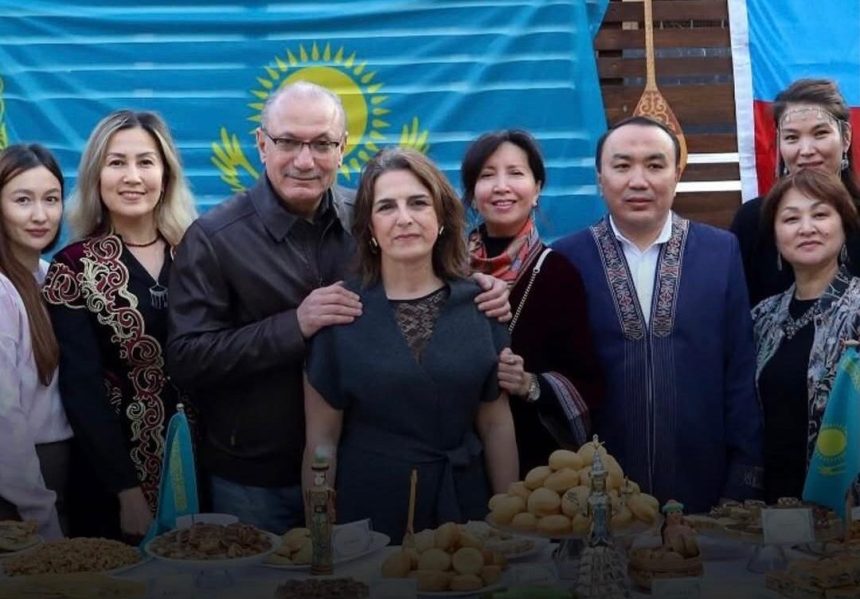
The remarks were made during a celebration hosted at the residence of the Turkish Ambassador in Cairo on the occasion of Nowruz, the Persian New Year. The event was attended by the Ambassador of Kazakhstan, Askar Zhengis, several representatives of diplomatic missions from Turkic-speaking countries accredited in Cairo, as well as prominent Egyptian journalists and media figures.
Nowruz as a message of peace and hope
In his address, Ambassador Mutlu Șen emphasized that Nowruz represents “a new beginning and the emergence of hope,” noting its profound spiritual and cultural significance. He stated that it is “a day when trees begin to blossom, snow melts in the mountains, giving rise to new rivers, and humanity transitions from darkness to light.”
He also expressed his appreciation to all those who attended despite the inclement weather, affirming that their presence “gives them special value.”



Șen added that Nowruz, in its essence, is “a message of peace,” asserting that life cannot flourish without peace, and that peace is a prerequisite for the prosperity of humanity, nature, and all living beings.
In this context, he referred to relations with Iran, stressing the historical and cultural ties between the peoples of the region. He noted that half of Iran’s population speaks Turkish, making them an integral part of the greater Turkic family.He further emphasized that Nowruz is also celebrated for seven days in Iran, and that this deep shared cultural heritage forms a solid bridge between peoples, which should be translated into a political reality based on respect, cooperation, and good neighborliness.
The Turkish ambassador also praised the resilience of Kazakh identity during and after the Soviet era, stressing that Turkish civilization has proven its ability to survive and renew itself despite attempts at erasure throughout history.
On the sidelines of the celebration, several participating countries set up special pavilions to showcase their authentic national cuisine. Among the most prominent was the Kazakh-Uzbek pavilion, which attracted a large audience with its displays of traditional dishes.
The Kazakh pavilion offered attendees the opportunity to learn about the culinary heritage of this ancient Asian nation, in a scene that embodied the spirit of cultural diversity that characterized the celebration.
The event also included folkloric and musical performances presented by families from the Uzbek and Azerbaijani communities.
Read also
Bulgaria and Egypt Celebrate 100 Years of Diplomatic Ties at National Day Reception in Cairo