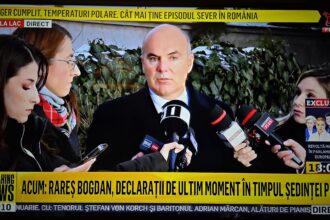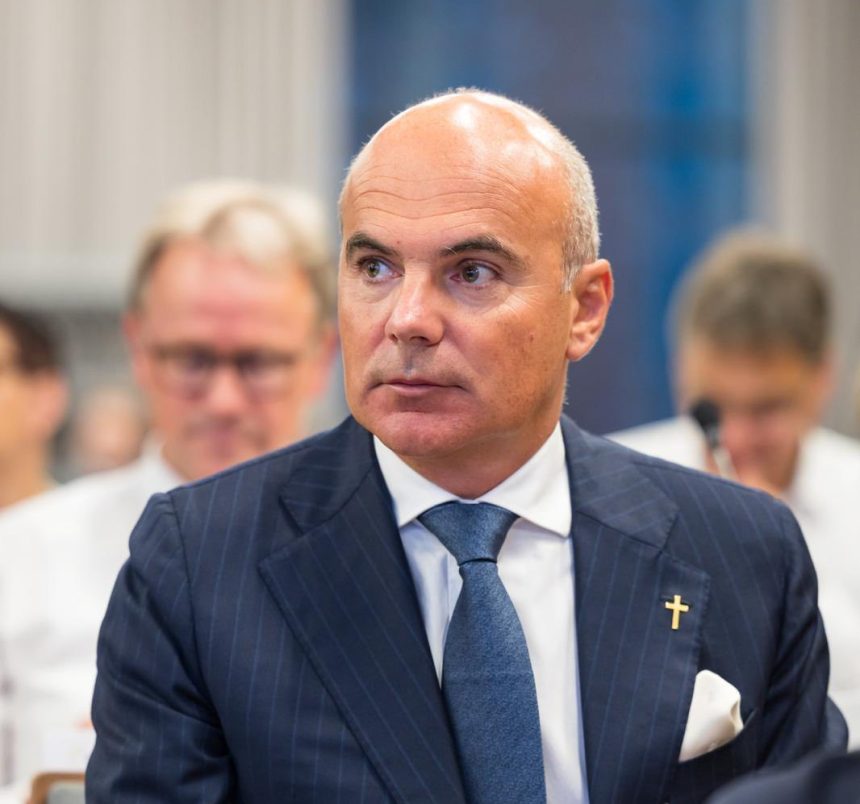
Green Deal policies are facing mounting criticism at the highest levels of the European Union, as a group of ten heads of state and government call for a rapid revision of key climate legislation—echoing concerns long voiced by Romanian MEP Rareș Bogdan(EPP).
In a strongly worded message, Rareș Bogdan framed the issue as a long-standing warning now validated at the European level:
“The Green Deal is an existential risk! I’ve been saying it for 5 years. Now 10 heads of state and government in the EU are saying it clearly, including Nicușor Dan.”
His remarks come after Romania, Italy, Greece, Austria, Poland, the Czech Republic, Hungary, Bulgaria, Croatia, and Slovakia signed a joint letter addressed to the President of the European Commission and the President of the European Council. The signatories demand a swift reassessment of green energy legislation and a reduction in pressure on industry, with a deadline set for the end of May.
Bogdan welcomed the shift in tone but warned about the timing:
“Good that they’ve woken up! Let’s just hope it’s not too late.”

A Turning Point for Europe’s Economic Strategy
The letter highlights growing concern among several EU governments that the current trajectory of the Green Deal may undermine Europe’s economic competitiveness and industrial base.

According to Rareș Bogdan, the stakes go far beyond environmental policy:
“If we are putting competitiveness front and center, the decisions taken now will shape decades of development — strategic autonomy, technological position, prosperity.”
While acknowledging the importance of climate action, he stressed the need for balance:
“Of course, climate change must not be ignored, but the transition to a green economy must not push half of the continent into bankruptcy.”
This framing aligns with a broader shift in European discourse, where energy costs, industrial resilience, and geopolitical competition are increasingly shaping policy debates.
ETS System at the Center of Criticism
A central point of contention is the EU Emissions Trading System (ETS), which signatories argue is contributing to rising energy costs and market instability.
Bogdan summarized the concerns raised by European leaders:
“Energy has become enormously expensive, the green transition is too costly due to inflation, and decarbonization solutions do not solve the problem of high-emission sectors. And these are strategic industries!”
The joint letter calls for concrete measures, including mitigating the impact of ETS on electricity prices, reducing carbon price volatility, and extending the period during which companies benefit from free emission allowances—even beyond 2034.
Additionally, the leaders propose slowing the phase-out of free allowances starting in 2028, giving industries more time to adapt to new regulatory realities.
Between Climate Ambition and Economic Reality
The debate reflects a growing tension within the EU: how to reconcile ambitious climate goals with economic sustainability and social stability.
Rareș Bogdan distilled the argument into a blunt conclusion:
“Put simply: scooters are fine, but let’s not be foolish!”
While the phrasing is informal, the underlying message resonates across multiple European capitals—namely that the pace and structure of the green transition must be recalibrated to avoid unintended economic consequences.
A Broader Political Signal
The coordinated stance of ten EU leaders signals a potential inflection point in European climate policy. It suggests that concerns once considered marginal are now entering the mainstream of EU decision-making.
For Romania, the alignment with this group reinforces its positioning within a bloc advocating for a more pragmatic approach—one that seeks to balance environmental commitments with industrial competitiveness and energy affordability.
As the European Commission faces increasing pressure to respond, the coming months may prove decisive in determining whether the Green Deal will be adjusted—or continue on its current path despite mounting resistance.
Read more: