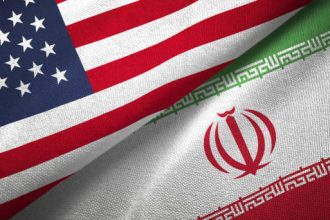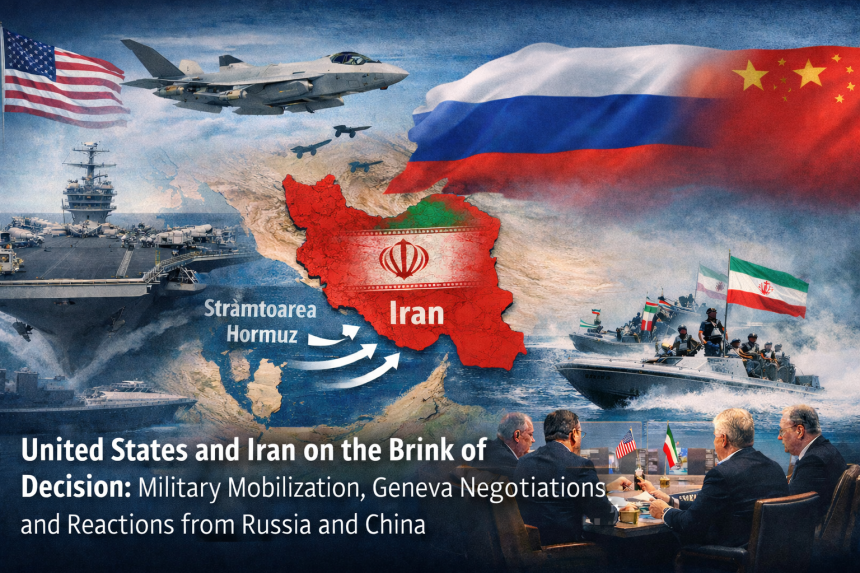
The United States and Iran have entered a phase where the distinction between deterrence and preparation for conflict is increasingly measured by concrete force deployments rather than political rhetoric. In recent days, the buildup of U.S. military capabilities in the Middle East has reached a level that fundamentally alters perceptions of escalation risk.
The United States has significantly strengthened its aerial presence at bases in Jordan and Saudi Arabia. The number of combat aircraft has increased markedly, with early-warning platforms, aerial refueling aircraft and command-and-control assets also observed. This configuration suggests more than a mere show of force: it provides the capacity for a sustained aerial campaign, not just symbolic strikes.
Concurrently, the naval component has been reinforced with a broad presence of guided-missile destroyers and a carrier strike group, while the repositioning of a second naval group closer to the operational theatre creates strategic depth. This naval geometry allows Washington to maintain long-term pressure and manage potential Iranian reactions.
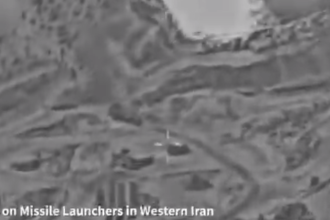
Doctrinally, the combination of fifth-generation aircraft, electronic warfare systems, ISR capabilities and naval platforms suggests that prepared options include both neutralizing Iran’s air defenses and striking sensitive infrastructure associated with its nuclear program or the Islamic Revolutionary Guard Corps. While this does not imply the inevitability of an attack, the buildup demonstrates that the military option is real and rapidly executable.

Iran has responded through asymmetric signalling. Naval exercises in the vicinity of the Strait of Hormuz, coupled with temporary navigation restrictions, send a clear message: any strike on Iranian territory could disrupt critical global energy corridors. The Strait remains a strategic economic fulcrum, and even the perception of increased risk can provoke severe volatility in energy markets.
On the diplomatic front, a new round of negotiations in Geneva offers a final window for de-escalation. Washington seeks verifiable limitations and a reduction in the risk of a nuclear “breakout,” while Tehran insists on its right to enrichment and the lifting of sanctions. The substantive differences in principle will directly influence the likelihood of military action.
In this context, Russia and China’s positioning is essential to understanding the strategic landscape.
Russia has called for restraint and warned against the risk of regional escalation, yet it has not demonstrated a military mobilization comparable to Iran’s. For Moscow, direct involvement would carry significant risks of confrontation with the United States. A more likely approach involves diplomatic support and, potentially, technological cooperation, alongside exploiting the geopolitical leverage afforded by any diversion of U.S. resources to other theatres.
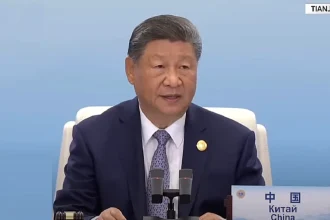
China’s stance is even more cautious. Its economic interests in the Gulf are substantial, and severe destabilization of the region would directly impact the Chinese economy. Beijing favors stability and negotiated solutions, avoiding any signal of direct military engagement. Simultaneously, a possible concentration of U.S. resources in the Middle East could create strategic opportunities in the Indo-Pacific, without entailing open conflict.
The calculated positions of Moscow and Beijing indicate that neither power is willing to transform a regional crisis into a global conflict. Both can benefit from pressure on Washington without entering the frontline.
The real risk of escalation hinges on three decisive variables: the outcome of the Geneva negotiations, the nature of any potential U.S. strike, and Iran’s maritime or proxy responses. A limited, calibrated attack may be manageable. A reaction that disrupts energy flows or results in significant casualties could spark a spiral that is difficult to control.
At present, the international system is not inevitably on the brink of a major war. However, it is in a tension point where the deployment of ships, aircraft and troops are no longer mere political signals but components of an operational architecture prepared for possible use.
The coming days will reveal whether accumulated pressure is sufficient to force compromise, or if we will witness the onset of a limited military confrontation with global implications.