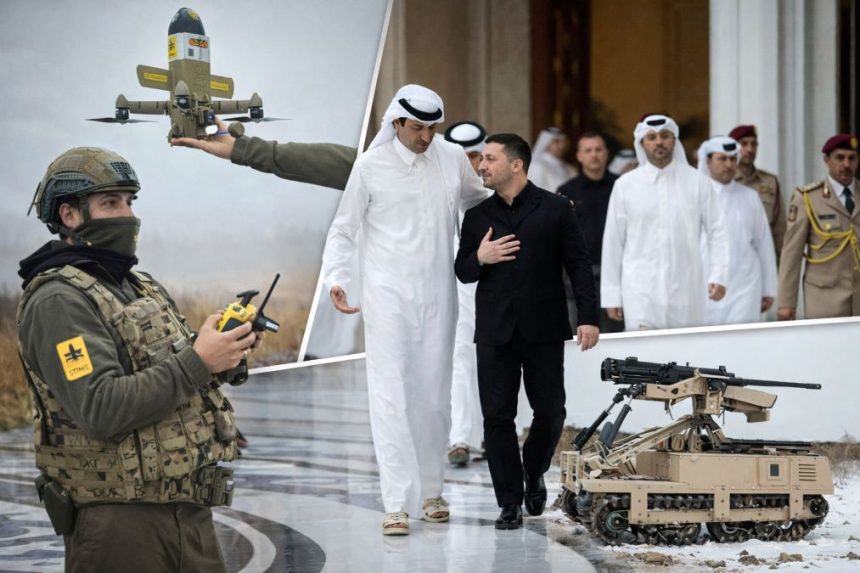
In four years of high-intensity war with Russia, Ukraine has undergone one of the most remarkable military transformations in recent history. What began as a desperate struggle for survival has evolved, through force of circumstance and an extraordinary capacity for adaptation, into a geopolitical advantage of a new kind: Kyiv is no longer a mere recipient of military assistance, but an exporter of know-how, a living laboratory of modern warfare, and a strategic partner courted by some of the wealthiest states in the world.
The analysis that follows is not a conventional one. It is a strategic reading of a profound shift in the global security equation.
The War Factory That Outpaced Europe
The figures are difficult to absorb in the context of a state defending itself against a neighbour with a nuclear arsenal. If in 2022 Ukraine’s defence industry was valued at approximately one billion dollars, by 2025 it had reached 35 billion, with projections of 50 to 55 billion by 2026. These figures reflect declared production capacity, not necessarily contracted or delivered value — a distinction of relevance in an industry whose primary domestic client remains underfunded. This growth was not planned in government offices. It was forged at the front line.

According to a report published on 31 March 2026 by the Kyiv School of Economics, drone production grew by 137%, unmanned ground vehicles by 488%, and electronic warfare systems by 215% year-on-year. The top three segments of Ukraine’s defence industry exceeded 6.8 billion dollars in 2025, more than double their combined value in 2024.
The European context renders these figures all the more significant. Ukraine can produce up to ten million drones per year — a capacity no European state comes close to matching even theoretically, and one that the United States, with a small-drone manufacturing base still in the process of reconstruction, cannot equal in the immediate term. In other words, a country at war is producing, at suboptimal capacity due to funding constraints, an order of magnitude more than its Western allies, long regarded as technologically advanced.
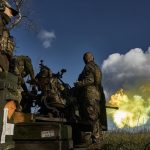
The secret of this performance lies not in resources, but in pressure. Ukraine has become the most demanding real-world testing ground for drones, artificial intelligence-enabled targeting systems, and electronic warfare countermeasures, driving technological evolution under continuous combat conditions. Innovation has not taken place in laboratories, but within a few kilometres of the front line.
Lessons No One Else Can Teach
Ukraine’s competitive advantage is not merely productive. It is experiential. Ukraine knows things no one else knows, because no one else has fought under those conditions.
One of the central lessons of this war is that modern air defence must prioritise scale, cost control, and the integration of multiple simple systems, rather than dependence on a small number of high-end weapons. Ukraine reached this conclusion not through theory, but by building — in real time — a layered defence system based on passive sensors, mobile firing teams, and low-cost interceptor drones capable of blunting mass attacks.
Kyiv has refined autonomous navigation systems that operate without GPS in heavily jammed environments, swarm coordination software that enables multiple drones to synchronise attacks with minimal operator input, fibre-optic drone control that is effectively immune to Russian electronic warfare, and artificial intelligence-powered targeting with limited human intervention.
A study published in February 2026 by IFRI — one of Europe’s most prestigious strategic research institutes — identifies eight key military-technological lessons drawn from the conflict in Ukraine, concluding that electronic warfare has become a continuous, software-driven contest embedded at the tactical level, in which adaptability and integration are decisive.
These capabilities cannot be replicated through procurement. They are the product of four years of combat-driven cycles of adaptation, immediate battlefield feedback, and innovation compressed to days rather than years. Anna Gvozdiar, a senior official representing Ukraine’s Ministry of Defence, articulated this directly: Ukraine has become not merely a recipient of assistance and a testing ground, but a source of technological solutions recognised across the world.
The Gulf Pivot: Geopolitics and Opportunity
President Volodymyr Zelensky’s diplomatic tour of Saudi Arabia, the United Arab Emirates, and Qatar in the latter half of March 2026 illustrated, more clearly than any statement could, the nature of Ukraine’s new strategic position.
Zelensky described the agreements as „historic”, specifying that they constitute ten-year strategic partnerships in the field of military technology. Their precise contents have not been made public, but the broad outlines are clear.
Ukraine offered the Gulf states an integrated package of air defence capabilities — maritime drones, electronic warfare systems, interception technology, operational software, and field expertise accumulated under real combat conditions. Zelensky confirmed that the approach is systemic: not interceptors alone, but defence lines, software, and electronic warfare systems.
The logic of this exchange is strategically elegant. Ukraine is proposing to trade its own interceptors for the far more expensive air defence missiles that Gulf states are currently using to down Iranian drones. Kyiv needs additional Patriot systems; the Gulf needs a more cost-effective method of managing Shahed drone attacks.
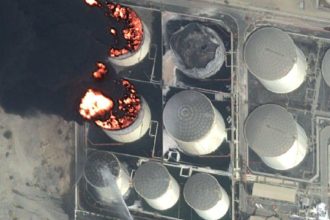
Operational similarity is crucial to understanding this equation. The same families of drones and missiles that Russia launches against Ukrainian power infrastructure can be — and are being — launched by Iranian forces or their proxies against refineries, desalination plants, and ports across Saudi Arabia and the Emirates. The Iran-Russia strike complex is continuously evolving: lessons learned over Odesa and Kyiv are directly transferable to targets in Israel, the Gulf, and the broader region.
Samuel Bendett, an adviser at the Center for New American Security, summarised this reality with precision: Ukraine has been countering Shahed drones for years, and every feature of that defence is of interest to the Gulf — drone identification through SIGINT and ELINT, data sharing on inbound threats, UAV interdiction through stationary and mobile firing teams, short-range air defence batteries, and interceptor drones.
A Model of Self-Financing Security
Beyond the strategic dimension, Ukraine’s moves carry an equally robust economic logic. This may be the least discussed, yet most consequential, of the transformations currently underway.
The model Kyiv is building has been officially described as „self-financing defence”: a mechanism through which controlled exports allow factories to operate at full capacity, preserve employment, and channel hard currency directly into the defence sector.
Zelensky announced the opening of ten arms export centres across Europe, with Germany set to be among the first host countries and Ukrainian drone production lines already operational in the United Kingdom. These centres are not mere commercial showcases — they function as institutional bridges, legal, regulatory, and commercial, connecting Ukrainian firms to EU procurement processes and compliance frameworks.
The Danish model has demonstrated that this approach is viable. Denmark established a dedicated framework for industrial defence cooperation with Ukraine, combining financial guarantees, direct funding of procurement contracts, and an accelerated approval regime, at a time when others offered little more than political declarations.
The implications for Ukraine’s financing are significant. A state that until 2025 was almost entirely dependent on Western assistance is now building its own circuits of strategic revenue. The agreements with the Gulf states are not solely military in nature — they are financial, diplomatic, and energy-linked: Zelensky confirmed securing an agreement with an undisclosed country for a year’s supply of diesel, essential for both military and agricultural equipment.
A Non-Classical Military Power in the International System
What, in essence, is Ukraine in 2026? It is not a victorious state, but neither is it a vulnerable one. It is something rarer and more strategically interesting: a non-classical power with a body of military knowledge unique on the planet, in pursuit of a sustainable model of security and financing.
Zelensky stated it plainly following his Gulf tour: „In terms of expertise, no one today can provide the kind of assistance Ukraine can.” This is not rhetoric. It is a verifiable reality, on the battlefields of eastern Europe and in the skies above the Strait of Hormuz.
The transformation is doctrinal, not merely technological. Low-cost drones, rapid technological adaptation, and decentralised innovation cycles have compressed the timeline between invention and battlefield deployment. The lessons extend well beyond Eastern Europe. Militaries across the world are studying the speed with which traditional doctrines can be overturned by inexpensive, networked technologies.
Europe, in this equation, finds itself in an uncomfortable position. Post-Cold War demilitarisation and strategic outsourcing to the United States have left European defence industries structurally ill-equipped to meet the demands of a sustained high-intensity conflict. In virtually every domain — artillery shell production, missile stockpiles, drone manufacturing — European capacity represents a fraction of what would be required to credibly deter Russia.
Ukraine has, paradoxically, resolved a problem Europe failed to solve over three decades of peace: what an efficient, private, agile, operationally tested, and rapidly scalable defence industry actually looks like. The partnership between Ukraine’s battlefield-proven industry and Europe’s capital and regulatory frameworks could define the next phase of continental security, transforming a front-line struggle into an engine of shared strategic resilience.
What we are witnessing today is not merely the story of a small state surviving an empire. It is the story of how extreme crisis generates a form of strategic capital that no peacetime defence budget can purchase.
Sources: SIPRI (2025), Kyiv School of Economics (31 March 2026), IFRI — Focus Stratégique (12 February 2026), Council on Foreign Relations (24 February 2026), Foreign Affairs (5 April 2026), Breaking Defense (28 March 2026), Euronews (30 March 2026), France24 (30 March 2026), Al Jazeera (28 March 2026), Foundation for Defense of Democracies (1 April 2026), Center for New American Security, defense.info (2 April 2026)
Read also
Poland Opens NATO’s Forbidden File: What Europe Does If America Leaves the Alliance