Romania is entering a period of global turbulence at a moment when the state appears unable to provide stability, vision, or a clear economic direction. Two major conflicts — the Russia–Ukraine war and the escalating tensions between the United States, Israel and Iran — are rapidly reshaping the global economic landscape.
While major economies are strengthening their energy security and protecting strategic industries, Romania seems trapped in a cycle of domestic political gridlock that limits its ability to respond effectively.
In a world where geopolitics increasingly drives economic outcomes, the absence of a coherent national strategy is no longer merely a political weakness — it has become a major economic vulnerability.
Romania therefore risks becoming a collateral economic victim of two global conflicts while simultaneously facing its own internal instability.
Two Conflicts Reshaping the Global Economy
The war in Ukraine has already transformed the economic architecture of Europe. Supply chains have been disrupted, energy costs have risen sharply, and European governments have been forced to rethink their industrial and energy security strategies.
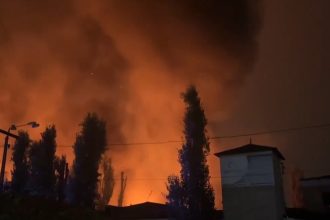
At the same time, the confrontation involving the United States, Israel and Iran is opening a second front of global economic uncertainty. The Middle East remains one of the most critical energy regions in the world, and any disruption to oil or gas flows can produce immediate ripple effects across global markets.
Energy has effectively become a new frontline in the global economic struggle.
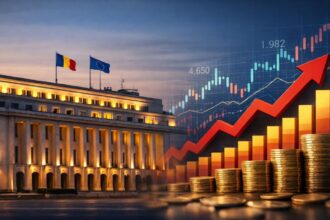
For Romania, the consequences are direct. Rising oil and gas prices quickly translate into higher fuel costs, increased transport expenses, and mounting inflationary pressure that directly affects the purchasing power of citizens.
In an economy closely tied to European energy stability, global shocks inevitably spill over into the domestic economy.
Romania Enters the Storm Without an Economic Shield
The core problem, however, is not only the global geopolitical environment, but also Romania’s internal economic fragility.
The national budget remains delayed, the business environment faces growing fiscal pressure, and political uncertainty continues to undermine investor confidence.
Rather than preparing the economy for a volatile international environment, the political class appears trapped in a continuous domestic confrontation.
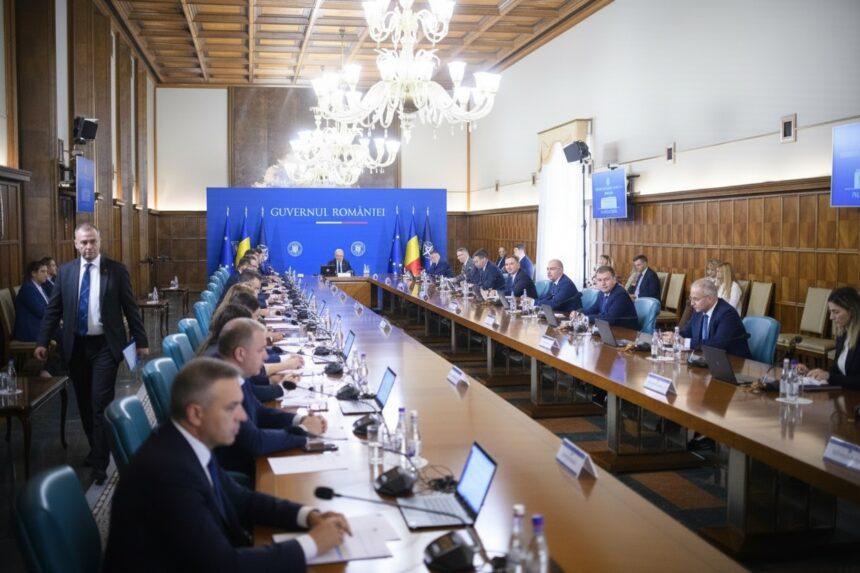
More troubling still, Romania faces this critical period amid a clear leadership deficit. At a time when strategic decisions are essential for economic stability, the country appears to be governed by leaders unable to articulate a coherent economic and foreign policy vision.
While other European states debate energy security, reindustrialization and strategic autonomy, Romania remains caught in a cycle of improvisation and short-term political reactions.
A Weakened Europe Focused on Its Own Economic Survival
The broader European context offers little reassurance.
The European Union itself is going through a fragile economic phase. Germany is attempting to shield its industrial base from rising energy costs, France faces growing fiscal pressures, and several other governments are primarily focused on protecting their own national economies from a new wave of global uncertainty.
In such moments, European solidarity tends to be constrained by national interests.
Each state seeks to safeguard its own industries, its own energy supply chains, and its own jobs.
For countries located on the economic periphery of the European Union, such as Romania, this reality can become particularly dangerous. Without a clear national economic and diplomatic strategy, Romania risks remaining vulnerable in an increasingly competitive European economic environment.
The Need for Political Stability and a National Strategy
History shows that during periods of geopolitical turbulence, the countries that successfully navigate crises are those capable of generating political consensus and institutional stability.
For Romania, a realistic solution in the current environment could be the formation of a national unity government, capable of overcoming political deadlock and restoring economic stability.
Such a government would be tasked with rapidly adopting the national budget, stabilizing fiscal policy, and creating a predictable framework for businesses and investors.
More importantly, Romania would need a clear national strategy — a long-term plan defining priorities in energy, industry, infrastructure, economic security and foreign policy.
In a world where geopolitics increasingly shapes the global economy, states without strategy risk becoming mere shock zones for international crises.
Romania is approaching a critical economic crossroads.
Two major geopolitical conflicts are reshaping global power dynamics, and their economic consequences are already visible across energy markets and European economies.
In this context, Romania’s vulnerability stems not only from external pressures but also from internal weaknesses.
Without political stability, without a coherent economic strategy, and without leadership capable of anticipating geopolitical change, Romania’s economy risks entering a prolonged period of uncertainty.
In a world defined by strategic competition and geopolitical rivalry, the absence of clear direction may ultimately become the most costly vulnerability a state can face.