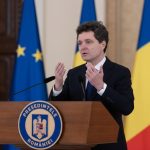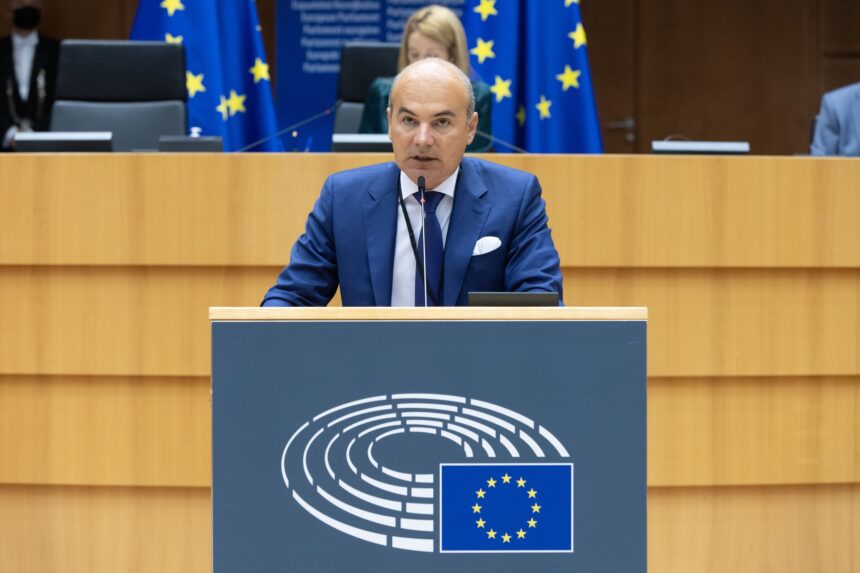
Romanian MEP Rareș Bogdan delivered one of the most compelling and structured interventions in the European Parliament in recent months, addressing a series of direct questions to the EU’s High Representative for Foreign Affairs and Security Policy, Kaja Kallas, during the meeting of the Committee on Foreign Affairs (AFET).
His message is not circumstantial, but rather targets the core foundations of the European Union’s foreign policy: the transatlantic relationship, the positioning toward the war in Ukraine, and the Union’s strategic coherence in an increasingly volatile international environment.
The Lesson of History and the Role of the United States
The intervention opens with a question that directly invokes the defining moments of the 20th century:
“Does Ms. Kallas, the High Representative for Foreign Affairs and Security Policy, know why the United States saved Europe in the world wars? Were those their wars?”
Through this formulation, Rareș Bogdan brings back into focus the decisive role of the United States in ensuring Europe’s stability, implicitly calling for an honest reassessment of the transatlantic relationship beyond the current political context.
Ukraine and Europe’s Security Reality
Referring to the war in Ukraine, the Romanian MEP underlines the importance of Kyiv’s resilience for the entire European space:
“Ukraine is resisting heroically. Every day of resistance is another day in which we, the citizens of the European Union, can drink our coffee in peace.”
This statement captures a strategic reality: Ukraine is not only fighting for its own survival, but also contributing directly to Europe’s broader security. At the same time, it implicitly raises questions about the depth, consistency, and long-term clarity of the European Union’s support.
EU–US Relations and the Question of Consistency
One of the most sensitive aspects of the intervention concerns how the European Union defines its relationship with the United States:
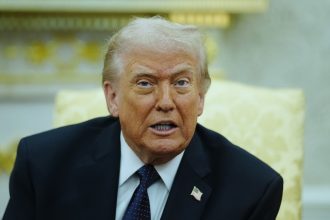
“If someone else were at the White House — Kamala Harris or another Democrat, or if the Republican president were not named Donald J. Trump — would the EU stand by the United States, as it normally should?”
This question points to a potential inconsistency in Europe’s approach, suggesting that strategic partnerships cannot be conditioned by political preferences or electoral cycles.
The idea is further crystallized in one of the most striking formulations of the intervention:
“Are friendship and our shared roots a buffet? Do we choose from the menu of a partnership only what suits us?”
Iran, Russia, and the Limits of Diplomacy
Rareș Bogdan also addresses directly the issue of engaging with states considered adversarial:
“Does anyone really imagine Iran, a sponsor of terrorism, sitting at the negotiating table?”
Extending the same logic, he adds:
“Following this line of reasoning, should we also consider the Kremlin a partner for dialogue? As they stand on the same axis!”
Through these questions, the Romanian MEP challenges the ambiguities in the EU’s foreign policy and calls for clearer distinctions between partners and adversaries.
Europe’s Security and the Role of the United States
Another key element of the intervention concerns Europe’s security architecture:
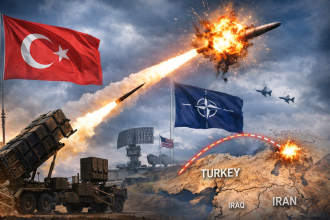
“Why did the Americans deploy missile defense systems in the EU? Without these systems, wouldn’t that be an invitation for the Kremlin to advance toward Berlin, Brussels, and Paris?”
This formulation brings into focus a strategic reality often avoided in public discourse: Europe’s continued reliance on U.S. security guarantees. It also raises fundamental questions about the extent to which the European Union can realistically achieve strategic autonomy.
A Direct Signal to Brussels
The intervention concludes with a pointed assessment of the European Union’s current positioning:
“Let us hope Ms. Kallas will provide a coherent answer, because so far, the Union has been playing offside.”
The message is clear: in a geopolitical environment defined by rapid change and strategic competition, the European Union risks being perceived as lacking coherence and timely strategic direction.
Through this intervention, Rareș Bogdan does not merely raise a series of questions. He opens a broader debate about the European Union’s role in the evolving global order and the nature of its fundamental strategic partnerships.