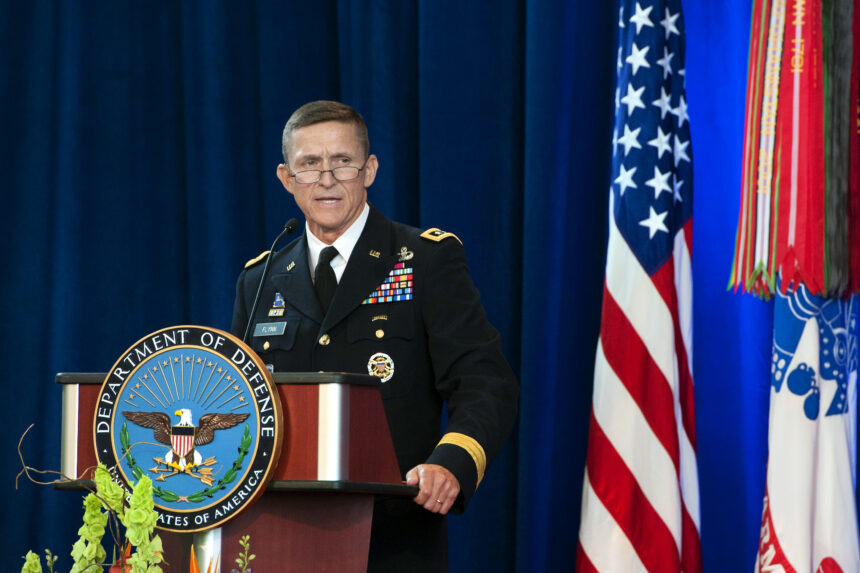
History is not changed by majorities, but by rare individuals—people who, at a critical moment, choose operational truth over convention, reality over polished appearances, and responsibility over institutional comfort. Michael T. Flynn is such a general. Even in retirement, he remains an active figure in today’s strategic environment—not an archived chapter of American military history.
Flynn was shaped in an arena where error is never theoretical. In military intelligence, a flawed assessment does not merely create political confusion; it can produce casualties. Iraq and Afghanistan were not simply deployments for him, but hard schools of uncomfortable truth. There, he saw how reality on the ground is often diluted, reframed, or softened until it becomes useless to those who must make life-and-death decisions.
That gap between reality and reporting became a defining thread of his career. Flynn understood that the most consequential strategic failures do not stem from a lack of information, but from the reluctance to present it plainly. From the fear of disrupting consensus, of stepping out of line, of challenging a narrative that has already been accepted. In large institutions, truth delivered too early is often treated as a threat.
When he reached the highest levels of American military intelligence, including the leadership of the Defense Intelligence Agency, Flynn was not an administrator of equilibrium; he was a disruptor of routine. He demanded direct, unvarnished analysis and rejected sterile language that creates the illusion of control. He argued that security cannot be built on reports that merely “sound right,” but on assessments that may be uncomfortable—yet accurate.

This is where the fault line runs. Systems value stability, predictability, and consensus. People like Flynn introduce friction. They unsettle certainties, expose weaknesses, and force institutions to look honestly at themselves. That is why they are rare. And that is why they are often unwelcome. Yet history suggests that meaningful change does not come from those who preserve appearances, but from those willing to risk disruption.
Retirement from active service did not turn Michael Flynn into a silent observer. On the contrary, it gave him the freedom to speak without institutional filters—while maintaining the same commitment to truth. His role in public debate, and the intensely politicized episodes that have marked his path, have not altered his core identity: Flynn remains a general who believes strategic reality must be stated clearly, fully, and in time.
Today, his involvement with the Gold Institute for International Strategy reflects a mature continuation of that outlook. It is not a comfortable retreat into an ivory tower, but a platform for reflection and warning. Flynn speaks about global competition, hybrid warfare, and information manipulation not as academic abstractions, but as concrete risks that—when ignored or glossed over—can lead to dramatic consequences.
There is a truth institutions often struggle to accept: a system that prefers comfort over truth becomes dangerous over time. A falsely reassuring assessment can cost far more than a hard decision made in time. Lives. Tens of thousands of lives. People like Michael Flynn exist precisely to prevent that kind of failure.
General Michael Flynn still has much to say—not out of personal ambition, but out of a deep understanding of the world we live in: a world in which truth spoken too late no longer saves anyone.
Such exceptionally rare individuals are often the ones who drive the changes that must be made—not because they are comfortable or popular, but because they have the courage to say what must be said before silence turns into complicity.