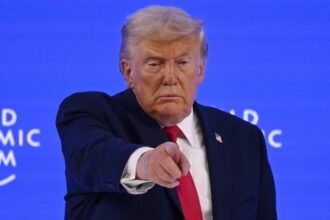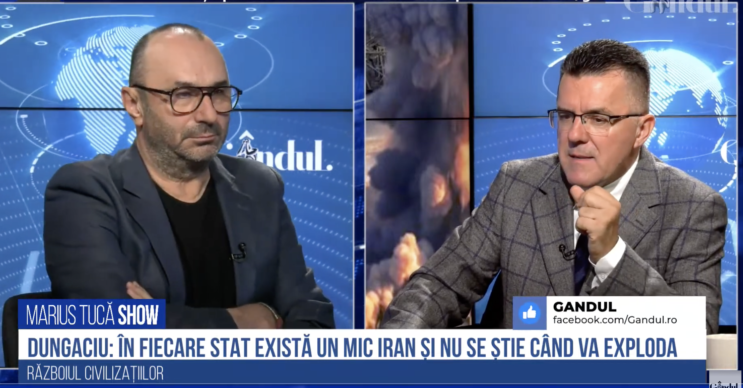
The argument advanced by sociologist and geopolitical analyst Dan Dungaciu opens with a deliberately striking observation: “When you point at the sun, the fool looks at the finger.” Beyond its rhetorical sharpness, the statement serves as an invitation to reassess how strategic realities are interpreted in parts of Europe, including Romania, at a time of profound global realignment.
Dungaciu’s analysis follows a recent press conference held by U.S. President Donald Trump, attended by senior American political figures and representatives of the strategic energy sector. The issues addressed—Venezuela, Greenland, and the broader strategic outlook of the United States—are interpreted not as isolated political messages, but as signals pointing toward longer-term strategic priorities.
Greenland and the logic of future-oriented strategy
From Dungaciu’s perspective, Greenland should be understood primarily through the lens of future security dynamics. The Arctic and North Atlantic regions are increasingly central to global strategic competition, and Greenland occupies a pivotal position within that evolving framework. Control and influence in this area are closely linked to the ability to manage emerging military, economic, and technological challenges in the High North.
In this context, statements regarding increased military activity in the region are treated as part of a broader strategic assessment rather than as rhetorical excess. Dungaciu argues that Greenland’s relevance is not limited to U.S. national interests alone. A stable and predictable American strategic presence in the region also reinforces the security architecture of the transatlantic alliance, particularly on its northern flank, at a time when Arctic competition is intensifying.
Approaching the Greenland question exclusively through traditional legal or procedural frameworks, while neglecting its strategic dimension, risks missing the underlying logic shaping U.S. and allied security planning.
Reassessing a decade-long narrative
A key component of Dungaciu’s position is a reassessment of the dominant narrative that emerged after 2016, portraying Donald Trump as fundamentally aligned with or dependent upon Russia. He views this narrative as deeply flawed and increasingly inconsistent with observable strategic behavior.
More importantly, Dungaciu emphasizes that such assumptions have influenced policy debates and strategic perceptions beyond the United States, including in Romania. In his analysis, equating “Trumpism” with Russian strategic interests has obscured a more basic reality: U.S. foreign and security policy, regardless of administration, is ultimately driven by American national interests within a competitive global environment.
From this standpoint, Washington’s approach toward Russia and China should be understood as competitive and interest-based, even when dialogue or negotiation occurs. Any future international arrangement, Dungaciu argues, is unlikely to be structured in a way that grants major strategic advantages to rival powers at the expense of U.S. security or its established spheres of influence.
Europe’s strategic ambiguity
Dungaciu extends his analysis to the European Union, noting the lack of a unified and coherent security vision. Divergent positions among European leaders—ranging from calls for continued military resistance in Ukraine to advocacy for negotiations—highlight internal uncertainty rather than strategic consensus.
In his assessment, Europe currently lacks the autonomous security capacity required to manage large-scale geopolitical challenges independently. The transatlantic relationship, particularly U.S. involvement within NATO, remains central to European security. Without it, existing European defense structures would face significant limitations.
Romania and the challenge of strategic adaptation
Against this backdrop, Dungaciu warns that Romania risks remaining anchored in outdated or oversimplified narratives. As earlier assumptions lose credibility, there is a tendency to replace them with new labels rather than to undertake a substantive strategic reassessment.
He argues that Romania’s strategic interest lies in evaluating U.S. actions through a forward-looking lens, grounded in long-term security realities rather than short-term ideological interpretations. Failure to do so could result in strategic misalignment at a moment when global power structures are undergoing significant transformation.
Dungaciu’s concluding message is ultimately one of strategic clarity and prudence. Understanding the deeper drivers of contemporary geopolitics, he suggests, requires moving beyond surface-level debates and focusing instead on the structural forces shaping the future international order.
Read also: AUR requests that 2026 be declared „The Year of America in Romania”