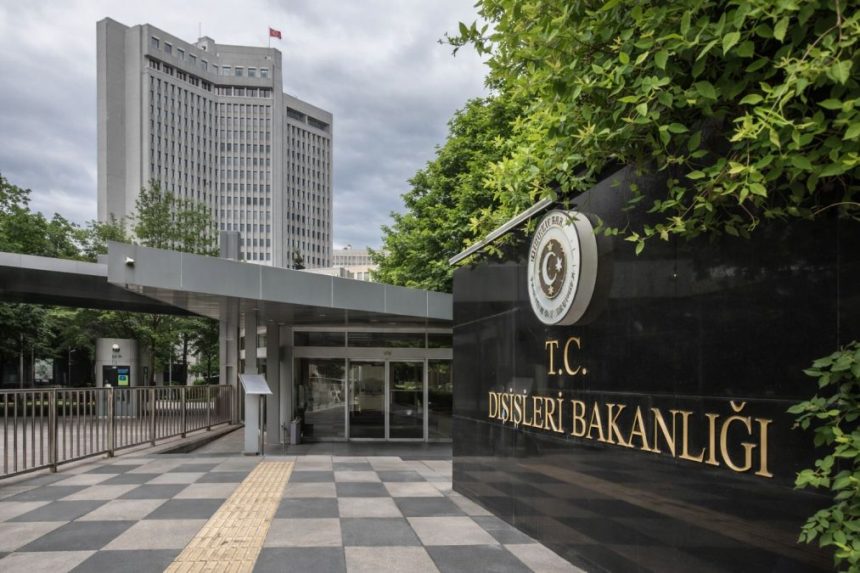
Turkey is often described as a balancing actor, positioned between West and East, between NATO and Russia, between Europe and the Middle East. The formula is convenient, but insufficient. It tells us where Ankara stands; it does not explain why, in the current succession of crises, Turkish diplomacy appears to be performing better than that of many states with comparable—or even greater—resources. The answer lies not only in geography, but in the way Ankara has built, preserved and activated diplomatic relationships over time, so that they can be converted into strategic relevance precisely at moments when the international system comes under strain. Turkey’s diplomatic relevance in the spring of 2026 is therefore not an accident of circumstance, but the expression of a methodical, long-term state investment. The findings of the Lowy Institute support this interpretation.
Current developments confirm this thesis with unusual clarity. On 3 April, Recep Tayyip Erdoğan held a telephone conversation with Vladimir Putin on developments in the Middle East, at a moment when very few NATO capitals still maintain a direct and meaningful political channel with Moscow. The following day, Volodymyr Zelensky was in Istanbul, where he announced new steps in security cooperation with Turkey, including in technology, expertise and energy infrastructure. During the same period, Ankara also remained present in the wider Gulf crisis, following the diplomatic meeting organised by Pakistan together with Turkey, Saudi Arabia and Egypt in an effort to explore formulas for de-escalation. According to Reuters reporting, taken together, these developments point to an essential fact: Turkey is maintaining its diplomatic relevance simultaneously across several theatres of crisis.
Turkish Diplomatic Performance Becomes Visible When Others Lose Access
This is where the serious analysis must begin. Turkish diplomacy is not performing today because it is neutral in the classical sense of the term. It is not. Turkey has interests of its own, firm positions and clear strategic alignments. Its performance derives from something else: from its ability not to close channels unnecessarily, not to reduce its foreign policy to a single operational loyalty, and to preserve functional relationships that others have sacrificed, whether for ideological or circumstantial reasons. In a more fragmented international order, this becomes a resource of power in itself. The actors that matter most are no longer only those that possess strength, but those that retain access. And Ankara has invested precisely in this kind of access, as the diplomatic context described by Reuters makes clear.
The Black Sea offers perhaps the clearest proof. In his discussion with Zelensky, Erdoğan underscored the importance of maritime security in the Black Sea and of energy supply security, reaffirming a constant line of Ankara’s policy: the region is not merely a strategic neighbourhood, but a space in which Turkey seeks to remain a defining actor. The statement issued by the Presidency of the Republic of Türkiye after the Istanbul meeting explicitly emphasised maritime security and energy infrastructure, confirming that Ankara reads the Ukrainian file not only in terms of land warfare, but also through the prism of regional maritime order. Here lies the difference between reactive diplomacy and diplomacy that operates with long-term positioning objectives, as reflected both in Reuters’ reporting and in the official position of the Turkish presidency.

Equally important is the fact that the same Turkey can also matter in the Gulf equation. The meeting hosted by Pakistan at the end of March, attended by Turkey, Saudi Arabia and Egypt, demonstrates not only Ankara’s concern for regional stability, but also the willingness of others to treat it as a legitimate interlocutor in a dossier that simultaneously affects security, energy and global trade. Reuters reported that Turkish Foreign Minister Hakan Fidan spoke there of the need for “concrete steps” to stop the war and protect commercial and energy routes. In Ankara’s diplomatic logic, this is not merely circumstantial rhetoric. It is the way Turkey turns its network of relationships into a platform for political intervention precisely where regional order is destabilising.
This performance cannot be understood without the diplomatic infrastructure accumulated over time. According to the Lowy Institute’s Global Diplomacy Index, Turkey has built the world’s third most extensive diplomatic network, surpassing France and Japan. This statistic is relevant not as a matter of prestige, but as a practical explanation. A larger network means denser contacts, institutional memory, presence before crisis breaks out, and more channels that can be activated when other doors close. Equally important, the Diplomacy Academy of Turkey’s Ministry of Foreign Affairs trains not only its own diplomats, but also runs programmes for foreign diplomats, including the International Junior Diplomats Training Program, organised annually since 1992. In other words, Ankara invests not only in representation, but also in reproducing a diplomatic culture capable of operating over the long term, as both the Lowy Institute and the official presentation of the Diplomacy Academy indicate.
The point, however, is not to praise the Turkish diplomatic system as an administrative achievement in itself, but to explain why it is producing visible results now. The correct answer is this: relationships maintained over time acquire their greatest value when the international order enters a period of crisis. In stable periods, an extensive diplomatic presence may look like little more than a display of capacity. In periods of tension, it becomes an instrument of influence. Ankara is benefiting today from the fact that it built relationships before it urgently needed them. That is why it can speak with Kyiv without severing its bridge to Moscow, enter the Hormuz conversation without being perceived as an outside actor, and preserve relevance simultaneously in dossiers that, for many other states, have become diplomatically incompatible, as the comparative findings of the Lowy Institute suggest.
For Atlas News, this conclusion is not merely deducible from reports and timelines; it is also observable in the way Turkish diplomacy is projected through people. The profile published by Atlas News on Salih Mutlu Şen, Turkey’s ambassador to Egypt, captures precisely the kind of diplomat who makes such a return possible: a career built over time, discretion, continuity, careful management of sensitive files, and an organic link between bilateral and multilateral diplomacy. In Romania, the official biography of Ambassador Özgür Kıvanç Altan points to a career diplomat who joined the ministry in 1996 and brings experience in NATO files and in the central structures of Turkish foreign policy. These two examples are not mere personal portraits. They show that Ankara’s diplomatic performance is carried by an elite professional corps capable of adapting the same institutional culture to very different theatres: Cairo and the Middle East, Bucharest and NATO’s eastern flank. This is where the strength of a real diplomatic school becomes visible: it does not produce decorative figures, but people capable of turning interstate relationships into usable political capital.
The NATO Summit scheduled to take place in Ankara on 7–8 July 2026 will provide a further test of this ambition for diplomatic centrality. But the deeper validation has already begun. Recent events have shown that the performance of Turkish diplomacy does not stem from a sudden burst of circumstantial activism, but from the slow accumulation of a resource that today’s world is once again rewarding: credible access to different camps, the preservation of channels, investment in personnel, and the ability to convert relationships into value precisely when the international system becomes unstable. Ankara is not now harvesting the fruits of a momentary inspiration. It is reaping the returns of a diplomatic investment made over time.