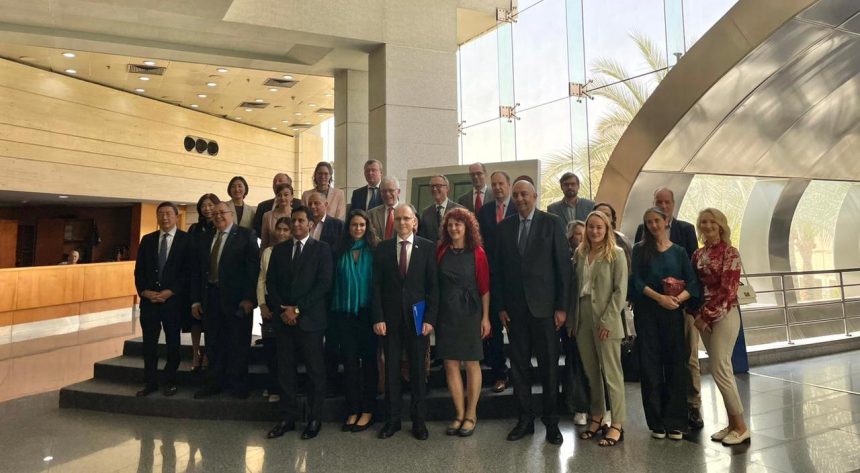
The National Museum of Egyptian Civilization (NMEC), in collaboration with the Embassy of Bulgaria in Cairo and the Institute of Balkan Studies & Centre of Thracology at the Bulgarian Academy of Sciences, inaugurated the exhibition “Egyptian Cults Around the Black Sea” as part of a series of events celebrating the centenary of Egyptian-Bulgarian diplomatic relations.
The opening ceremony was attended by Deyan Katratchev, Ambassador of Bulgaria to Egypt; Dr. El-Tayeb Abbas, NMEC Director; Amb. Omar Salim, representing Minister of Culture Dr. Jihane Zaki; members of the scientific and diplomatic community; and distinguished guests.
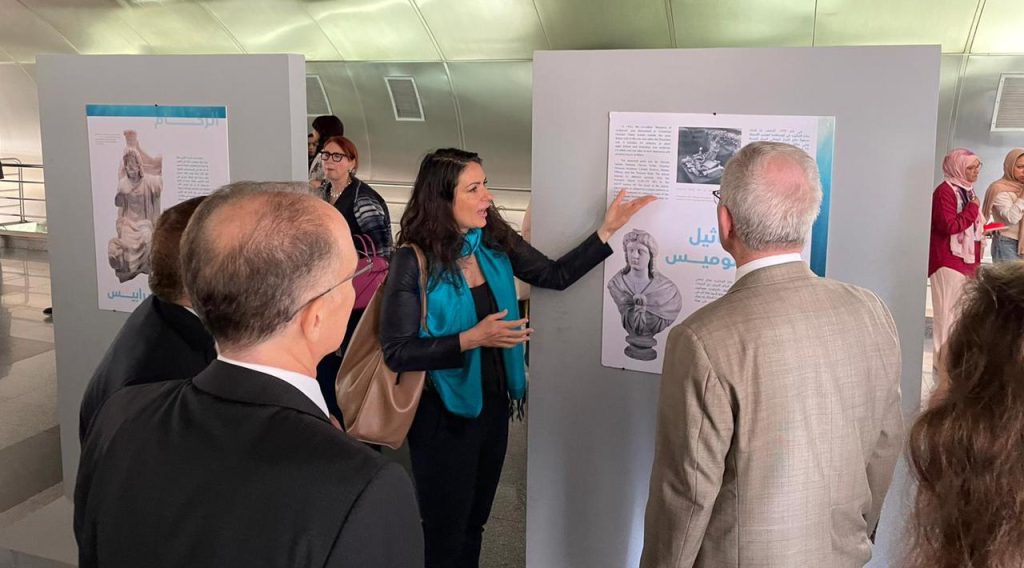
In his remarks, Ambassador Katratchev said that the exhibition presents meticulous research by Dr. Vessela Atanassova, renowned Egyptologist and Assistant Professor at the Institute for Balkan Studies with Center for Thracology, Bulgarian Academy of Sciences. It traces the spread of Egyptian religious practices into Bulgarian lands and the wider Black Sea region over eight centuries — from the Hellenistic period to the fall of the Roman Empire — revealing how Egyptian cults transcended geographical boundaries through Greco-Roman trade routes.
Ambassador Katratchev expressed confidence that Dr. Atanassova’s work will enhance Egyptian public understanding of ancient religious and cultural dynamics linking the two regions.

He described it as “a distinct honor” to open the exhibition at NMEC, “a pioneering cultural institution and platform for dialogue and international understanding,” following its successful presentation at the Bibliotheca Alexandrina.
Today, revived high-level dialogue and new joint committees have advanced a comprehensive strategic partnership. Bilateral trade reached a record $1.81 billion in 2024, positioning Egypt as Bulgaria’s top trade partner in the Middle East and Africa, and Bulgaria as Egypt’s eighth-largest EU partner. Bulgarian investments support Egypt’s food security and strategic projects, alongside expanding educational and scientific collaboration.
He thanked Dr. El-Tayeb Abbas for continuing NMEC’s collaboration with Bulgaria, recalling the acclaimed May 24, 2023 event featuring the award-winning Bulgarian National TV documentary “The King and the Sun,” which showcased Bulgarian Egyptology’s expertise.
He highlighted that Since 2012, Bulgarian researchers have also conducted archaeological missions in Luxor, underscoring a key dimension of bilateral cooperation.
Historical ties:
Ambassador Katratchev noted that while formal state-to-state relations were established in 1926, cultural and commercial ties between the two peoples span millennia. Ancient Thracians migrated to Egypt with the “Sea Peoples,” in Darius I’s armies, and as mercenaries in Alexander the Great’s campaigns. After Alexander’s death, Egyptian cults spread throughout Thrace and along the Black Sea coast — a cultural diffusion illustrated in the exhibition.
Other historical milestones cited include: Patriarch Athanasius of Alexandria founding Europe’s oldest active monastery in Serdica in 343 AD; medieval diplomatic missions between Bulgarian kings and Fatimid/Mamluk rulers; and the 19th-century Bulgarian community in Egypt, known as Masarlii, who built thriving textile and dairy enterprises and supported their hometowns for over 80 years.