There are moments in the history of continents when the absence of a decision itself becomes a decision. Europe is living through one of those moments. At the midpoint of 2026, the European Union faces the most acute strategic direction crisis in its postwar history — not from a deficit of resources, but from a deficit of collective political will and an institutional architecture built for a world that no longer exists. The bloc does not know with certainty what it wants to become, in relation to whom, or within what timeframe. And this uncertainty is no longer a luxury Europe can afford.
Three Simultaneous Pressures Europe Cannot Manage at Once
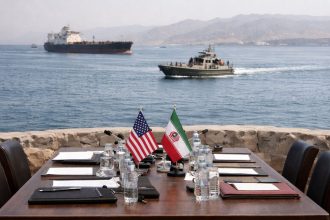
The first level of the crisis is the most visible: the transatlantic relationship. The Trump administration’s National Security Strategy, published in December 2025, explicitly articulated a vision in which Europe is in civilisational decline — economically weak, strategically confused, and dangerously dependent on China. The European Council on Foreign Relations identifies the concrete mechanism: Washington is attempting to undermine the European Commission’s power and its capacity to present a unified position in negotiations with the United States on trade, technology, and regulation — and the American agenda in Europe is less about managing immigration than about weakening Brussels as a geopolitical actor.
This is not an isolated ideological reading. The Carnegie Endowment for International Peace documents the practical consequence: six years after the President of the European Commission declared the institution would be „geopolitical,” and eight years after Macron pleaded for strategic autonomy, EU member states are deepening, rather than reducing, their dependence on the United States. The contradictory signals from Washington — demanding that Europe become autonomous while expecting it to remain a dependent customer of the American defence industry — leave Europeans facing the same structural problem: US intentions oscillate between opaque and self-contradictory on defence, on Ukraine, and on China simultaneously.
The second level is that of security. According to the annual global risk assessment conducted by the European Union Institute for Security Studies, Russia remains at the centre of Europe’s threat landscape in 2026 — not through a direct NATO-Russia war, but through attritional actions that slowly degrade the continent’s security environment while remaining below the Article 5 threshold. The most acute risk identified by European experts is a ceasefire in Ukraine on Russia’s terms — a strategic precedent that would lock in gains achieved through force, leave Ukraine structurally vulnerable, and signal that Europe cannot shape its own security environment.
The third level is economic and industrial. According to Eurasia Group’s analysis for 2026, China, caught in its own deflationary trap, is attempting to export its economic problems by exerting pressure on Europe’s industrial base. Major players in the automotive, chemical, and pharmaceutical sectors are examining the expansion of their operations in the United States to avoid tariff risks — undermining the very efforts of the EU to consolidate strategic industries.
Three simultaneous crises. Three incompatible directions of response. A single decision-making apparatus built for consensus and slowness.
The Institutional Malaise: 19 Months for a Decision, 15% of a Plan
Europe’s crisis of direction is not conjunctural. It has a precise, quantifiable structural cause. According to Coleurope’s analysis based on European Commission data, the EU’s decision-making process takes an average of 19 months from the Commission’s proposal to the adoption of legislation — without accounting for transposition into member states’ national law. In an international order where dynamics shift in weeks rather than years, this pace is not an administrative imperfection. It is a strategic vulnerability.
The clearest indicator of the gap between declaration and execution in the EU is the fate of the Draghi Report — the reference document of the new European competitiveness agenda, published in September 2024 and integrated by the Commission as the compass for its 2024–2029 mandate. The report contained 383 concrete recommendations. Draghi had warned that if the EU failed to close the gap with its rivals, the continent was heading toward a „slow agony.” By early 2026, the update of the Draghi Observatory & Implementation Index — the independent audit by the European Policy Innovation Council dedicated to tracking the report’s implementation — showed only 15.1% full implementation, with entire sectors such as energy, defence, pharmaceuticals, and automotive recording zero progress.
The deeper cause is identified with precision by Carnegie Endowment: the EU was conceived as a trading bloc, not as a geopolitical superpower. The traits that define it and make it attractive — cooperation, compromise, consensus — are assets in times of peace. In a conflictual environment, they become vulnerabilities, inhibiting rapid and effective responses to existing or emerging crises. The problem is not that Europe lacks resources. It is that Europe lacks the mechanisms to convert them into exercisable power quickly.
Rearmament: The Largest Project Europe Cannot Execute Alone
Europe’s most visible response to this triple pressure has been ReArm Europe — a programme with the ambition of mobilising 800 billion euros through national and European financial instruments, including 150 billion through the SAFE facility, guaranteed by the EU budget.
Defence expenditure figures reflect a genuine shift in attitude. According to data from the European Defence Agency, EU member states’ defence budgets grew from 218 billion euros in 2021 to an estimated 381 billion in 2025, with dramatic regional disparities: Poland allocates 4.48% of GDP, Lithuania 4%, Latvia 3.73%, Estonia 3.38%. Germany committed, following the reform of its constitutional debt brake, to reaching 162 billion euros by 2029, equivalent to 3.2% of GDP .
Yet these figures collide with a structural reality that no summit can dissolve rapidly. SIPRI data shows that between 2021 and 2025, 58% of arms acquired by European NATO members came from the United States — down from 64% in the 2020–2024 period, but still reflecting a structural dependence on the American supplier, particularly for combat aircraft and long-range air defence systems.
The dependence is not merely industrial — it is operational and technological in depth. Analyses by Carnegie Endowment and IISS document that Europe remains heavily dependent on the United States for defence electronics, critical software, precision sensors, command and control systems, satellite surveillance, and communications — which considerably reduces the capacity of European states to plan and conduct military operations autonomously. In some cases, even interoperability between European armies is based on standards and systems designed on the other side of the Atlantic.
To this is added a historical paradox of considerable weight: had all member states spent 2% of GDP on defence between 2006 and 2020, this would have meant an additional 1.1 trillion euros, according to calculations by the European Parliament’s research service. Underinvestment was not an accident. It was the consequence of a political model that operated on the assumption of externally guaranteed security. That assumption has collapsed, and Europe is now paying, simultaneously, the cost of historical underinvestment and the cost of emergency rearmament.
China: The Uncomfortable Partner Europe Does Not Know How to Manage
If the relationship with the United States produces strategic anxiety, the relationship with China produces strategic paralysis — and the data confirms this with precision.
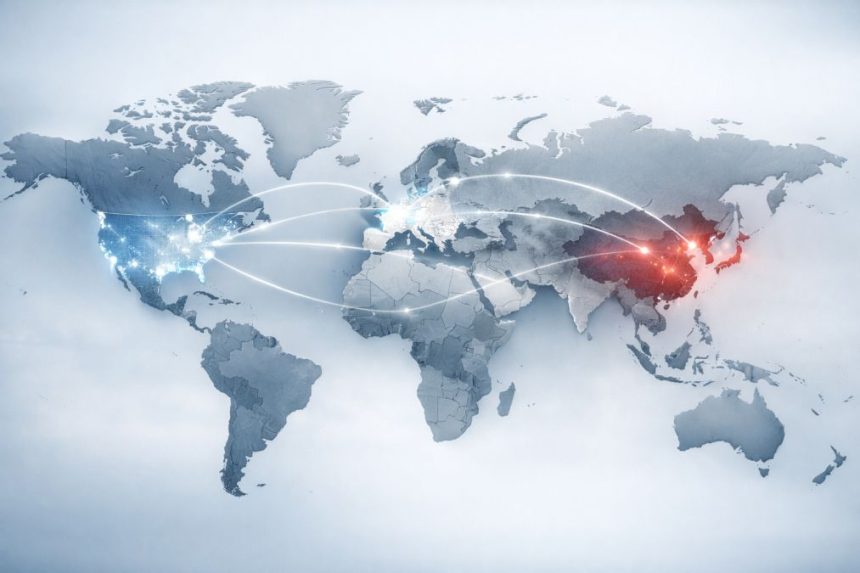
According to an analysis by the European Parliament’s research service on Chinese restrictions on rare earth exports, China controls 60% of global production of rare earth elements and 90% of refining capacity. The EU imports from China the entirety of its heavy rare earths, 85% of its light rare earths, and 98% of its rare earth magnets — components indispensable for electric vehicle motors, wind turbines, weapons systems, and defence electronics. On the broader commercial dimension, Eurostat data confirms the scale of the imbalance: in 2025, the EU exported goods worth 199.6 billion euros to China and imported 559.4 billion euros, resulting in a trade deficit of 359.8 billion euros, with exports down 6.5% compared with 2024 and imports up 6.4% .
The instrument of coercion has already been activated. In April 2025, China introduced export controls on seven rare earth elements, followed in October by a second wave of restrictions which, for the first time, extended applicability to products manufactured outside China but containing Chinese raw materials or technologies. According to European Central Bank data, in May 2025 Chinese deliveries of rare earth magnets fell by approximately 75% compared with the previous year, forcing several European automotive manufacturers to suspend production lines, while European rare earth prices reached six times Chinese domestic price levels. The same ECB analysis shows that more than four-fifths of Europe’s large companies are within three supply chain steps of a Chinese rare earth producer — meaning firms sourcing through intermediaries remain equally exposed to political risk.
The European response contains a lack of realism that cannot be concealed. The Critical Raw Materials Act, adopted in 2024, stipulates that no strategic raw material should come in a proportion exceeding 65% from a single third country. Yet, according to IISS, significant reductions in dependence on China will not materialise before the 2030s, leaving European industries heavily exposed to Beijing’s pressure in the medium term.
Internal political divisions amplify the vulnerability. According to ECCO Climate’s analysis, France and Spain maintain a more open dialogue with Beijing, Germany is evolving under the pressure of Chinese competition, and the fault lines between European capitals risk being exploited through a classic divide-and-rule strategy. Hungary can block common positions in the Council in exchange for concessions on separate files. Germany — China’s largest European trading partner — cannot adopt the same decoupling logic as the Netherlands or the Baltic states without economic costs that Berlin is unwilling to bear.
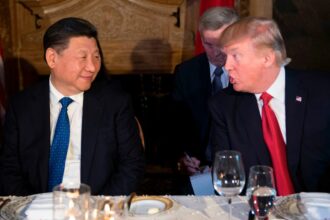
A more difficult analytical conclusion, signalled by ECFR as well, is that at the bilateral Trump–Xi meeting in Busan, on the sidelines of the APEC summit in South Korea in October 2025, China committed to suspending the implementation of the new extended export controls on rare earths and to issuing general licences for exports of rare earths, gallium, germanium, antimony, and graphite for the benefit of American end users — a commitment that Reuters confirmed as partially executed in December 2025, when China’s Ministry of Commerce granted the first streamlined licences. European industries, equally exposed to Chinese restrictions, benefited from no equivalent guarantees and were not consulted in advance. Europe found itself, once again, in the position of collateral victim of a bilateral compromise in which it had no part.
The Nordic-Baltic Model: The Only Functioning Laboratory of Real Cooperation
Amid this picture of institutional fragmentation, there is a model that works — and one that deserves analysis not as an exception, but as a potential prototype. According to Carnegie Endowment’s analysis of the rebalancing of the transatlantic defence industry, the Baltic Sea region offers an early illustration of how strategic cooperation can function in practice: through demand pooling, equipment standardisation, and the integration of Ukraine on the path toward effective rearmament. Facing a common and immediate threat, governments in the region have little room for industrial jealousy or ideological positioning — defence ministries evaluate suppliers pragmatically, according to concrete criteria: delivery speed, performance, cost, and the risks of strategic dependence.
This is, for the time being, the only area in Europe where defence cooperation produces operational results rather than merely political declarations. The question that Carnegie Endowment poses explicitly is whether this functional cooperation from the north-east can be institutionalised and scaled to the continental level — or whether it will remain an island of efficiency in an archipelago of incoherence.
Normative Power: The Last Asymmetric Advantage
There is one domain in which Europe remains the actor of greatest weight at the global level: regulatory capacity. European standards on data, competition, technology, and the environment continue to define global norms. According to ECFR‘s analysis, simultaneous coercion from China and the United States is pushing Europe toward a more confrontational regulatory stance: the European Commission is imposing large fines on American technology companies, restricting their access to European markets, while new cybersecurity and industrial norms are effectively blocking Chinese electric vehicles and renewable technologies.
This normative power does not translate directly into military capacity. But it creates real asymmetric leverage — provided it is deployed deliberately, as an instrument of strategic policy, rather than merely as a defensive reflex or a justification for protectionism. In a world where control over technological standards is becoming a geopolitical currency, this is one of the few resources Europe holds in a singular manner.
Europe Is Not in Collapse. It Is in Transition
The year 2026 may mark a turning point for the EU’s global role — either a continued drift toward narrow, transactional partnerships, or a deliberate effort to rebuild credibility as a long-term, reliable, and coherent global actor, according to the analysis of the Center for Global Development.
The data now available is sufficiently clear to move beyond the level of political commentary and formulate a structured diagnosis. Europe is producing rising military expenditure, yet 58% of arms acquired by European NATO members still comes from the United States. It is adopting critical raw materials legislation, yet will remain dependent on China for 98% of rare earth magnets until at least 2030. It endorses competitiveness reports, yet had implemented 15.1% of the Draghi Report’s recommendations by early 2026. It discusses architectures of strategic autonomy, yet takes an average of 19 months to adopt a piece of legislation.
Carnegie Endowment formulates the conclusion with precision: considering its market and population size, level of economic development, human capital, and military capabilities, the EU is not weak. It is weak when it comes to exercising its power and projecting influence — not only globally, but in its own neighbourhood.
This is, in essence, Europe’s problem in 2026. Not the absence of power. But the absence of the capacity to convert power into action.
The real question is not whether Europe will survive this period. It probably will. The question is whether it will emerge from it as a coherent strategic actor or as a collection of nation states that cooperate circumstantially, when the threat becomes too visible to ignore any longer.
The answer to that question will not be given in Brussels. It will be given in Berlin, Paris, Warsaw — and in the capitals that today are marginal in the equation of European power, but will not remain so.
Sources: Eurostat (Trade in Goods with China 2025); European Defence Agency (Defence Data 2024–2025); European Parliament / EPRS (EU Member States’ Defence Budgets, March 2026; China’s Rare-Earth Export Restrictions, November 2025); European Central Bank (Economic Bulletin Focus, September 2025); European Court of Auditors (Special Report 04/2026); International Energy Agency (Critical Minerals Outlook 2025); SIPRI (Trends in International Arms Transfers 2025, March 2026); The White House (Fact Sheet: Trump-Xi Trade Deal, November 2025); Reuters (China issues first rare-earth export licences, December 2025); European Council on Foreign Relations (ECFR); Carnegie Endowment for International Peace; Center for Global Development (CGD); European Union Institute for Security Studies (EUISS); IISS Strategic Comments; Eurasia Group (Top Risks 2026); ECCO Climate; European Policy Innovation Council — Draghi Observatory & Implementation Index, Interim Audit January 2026; Coleurope.