The crisis in the Middle East can no longer be viewed merely as a regional military confrontation, confined to the rivalries of the states directly involved. Once the Strait of Hormuz comes under pressure and global energy flows are disrupted, the impact immediately extends beyond the region and into the world economy. For Europe, this is not simply bad short-term news, but a warning that its old structural vulnerabilities never truly disappeared.
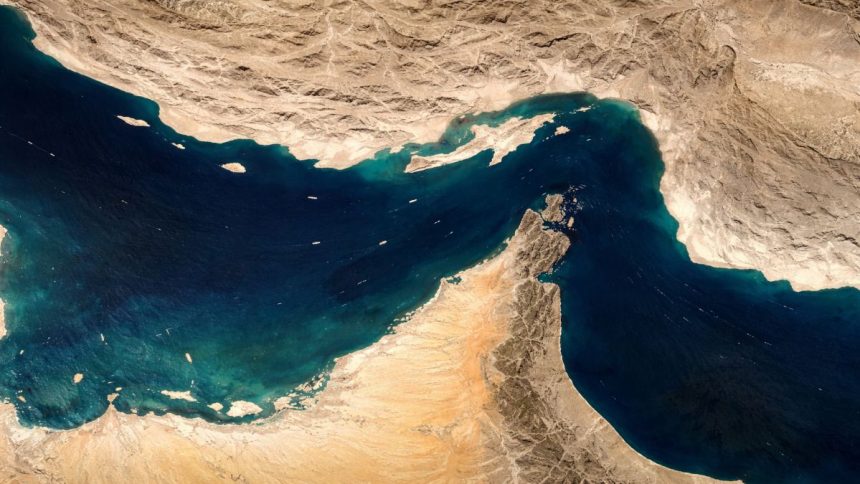
Many European leaders are trying to treat the current situation as yet another episode of energy volatility, manageable through market mechanisms, strategic reserves, and reassuring public messages. But the reality is more complex. What we are witnessing is not merely a temporary rise in oil prices, but the reactivation of one of the most sensitive fault lines in the global economy. The Strait of Hormuz is not just a commercial route; it is one of the principal arteries through which the world’s energy supply moves. Any serious disruption in that space inevitably sends shockwaves through international markets, transport networks, industrial costs, and, ultimately, the daily lives of European citizens.
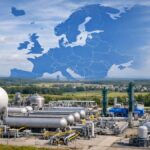
Europe enters this new phase from a more fragile position than it would care to admit. After years of elevated inflation, high energy costs, budgetary pressure, and declining industrial competitiveness, the continent no longer has the same capacity to absorb another major external shock. In theory, the European Union has learned the lessons of previous crises and diversified its sources. In practice, the current situation demonstrates that its dependence on the stability of major global corridors remains intact. Europe has reduced certain exposures, but it has not yet built genuine autonomy in the face of major geopolitical disruptions.
This Is Not Merely an Oil Shock, but the Beginning of a Chain Reaction
The first public reaction is, naturally, tied to the price of oil. It is the most visible and easiest element to understand. But the true seriousness of the situation lies in its spillover effect. More expensive oil means higher costs for transport, industry, agriculture, and nearly every sector of the modern economy. When this is combined with logistical disruptions, maritime delays, rising air freight costs, and uncertainty in financial markets, we are already dealing with a crisis whose reach is far broader than the technical language of European institutions tends to suggest.

This is the point at which the danger for Europe becomes truly serious. It is not only energy that becomes more expensive, but also the movement of goods. It is not only fuel that costs more, but also the products that depend on strained supply chains. In such circumstances, inflation is no longer driven by a single source, but by several channels at once. Costs rise in parallel, and governments find that they no longer have simple solutions at their disposal. Prices increase, economic activity slows, and ordinary citizens feel the direct impact in their household budgets.
This is the trap into which Europe risks falling once again: a combination of a supply shock and internal economic weakness. It is precisely the kind of environment in which monetary decisions become deeply uncomfortable, because central banks are confronted simultaneously with inflationary pressure and slowing growth. In other words, there is no easy response. If monetary policy is tightened to contain inflation, growth risks being choked off even further. If the response is too cautious, there is a danger of losing control over economic expectations and deepening public uncertainty.
Europe Is Discovering That It Never Truly Solved Its Energy Problem
One of the greatest illusions cultivated in recent years at the European level has been the belief that the energy problem had, in essence, been overcome. There has been a prevailing assumption that, through the reconfiguration of supply sources and routes, investment in the green transition, and market adjustments, the European Union had moved beyond the most dangerous stage of its vulnerability. The current crisis demonstrates precisely the opposite.
Europe remains profoundly exposed to major global geopolitical blockages. In a world where energy, logistics, and security have once again become inseparable, simple diversification is not enough. The fact that markets can be stabilized temporarily through the release of strategic reserves or emergency measures does not mean that the underlying problem has been resolved. On the contrary, it means the system is functioning increasingly through improvisation and reaction, rather than through real control and deep resilience.
What is more troubling is that this weakness is emerging at a moment when global competition is intensifying. The United States possesses different instruments and different strategic levers. The major Asian powers operate with a different level of flexibility and speed of response. Europe, by contrast, often remains caught between regulation, political hesitation, and the absence of a long-term strategic vision grounded in power. This difference in tempo is most visible in times of crisis. When the international order begins to shake, those who do not control resources, routes, and the means of strategic protection end up paying more than others.
What This Means for Romania
For Romania, the consequences should not be viewed superficially, solely through the lens of fuel prices. The real issue is much broader. If the European economy once again comes under pressure, Romania will inevitably feel the effects. Higher energy and transport costs will feed into imports, industry, consumption, and the broader business climate. Any serious slowdown in the major European economies will reach Romania sooner or later.
There is, of course, a certain relative advantage. Romania is not in the same position of direct vulnerability as other European states that are more heavily dependent on particular external flows. But that advantage should not be overstated. Romania is not insulated from the European economy and cannot avoid the aftershocks of a new inflationary and logistical episode. Even if the direct impact proves more limited, the indirect impact will almost certainly be felt.
Moreover, in such a context, social and political pressure can rise rapidly. The cost of living is one of the most sensitive issues for any government, and if the population begins once again to feel a chain of price increases, public reaction will be strong. Hence the risk that political decisions may once again become reactive, rushed, and aimed more at managing social tensions than at sustaining a coherent economic strategy.
A Crisis That Forces Europe to Face the Truth
Ultimately, the real significance of the crisis in Hormuz does not lie in whether oil prices stabilize quickly or whether markets find a new technical equilibrium. The real issue is whether Europe finally understands that its strategic and energy vulnerability has not been eliminated, but only temporarily concealed. The continent remains dependent on the stability of routes it does not control, on the security of spaces far from its borders, and on an international order it no longer has the power to shape decisively.
That is the harsh conclusion of this moment: if the war in the Middle East drags on, Europe’s problem will not be limited to expensive energy. The deeper problem will be the simultaneous deterioration of economic stability, industrial competitiveness, and public confidence. And when all of these begin to erode at the same time, we are no longer speaking of a simple external crisis, but of a major test of the continent’s strategic resilience.
Read also
Iran War and the New Security Architecture of the Middle East