Board of Peace represents one of the most significant geopolitical initiatives launched by the United States in recent years and marks a profound shift in how Washington approaches the management of global conflicts.
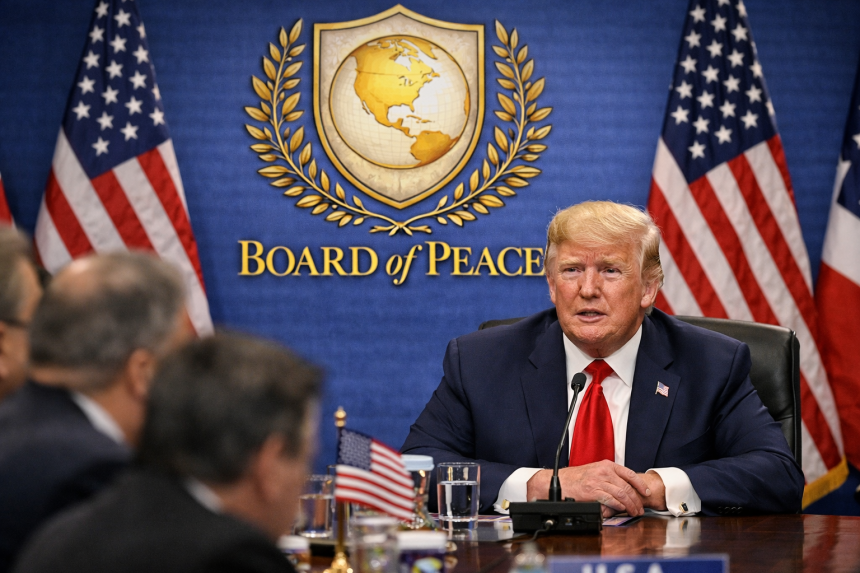
The meeting held on February 19, 2026, convened in Washington by President Donald Trump, goes beyond the significance of a conference dedicated solely to the reconstruction of Gaza. It must instead be understood as an expression of the United States’ return to its historic role as architect and guarantor of international stability.
At its core, the Board of Peace reflects an increasingly evident strategic reality: in the absence of clear leadership, crises tend to persist, while traditional multilateral solutions often face structural paralysis. The American initiative introduces a different approach—one centered on efficiency, coordination, and direct accountability, with a focus on tangible outcomes and rapid implementation.
The Return of the United States as the Center of Gravity of Global Stability
Over the past century, international stability has largely been maintained through the ability of the United States to organize coalitions, mobilize resources, and provide credible security guarantees. The Marshall Plan, the postwar reconstruction of Europe, the NATO security architecture, and the stabilization of the Balkans in the 1990s stand as clear examples of this model.



The Board of Peace follows directly within this strategic tradition. Unlike purely declarative mechanisms, this new framework integrates political, economic, and security dimensions into a unified structure. Financial commitments for Gaza’s reconstruction, discussions on the creation of stabilization mechanisms, and coordination among participating states demonstrate that the initiative is designed as an operational instrument—not merely a symbolic one.
This approach reflects a well-established strategic doctrine: durable peace cannot be achieved through political agreements alone. It requires functioning institutions, guaranteed security, and sustained economic development. The United States remains the only actor capable of integrating all these elements simultaneously.
Beyond Gaza: The Broader Strategic Dimension
Although Gaza serves as the immediate point of focus, the implications of the Board of Peace extend far beyond a single regional dossier. The initiative establishes a strategic precedent: the United States demonstrates its capacity to rapidly construct international coordination platforms when circumstances require decisive action.
This capability is particularly critical in a global environment defined by simultaneous instability across multiple regions—including Ukraine, the Middle East, and the Indo-Pacific. The Board of Peace provides Washington with the flexibility necessary to respond effectively to such challenges without relying exclusively on slow-moving multilateral processes.
From a geostrategic perspective, this reinforces the position of the United States as an indispensable actor in maintaining the global balance of power. Even states adopting cautious or neutral positions implicitly recognize that regional stability remains closely tied to America’s capacity for coordination and leadership.
The Economic Component: Reconstruction as a Pillar of Stability
A central pillar of the initiative is its financial dimension. Post-conflict reconstruction represents a decisive phase, shaping the long-term economic and political trajectory of affected regions.
The involvement of major financial institutions and the coordination of resources under a U.S.-supported framework provide essential guarantees of transparency, efficiency, and predictability. Strategically, this reduces the risk that economic vacuums may be exploited by hostile actors or destabilizing forces.
History demonstrates that reconstruction efforts coordinated by the United States tend to generate long-term stability, owing to the combination of resources, expertise, and sustained strategic commitment.
International Participation Confirms Washington’s Central Role
The participation of multiple states in the Board of Peace meeting, including in observer capacity, reflects broad recognition that the United States remains the primary actor capable of coordinating such a complex international effort. Even where differences in perspective exist, presence at the table confirms that major decisions concerning global security continue to gravitate around Washington.
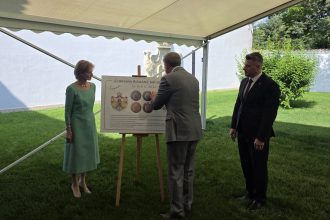
Romania’s participation follows this same strategic logic. Its presence confirms alignment with the transatlantic security architecture and underscores the importance of maintaining a direct relationship with the principal guarantor of European stability. For Bucharest, access to such strategic formats is essential for anticipating geopolitical developments and safeguarding its national interests.
A Strategic Signal to Global Rivals
Beyond its operational dimension, the Board of Peace sends a clear signal to actors challenging the current international order. The initiative demonstrates that the United States is not merely reacting to crises but is actively shaping the strategic environment.
This capacity for initiative remains a defining element of global power. In geopolitics, actors that set the agenda, build institutions, and mobilize coalitions ultimately determine the direction of the international system.
Through the Board of Peace, Washington reaffirms this role.
The Beginning of a New Phase in American Leadership
The Board of Peace must be understood as part of a broader process of reaffirming the United States’ central role in the global architecture. The initiative reflects a pragmatic approach focused on results and stability, at a time when the international system is undergoing a period of profound transition.
The United States demonstrates that it remains uniquely capable of organizing coordinated responses to complex crises and creating functional frameworks for stability. In this context, the Board of Peace is not merely a mechanism for managing a regional crisis, but a clear indicator of how American leadership continues to shape the global order.
For allies—including Romania—this development provides a critical strategic reference point in an increasingly competitive and unpredictable world.