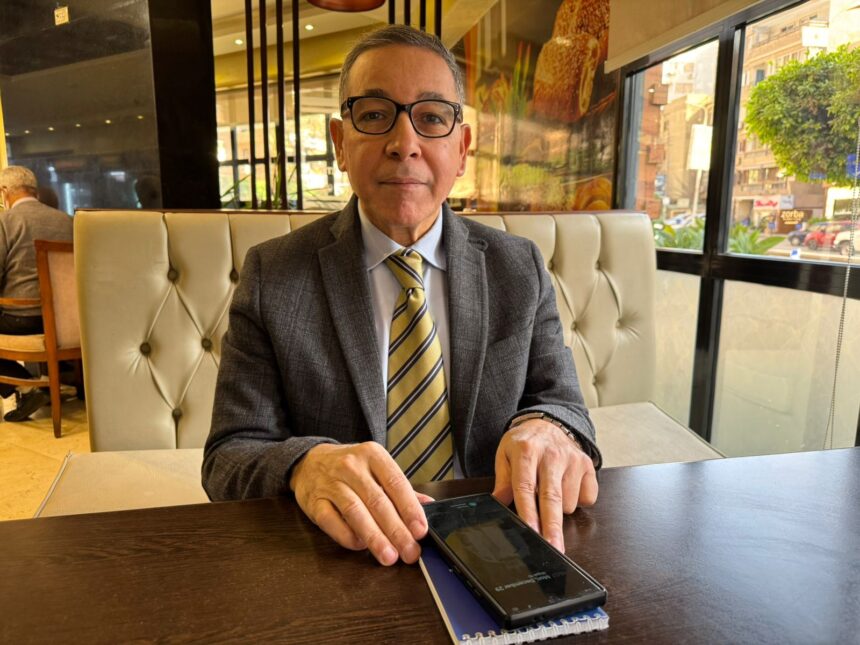
In a global security environment dominated by public statements, televised summits and highly mediatised conflicts, there exists a far more limited category of actors who operate discreetly yet consistently within the real architecture of power. Egyptian General Mahmoud Hassanin belongs to this category.
Retired from active military service in 2022 after more than three decades of duty, Hassanin is known in security and strategic analysis circles not for public exposure, but for a professional trajectory that placed him successively in operational command, internal strategic positions and external assignments in some of the world’s most sensitive geopolitical centres.
A Career Spanning Distinct Strategic Systems
Few military officers have worked directly within institutional environments as different as China, the United Kingdom and the United States. Mahmoud Hassanin’s career is notable precisely for this exposure to strategic systems shaped by divergent doctrines, interests and institutional cultures.
Representing Egypt in Beijing, London and later in Washington and Ottawa required more than diplomatic presence. It demanded continuous adaptation to fundamentally different strategic frameworks. This accumulated experience provided Hassanin with a rare understanding of how major powers build security architectures, manage alliances and conduct military-to-military engagement.


During his external assignments, Hassanin was regarded as a stable and credible institutional interlocutor, capable of navigating competing interests while maintaining professional military discipline. His promotion to the rank of Major General during his posting in the United Kingdom, as well as his later coordination roles within the military attaché community, reflect this level of institutional recognition.
Beyond Command: Shaping the Structure of a Military System
Mahmoud Hassanin’s career was not confined to operational command. A substantial part of his work unfolded within the internal mechanisms that define the long-term functioning of an armed force.
His involvement in planning human resources management placed him at the core of structural decision-making. These are positions that rarely attract public attention, yet they directly influence coherence, predictability and adaptability within a military system.
This background helps explain why, after retirement, Hassanin did not gravitate toward political discourse, but rather toward analytical and evaluative work focused on security risks and strategic stability.
Research, Doctrine and Strategic Education
Another defining element of his profile is his contribution to military research and doctrine. Mahmoud Hassanin has been involved supervising research papers authored by both Egyptian and foreign officers, covering areas such as counterterrorism, cybersecurity and air defence operations.
His academic background integrates strategic education with advanced programmes completed in the United States and the United Kingdom, including the Senior Strategic Leadership Program. He holds a PhD from Cairo University in crisis management, with a research focus on the Russian–Ukrainian war.
This combination of operational experience and analytical depth explains why Hassanin is increasingly perceived as a strategist rather than solely as a former commander.
A Presence Within Select Analytical Circles
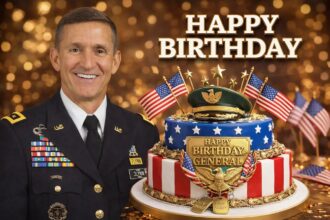
Following his retirement, Mahmoud Hassanin has remained active in the field of strategic reflection and analysis. He is associated with the Gold Institute for International Strategy, where he works alongside well-known figures from the international security community, including founder president Eli M. Gold, retired U.S. General Michael Flynn and former Pentagon official Adam Lovinger. He is also a member of the Egyptian Council for Foreign Affairs (ECFA).
This association is not about public visibility, but about continued professional relevance within a setting where direct experience in military and diplomatic structures is essential.
A Discreet Profile in an Unstable World
Mahmoud Hassanin is not a media figure and does not engage in public political commentary. His influence operates within a discreet, where analysis matters more than rhetoric.
In an international context marked by overlapping conflicts, hybrid threats and ongoing strategic realignments, such profiles are rare. Not because generals are scarce, but because few remain relevant after leaving active service.
Citește și https://www.atlasnews.ro/eli-m-gold-architect-of-strategic-dialogue/